Cyprus: Guterres Intensifies Peace Push as New Five-Party Talks Loom
 ΧΡΟΝΟΣ ΑΝΑΓΝΩΣΗΣ 5 '



UN launches renewed diplomatic initiative
After years of limited progress, the United Nations is making a fresh attempt to restart negotiations on one of Europe’s longest-running unresolved conflicts.
UN Secretary-General António Guterres is scheduled to pay a two-day visit to Cyprus on July 27 and 28, signaling what diplomats describe as the most significant peace initiative since the collapse of the Crans-Montana negotiations in 2017.
The visit comes amid renewed international interest in stability across the Eastern Mediterranean, where security, energy cooperation and regional geopolitics have become increasingly interconnected.
Separate meetings before joint talks
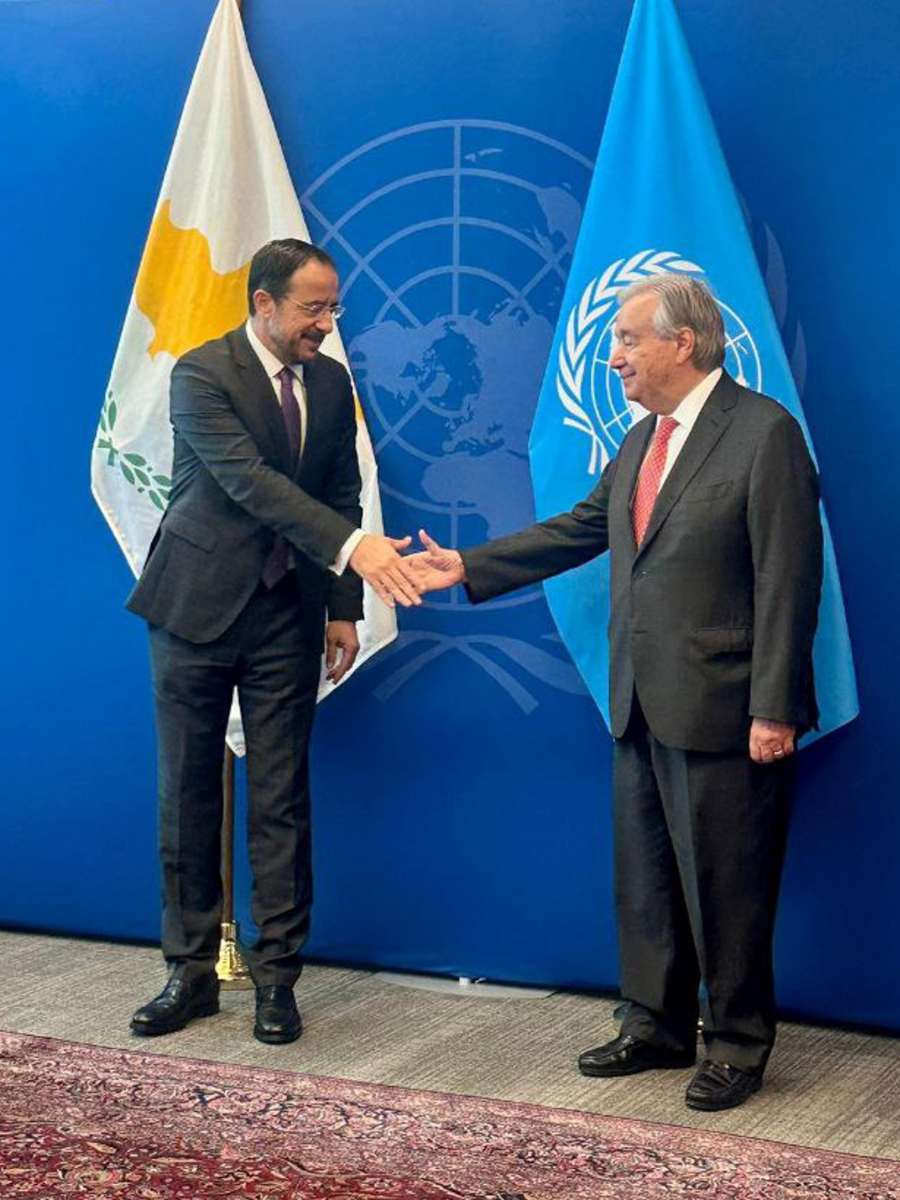
According to diplomatic sources, Guterres will begin his visit with separate meetings with Cypriot President Nikos Christodoulides and Turkish Cypriot leader Tufan Erhürman.
On the second day, the two leaders are expected to meet jointly with the UN Secretary-General at the residence of the UN Special Representative inside the UN-controlled buffer zone at the former Nicosia International Airport, a venue long associated with peace negotiations on the island.
Holding the meeting inside the buffer zone is widely viewed as a symbolic reminder of the United Nations’ role as a neutral mediator in the decades-old dispute.
Five-party conference expected
Diplomatic sources indicate that Guterres is likely to announce the convening of a new informal five-party conference, expected to take place in late August or early September.
The conference would bring together:
- The Republic of Cyprus
- The Turkish Cypriot leadership
- Greece
- Türkiye
- The United Kingdom
under United Nations auspices.
Unlike previous negotiation rounds, diplomats suggest the upcoming process could include a defined timetable and a stronger focus on producing concrete outcomes rather than open-ended discussions.
A new UN framework under discussion
The Secretary-General’s visit comes amid growing reports that the United Nations has been quietly working on a renewed framework for negotiations.
Cypriot President Nikos Christodoulides hinted earlier this year that a new UN initiative on Cyprus could emerge during 2026, raising expectations that the organization is preparing a fresh diplomatic approach.
Although no formal proposal has yet been presented, diplomatic circles believe the UN is seeking to create conditions for substantive negotiations while avoiding the procedural deadlocks that have characterized previous rounds of talks.
First visit by a UN chief in 16 years
Guterres’ trip will mark the first visit by a sitting UN Secretary-General to Cyprus since 2010, when Ban Ki-moon traveled to the island in an effort to inject momentum into negotiations between then-President Demetris Christofias and Turkish Cypriot leader Mehmet Ali Talat.
The visit also recalls the intensive diplomatic efforts led by Kofi Annan between 2002 and 2004, which resulted in the Annan Plan and the simultaneous referendums held before Cyprus joined the European Union.
While that initiative ultimately failed to reunify the island, it remains the most ambitious UN effort to resolve the conflict.
The broader geopolitical stakes
The renewed diplomatic activity extends well beyond Cyprus itself.
The Eastern Mediterranean has emerged as one of the world’s most strategically significant regions, where the interests of the European Union, Türkiye, Greece, the United Kingdom, the United States, and NATO increasingly intersect.
Energy security, offshore natural gas resources, maritime boundaries and regional security cooperation have transformed the Cyprus issue from a bilateral dispute into a matter of wider geopolitical importance.
For Brussels, progress on Cyprus could facilitate broader EU–Türkiye relations, while also contributing to greater stability in the Eastern Mediterranean.
Political obstacles remain
Despite the renewed diplomatic momentum, the positions of the two sides remain fundamentally different.
The internationally recognized Republic of Cyprus continues to support a bizonal, bicommunal federation, consistent with longstanding UN Security Council resolutions.
Meanwhile, the Turkish Cypriot leadership, backed by Ankara, maintains that negotiations should be based on the principle of two sovereign states, a position rejected by both the United Nations and the European Union.
Bridging these competing visions remains the central challenge facing any new negotiation process.
António Guterres’ decision to personally return to Cyprus reflects the United Nations’ assessment that a new diplomatic window may be opening.
Regional developments—including evolving EU–Türkiye relations, growing strategic competition in the Eastern Mediterranean, and increasing emphasis on energy security—have created incentives for renewed dialogue after years of diplomatic paralysis.
Yet success is far from guaranteed. The core disagreements over sovereignty, governance and security guarantees remain unresolved, while domestic political considerations on both sides continue to complicate compromise.
Whether the Secretary-General’s initiative can move beyond confidence-building measures toward substantive negotiations will determine not only the future of Cyprus but also the stability of one of Europe’s most strategically important regions.
If a new five-party conference is formally announced, it would represent the most significant diplomatic breakthrough on the Cyprus issue in nearly a decade and could redefine the trajectory of negotiations for years to come.
Πηγή: pagenews.gr
Διαβάστε όλες τις τελευταίες Ειδήσεις από την Ελλάδα και τον Κόσμο