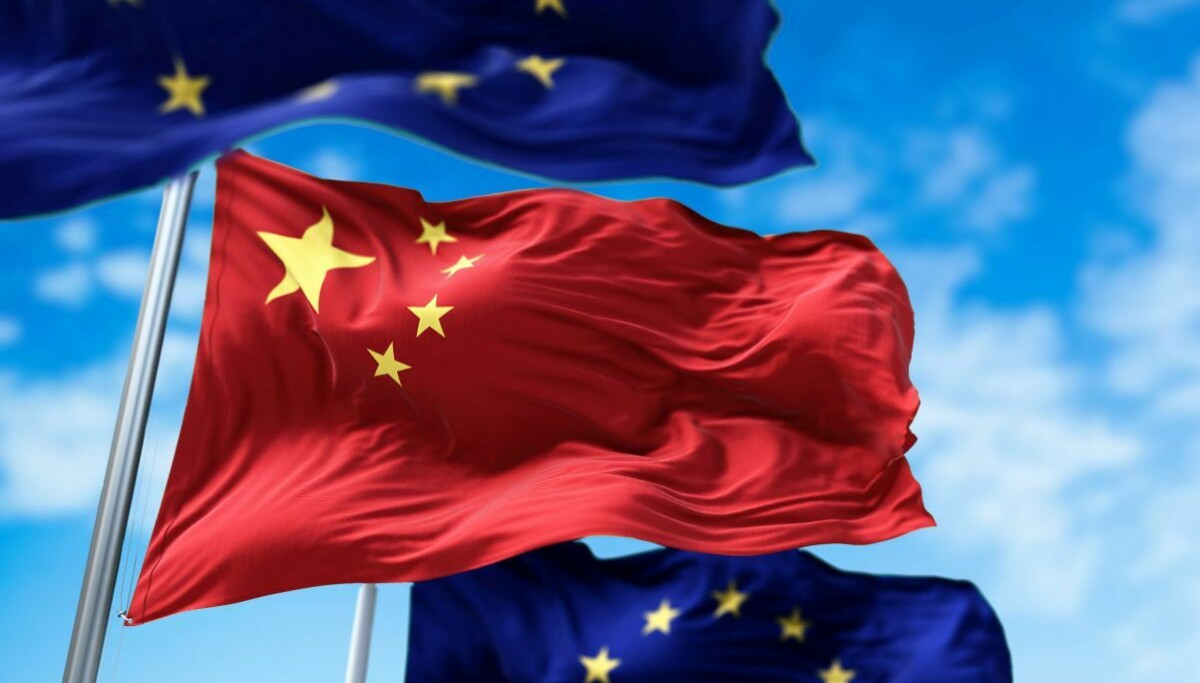
Europe is confronting an uncomfortable reality: many of its companies remain world-class, but too few possess the scale of their American and Chinese rivals.
That concern is driving a fundamental rethink in Brussels over competition policy, industrial strategy and cross-border consolidation. After years in which European regulators often viewed mega-mergers with suspicion, the debate is shifting towards whether bigger European companies are now essential for the continent’s economic and strategic sovereignty.
The European Commission has moved to give greater consideration to scale, innovation, resilience and global competitiveness when assessing mergers, reflecting a broader political push to strengthen Europe’s industrial base.
European Commission President Ursula von der Leyen has encapsulated the emerging philosophy clearly:
“We need European champions.”
The question is how far Europe is prepared to go to create them.
Seven mega-mergers that could redraw Europe’s corporate map
The Financial Times asked more than 30 senior investment bankers, M&A advisers, lawyers and corporate executives to consider combinations that could create genuinely global European heavyweights.
Among the hypothetical pairings discussed were:
- Deutsche Telekom – Orange in telecommunications
- Airbus – Saab in aerospace and defence
- Iberdrola – Enel in energy
- Deutsche Bank – BNP Paribas in banking
- ASML – Mistral AI in technology and artificial intelligence
- Sanofi – Bayer in pharmaceuticals
- Siemens – Schneider Electric in industrial technology and automation
These are not announced transactions. Rather, they illustrate the scale of consolidation that could be required if Europe wants companies capable of competing globally.
And they expose the central dilemma facing Brussels: how much domestic competition should Europe be willing to sacrifice in exchange for greater global competitiveness?


Iberdrola–Enel: An energy superpower
One of the most strategically significant scenarios involves Spain’s Iberdrola and Italy’s Enel.
A combination of the two would create an enormous European energy group spanning renewable generation, electricity networks, distribution and the digitalisation of power infrastructure.
The strategic logic is clear.
Europe needs hundreds of billions of euros of investment to modernise electricity grids, expand renewable capacity, strengthen interconnections and electrify transport and industry.
Greater corporate scale could improve access to capital and accelerate that investment.
But energy infrastructure remains politically sensitive. Electricity grids are increasingly regarded not simply as commercial assets but as critical infrastructure directly connected to national security and economic sovereignty.
That makes any major cross-border consolidation politically difficult.
Airbus–Saab and Europe’s defence challenge
An Airbus–Saab combination would carry an even stronger geopolitical dimension.
Russia’s war against Ukraine and uncertainty surrounding Europe’s long-term security relationship with Washington have exposed one of the continent’s structural weaknesses: Europe spends heavily on defence but its defence-industrial base remains fragmented along national lines.
European countries operate numerous weapons systems, procurement structures and competing industrial platforms.
Greater consolidation could generate scale, accelerate production and improve Europe’s ability to develop advanced military technologies independently.
But defence remains one of the most politically protected sectors in Europe.
Governments are reluctant to surrender control over strategic companies, military technologies and domestic production capacity.
The economic logic of consolidation therefore repeatedly collides with national sovereignty.
ASML–Mistral: Europe’s answer to the AI giants?
Perhaps the most provocative technology scenario is a deeper combination between Dutch semiconductor equipment champion ASML and French artificial intelligence company Mistral AI.
ASML occupies an extraordinary position in the global semiconductor supply chain. Its extreme ultraviolet lithography systems are indispensable for manufacturing the world’s most advanced chips.
Mistral, meanwhile, has emerged as one of Europe’s most prominent attempts to build a home-grown AI competitor to the US technology giants.
ASML has already invested in Mistral.
A much deeper strategic relationship would symbolise something Europe has struggled to build: an integrated European technology ecosystem stretching from semiconductor infrastructure to artificial intelligence models.
The geopolitical stakes are considerable.
The US dominates frontier AI through companies such as OpenAI, Google, Anthropic, Microsoft and Meta, while China is investing aggressively in domestic alternatives.
Europe risks becoming a major consumer of technologies developed elsewhere rather than a producer of the platforms that will shape the next industrial era.
Deutsche Bank–BNP Paribas: The missing European banking giant
The same fragmentation exists in finance.
Despite having a single currency across much of the bloc, Europe still lacks a genuinely integrated banking market comparable with that of the United States.
A hypothetical Deutsche Bank–BNP Paribas combination would immediately create a financial institution with enormous European scale.
But banking consolidation remains constrained by national regulation, politics and the unfinished architecture of Europe’s banking and capital markets union.
That matters far beyond banking itself.
Without deeper European capital markets, innovative European companies frequently turn to US investors and exchanges when they need large amounts of growth capital.
The result is a persistent paradox: Europe creates successful companies but often struggles to finance their expansion into global giants.
Europe’s growth problem is forcing the debate
Behind the merger discussion lies a much bigger economic concern.
Over the past decade, the EU’s average annual real economic growth has significantly lagged both the United States and China, according to figures cited by the Financial Times.
The productivity gap is particularly worrying in technology-intensive sectors.
Europe retains enormous strengths — advanced manufacturing, pharmaceuticals, luxury goods, aerospace, automotive engineering and industrial technology — but the fragmentation of its single market continues to limit corporate scale.
The debate over mega-mergers is therefore becoming part of a much broader question:
Can Europe remain economically sovereign without creating companies large enough to compete with American and Chinese giants?
From competition policy to economic security
For decades, European competition policy was primarily designed to protect consumers from excessive corporate concentration.
That objective is not disappearing.
But geopolitics is changing the calculation.
Washington is using subsidies, tariffs and industrial policy to protect strategically important sectors. Beijing has spent years building national champions supported by an enormous domestic market and state-directed investment.
Europe increasingly finds itself squeezed between the two.
The result is a gradual shift from a purely competition-based approach towards one that also considers economic security, technological sovereignty and industrial resilience.
That does not mean Brussels will suddenly approve every mega-merger.
It does mean, however, that the political question has changed.
Europe once asked whether its companies were becoming too big.
It is increasingly asking whether they are big enough.
And if Brussels ultimately decides that scale has become a geopolitical necessity, the next wave of European consolidation could redraw the corporate map of the continent.
Source: pagenews.gr