Putin Opens the Door to Peace With Ukraine — But Raises the Price for Returning to Talks
 ΧΡΟΝΟΣ ΑΝΑΓΝΩΣΗΣ 8 '
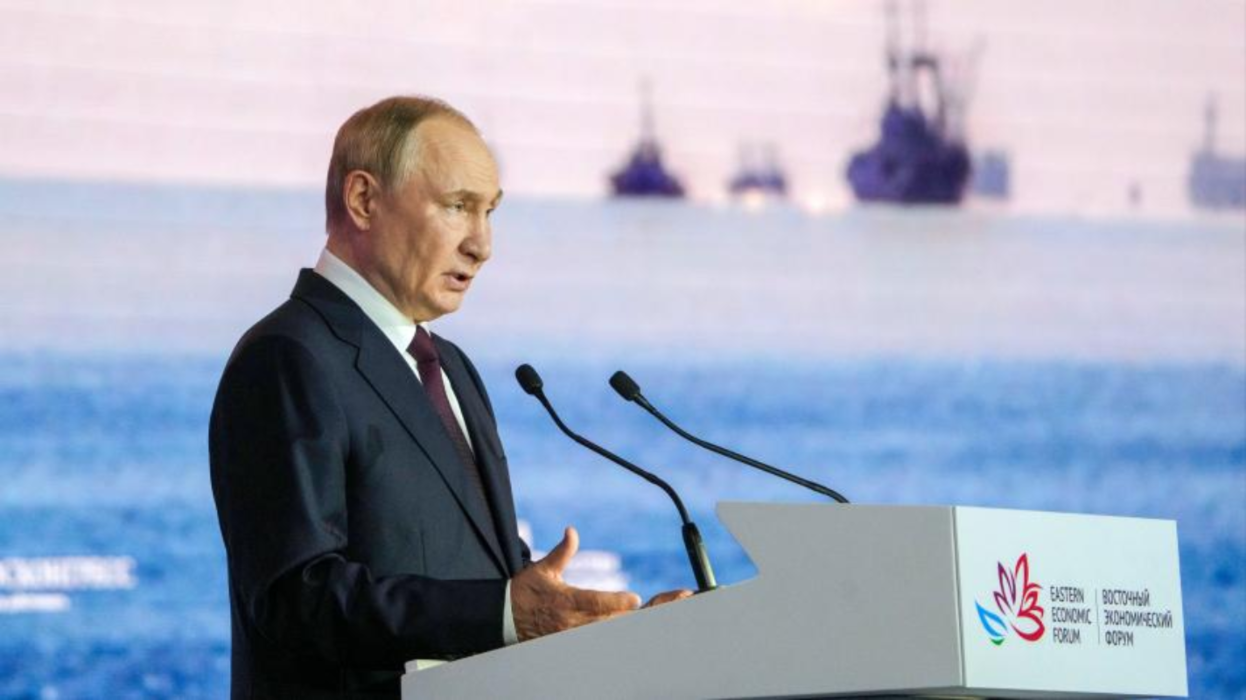
Πηγή Φωτογραφίας: AP Photo//Putin Opens the Door to Peace With Ukraine — But Raises the Price for Returning to Talks



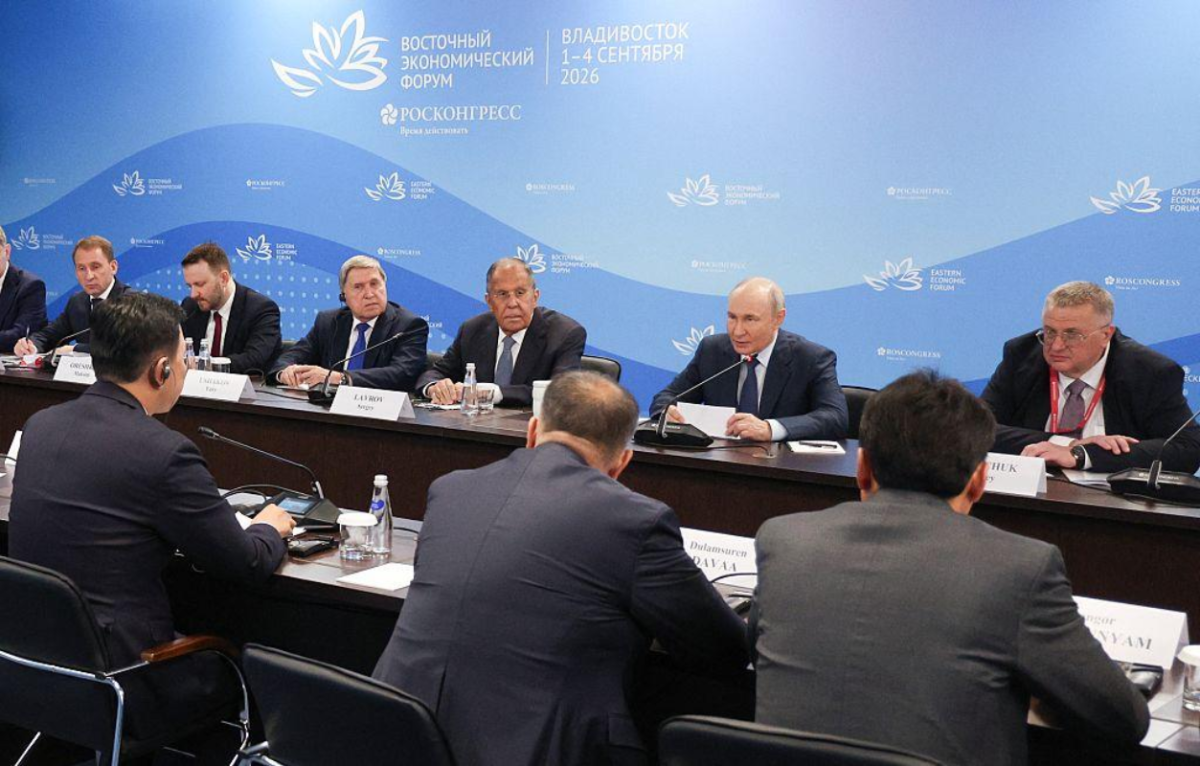
Russian President Vladimir Putin has sent a carefully calibrated message over the war in Ukraine: the door to a negotiated settlement remains open, but the conditions for returning to direct talks are becoming increasingly difficult.
Putin said Russia still sees a possibility of reaching a peace agreement and expressed appreciation for countries attempting to facilitate a settlement, including the United States and China.
At the same time, he stressed that outside powers cannot ultimately impose an agreement.
“Ultimately, the problem must be resolved by the countries involved in the conflict — Russia and Ukraine,” Putin said.
Asked directly whether he still believed peace was possible, the Russian president replied:
“We are grateful to everyone who is trying to contribute to a settlement. Is there a possibility? In my view, yes, there is.”
The remarks are significant because direct Russia-Ukraine negotiations have stalled while the military confrontation has expanded far beyond the front line.
A Peace Signal — Followed by a Warning
Putin’s diplomatic opening was accompanied by a much tougher message for Kyiv.
The Russian president pointed to recent Ukrainian attacks on merchant shipping and warnings over the safety of Russian airspace, arguing that such actions were making a return to bilateral negotiations more difficult.
Putin described reported threats involving civilian aviation and attacks on commercial vessels as “acts of state terrorism” and said they complicated the prospects for renewed peace talks.
The combination is revealing.
Moscow is signalling that it does not want to close the diplomatic channel, while simultaneously building the case that Ukrainian actions are responsible for making negotiations harder.
That distinction could become important if Washington intensifies pressure on both sides to return to the negotiating table.
Zelenskyy Warns Airlines: Russian Airspace Is Becoming Dangerous
At the centre of the latest dispute is an extraordinary warning from Ukrainian President Volodymyr Zelenskyy to international airlines and insurance companies.
Ukraine argues that the dramatic expansion of its long-range drone operations inside Russia has changed the security environment for civilian aviation.
Zelenskyy warned airlines, insurers and other operators still using Russian airports and airspace that the risks were increasing.
Ukraine maintains that its forces target military and strategic infrastructure rather than civilian aircraft.
Kyiv has also appealed to the UN’s International Civil Aviation Organization to encourage countries to restrict operations in Russian airspace.
The issue potentially adds another economic dimension to the conflict.
If airlines and insurers begin treating Russian airspace as carrying substantially higher risk, the consequences could extend to aviation routes, insurance premiums, connectivity and Russia’s links with international markets.
Ukraine Takes the War Deeper Into Russia
The dispute over aviation reflects a much larger change in the war.
Ukraine has increasingly used long-range drones to strike targets hundreds of kilometres inside Russian territory.
Oil refineries, military facilities, industrial sites, energy infrastructure and logistical hubs have all become part of Kyiv’s broader strategy.
The objective is not merely military.
By demonstrating an ability to disrupt infrastructure far behind the front, Ukraine is seeking to impose a greater economic and domestic cost on Moscow while strengthening its position ahead of any eventual negotiations.
Russia, meanwhile, continues long-range strikes against Ukrainian targets.
The result is a conflict that may appear relatively static along sections of the front but is becoming geographically broader and strategically more complex.
The War at Sea Is Becoming Another Flashpoint
The maritime dimension is equally important.
Attacks involving ports and commercial shipping have increased concerns that the conflict could generate wider risks for international trade.
Putin specifically cited attacks on merchant vessels when explaining why negotiations had become more difficult.
That matters because commercial shipping introduces third parties into the conflict — shipowners, insurers, cargo operators and countries whose vessels may operate in affected waters.
The longer the conflict expands into civilian transport networks, the greater the risk that its economic consequences spread beyond Russia and Ukraine.
The Trump–Putin Channel Remains Open
Despite the increasingly confrontational military environment, communication between Moscow and the administration of US President Donald Trump continues.
Putin said contacts were taking place through American and Russian intelligence services as well as through Trump’s envoys.
The intelligence channel is particularly significant.
CIA Director John Ratcliffe met senior Russian intelligence officials in Moscow the previous week, although neither Washington nor Moscow publicly disclosed the substance of the discussions.
For the Trump administration, maintaining direct access to Moscow offers a potential diplomatic mechanism at a time when formal Russia-Ukraine negotiations remain stalled.
For Putin, keeping Washington engaged provides an opportunity to shape the terms of any future settlement and ensure that Russian demands remain central to the diplomatic process.
China Remains Part of Putin’s Diplomatic Equation
Putin’s reference to China is also notable.
Beijing has repeatedly presented itself as supporting a political settlement while maintaining close strategic and economic relations with Moscow.
China therefore occupies a fundamentally different position from Washington.
The United States remains Ukraine’s most consequential Western interlocutor and a critical actor in any potential security arrangement. China, by contrast, retains substantial economic leverage over Russia and could play a supporting role in a broader diplomatic framework.
Putin’s decision to mention both powers suggests Moscow continues to envision any eventual settlement as part of a larger geopolitical negotiation, rather than simply a bilateral Russia-Ukraine agreement.
Why Putin Is Talking About Peace While the War Escalates
There is an apparent contradiction at the heart of the current moment.
Putin says peace remains possible.
Zelenskyy continues to expand Ukraine’s ability to strike Russia.
Russia continues military operations against Ukraine.
Washington continues talking to Moscow.
All of these developments can coexist because military escalation and diplomacy are not necessarily moving in opposite directions.
Both Russia and Ukraine have incentives to improve their battlefield and strategic positions before entering serious negotiations.
For Moscow, demonstrating that it can sustain the war strengthens its bargaining power.
For Kyiv, showing that Russia itself is vulnerable — economically, militarily and increasingly in its own airspace — serves a similar purpose.
That creates a dangerous paradox: both sides may believe that escalating now will produce better terms later.
Peace Is Possible — But the Gap Remains Wide
Putin’s comments should therefore not be interpreted as evidence that a peace agreement is imminent.
They do, however, show that Moscow continues to see value in keeping a diplomatic route open.
Russia does not want to present itself internationally as rejecting negotiations outright. At the same time, Putin is framing Ukrainian actions as a reason why restarting direct talks has become more difficult.
Kyiv, meanwhile, appears determined to demonstrate that any future negotiation cannot take place under conditions in which Russia enjoys strategic sanctuary behind its own borders.
Washington could become the critical bridge between those positions.
The key question now is whether continuing US-Russia contacts can produce the conditions for renewed direct negotiations between Moscow and Kyiv — or whether the expanding drone, maritime and long-range war will push the two sides even further apart.
For now, Putin is keeping peace on the table. But the war is still determining the price of getting there.
Source: pagenews.gr
Διαβάστε όλες τις τελευταίες Ειδήσεις από την Ελλάδα και τον Κόσμο