The geography of the Middle East is becoming a weapon.
For decades, Saudi Arabia built not only one of the world’s largest oil-export systems but also alternative routes intended to keep crude flowing if the Strait of Hormuz ever became too dangerous.
That strategic insurance is now under pressure from more than one direction.
On September 11, Saudi authorities said multiple drones launched from Iraq struck the East–West Pipeline. The kingdom temporarily shut the line as a precaution. No group immediately claimed responsibility.
Less than 24 hours later, the pressure shifted to the southern entrance of the Red Sea.
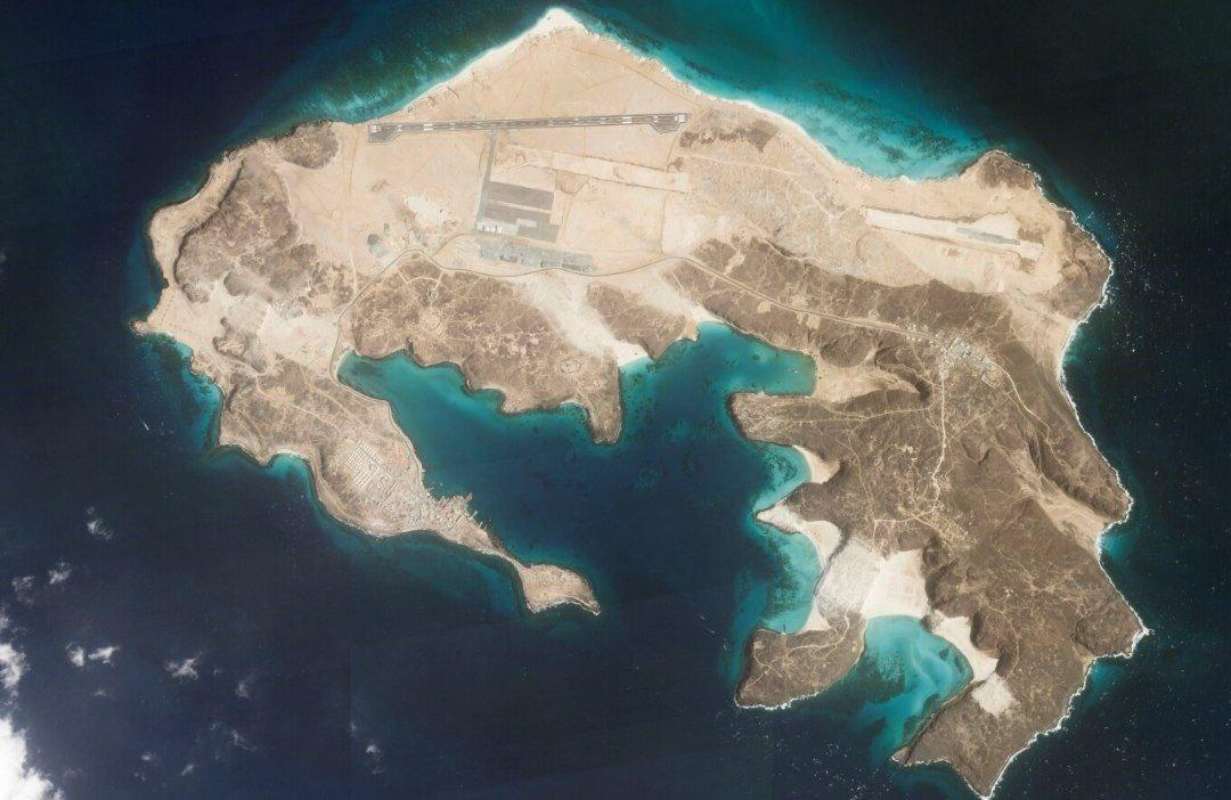
Houthi forces seized Perim Island — known in Arabic as Mayyun — in the Bab el-Mandeb, strengthening their position around one of the world’s most important maritime chokepoints.
The seizure does not mean the Houthis can simply “close” the entire strait at will. But it increases their ability to monitor, threaten and disrupt shipping through a corridor connecting the Indian Ocean with the Red Sea, Suez Canal and ultimately Europe.


The Pipeline Built for Exactly This Crisis
The East–West Pipeline, also known as Petroline, is not simply another piece of Saudi energy infrastructure.
It is Riyadh’s strategic bypass around Hormuz.
Running roughly 1,200 kilometres from Saudi Arabia’s oil-producing Eastern Province to the Red Sea port of Yanbu, the system has capacity of up to approximately 7 million barrels per day.
Its strategic logic is straightforward.
If Hormuz becomes unsafe, Saudi crude can move west across the kingdom, reach Yanbu and enter international markets through the Red Sea rather than the Persian Gulf.
That is precisely why an attack on Petroline matters far beyond the physical damage inflicted on the infrastructure.
The target was Saudi Arabia’s alternative route.
Perim Is Tiny — Its Geography Is Not
Perim is a small volcanic island.
Its strategic importance comes almost entirely from its location.
It sits inside the Bab el-Mandeb, separating the Red Sea from the Gulf of Aden and the wider Indian Ocean.
Following the Houthi seizure, preliminary shipping data cited by The National showed vessel traffic through the Bab el-Mandeb falling from 30 ships to 15 in a single day.
That does not amount to proof of a permanent blockade.
It does, however, illustrate the immediate sensitivity of commercial shipping to changes in the security environment.
For shipowners, insurers and commodity traders, the ability to threaten a route can matter almost as much as actually closing it.
Hormuz on One Side, Bab el-Mandeb on the Other
This is where the crisis becomes strategically much larger.
Saudi Arabia sits between two of the world’s critical maritime energy chokepoints.
To the east:
Strait of Hormuz.
To the west:
Bab el-Mandeb.
And between them lies the East–West Pipeline.
For years, Riyadh’s strategy was designed to ensure that dependence on the first could be reduced by using the second.
September’s events demonstrated the vulnerability that emerges when the land-based alternative itself is attacked while the western maritime exit simultaneously becomes more dangerous.
The pressure therefore runs across an entire chain:
Persian Gulf → Saudi Arabia → Petroline → Yanbu → Red Sea → Bab el-Mandeb → Indian Ocean.
A disruption at one point can be managed.
Pressure across several points at once is a different strategic problem.
Saudi Arabia Is Not Literally Cut Off — But Its Strategic Insurance Has Been Tested
This distinction matters.
Saudi Arabia has not lost every possible means of exporting oil, and describing the kingdom as completely “trapped” would overstate the current situation.
The significance lies elsewhere.
Routes built specifically to provide redundancy are now exposed to different forms of military pressure at approximately the same time.
The East–West Pipeline can be repaired and restarted. Tankers can alter routes. Security deployments can change.
But every additional threat increases transportation costs, insurance premiums and uncertainty for traders deciding how much geopolitical risk should be priced into crude.
That is why the Saudi problem can quickly become an international market problem.
Erdogan, Mohammed bin Salman and Pakistan Face a Different Kind of Test
There is another dimension to the story: Saudi Arabia’s changing security relationships.
Riyadh has sought deeper defence cooperation with Pakistan and Turkey as regional security conditions have deteriorated.
That creates an important question when critical Saudi infrastructure comes under attack:
What does collective security actually mean when the threat is not a conventional invasion but drones, missiles and armed non-state actors?
This is particularly difficult because attribution can itself become part of the conflict.
A drone may originate from one country without necessarily establishing that country’s government ordered the strike. A proxy force can operate with outside support without creating the same legal or political conditions as an overt state attack.
That makes collective-defence commitments much harder to activate than their language may suggest.
Statements of Solidarity Are Easier Than Military Deployment
Turkey has signalled its willingness to deepen security cooperation with Riyadh, while Pakistan has longstanding military ties with the kingdom.
But defending Saudi Arabia’s energy infrastructure presents a very different operational challenge.
Petroline stretches for roughly 1,200 kilometres.
Saudi energy infrastructure includes pipelines, pumping stations, refineries, terminals and export facilities.
At sea, the problem extends across the Red Sea and Bab el-Mandeb.
No single deployment can protect all of them.
The emerging Saudi-Turkish-Pakistani security architecture is therefore being tested less by the question of whether the three governments support one another politically than by whether they can develop practical mechanisms for air defence, intelligence sharing, maritime security and protection of critical infrastructure.
The Saudi Problem Is Also a European Problem
The Bab el-Mandeb is not merely a Middle Eastern waterway.
It is the southern entrance to a commercial chain that leads directly toward Europe:
Indian Ocean → Bab el-Mandeb → Red Sea → Suez Canal → Mediterranean → Europe.
When that route becomes more dangerous, the effects can spread through freight rates, insurance costs and delivery times.
Energy markets face an additional layer of exposure.
Saudi Arabia remains one of the central actors in global crude supply. Anything that creates uncertainty around its ability to move barrels efficiently to customers can affect oil prices even before a physical shortage occurs.
And that eventually reaches European consumers through fuel, transportation and production costs.
Oil Markets Are Pricing the Route — Not Just the Barrel
This is one of the most important changes in the current energy crisis.
Traders are no longer watching only how much oil Saudi Arabia, Iran or other producers can pump.
They are watching whether that oil can actually move safely.
That means the geopolitical value of pipelines, ports and narrow waterways has risen sharply.
A barrel sitting at a production facility is not equivalent to a barrel that can reliably reach a refinery.
The market increasingly has to price both.
The New Energy War Is a War Over Corridors
The broader lesson extends well beyond Saudi Arabia.
The Middle East’s energy confrontation is increasingly being fought over infrastructure and geography:
Hormuz.
Bab el-Mandeb.
The East–West Pipeline.
Yanbu.
The Red Sea.
Control does not necessarily require physically occupying each location.
The ability to make a route dangerous, expensive or unreliable can itself generate strategic leverage.
That is especially true for actors whose conventional military power is far smaller than that of Saudi Arabia or its allies.
The Kingdom Still Has Exits — But They Are No Longer Safe Assumptions
Saudi Arabia is therefore not a kingdom literally “with no exit.”
Oil exports have not disappeared, and infrastructure can be restored.
The more consequential development is that the kingdom’s strategic redundancy has been challenged.
The route designed to bypass Hormuz was attacked.
The maritime corridor reached through that bypass is under increased pressure at Bab el-Mandeb.
And the security partnerships Riyadh has been building now face the harder question of what collective defence means against drones, proxies and attacks on sprawling energy infrastructure.
For global markets, that produces a new equation:
the risk is no longer simply whether the Middle East has enough oil. It is whether the region can keep the routes carrying that oil open.
Source: pagenews.gr