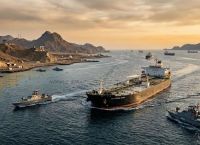
Houthis at Bab el-Mandeb: Iran’s ‘Second Chokehold’ on Oil Puts Trump in a Red Sea Dilemma
 ΧΡΟΝΟΣ ΑΝΑΓΝΩΣΗΣ 7 '
Πηγή Φωτογραφίας: AP Photo//Houthis at Bab el-Mandeb: Iran’s ‘Second Chokehold’ on Oil Puts Trump in a Red Sea Dilemma



A second strategic front is emerging in the Middle East war — this time on the opposite side of the Arabian Peninsula.
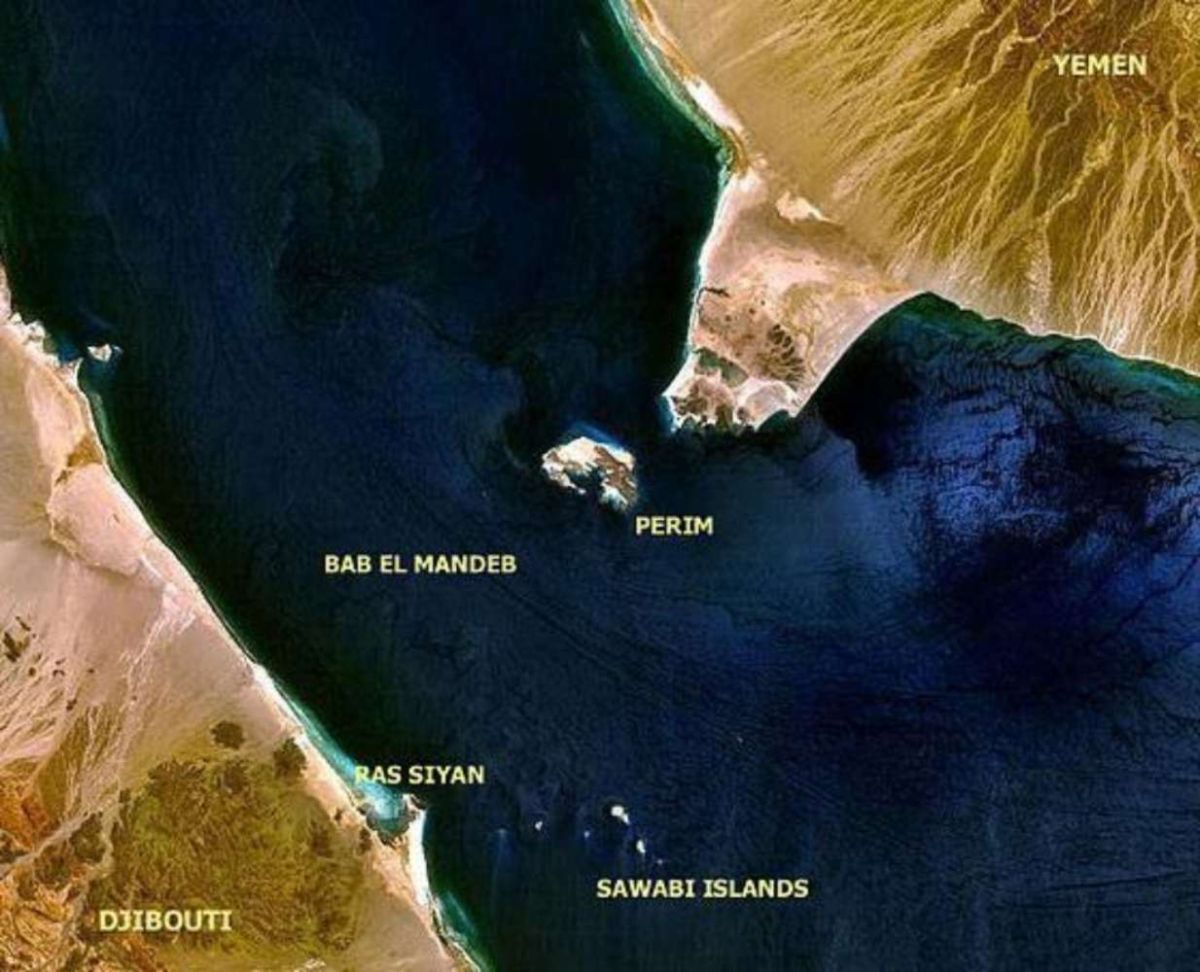
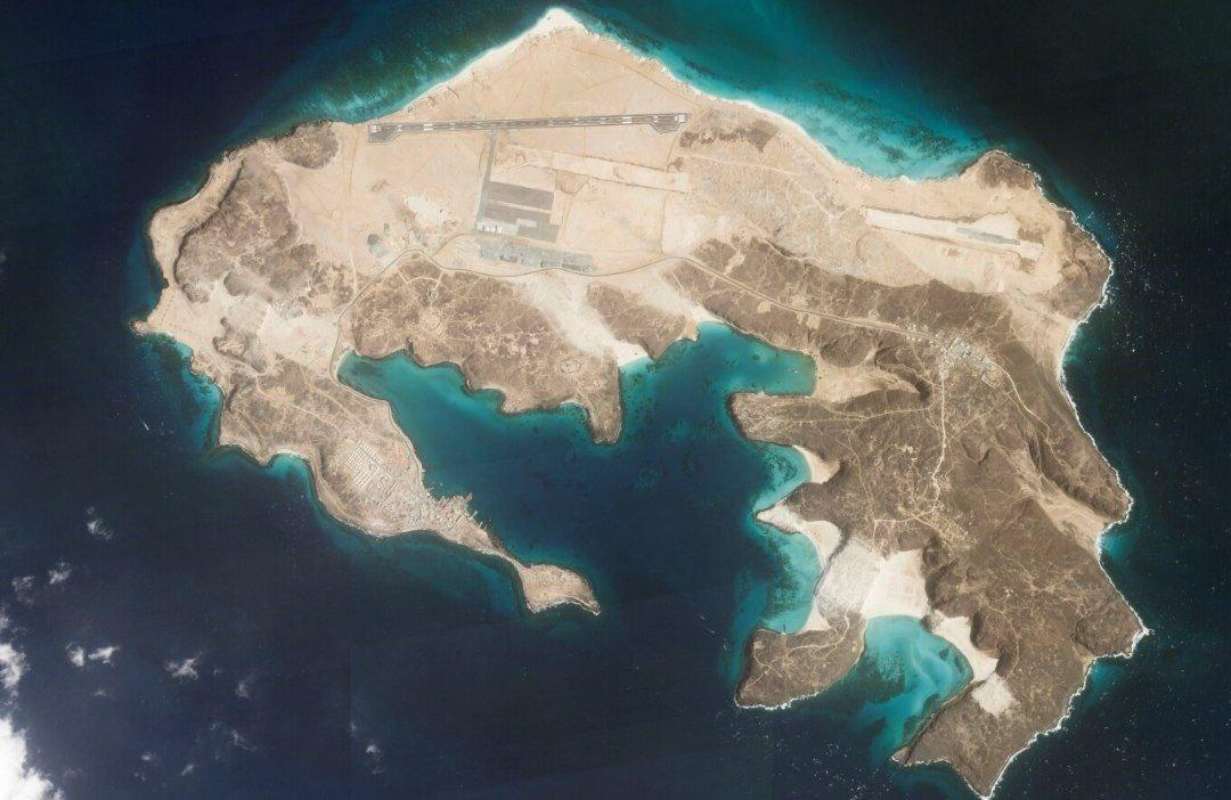
Iran-aligned Houthi forces have advanced rapidly along Yemen’s western coast, reaching Perim, also known as Mayyun, the small but strategically crucial island sitting inside the Bab el-Mandeb Strait.
Yemeni government sources have reported the withdrawal of their forces from Perim, while the Houthis have also taken Dhubab on the mainland opposite the island.
The advance significantly strengthens the Houthis’ geographical position around one of the world’s most important maritime corridors.
And it comes at an exceptionally dangerous moment for Saudi Arabia.
A Tiny Island with Enormous Strategic Value
Perim sits directly inside Bab el-Mandeb, effectively dividing the strait into two channels.
To the north lies the Red Sea and, beyond it, the Suez Canal.
To the south lie the Gulf of Aden and the Indian Ocean.
Houthi control of the island would not mean they could simply flip a switch and close the strait.
But it would give the group a stronger position from which to monitor, threaten and potentially strike commercial shipping.
That matters because the Houthis have already demonstrated how much disruption they can inflict on Red Sea trade without controlling the island.
Their attacks on commercial vessels in previous years forced shipping companies to reroute vessels around the Cape of Good Hope, adding time and cost to global supply chains.
Saudi Arabia Faces Pressure on Both Sides
This is where the story becomes much bigger than Yemen.
Saudi Arabia has two crucial geographical directions through which its oil can reach international markets.
The first runs east through the Persian Gulf and the Strait of Hormuz.
The second allows crude to travel across the kingdom through the East-West Pipeline to the Red Sea port of Yanbu, bypassing Hormuz altogether.
But both routes are now under pressure.
Hormuz has been severely disrupted by the war with Iran.
Saudi Arabia’s East-West Pipeline has also faced disruption following drone attacks.
And at the southern exit of the Red Sea, the Houthis are strengthening their position around Bab el-Mandeb.
The result is a potentially dangerous squeeze around the Arabian Peninsula.
Iran’s ‘Second Chokehold’
This is the real geo-energy risk.
Iran has direct leverage around the Strait of Hormuz.
Its Houthi allies are now strengthening their position around Bab el-Mandeb.
The two chokepoints sit on opposite sides of the Arabian Peninsula.
If both are seriously disrupted at the same time, the consequences would extend far beyond Saudi oil exports.
Europe-Asia trade, oil tankers, container ships, war-risk insurance premiums and global freight costs could all come under additional pressure.
Tehran does not necessarily need complete control of both waterways to gain leverage.
The ability to make passage more dangerous, expensive and unpredictable can itself become a strategic weapon.
Riyadh Wants Help — Trump Does Not Want Another War
The military question is becoming increasingly difficult for Washington.
Saudi Arabia wants stronger American support against the Houthis, but the Trump administration has so far avoided opening another major direct military front in Yemen.
Washington can provide intelligence and other forms of support without committing US forces to a new sustained bombing campaign.
That distinction matters.
The United States is already deeply committed to the confrontation with Iran.
Opening another intensive campaign against the Houthis could require additional naval forces, aircraft, precision munitions and air-defence capabilities.
And the Houthis have repeatedly demonstrated that they are an unusually resilient adversary.
Why Washington Is Wary of Returning to Yemen
Saudi Arabia spent years trying to defeat the Houthis militarily.
It failed to remove them from Sana’a.
Previous US strikes have also failed to permanently eliminate the group’s ability to launch missiles and drones or threaten maritime traffic.
A renewed American campaign would therefore carry substantial costs without guaranteeing a decisive outcome.
There is another complication.
A direct intervention could unravel the previous understanding that helped halt US bombing of Houthi targets in return for restrictions on attacks against American interests and Red Sea shipping.
That could expose US forces and vessels to renewed attacks.
The Houthis Send Their Own Warning
The Houthis have warned Washington against becoming directly involved in the latest fighting.
Their strategy does not necessarily require a total blockade of Bab el-Mandeb.
Selective pressure may be enough.
The group could potentially threaten vessels associated with particular countries while allowing other traffic to continue.
That would make the threat more difficult to counter.
Instead of shutting the waterway completely, the Houthis could turn access to it into an instrument of coercion.
Trump’s Red Sea Dilemma
For Donald Trump, the calculation is becoming increasingly uncomfortable.
If Washington intervenes directly, the United States risks opening another military front while already committing substantial resources to the conflict with Iran.
If Washington stays out, Saudi Arabia and its regional allies may be forced to confront an increasingly entrenched Houthi force with a stronger position near Bab el-Mandeb.
There is also a domestic economic dimension.
Further disruption to Middle Eastern oil flows could push energy and gasoline prices higher in the United States — a politically dangerous development as the midterm elections approach.
Trump therefore faces a classic strategic dilemma:
how to deter the Houthis without becoming trapped in another open-ended Yemen campaign.
Iran Does Not Need to Close Two Straits
This may be the most important point.
Iran and its allies do not necessarily need to completely close either Hormuz or Bab el-Mandeb.
They only need to increase the cost of using them.
Every tanker that changes course matters.
Every insurer that raises its war-risk premium matters.
Every shipping company that decides the passage is too dangerous matters.
And every additional day a cargo spends sailing around Africa feeds into freight costs and ultimately consumer prices.
Geography itself becomes a weapon.
Two Chokepoints, One Global Threat
Hormuz and Bab el-Mandeb are separate waterways.
But in the current conflict, they are increasingly becoming parts of the same geopolitical system.
To the east, Iran holds leverage around Hormuz.
To the west, the Houthis are gaining strategic depth around Bab el-Mandeb.
And between them sits Saudi Arabia.
That is the new American dilemma.
Washington wants to protect freedom of navigation and global energy flows without being dragged back into a prolonged Yemen war.
But after the shock at Hormuz, the global economy can ill afford another serious disruption at the Arabian Peninsula’s second maritime gateway.
Source: pagenews.gr
Διαβάστε όλες τις τελευταίες Ειδήσεις από την Ελλάδα και τον Κόσμο