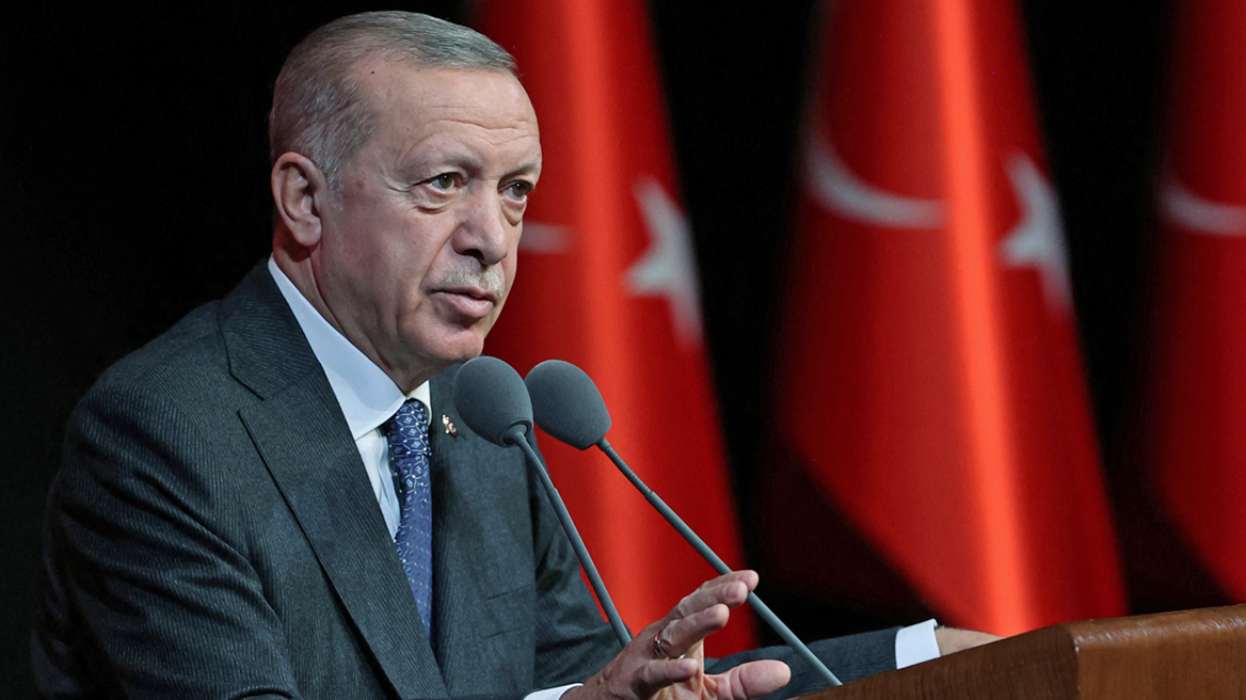
Recep Tayyip Erdoğan gave a carefully measured answer when Newsweek asked whether Greece’s defence cooperation with Israel could add to tensions between Ankara and Tel Aviv.
He declined to describe the Greek-Israeli partnership as a hostile act. “The relations Greece or any other country develops with third countries are their own choice,” he said, adding that Turkey does not view every bilateral relationship as a threat.
That acknowledgment matters for Athens. But Erdoğan paired it with a reservation: Turkey, he said, closely monitors steps it believes could affect its national security, rights and interests.
Softer language, unresolved disputes
Erdoğan also said Turkey does not build its foreign policy around scenarios of inevitable war. He argued instead for diplomacy and a regional security framework that would reduce tensions.
The language is conciliatory. Its practical meaning for Greece will depend on what Ankara does next in the Eastern Mediterranean. Turkey’s objections to the Greece–Cyprus electricity interconnector and the wider disputes over maritime rights remain unresolved.
That is the tension at the heart of his answer. Erdoğan accepts that Greece can choose its defence partners, while reserving Ankara’s ability to challenge regional moves it considers contrary to Turkish interests.


Turkey’s wider balancing act
Erdoğan placed this position within a broader account of Turkish foreign policy. He said Turkey would not choose between East and West: it intends to retain its role in NATO while maintaining channels with Russia and Iran and building ties with other centres of power.
For Ankara, that is strategic autonomy. For its neighbours, the test is how Turkey acts when competing interests meet.
The Newsweek interview does not signal an imminent confrontation over Greece and Israel. Nor does it settle the disagreements in the Eastern Mediterranean. It marks a shift towards calmer presidential language. The next test will be whether Turkish actions match it.
Source: pagenews.gr