Geopolitical Earthquake in the Mediterranean: Libya Approves Turkey’s Maritime Deal,Raising Stakes for Greece
 ΧΡΟΝΟΣ ΑΝΑΓΝΩΣΗΣ 13 '

Πηγή Φωτογραφίας: AP Photo//Geopolitical Earthquake in the Mediterranean: Libya Approves Turkey’s Maritime Deal, Raising Stakes for Greece



A significant geopolitical development is reshaping the diplomatic landscape of the Eastern Mediterranean, as Libya’s House of Representatives has reportedly approved the controversial maritime boundary agreement signed with Turkey in 2019.
According to Reuters, citing two Libyan lawmakers, the eastern-based parliament approved the agreement on October 20, 2026, while also reversing its 2020 decision to boycott Turkey.
The development is particularly important because the same parliament had previously rejected the agreement, which was signed between Ankara and Libya’s then internationally recognized Government of National Accord in Tripoli.
For Greece, the decision represents a serious diplomatic challenge, potentially strengthening Turkey’s position in its longstanding dispute with Athens over maritime boundaries, continental shelf rights and exclusive economic zones.
However, parliamentary approval does not automatically make the agreement legally binding on Greece or override the maritime rights of third countries under international law.
The central geopolitical question is whether Ankara will use this breakthrough to advance its maritime claims or pursue additional energy-related initiatives in waters contested by Greece.
From Rejection in 2020 to Approval in 2026: Libya’s Strategic Reversal
The Turkey–Libya maritime memorandum was signed on November 27, 2019, between Turkish President Recep Tayyip Erdoğan’s government and Libya’s Government of National Accord, then led by Fayez al-Sarraj.
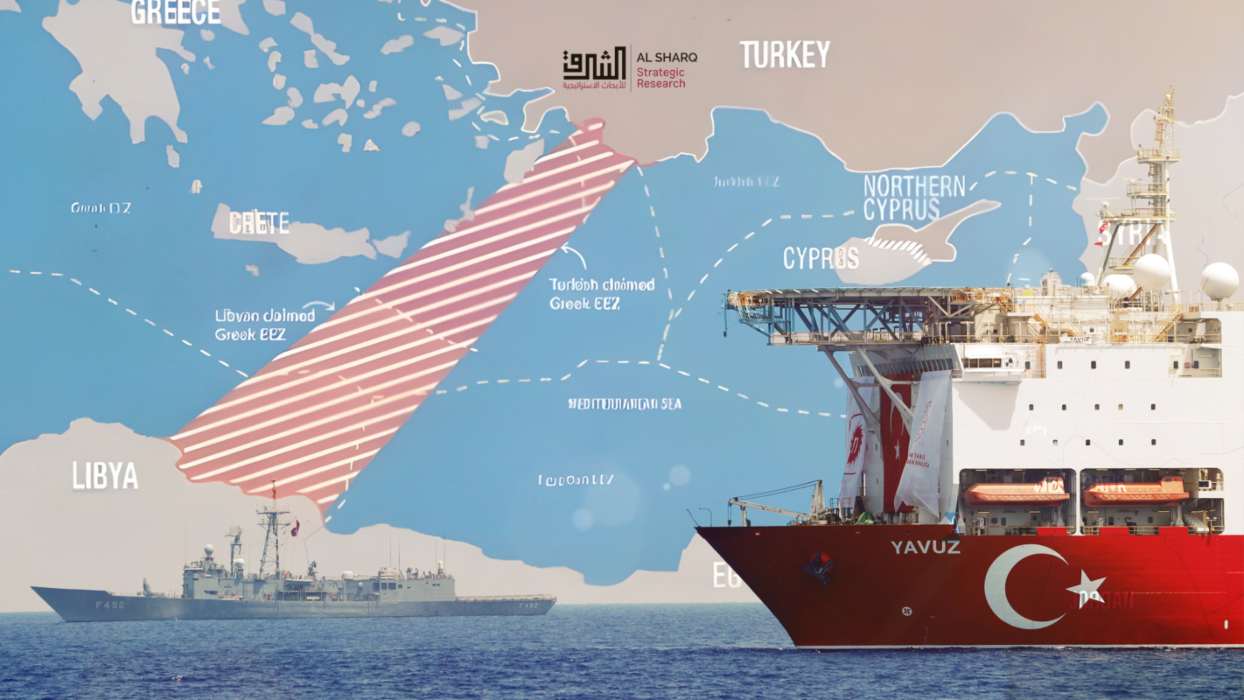
The agreement sought to establish a maritime boundary between Turkey and Libya across the Eastern Mediterranean.
Its central controversy lies in its treatment of Greek islands, particularly Crete, Rhodes, Karpathos and Kasos, whose maritime entitlements are central to Greece’s position.
Athens rejected the agreement, arguing that it disregarded the maritime rights of Greek islands and violated principles of international maritime law.
At the time, Libya’s eastern-based House of Representatives refused to ratify the memorandum.
In 2020, the parliament also adopted a boycott of Turkey, reflecting the broader confrontation between Ankara and the eastern Libyan forces associated with Khalifa Haftar.
Turkey was then providing substantial military support to the Tripoli-based authorities against Haftar’s offensive.
Six years later, the reported parliamentary approval represents a striking reversal.
A political institution once openly hostile to Turkey’s intervention in Libya has now moved toward accepting one of Ankara’s most strategically important agreements in the Mediterranean.
Ankara’s Diplomatic Breakthrough: How Turkey Reached Haftar’s Camp
The parliamentary decision follows a broader Turkish effort to improve relations with eastern Libya.
For years, Ankara’s influence was concentrated primarily in Tripoli and western Libya.
Its military involvement and political support helped preserve the Tripoli-based authorities during the country’s internal conflict.
However, Turkey has increasingly sought to establish working relationships with the rival political and military structures in the east.
Turkish Foreign Minister Hakan Fidan’s visit to Libya in August was a particularly important development.
During that diplomatic outreach, Ankara engaged with figures associated with the Haftar family, which continues to exercise considerable influence over eastern Libya.
The contacts suggested that Turkey was pursuing a strategy extending beyond its traditional allies in Tripoli.
Rather than relying exclusively on one Libyan faction, Ankara has attempted to develop relationships across the country’s fragmented political system.
The reported approval of the maritime memorandum by the eastern-based parliament is a major political development in that strategy.
It indicates that Turkey may be succeeding in transforming former adversaries into negotiating partners, although the precise understandings behind the decision have not been publicly established.
Why Crete Is at the Center of the Dispute
For Greece, the significance of the Turkish–Libyan memorandum is inseparable from the geography of the Eastern Mediterranean.
The agreement establishes a claimed maritime boundary between Turkey and Libya that disregards the effect Greece argues should be given to its islands.
Crete is especially important because of its size, geographic position and potential maritime entitlements.
Rhodes, Karpathos and Kasos are also relevant to the delimitation of maritime zones in the region.
Under the United Nations Convention on the Law of the Sea, islands generally possess rights to a territorial sea, continental shelf and exclusive economic zone, subject to the applicable rules and delimitation principles.
Greece maintains that its islands generate maritime entitlements that must be taken into account when boundaries are established.
Turkey disputes the extent to which islands should influence maritime delimitation in particular geographic circumstances.
This disagreement forms the legal and geopolitical foundation of the controversy.
The new Libyan parliamentary decision does not settle that dispute.
Nevertheless, it may strengthen Ankara’s diplomatic argument that the agreement enjoys broader institutional support within Libya.
That distinction matters: political endorsement by Libya cannot, by itself, extinguish the rights of Greece or any other third state.
The European Union’s Position Remains Critical
The European Union has previously rejected the Turkish–Libyan maritime memorandum.
In December 2019, the European Council stated that the agreement infringed upon the sovereign rights of third states, did not comply with the Law of the Sea and could not produce legal consequences for third countries.
This position has been central to Greece’s diplomatic response.
The EU’s assessment distinguishes between an agreement concluded by two states and the legal rights of other countries affected by its claims.
Libya’s new parliamentary approval may change the internal political status of the memorandum, but it does not automatically resolve the international objections raised against it.
Nor does registration of an agreement with the United Nations constitute international recognition of the validity of all the maritime claims it contains.
For Athens, maintaining this distinction will be essential as Turkey seeks to build diplomatic momentum around the agreement.
Energy Exploration South of Crete: The Economic Stakes
The dispute also has a substantial energy dimension.
Greece has sought to develop hydrocarbon exploration opportunities in offshore areas south and southwest of Crete.
These initiatives form part of a broader strategy to assess potential domestic energy resources and strengthen the country’s position in the regional energy landscape.
The Turkish–Libyan memorandum creates competing claims over maritime jurisdiction that could complicate future exploration and investment decisions.
Energy companies operating in disputed or politically sensitive waters must consider not only geological prospects but also regulatory certainty, maritime security and diplomatic risk.
Ankara could attempt to use the new parliamentary decision to reinforce its arguments in future discussions concerning exploration rights.
However, Reuters’ reported parliamentary development does not establish that Turkey has announced new drilling operations or dispatched research vessels as a direct consequence.
The immediate change is political and diplomatic.
Whether it develops into a new operational confrontation will depend on subsequent decisions by Turkey, Libya and other regional actors.
Greece Faces a New Diplomatic Challenge
Until now, the opposition of Libya’s eastern-based parliament to the 2019 memorandum had been an important feature of the diplomatic landscape.
Athens could point to the absence of approval from one of Libya’s principal political institutions.
That situation has now reportedly changed.
The development reduces the political significance of the previous division between eastern and western Libya over the maritime agreement.
It also highlights a broader challenge for Greek diplomacy: Turkey is no longer relying exclusively on the Tripoli authorities to advance its interests.
Instead, Ankara appears increasingly capable of engaging multiple Libyan power centers.
For Greece, this raises the importance of maintaining dialogue with political actors across Libya while continuing to defend its maritime positions through international law and diplomatic partnerships.
The central issue is not simply whether the Libyan parliament approved the memorandum.
It is how that approval could be used in future negotiations and regional initiatives.
Egypt’s Role: A New Test for Regional Alliances
The development is also relevant to Egypt, which has traditionally maintained close relations with eastern Libya.
Cairo has opposed the Turkish–Libyan maritime memorandum and has developed significant strategic cooperation with Greece.
The Greece–Egypt agreement on the partial delimitation of their exclusive economic zones, signed in August 2020, remains an important element of that relationship.
Turkey’s rapprochement with eastern Libya creates a more complicated diplomatic environment for Cairo.
Egypt must balance its longstanding relationships with eastern Libyan actors against its broader interests in Libyan stability and its evolving relations with Ankara.
The reaction of the Egyptian government to the latest parliamentary decision will therefore be closely watched.
It could provide an early indication of whether the development is likely to produce wider diplomatic realignments in the Eastern Mediterranean.
Turkey’s Broader Strategy: Influence Across a Divided Libya
Libya’s internal fragmentation has long provided opportunities for external powers to develop competing networks of influence.
Turkey’s earlier strategy relied heavily on its military and political partnership with the Tripoli-based government.
Its recent outreach to eastern Libya suggests a more comprehensive approach.
By maintaining relations with rival institutions, Ankara may be seeking to preserve its influence regardless of the outcome of future political negotiations or efforts to reunify Libya’s institutions.
This approach could also create opportunities for cooperation in infrastructure, trade, defense and energy.
For Turkey, the maritime memorandum is therefore part of a broader strategic relationship rather than an isolated legal document.
The reported parliamentary approval strengthens the political foundations of that relationship, although it remains unclear how the decision will affect Libya’s internal political negotiations.
Could the Decision Trigger a New Mediterranean Crisis?
The possibility of renewed tensions cannot be dismissed, particularly if Turkey attempts to translate diplomatic gains into maritime activities in contested areas.
Potential flashpoints could include competing exploration initiatives, disputes over research vessel operations or new disagreements about the jurisdiction of maritime authorities.
Yet a direct escalation is not an inevitable consequence of the Libyan vote.
Several factors will influence what happens next: the stability of Libya’s institutions, Turkey’s diplomatic priorities, Greece’s response, Egypt’s position and the wider relationship between Ankara and the European Union.
The distinction between a political decision and an operational move is especially important.
For now, the development represents a significant change in Libya’s institutional position rather than evidence of an imminent maritime confrontation.
The Strategic Implications for Athens and Brussels
The European dimension of the dispute is likely to remain central.
Greece is an EU member state, and its maritime disagreements with Turkey have repeatedly featured in discussions about European security, regional stability and relations with Ankara.
The new Libyan decision could bring the Turkish–Libyan memorandum back onto the diplomatic agenda in Brussels.
Athens may seek to reinforce the established European position that bilateral maritime agreements cannot undermine the rights of third countries.
At the same time, the development demonstrates how diplomatic influence in North Africa can affect security calculations in the Eastern Mediterranean.
Libya is not merely a neighboring state across the sea.
It is a strategic arena where energy interests, migration pressures, military relationships and maritime jurisdiction increasingly intersect.
A New Chapter in the Eastern Mediterranean Power Struggle
The reported approval of the Turkish–Libyan maritime memorandum by Libya’s eastern-based parliament marks an important turning point.
Its significance lies not only in the agreement itself but also in the identity of the institution now supporting it.
A parliament that rejected the memorandum in 2020 has reportedly reversed course following years of changing political alignments and intensified Turkish diplomatic engagement.
For Ankara, the decision represents a potentially valuable strategic achievement.
For Athens, it creates a more challenging diplomatic environment, particularly regarding maritime rights and energy interests around Crete.
But the legal dispute remains unresolved.
Libya’s parliamentary approval cannot, by itself, determine the maritime rights of Greece or establish binding boundaries for states that are not parties to the agreement.
The next phase will depend on whether Turkey treats the development primarily as a diplomatic success or seeks to translate it into concrete maritime and energy initiatives.
What is already clear is that the Eastern Mediterranean has entered another period of strategic uncertainty, with Libya once again at the center of the geopolitical contest between Greece and Turkey.
Source: pagenews.gr
Διαβάστε όλες τις τελευταίες Ειδήσεις από την Ελλάδα και τον Κόσμο