Stefanis: Ankara Is Looking for a Way Out — Even an Oruc Reis Scenario Is on the Table
 ΧΡΟΝΟΣ ΑΝΑΓΝΩΣΗΣ 9 '
Πηγή Φωτογραφίας: eurokinissi//Stefanis: Ankara Is Looking for a Way Out — Even an Oruc Reis Scenario Is on the Table



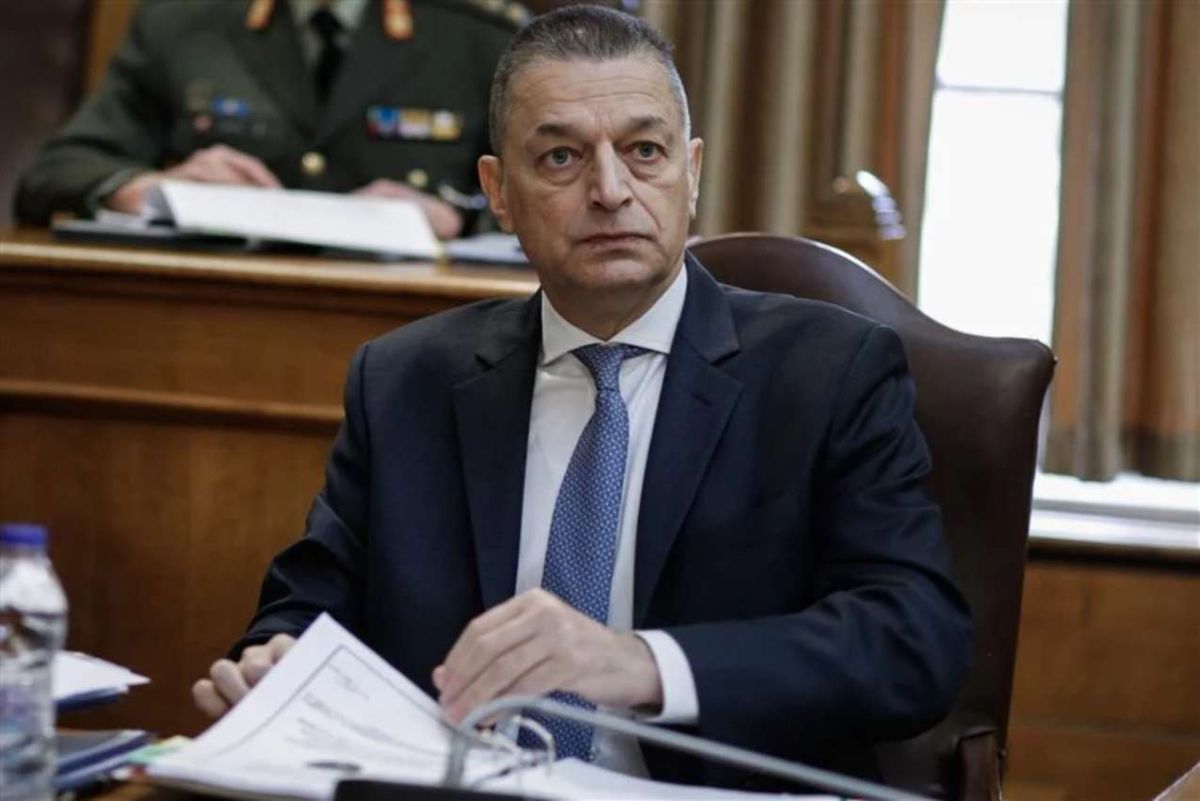
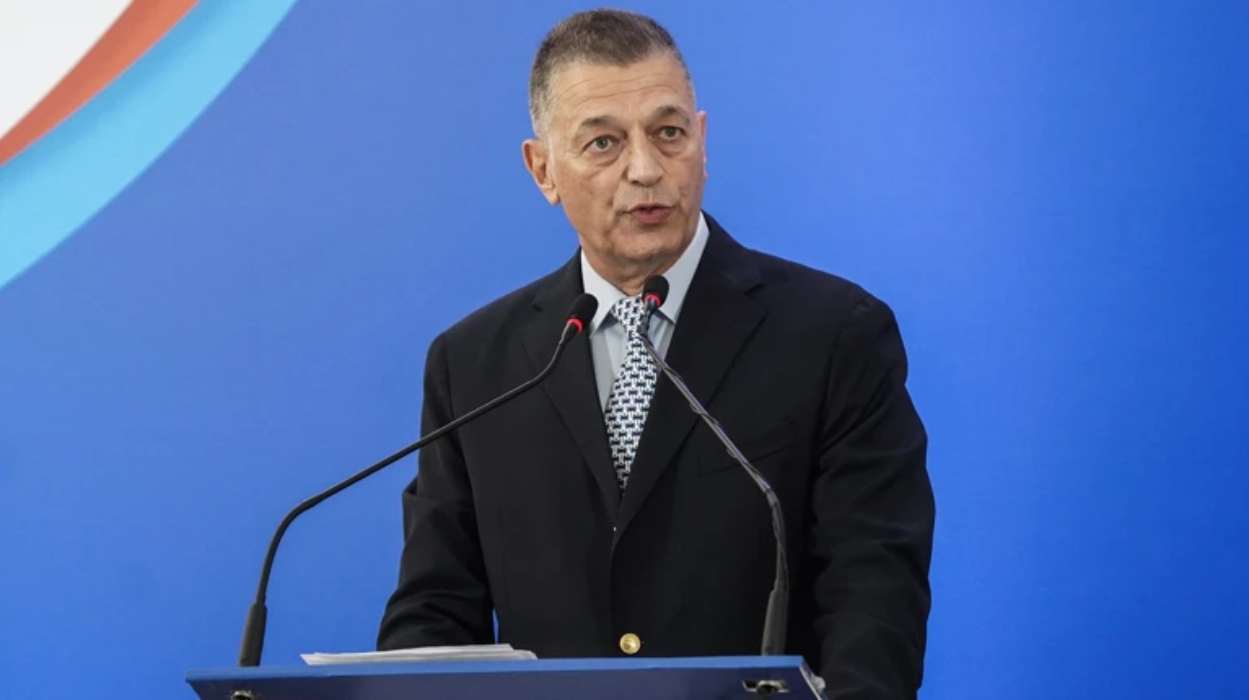
A geopolitical arc stretching from Cyprus and Turkey to Saudi Arabia was outlined by Alkiviadis Stefanis, as he assessed how Ankara could respond to the rapidly changing balance of power in the region.
Eastern Mediterranean energy projects, Cyprus, Turkey’s Russian-made S-400s, Ankara’s ambition to return to the F-35 programme and the deployment of Greek Patriot systems in the Gulf are increasingly becoming interconnected pieces of the same strategic puzzle.
And Turkey is at the centre of it.
Stefanis: Turkey Feels Increasingly Isolated
Stefanis argued that Ankara is watching the energy developments surrounding Cyprus closely and wants to demonstrate that it remains a player in the region.
“Turkey currently feels isolated from this energy initiative and wants to show through its behaviour that it is also there for the occupied territories,” he said.
In his assessment, Ankara’s message has two audiences.
The first is the Turkish Cypriot community.
The second is Turkey’s domestic political audience.
“On the one hand, it wants to tell its audience in the occupied part, ‘Do not worry, we are here’ […] and, of course, to show its domestic audience that ‘we are there and we support the Turkish Cypriots’.”
Even Oruc Reis Could Become Part of Ankara’s Playbook
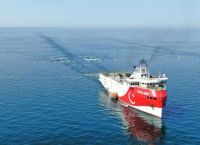
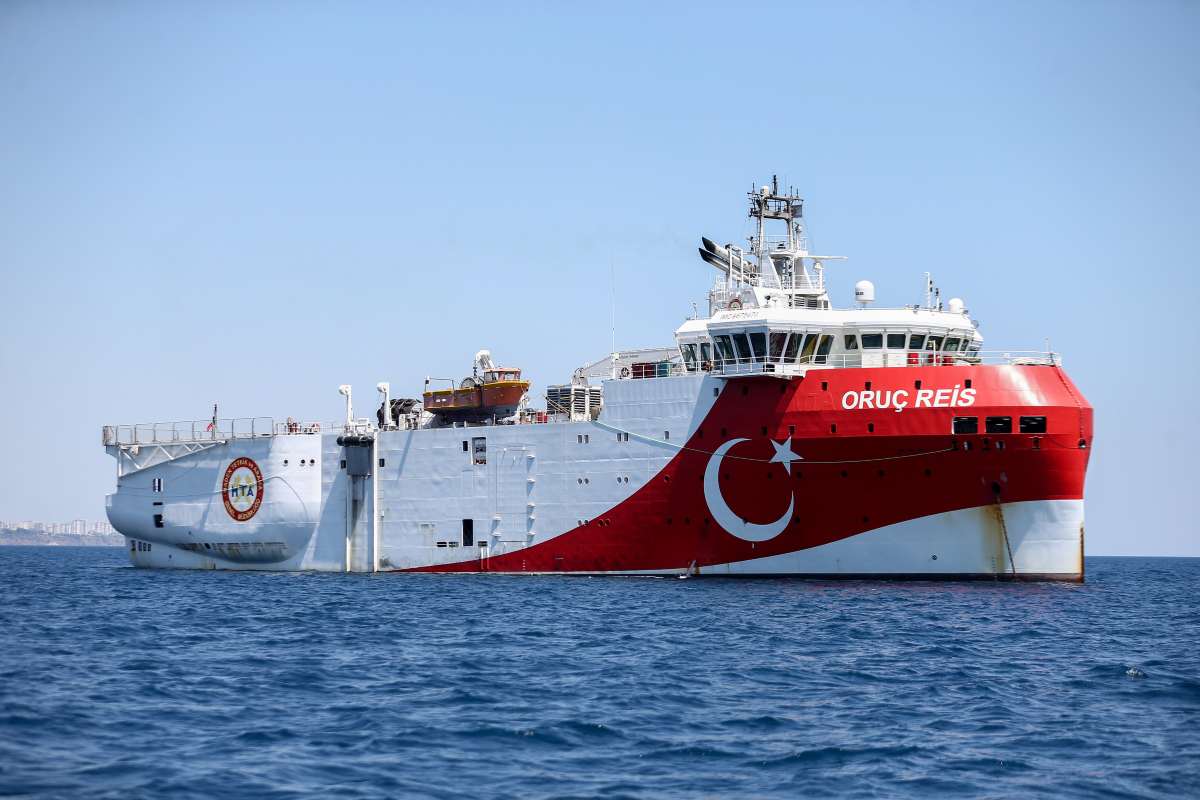
Against this backdrop, Stefanis did not rule out Turkish moves on the ground — including scenarios involving the Oruc Reis research vessel.
“I believe all the things you are describing are among the scenarios Ankara is examining regarding how it will react and how it will break out of the isolation that appears to be developing,” he said.
This was an assessment by Stefanis, not information that Ankara has decided to deploy the vessel.
Nevertheless, the reference carries particular significance because of the role Oruc Reis played during previous Greek-Turkish tensions in the Eastern Mediterranean.
Cyprus Moves Back to the Centre of the Energy Chessboard
Stefanis also addressed the possibility of Turkey seeking an energy connection with the Turkish-occupied northern part of Cyprus.
He described such a project as technically extremely difficult.
On the legal and geopolitical dimension, he was categorical in stating his own position:
“In terms of international law, this is an enormous issue. It violates the Cypriot EEZ. Of course it does.”
The Republic of Cyprus is the internationally recognised state and an EU member, while the self-declared “Turkish Republic of Northern Cyprus” is recognised only by Turkey.
Any new Turkish energy initiative around the island could therefore acquire a broader European dimension.
“I Don’t Think Europe Will React” Quickly
Stefanis was sceptical about how rapidly the European Union would respond in the event of renewed tensions.
“If we look at each other and speak honestly, I don’t think Europe will react to this,” he said, referring to previous security crises in which, in his view, the European response came too slowly.
That is Stefanis’s assessment, rather than an announced or predetermined EU position.
The discussion then moved to another major strategic problem for Ankara: Turkey’s Russian-made S-400 air-defence systems.
Moscow has confirmed contacts over the possibility of the systems being transferred from Turkey to a third country considered friendly to Russia.
Stefanis highlighted a crucial condition.
Ankara cannot simply decide on its own where the Russian systems will go.
The S-400 Problem Returns
“Russia has a legal say in approving where the S-400s will go,” he said.
“If a weapons system is resold, you are required to obtain approval, announce the country to which you intend to transfer it and receive that approval.”
Russian Foreign Minister Sergei Lavrov has similarly said Moscow’s consent would be required for a transfer and that any recipient would have to be acceptable to Russia.
The F-35 Is the Bigger Prize
The real significance of the S-400 issue goes well beyond the missiles themselves.
It concerns the F-35.
Turkey’s acquisition of the Russian system led Washington to remove Ankara from the F-35 programme and subsequently impose CAATSA sanctions on Turkey’s defence procurement agency.
Ankara has been searching for a formula that could remove the S-400 obstacle and reopen the debate over the F-35.
But transferring the systems to a third country would have to satisfy several parties simultaneously: Russia, Turkey, the prospective recipient and ultimately the United States if Ankara’s objective is to return to the fighter programme.
Removing the S-400s would therefore not automatically guarantee Turkey’s return to the F-35 programme.
Stefanis: A Difficult Equation for Ankara
Stefanis described Turkey’s predicament in particularly sharp terms.
In his view, a country that projects the rapid expansion of its defence industry internationally is finding it remarkably difficult to resolve the S-400 problem.
The original Turkish S-400 deal was worth approximately $2.5 billion, according to publicly reported figures.
But its strategic cost has extended far beyond the purchase price.
The systems remain a major obstacle in Turkey’s defence relationship with Washington.
From Turkey’s S-400s to Greece’s Patriots
The conversation then shifted to the Greek Patriot battery deployed in Saudi Arabia.
Here Stefanis was clear about its strategic value.
“I believe there is great geopolitical value in having these systems there,” he said.
The Greek battery has been operationally activated during the latest Middle East crisis, reinforcing its role in Saudi air defence.
That gives the Greek deployment significance beyond a symbolic defence partnership: it has become part of the wider regional air-defence architecture at a time of heightened missile and drone threats.
“My Personal Assessment Is That They Will Remain There”
Against the backdrop of discussions at Greece’s Government Council for National Security, Stefanis said he expected the Greek Patriots to remain in Saudi Arabia.
“My personal assessment is that they will remain there,” he said.
This was his assessment, not an announcement of a final Greek government decision.
The wider strategic question, however, is becoming increasingly important.
Greek military assets deployed in the Gulf now sit at the intersection of Greece’s relations with Saudi Arabia, regional security and the broader Western defence architecture in the Middle East.
Cyprus: “It Is Our Heart, Our Soul, Our Mind”
Stefanis was particularly emphatic when the discussion returned to Cyprus.
“Cyprus is us. Cyprus is our heart, our soul, our mind. And Cyprus hurts us because of what has been happening there continuously,” he said.
“Cyprus is not far away. Cyprus is beside us.”
He linked the issue to Prime Minister Kyriakos Mitsotakis’s recent intervention at the United Nations, arguing that Cyprus remains a fundamental part of the broader Greek-Turkish relationship.
Is the Cable Moving Again?
Stefanis was also asked whether developments surrounding the electricity interconnection are approaching a new phase.
His answer was notable:
“I believe we are close, because the latest agreements have been completed.”
The interconnection has become far more than an infrastructure project.
It touches simultaneously on:
- Greece-Cyprus relations,
- Cyprus’s future role in regional energy networks,
- Turkey’s maritime claims in the Eastern Mediterranean,
- wider international interest in energy connectivity,
- and the strategic relationships linking Greece, Cyprus and Israel.
Rubio’s Visit Adds Another Piece to the Puzzle
All of this is unfolding ahead of another important diplomatic moment: the expected visit of US Secretary of State Marco Rubio to Athens and the next round of the Greece-US Strategic Dialogue.
Stefanis argued that energy will inevitably form part of the wider strategic conversation because Washington sees Greece both as an energy gateway and as a security pillar in the region.
That role has become more important as the Eastern Mediterranean, the Balkans and the Gulf become increasingly interconnected through energy corridors, defence arrangements and critical infrastructure.
Ankara Faces Three Strategic Equations at Once
Stefanis’s assessment ultimately describes a Turkey confronting three difficult equations simultaneously.
In the Eastern Mediterranean, Ankara wants to retain influence over energy developments and continue supporting Turkish Cypriot claims.
In its defence relationship with Washington, it is looking for a way to resolve the S-400 problem and reopen the path toward the F-35.
And in its relationship with Russia, it cannot simply dispose of the same systems without taking Moscow’s position into account.
At the same time, Greece is deepening its strategic relationship with the United States, maintaining a military presence in the Gulf and seeking a larger role in the energy architecture of the Eastern Mediterranean and Southeast Europe.
None of this means that another Greek-Turkish crisis is inevitable.
It does mean, however, that Cyprus, energy, the S-400s, the F-35 and regional air defence are increasingly part of the same geopolitical equation.
That is why Ankara’s next move — whether it involves a research vessel, an energy project or the fate of the S-400s — will be watched far beyond Turkey.
Source: pagenews.gr
Διαβάστε όλες τις τελευταίες Ειδήσεις από την Ελλάδα και τον Κόσμο