Brussels’ €45 Billion Ukraine Loan Sparks EU Showdown – Merz Threatens Budget Blockade
 ΧΡΟΝΟΣ ΑΝΑΓΝΩΣΗΣ 9 '
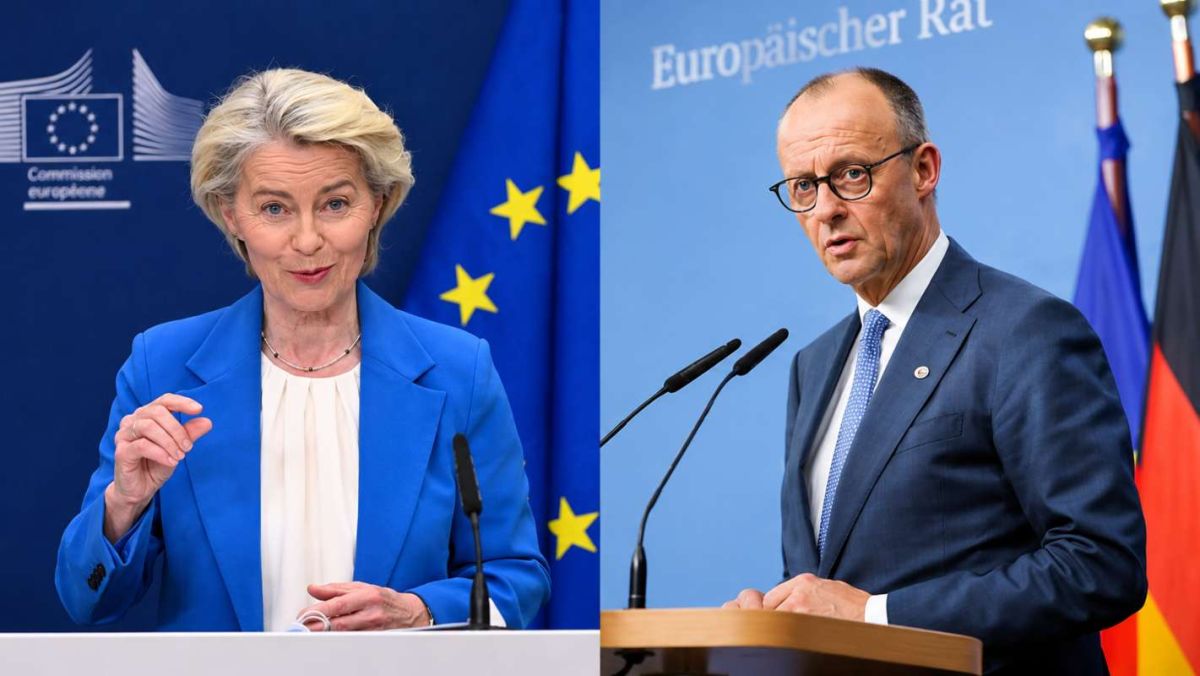
Πηγή Φωτογραφίας: AP Photo//Brussels’ €45 Billion Ukraine Loan Sparks EU Showdown – Merz Threatens Budget Blockade



“Supporting Ukraine is a matter of our indivisible European security.”
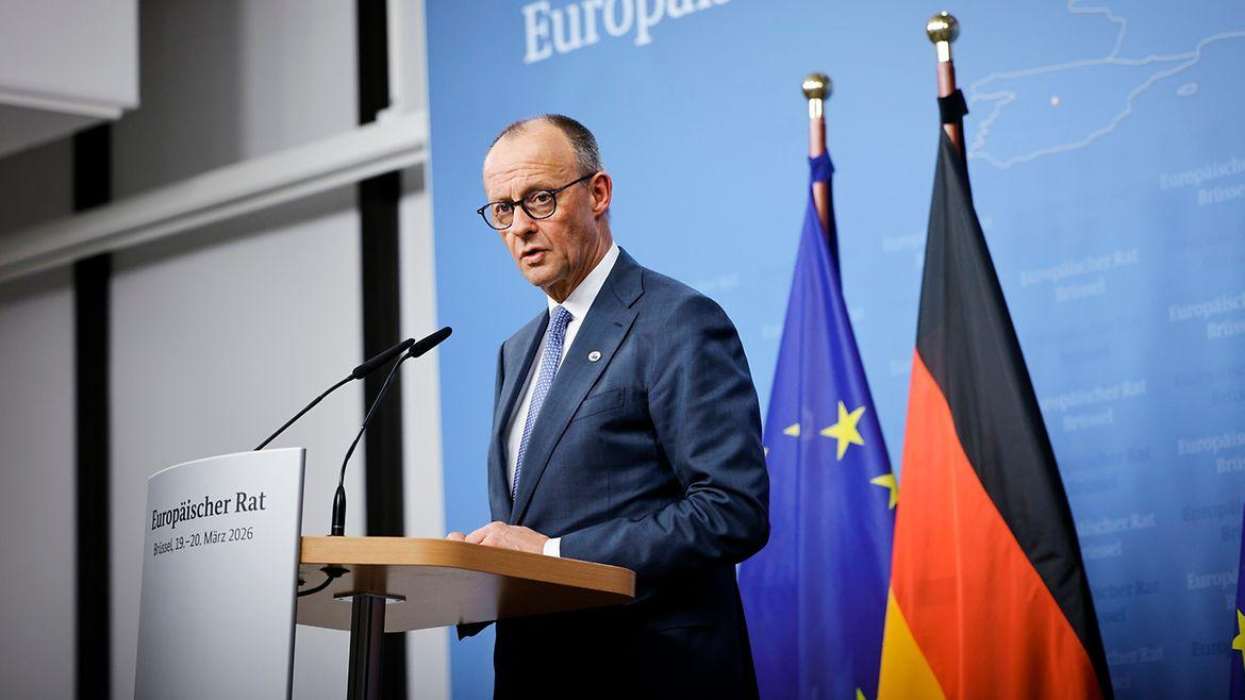
That is the message German Chancellor Friedrich Merz is sending to European leaders as Brussels prepares another major financial intervention to keep Ukraine’s economy and defence capabilities functioning amid Russia’s continuing war.
According to a Financial Times report published on November 16, the European Commission is preparing to propose an additional €45 billion loan for Ukraine, financed through borrowing on international markets and backed by the EU’s common budget.
The proposal is expected to be presented to member states on Wednesday, November 18, according to people familiar with the preparations.
But the financial package is already becoming a political battleground.
Germany wants all 27 member states to contribute fairly to Ukraine’s financing needs, while several governments remain reluctant to accept additional obligations.
The dispute threatens to spill into negotiations over the EU’s next seven-year budget, potentially transforming a financial rescue package into a wider confrontation over European solidarity, fiscal responsibility and the future of the bloc’s security architecture.
Ukraine’s €70 Billion Financing Gap
Ukraine is facing an estimated additional financing shortfall of approximately €70 billion in 2027, reflecting the enormous economic pressures generated by Russia’s continuing invasion.
The European Commission is seeking to cover roughly two-thirds of that amount through the proposed €45 billion loan, while expecting other international partners to help finance the remainder.
Crucially, the new package would come on top of the €45 billion already earmarked for 2027 under the EU’s existing €90 billion Ukraine support programme covering 2026–2027.
The distinction matters.
Brussels is not simply reallocating previously approved funds. It is considering another substantial financial commitment at a time when European governments are confronting competing demands for defence, infrastructure, energy security and domestic spending.
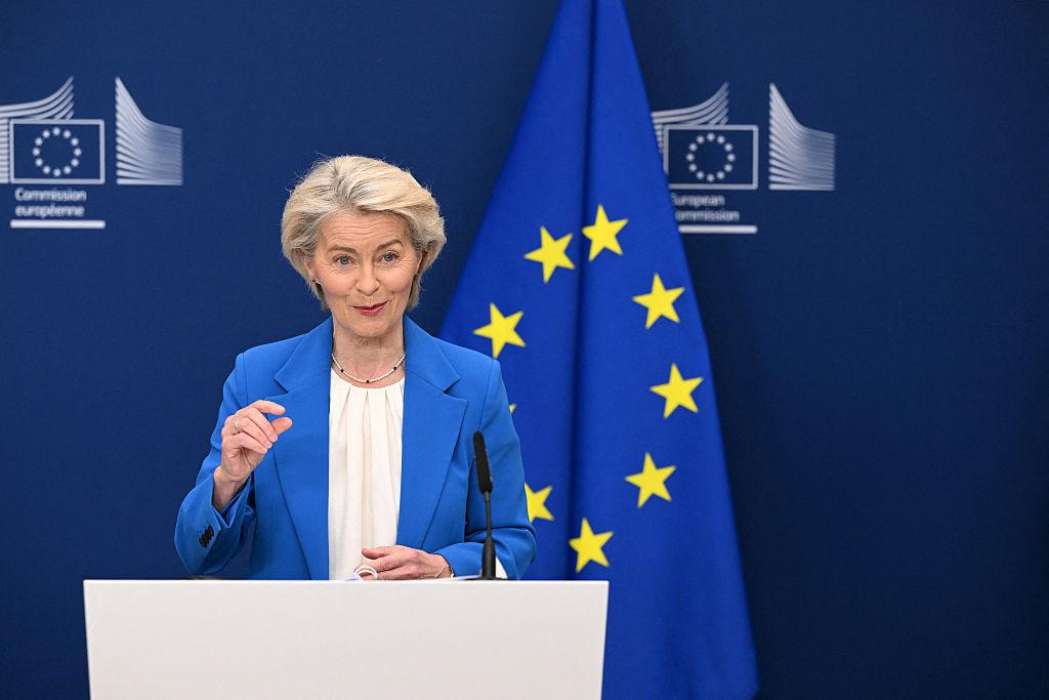
European Commissioner for the Economy Valdis Dombrovskis has acknowledged the scale of the challenge.
“We are working to close Ukraine’s financing gap, which turned out to be larger than initially expected,” he said.
The proposed financing mechanism would broadly follow the structure of the existing EU lending programme, allowing the Commission to raise funds on capital markets using the European budget as a guarantee.
While this approach could provide Kyiv with access to financing on favourable terms, it would also create additional debt-servicing obligations.
And that is where the political conflict begins.
Merz Draws a Red Line: No Fair Burden-Sharing, No Budget Agreement
German Chancellor Friedrich Merz is seeking to link Ukraine’s financial assistance to negotiations over the EU’s next Multiannual Financial Framework, covering 2028–2034.
In a letter to European Council President António Costa, Merz argued that financial solidarity must be shared across the entire bloc.
“A collective commitment that all of us, without exception, will contribute fairly to closing this gap is an essential prerequisite,” he stated.
Berlin’s position reflects growing frustration over arrangements that allow some member states to benefit from EU funding while avoiding certain financial obligations associated with supporting Ukraine.
Germany, one of the largest contributors to the EU budget, is pressing for a more equitable distribution of the financial burden.
The message carries significant political weight.
If the Ukraine financing dispute becomes tied to the next long-term EU budget, disagreements over the war could complicate negotiations involving agricultural subsidies, regional development funding, cohesion policy and other major European spending programmes.
The confrontation is expected to intensify ahead of the special European Council meeting scheduled for November 26–27.
Four Countries Resist – A New European Divide Emerges
Hungary, Slovakia and the Czech Republic previously secured exemptions from certain interest-payment obligations associated with the EU’s existing €90 billion Ukraine loan.
Those governments are again reluctant to assume additional financial commitments.
Bulgaria has also emerged among the countries expressing reservations about the proposed arrangements.
Their objections expose a broader division within the European Union.
On one side are governments that consider sustained financial assistance to Ukraine an essential investment in European security.
On the other are governments questioning the scale, duration and distribution of the financial responsibilities involved.
Czech Prime Minister Andrej Babiš has opposed attempts to make support for Ukraine a condition for agreement on the EU’s next long-term budget.
Slovak Prime Minister Robert Fico has similarly warned against linking the two negotiations.
The disagreement is not simply about the amount of money involved.
It concerns the future of European financial integration and the extent to which member states should collectively guarantee borrowing for strategic security objectives.
For Brussels, securing agreement on another major Ukraine package will require balancing these competing political and fiscal priorities.
Who Pays the Interest? The Financial Battle Behind the Headlines
One of the most contentious issues concerns the servicing costs associated with EU borrowing.
Under the existing €90 billion lending programme, annual interest obligations were initially estimated at approximately €3 billion, although actual costs depend on market conditions and the timing of borrowing.
The German government is reluctant to accept another arrangement in which some member states are exempted from contributing to these expenses.
The financial implications extend beyond the Ukraine programme itself.
Additional debt-servicing obligations could place further pressure on the EU budget, potentially reducing the resources available for other policy priorities unless new funding sources are introduced.
This is particularly sensitive as Brussels prepares negotiations over its next seven-year spending framework.
Agriculture, regional development, industrial competitiveness, climate policy and defence investment are all competing for financial resources.
The Ukraine loan therefore raises a fundamental question: how much collective debt is Europe prepared to assume to sustain its geopolitical commitments?
Defence, Reconstruction and the Survival of Ukraine’s State Finances
Ukraine’s financing requirements reflect the extraordinary costs of sustaining a country at war.
Russian attacks on energy infrastructure, industrial facilities and civilian services have placed additional pressure on public finances.
Kyiv must simultaneously fund military operations, maintain essential government services and repair damaged infrastructure.
Under the existing EU support programme, the Commission has proposed allocating the €45 billion already planned for 2027 as follows:
- €31.7 billion for strengthening Ukraine’s defence industry and military capabilities.
- €13.3 billion for budgetary support and maintaining essential government functions.
These allocations relate to the previously established programme, not the newly proposed additional €45 billion loan, whose detailed structure remains under discussion.
EU financial assistance is also linked to conditions involving governance, anti-corruption measures, fiscal sustainability and the rule of law.
The challenge for Brussels is to provide sufficient resources to sustain Ukraine’s defence while maintaining political support among European taxpayers and governments.
Europe’s Strategic Dilemma: Financing Ukraine Without Fracturing the Union
The proposed loan illustrates how Europe’s response to Russia’s invasion has evolved.
What began as a series of emergency financial interventions is increasingly becoming a long-term commitment requiring substantial public borrowing and coordinated fiscal decisions.
For Ukraine, access to predictable financing is essential to sustaining both military resistance and the basic functioning of the state.
For Germany and other major contributors, the priority is ensuring that the financial burden is distributed fairly.
For governments resisting additional obligations, the concerns involve national budgets, fiscal sovereignty and the potential creation of long-term liabilities.
These competing priorities are now colliding with a broader debate about Europe’s ability to act as a geopolitical power.
The EU has repeatedly described Ukraine’s security as inseparable from its own.
But translating that political commitment into financing requires agreements that remain difficult to secure among 27 governments with different economic circumstances and strategic perspectives.
The November 26–27 Summit: A Test of European Unity
The special European Council meeting later this month is emerging as a decisive moment in negotiations over Ukraine’s future financing.
European leaders will need to determine whether they can establish a common approach to covering Kyiv’s additional requirements or whether the disagreement will deepen divisions over the EU budget.
A failure to reach agreement could complicate Ukraine’s financial planning and undermine efforts to establish predictable, long-term support.
A compromise, meanwhile, would demonstrate the EU’s willingness to translate its strategic commitments into collective financial action.
The stakes extend beyond the immediate loan.
Europe is confronting a broader question about its capacity to finance security, defence and geopolitical stability through common institutions.
The €45 billion proposal is therefore more than another Ukraine rescue package. It is a test of whether the European Union can agree not only on the importance of defending Ukraine, but also on who will ultimately pay for that commitment.
Source: pagenews.gr
Διαβάστε όλες τις τελευταίες Ειδήσεις από την Ελλάδα και τον Κόσμο