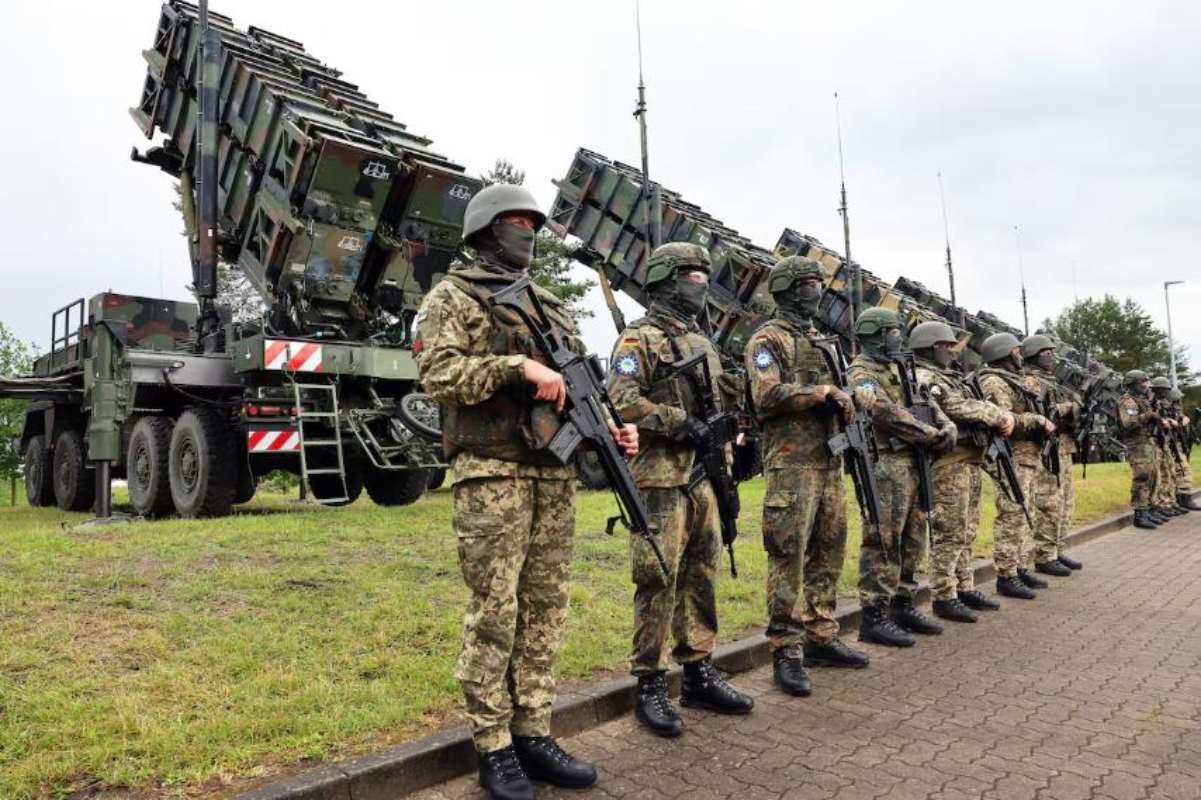
Europe is rapidly increasing its defence budgets. The harder question remains: can governments translate higher spending into joint procurement and military capabilities that work effectively together?
Russia’s war against Ukraine and uncertainty over Washington’s future stance have accelerated European decisions. Governments are seeking to address shortages in ammunition, air defence, drones and infrastructure.
Financing, however, is only part of the equation. Different military requirements, procurement schedules and national industrial interests continue to shape purchasing decisions.
€418 Billion in 2025 — €454 Billion Projected for 2026
According to the European Defence Agency, spending by the EU’s 27 member states reached €418 billion in 2025, a 20% increase compared with 2024.
For 2026, expenditure is projected at €454 billion, equivalent to 2.4% of EU GDP.
Defence equipment procurement totalled €115 billion in 2025, with 24% involving collaborative purchases.
EDA Chief Executive André Denk stressed:
“EU Member States are making unprecedented investments in defence.”
The figures demonstrate both the scale of the increase and the scope for greater cooperation. Most equipment purchases are still organised outside collaborative arrangements.
Compatibility Starts Before the Order Is Placed
An armed force can acquire modern equipment and still struggle to support it during joint operations.
Differences in spare parts, maintenance, training and communications increase complexity. Cooperation therefore needs to begin when requirements are defined and continue throughout the equipment’s service life.
Joint procurement can support standardisation and economies of scale. It nevertheless requires agreement on what to buy, when it should arrive and how it will be maintained.
These decisions shape military capabilities for decades, helping explain why governments remain protective of national control.
The €800 Billion Headline Is Not a Single European Fund
The ReArm Europe / Readiness 2030 plan is associated with the potential mobilisation of approximately €800 billion.
That figure brings together different mechanisms. A large share reflects additional fiscal space that national governments can use for defence expenditure. Another component is SAFE, which provides up to €150 billion in loans.
The distinction matters politically. The European initiative facilitates financing and creates incentives for cooperation, while governments retain the central decisions over their budgets and purchases.
The Commission also seeks to strengthen production, innovation and military mobility so that additional resources address specific readiness gaps.
SAFE: Loans Designed to Encourage Joint Orders
Security Action for Europe provides up to €150 billion in long-term loans to member states.
The EU raises money on capital markets and lends it to participating countries, which remain responsible for repayment.
In principle, a joint procurement must involve at least two participating countries, although temporary exceptions allow national purchases.
Eligible areas include ammunition, missiles, air defence systems, drones, cyber capabilities, maritime capabilities and military mobility.
Rules on component origin and technological control also aim to strengthen Europe’s industrial base and security of supply.
The financial incentive brings partners to the negotiating table. Reaching a shared contract still requires political and operational agreement.
Fiscal Flexibility Leaves Costs With National Governments
The national escape clause permits temporary deviations from certain fiscal requirements to accommodate increased defence expenditure.
This flexibility is subject to conditions and limits, with debt sustainability remaining a central consideration.
For governments, it facilitates the planning of additional spending. Financing and servicing the resulting obligations nevertheless continue to affect national accounts.
Countries facing different borrowing costs and budget pressures consequently have unequal room to participate. Aligning the availability of funding is another challenge for joint orders.
The Industrial Politics Behind Defence Contracts
Every major defence purchase involves jobs, expertise, production facilities and export opportunities.
A joint European procurement can generate collective benefits, while the distribution of industrial work prompts negotiations among participants.
Governments must explain why they have chosen a particular supplier and how much economic value will return to their own country.
This competition can slow decisions. Addressing it requires early agreement on requirements, production and support so that negotiations produce workable contracts.


Manufacturers Need Predictable Orders
Expanding production capacity requires investment in facilities, equipment, workers and suppliers.
For businesses, political announcements signal intent. Binding orders and credible delivery schedules enable more concrete investment planning.
Combining demand from several countries can support larger production runs. It also requires stability in specifications and quantities so that manufacturers can respond.
Lessons From Ammunition Procurement
The European Defence Agency’s joint ammunition procurement initiative, launched in 2023, demonstrated how pressure from a shared need can accelerate cooperation.
It established a framework through which countries could coordinate purchases while retaining decisions over their requirements and commitments.
The broader challenge is extending that approach to programmes with longer timelines and greater technological complexity. In those cases, differences in planning and industrial interests carry greater weight.
What the Debate Means for Greece
For Greece, European cooperation raises questions about operational capability, financing and industrial participation.
Assessing a joint programme requires examination of lifetime costs, timely delivery, spare-parts availability and reliable support.
The potential involvement of Greek companies in production, maintenance, software and technical services is equally important.
These criteria can guide the assessment of cooperation proposals alongside the specific requirements of the Greek Armed Forces.
European Readiness Will Be Tested in Contracts
Higher expenditure creates opportunities. Its operational value depends on equipment choices, cooperation and industry’s ability to deliver.
Europe now has more financing tools. The next test is whether governments will align their requirements sufficiently to sign joint orders and secure dependable support.
That will determine how much of the new procurement surge translates into effective European defence readiness.
Source: pagenews.gr