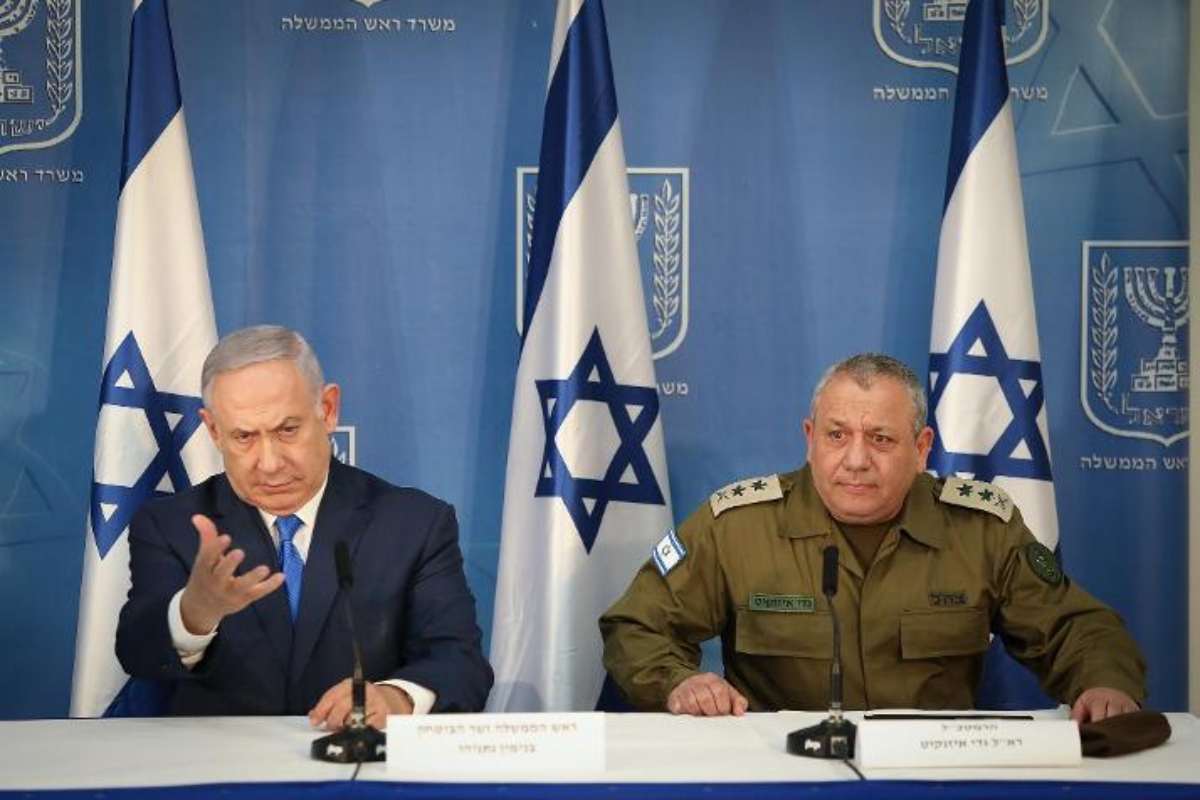
Gadi Eisenkot has the first opportunity to form Israel’s next government. What he lacks is a parliamentary majority ready to govern alongside him.
President Isaac Herzog’s decision shifts the contest from election results to coalition negotiations. Each available solution requires Eisenkot or one of his partners to reconsider a position they previously defended.
To replace Benjamin Netanyahu, he needs support beyond his existing bloc. To secure it, he must negotiate with parties his allies have rejected or deeply distrust.
Electoral arithmetic does not produce a government
The October 27 election left three principal groupings in the Knesset:
- Netanyahu’s bloc holds 53 seats.
- The four parties forming Eisenkot’s core bloc hold 48.
- The two Arab-led lists, Ra’am and the Joint List, hold a combined 19.
Arab-party endorsements gave Eisenkot 67 recommendations during presidential consultations. Those recommendations concern who should attempt to form a government; they are not a signed coalition agreement.
The gap between the two gives Netanyahu an opportunity to try to reverse the political balance.


First route: A minority government with Arab support
Eisenkot could form an administration with Yashar and its natural partners — Together, The Democrats and Israel Our Home — relying on external support from the Arab parties.
That arrangement would allow those parties to influence parliamentary stability without necessarily taking cabinet positions.
The obstacle lies within the opposition bloc itself. Avigdor Lieberman has rejected cooperation with Arab parties, while The Democrats are more receptive to their participation.
Any agreement would therefore need to specify its scope: support for taking office, passing budgets and pursuing which policies?
A shared desire to replace Netanyahu would not automatically resolve disagreements over Palestinian issues, security or the West Bank.
Second route: Ultra-Orthodox parties deliver exactly 61 seats
A partnership with the two ultra-Orthodox parties offers different arithmetic.
United Torah Judaism and Shas hold 13 seats between them. Combined with Eisenkot’s 48-seat bloc, they would secure a narrow absolute majority of 61 lawmakers.
Military service is the central obstacle. Ultra-Orthodox parties want to preserve exemptions for religious seminary students, while Eisenkot and his allies have criticized the existing arrangements.
Lieberman has signaled room for compromise. Eisenkot, however, has reiterated that mandatory service for all remains a core principle of his proposed government.
UTJ’s refusal to recommend a candidate for prime minister creates negotiating space. It does not yet constitute a commitment to abandon Netanyahu. Shas endorsed him during the consultations.


Third route: Unity with the party they campaigned to displace
An arrangement bringing together Yashar, Together, Israel Our Home and Likud would command 67 seats.
It would provide a broader parliamentary base but raise the hardest political question: how could Eisenkot justify governing with Netanyahu after campaigning to replace him?
Netanyahu, meanwhile, would have to negotiate a different relationship with his traditional allies. Leadership arrangements and any rotation of the premiership would also be critical.
Unity could return as an option of last resort if other negotiations fail. That does not mean the current objections have disappeared.


Netanyahu waits for divisions
The outgoing prime minister remains in office until a successor government is formed.
His political opening lies in his opponents’ failure to agree and the possibility of attracting support from across the divide.
Eisenkot initially has 28 days from the formal assignment of the mandate, with a presidential extension of up to 14 days possible. If he fails, Herzog can give another candidate an opportunity, with Netanyahu considered a likely next contender.


Another election remains possible if the prescribed government-formation procedures are exhausted.
For now, every route requires someone to reverse an earlier refusal. Lieberman captured the logic of compromise when leaving the door open to an agreement with the ultra-Orthodox parties:
“You cannot have it all.”
Source: pagenews.gr