Eisenkot Gets First Shot as Netanyahu Counts Allies—Ultra-Orthodox Parties Hold the Key
 ΧΡΟΝΟΣ ΑΝΑΓΝΩΣΗΣ 5 '
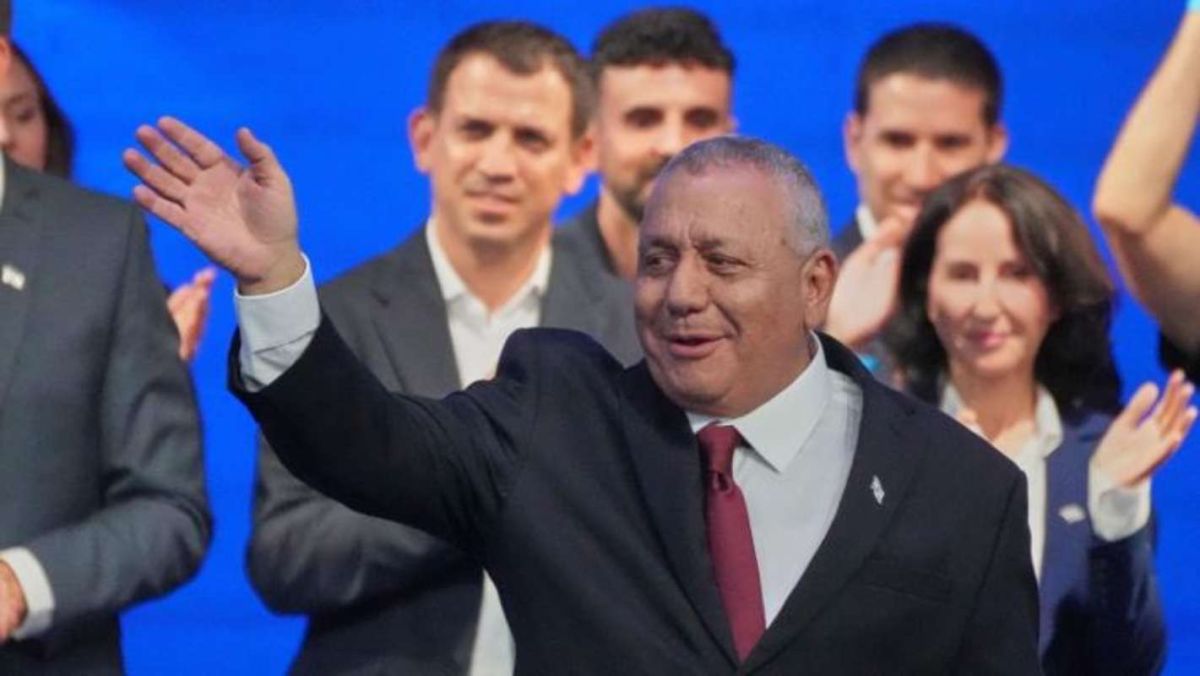



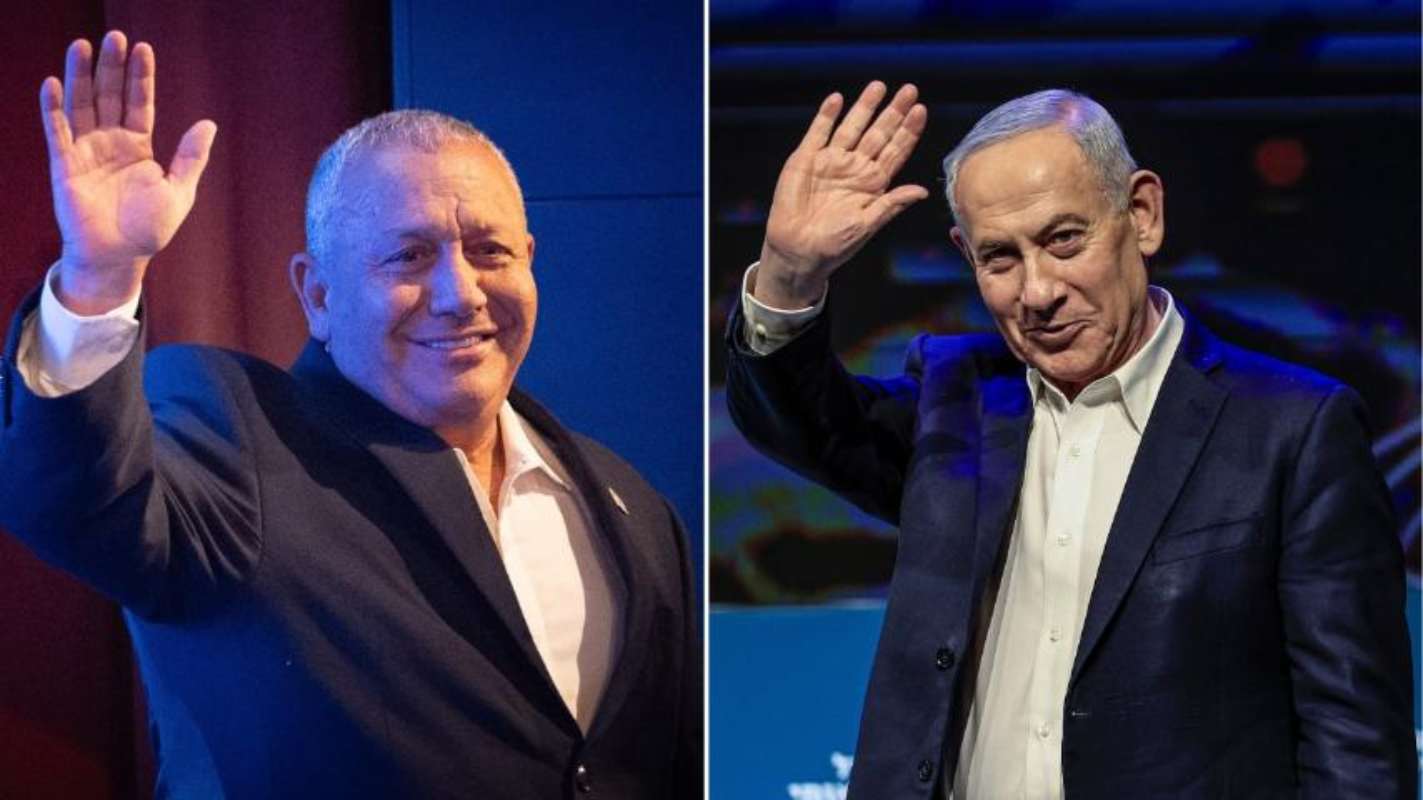
Gadi Eisenkot has won the first opportunity to form a government. To turn that opportunity into power, however, he must unite parties that agree on replacing Benjamin Netanyahu but disagree over who can govern together.
Israeli President Isaac Herzog announced that he would formally assign the mandate to the Yashar leader on Sunday, November 8, at 5 p.m.
The decision creates a genuine opening for a change of government without guaranteeing one. Attention now shifts to the ultra-Orthodox parties, Netanyahu’s longstanding allies, and the dispute over whether an alternative administration can rely on Arab parties.
Sixty-seven recommendations are not sixty-seven coalition votes
During presidential consultations, factions representing 67 of the Knesset’s 120 members recommended Eisenkot. Parties holding 46 seats recommended Netanyahu, while one seven-seat faction declined to endorse either candidate.
Those numbers gave Eisenkot a clear advantage in securing the mandate. They did not resolve disagreements over the composition of a government.
According to Israeli reporting, the parliamentary balance is:
- Four parties in the opposition bloc hold 48 seats.
- Two Arab-led parties hold a combined 19 seats.
- Netanyahu’s outgoing alliance holds 53 seats.
Together, the parties recommending Eisenkot exceed the 61 seats required for an absolute majority. Resistance to cooperation with Arab parties, however, prevents that support from automatically becoming a governing coalition.
Why the ultra-Orthodox parties matter
United Torah Judaism’s position is particularly sensitive for Netanyahu.
The seven-seat party did not recommend him during the consultations. That does not constitute an agreement to support Eisenkot, but it shows that the traditional alliance can no longer be taken for granted.
The dispute is linked to the outgoing government’s failure to resolve exemptions from military service for ultra-Orthodox men.
Reports by Israel’s Channels 12 and 13 also suggest the possibility of coordinated movement by the ultra-Orthodox parties. Anonymous sources cited by the broadcasters indicated that Shas could follow if UTJ’s religious leadership approved an agreement.
These remain conditional assessments, rather than announced decisions.
The arithmetic explains their importance: UTJ’s seven seats and Shas’s six, added to the opposition bloc’s 48, would produce exactly 61. Reaching the political agreement needed to assemble that majority remains difficult.
Military service complicates the negotiations
An agreement with the ultra-Orthodox factions would require compromises among parties with sharply different positions on military service and the relationship between religion and the state.
The issue weakening Netanyahu’s alliance could also complicate the formation of an alternative government.
Eisenkot therefore needs more than dissatisfaction among his rival’s former partners. He needs acceptable terms for participation, an allocation of responsibilities and agreement on issues that have repeatedly generated political conflict.
The presidential mandate gives him time to seek those compromises. It does not remove the parties’ mutual vetoes.
Netanyahu calls for unity while attacking Arab parties
Netanyahu is seeking to prevent an alternative majority from emerging by calling for a national unity government.
His proposal, however, requires the inclusion of all his previous coalition partners, including far-right and ultra-Orthodox factions. He did not specify who should lead such an administration.
He also attacked the prospect of a government supported by Arab parties, describing them as supporters of terrorism and claiming that such an arrangement would endanger Israel’s survival.
Those descriptions are Netanyahu’s political allegations. A parliamentary party’s endorsement of a candidate for prime minister does not substantiate the accusations he has made against it.
The clock starts with the formal mandate
Once formally tasked, Eisenkot will have 28 days to form a government. The president can grant an extension of up to 14 additional days.
His immediate challenge is to determine which parties that recommended him are prepared to support a specific administration, and which remain open to other arrangements.
Herzog had already identified that difficulty after the consultations, explaining that the ability to form a government remained uncertain because of “mutual vetoes between the blocs and within the blocs themselves.”
Source: pagenews.gr
Διαβάστε όλες τις τελευταίες Ειδήσεις από την Ελλάδα και τον Κόσμο