Eisenkot Wants to End Netanyahu’s Era — But Who Will Make Him Prime Minister?
 ΧΡΟΝΟΣ ΑΝΑΓΝΩΣΗΣ 5 '
Πηγή Φωτογραφίας: AP Photo//Eisenkot Wants to End Netanyahu’s Era — But Who Will Make Him Prime Minister?



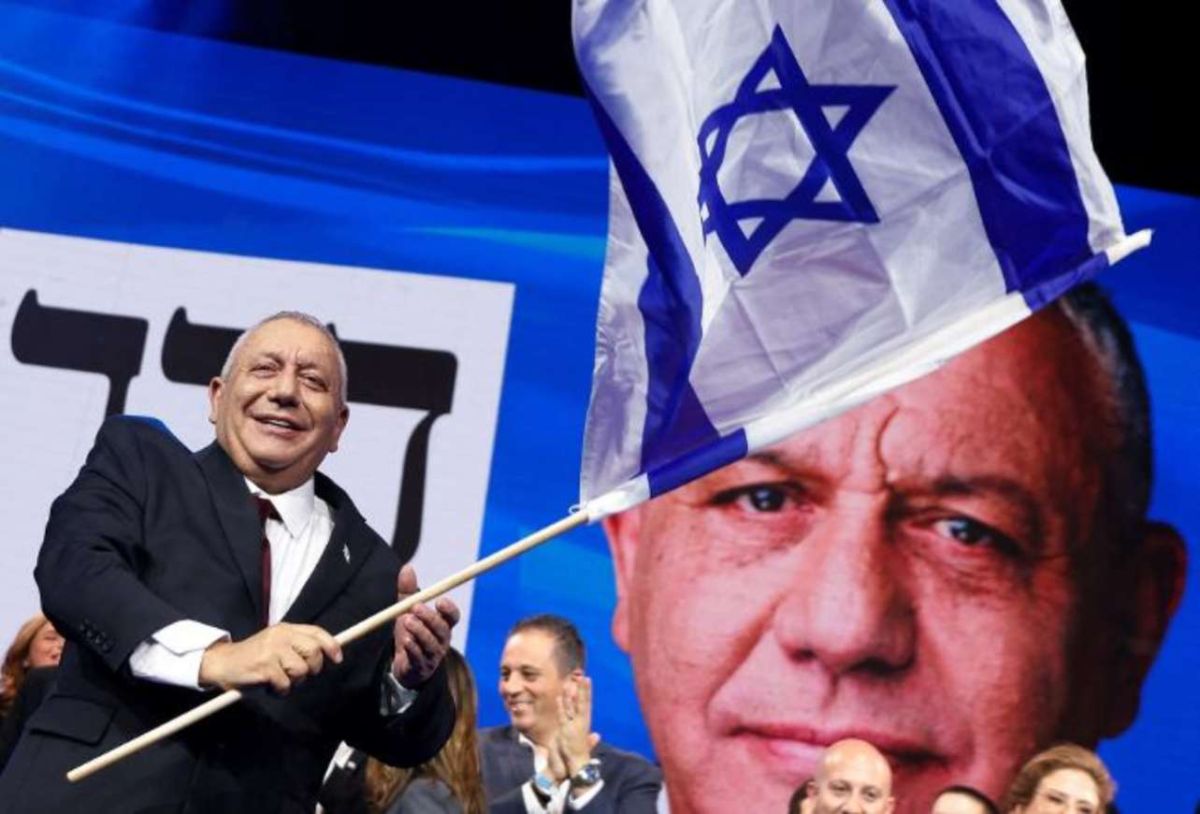
Gadi Eisenkot is closer than ever to a chance to succeed Benjamin Netanyahu. Between the presidential mandate and the premiership, however, lies a difficult negotiation: who is willing to support him, and on what terms?
Israeli President Isaac Herzog announced on Saturday evening that he had selected the Yashar leader to make the first attempt at forming a government. The formal handover is scheduled for Sunday, November 8, at the presidential residence in Jerusalem.
The decision is a setback for Netanyahu, without guaranteeing a transfer of power. Eisenkot must now turn endorsements of his candidacy into an agreement on an actual government.
The arithmetic behind the deadlock
The October 27 election stripped Netanyahu’s coalition of its majority but did not deliver a governing majority to his opponents.
The outgoing prime minister’s bloc holds 53 of the Knesset’s 120 seats. Four parties in the opposition bloc hold 48, while the two Arab-led lists hold a combined 19.
During presidential consultations, factions representing 67 lawmakers recommended Eisenkot, compared with 46 backing Netanyahu. The seven-member United Torah Judaism faction endorsed neither candidate.
Those numbers show who secured greater support for the first attempt. They do not establish that a shared governing program already exists.
Agreement on replacing Netanyahu does not erase differences over cooperation with Arab parties, military conscription or the relationship between religion and the state.
Arab lawmakers could determine the outcome
The Arab parties’ endorsements gave Eisenkot a clear advantage in the presidential consultations.
The difficult question is whether his partners will accept that support in the next phase — through participation in a coalition or external parliamentary backing for a minority government.
These arrangements carry different commitments. Holding cabinet positions, supporting a government from outside and abstaining on particular votes are distinct political choices.
For Eisenkot, each route requires negotiations both with potential supporters and within his existing bloc. Internal objections could prove as decisive as demands from prospective partners.
Netanyahu’s rival has his own hardline positions
Eisenkot, Israel’s military chief of staff from 2015 to 2019, has emphasized restoring unity in a deeply divided country.
He has condemned extremist settler violence against Palestinians in the West Bank, describing incidents as “Jewish terror” and blaming Netanyahu’s government for enabling it.
That does not amount to a broadly conciliatory position on the Palestinian question. According to The Guardian, he opposes establishing a Palestinian state and has pledged to end Hamas’s rule in Gaza and destroy its military wing.
His positions create a complicated basis for cooperation. Opposition to Netanyahu may provide common ground without bridging differences over Palestinian rights and the region’s political future.
The legacy of the Dahiya doctrine
A significant part of Eisenkot’s military record is his association with the so-called Dahiya doctrine.
Its public articulation dates to 2008, when he headed Israel’s Northern Command, drawing on the destruction inflicted on Beirut’s southern suburb during the 2006 war.
The approach envisaged overwhelming force and extensive destruction in areas from which Hezbollah operated. Its implications for civilian areas and infrastructure have been central to the criticism it has attracted.
That record helps explain why Eisenkot’s potential premiership must be assessed through his own positions and decisions. A change of leader does not, by itself, establish a change in military doctrine.
Ultra-Orthodox parties offer another possible route
Another possibility is an agreement with ultra-Orthodox parties traditionally aligned with Netanyahu.
Such a partnership could change the parliamentary arithmetic but would require difficult compromises over military-service exemptions and other religious demands.
Broader national-unity arrangements also remain conceivable, although personal and political disagreements between the rival camps present substantial obstacles.
The presidential mandate gives Eisenkot the initiative. Once formally assigned, he will have 28 days to form a government, with a possible extension of up to 14 additional days.
In his first response, Eisenkot outlined his ambition:
“Now is the time to form a national emergency government. I will do everything to ensure we are worthy.”
Source: pagenews.gr
Διαβάστε όλες τις τελευταίες Ειδήσεις από την Ελλάδα και τον Κόσμο