Trump Wants Europe at the Ukraine Peace Table – Kushner and Witkoff Face Moscow’s Resistance
 ΧΡΟΝΟΣ ΑΝΑΓΝΩΣΗΣ 8 '
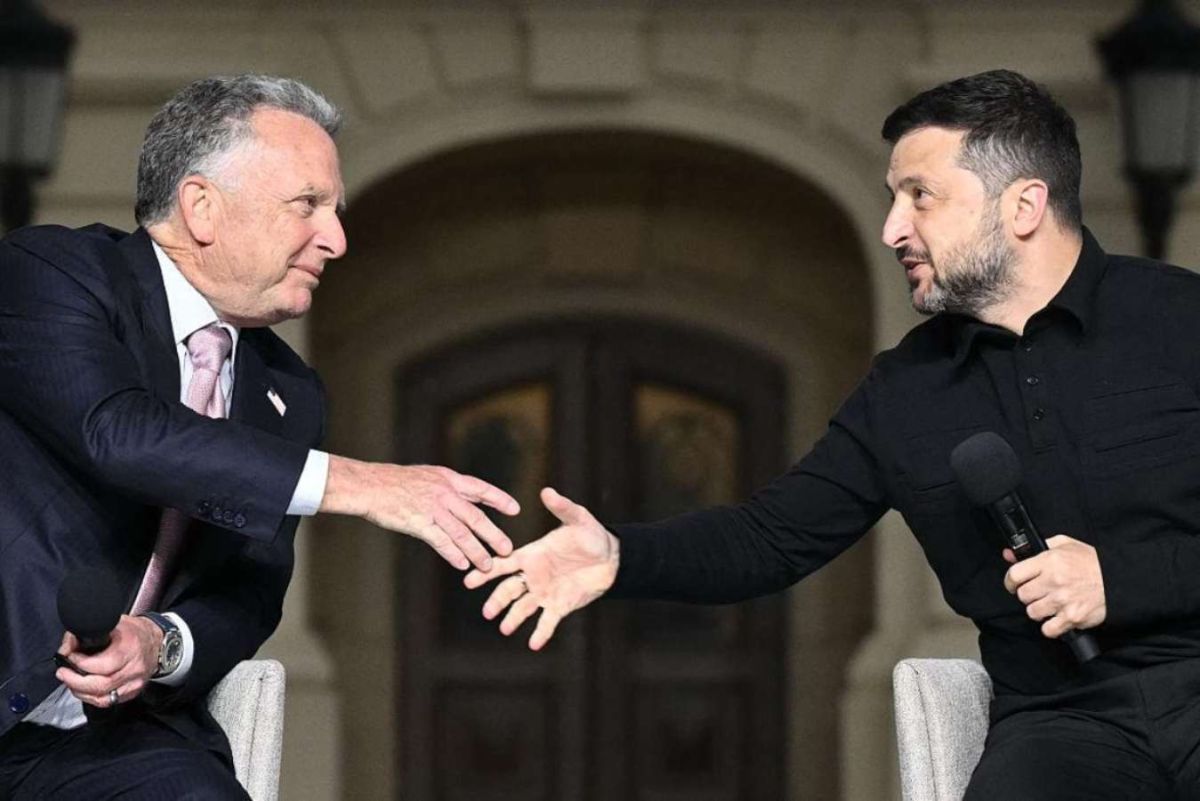
Πηγή Φωτογραφίας: Ζελένσκι – Στιβ Γουίτκοφ, Credit: Genya Savilov / AFP via Getty Images.



A new diplomatic initiative from Washington is reshaping negotiations over the war in Ukraine. The administration of US President Donald Trump is seeking direct European participation in future talks with Russia, acknowledging that any agreement determining the continent’s security cannot be negotiated without European governments.
According to POLITICO, Jared Kushner and US special envoy Steve Witkoff are expected to press Moscow to accept European representatives in the next phase of negotiations.
The American initiative comes as the United States, Russia and Ukraine begin a new round of trilateral discussions in Abu Dhabi on November 10 and 11, the first such meetings since February.
Washington Changes Course: Europe Must Be at the Table
The US administration wants the Abu Dhabi meetings to be the final round conducted without full European participation.
“We need Europe at the table,” a US official told POLITICO, explaining that Washington intends to bring European representatives into the process following the trilateral discussions.
The shift is politically significant.
European governments have repeatedly expressed concerns that Washington and Moscow could negotiate arrangements directly affecting Europe’s security without meaningful European involvement.
Kushner and Witkoff are attempting to accelerate diplomatic efforts by linking a potential settlement in Ukraine to a broader framework governing relations between Russia and the West.
For European capitals, however, the issue extends beyond securing a seat at the negotiating table. It concerns their ability to influence decisions that could redefine the continent’s strategic balance for decades.
Moscow Resists European Participation
Russia remains the principal obstacle to expanding the negotiations.
The Kremlin has indicated that it prefers maintaining the existing trilateral format involving Russia, Ukraine and the United States.
Kremlin spokesperson Dmitry Peskov has emphasized that the Abu Dhabi negotiations are trilateral, noting that American and Ukrainian officials maintain separate channels of communication with European governments.
Despite Moscow’s objections, representatives from Britain, Germany, France and Italy are present in Abu Dhabi, alongside officials from NATO, the European Commission and the European Council.
European representatives are expected to hold consultations with American and Ukrainian officials, although they will not participate directly in the principal negotiating sessions.
This arrangement highlights the central contradiction in the diplomatic process: Europe is increasingly involved in consultations but remains outside the formal negotiations over its own security environment.
The Two-Day Agenda: Security Guarantees and Territory
The structure of the negotiations reveals the scale of Washington’s ambitions.
The first day focuses on security guarantees for Ukraine and the possible establishment of a broader European security framework.
The second day turns to territorial disputes, future borders and the conditions required for a potential settlement.
Territory remains among the most difficult issues.
Moscow continues to demand control over Ukrainian regions, while Kyiv rejects surrendering territory that Russian forces have not captured.
American officials believe some flexibility has emerged in private discussions, although there is no indication that a territorial agreement has been reached.
A senior Ukrainian official, according to Reuters, has rejected territorial concessions within the current negotiations, maintaining that such questions can only be addressed at the leadership level and alongside credible security guarantees.
For Kyiv, any settlement must prevent a renewed Russian offensive rather than merely suspend the current fighting.
Europe Fears a Wider US-Russia Security Deal
Beyond Ukraine’s borders, European governments are concerned about the possibility of a wider agreement between Washington and Moscow.
Such an arrangement could revive longstanding Russian demands for restrictions on NATO’s military presence in Eastern Europe.
Before launching its full-scale invasion of Ukraine in February 2022, Moscow demanded changes to NATO’s military posture in countries that joined the alliance after 1997.
Those demands were rejected by Western governments, which maintained that sovereign states must remain free to determine their own security arrangements.
American officials now insist that NATO will remain the central pillar of European collective defense.
Nevertheless, discussions about a future security framework could reopen sensitive questions about military deployments, deterrence and the balance of power between Russia and the alliance.
NATO Secretary-General Mark Rutte has been involved in consultations surrounding the diplomatic initiative.
For countries bordering Russia, the implications are particularly significant. Any agreement affecting NATO’s eastern flank would have direct consequences for their national security.
Who Will Speak for Europe?
Washington’s proposal also exposes a persistent weakness in European diplomacy: the absence of a single negotiating voice.
France, Germany and Britain have assumed prominent roles in preparatory discussions, but other European governments argue that decisions about continental security cannot be confined to a small group of capitals.
Italy and Poland are among the countries seeking broader participation, while governments in Northern and Eastern Europe insist that their security concerns must be represented.
The question is expected to feature in discussions among European leaders in Dublin later this week.
The challenge is not simply institutional.
European governments differ in their assessments of Russia, their preferred security guarantees for Ukraine and the degree to which future relations with Moscow should be incorporated into a peace settlement.
These differences could complicate Washington’s effort to bring Europe into a unified negotiating format.
Trump’s Ambition Goes Beyond Ukraine
President Trump has already suggested that the agreement he wants would extend beyond ending the war in Ukraine.
He has described the prospective settlement as a major agreement that could encompass the security of Europe as a whole.
Kushner has similarly argued that a lasting settlement would require direct engagement between Russia and European partners over broader security arrangements.
The administration’s approach reflects an effort to transform negotiations over Ukraine into discussions about the future relationship between Russia, Europe and the United States.
That ambition, however, creates additional diplomatic difficulties.
A ceasefire agreement would require resolving immediate military and territorial questions. A wider European security settlement would involve NATO, the European Union and governments with sharply different threat perceptions.
Combining those objectives could expand the scope of negotiations without necessarily bringing the parties closer to an agreement.
Abu Dhabi Talks: No Immediate Breakthrough Expected
Washington does not expect the two-day Abu Dhabi negotiations to produce a definitive ceasefire.
The immediate objective is to preserve diplomatic momentum, identify areas of possible compromise and prepare the ground for subsequent negotiations.
US Secretary of State Marco Rubio has acknowledged the difficulties surrounding the process while emphasizing that Washington will continue exploring ways to end the conflict.
The decisive question is whether Russia will accept European participation in the next phase.
For Ukraine, the central priority remains obtaining security guarantees capable of protecting its sovereignty and preventing renewed aggression.
For Europe, the stakes extend further: ensuring that the continent’s future security arrangements are not negotiated exclusively between Washington and Moscow.
And for the Trump administration, the Abu Dhabi meetings represent another attempt to turn high-level diplomacy into a framework for ending a war that has fundamentally transformed European security.
Source: pagenews.gr
Διαβάστε όλες τις τελευταίες Ειδήσεις από την Ελλάδα και τον Κόσμο