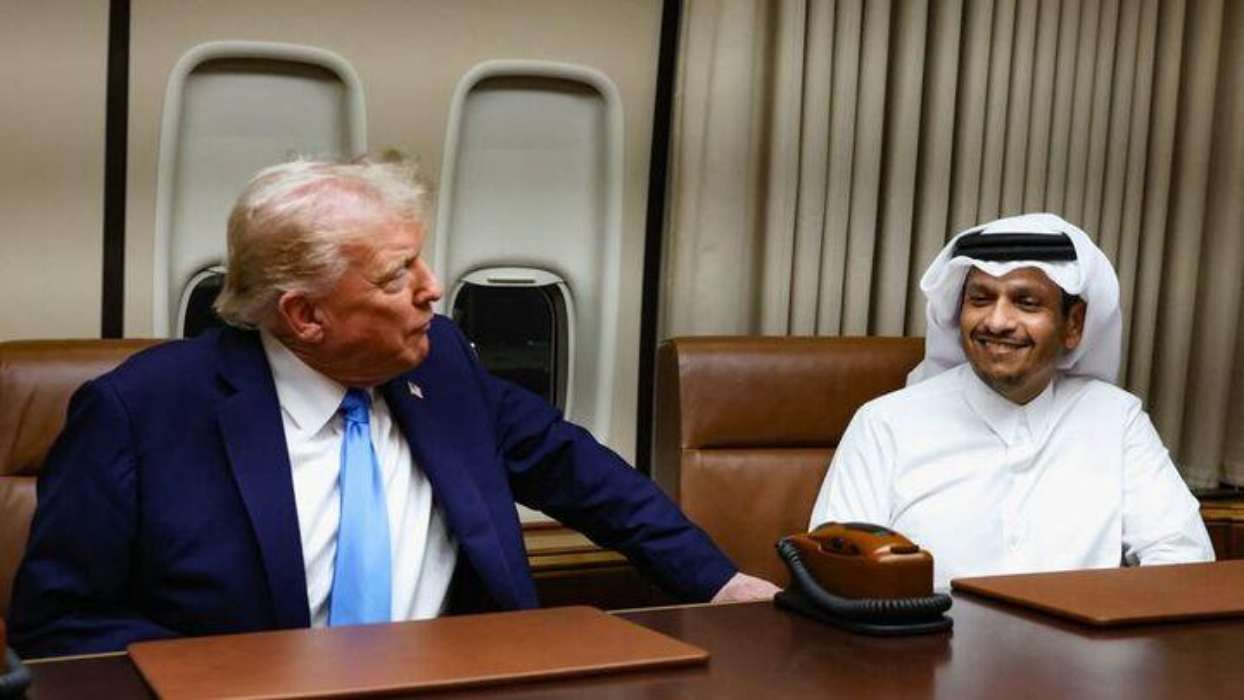
Donald Trump said the war with Iran was “militarily effectively over” after meeting Qatar’s prime minister at the White House on Monday, November 9.
His remarks signaled a preference for avoiding another major bombing campaign. They did not announce a peace agreement or an end to the US blockade.
For now, the president appears to favor maintaining pressure on Tehran while giving Qatar’s mediation effort more time.
A Meeting Opens a Diplomatic Window
Trump met Qatari Prime Minister and Foreign Minister Sheikh Mohammed bin Abdulrahman Al Thani to discuss efforts to resolve the conflict.
He subsequently described positive momentum toward ending it. In a social media post, he portrayed renewed US strikes as unlikely, while leaving open the possibility of changing course.
Qatar remains central to mediation between Washington and Tehran. The significance of its intervention will depend on whether messages of de-escalation can become concrete, reciprocal commitments.
No mutually accepted text has been made public that would establish that the crisis has ended.
Qatar and Saudi Arabia Want a Peaceful Solution
In a brief telephone interview with Reuters, Trump said Qatar and Saudi Arabia wanted a peaceful resolution.
He also made clear that military action remained an option, saying US forces were ready to act if necessary.
The position combines two messages: more time for diplomacy and continued readiness to escalate. Their balance will depend on subsequent decisions and Iran’s response.
The Blockade Stays in Place
Trump also told Reuters that he was in no rush to resume strikes and was content to maintain the naval blockade.
That defines the limits of the de-escalation he is describing: a reduced prospect of major new attacks alongside continued coercive pressure.
Avoiding another bombing campaign and ending a conflict are separate milestones. A durable settlement would require agreed terms, implementation arrangements and clear commitments about what happens next.
The blockade therefore remains central to the distinction between a pause in large-scale military operations and a negotiated resolution.


Tehran Does Not Share Washington’s Optimism
Public messages from Iran remain confrontational.
According to AFP, Mohsen Rezaei rejected US claims about negotiations, while Mohammad Bagher Ghalibaf accused Israel of drawing Washington deeper into the conflict.
Those statements show that the two sides are not presenting a shared account of diplomatic progress. White House optimism cannot be treated as Iranian acceptance of an agreement.
Assessing progress requires developments beyond public assurances: confirmed commitments to de-escalation and an agreed process for addressing the outstanding disputes.
Trump, meanwhile, kept his options open. As he told Reuters:
“We’ll see where it goes. I’m prepared.”
Source: pagenews.gr