Wall Street After Trump’s Midterm Defeat: Historic Rally Ahead or a Bigger Market Crash?
 ΧΡΟΝΟΣ ΑΝΑΓΝΩΣΗΣ 14 '
Πηγή Φωτογραφίας: AP Photo//Wall Street After Trump's Midterm Defeat: Historic Rally Ahead or a Bigger Market Crash?



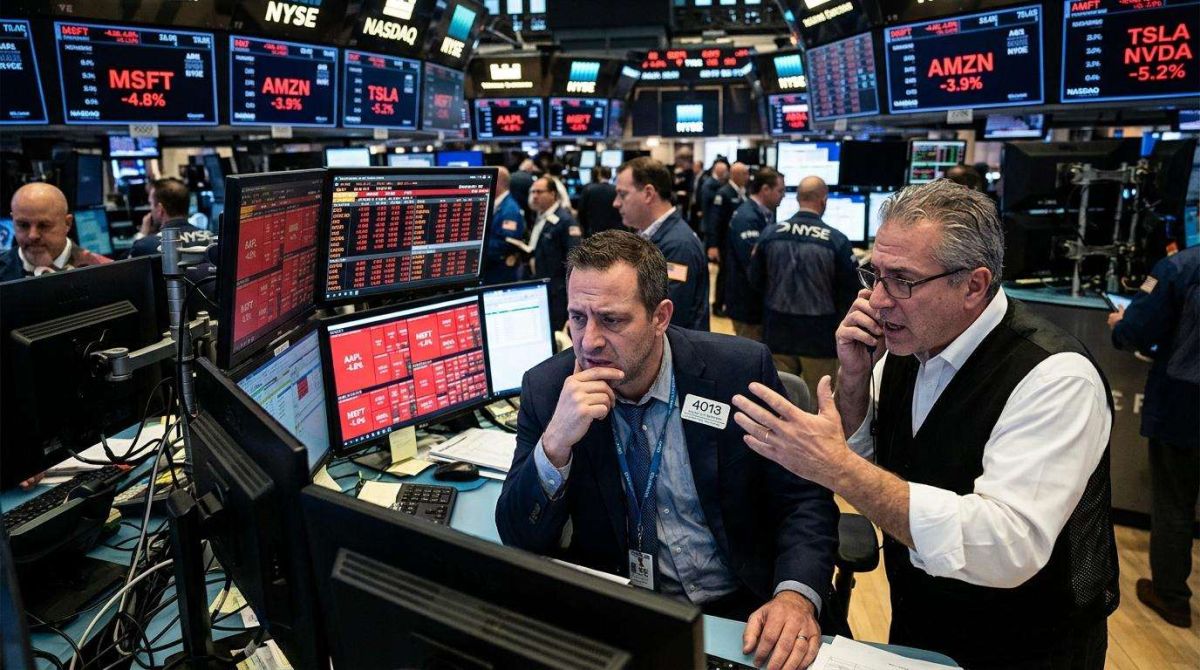
Wall Street is facing a critical test following the Republican Party’s defeat in the US midterm elections, as investors attempt to determine whether the latest market turmoil represents a temporary political shock or the beginning of a more serious financial correction.
The historical evidence offers a compelling argument for optimism.
Since 1946, the S&P 500 has risen during every 12-month period following US midterm elections, delivering an average gain of 14.4%, according to research by Deutsche Bank.
Yet the economic environment confronting investors in November 2026 is unusually complex.
The American stock market has become heavily dependent on a small group of technology companies, artificial intelligence infrastructure spending has reached extraordinary levels, and the Federal Reserve faces renewed pressure to control inflation.
Meanwhile, geopolitical instability in the Middle East and Ukraine continues to complicate the outlook for energy prices, corporate earnings and global economic growth.
The central question is whether Wall Street’s historical post-midterm rally can survive these overlapping risks.
The $3.2 Trillion Sell-Off: Why Markets Reacted So Sharply
The immediate reaction to the Democratic electoral victory was dramatic.
Approximately $3.2 trillion in US stock market value was erased following the election, according to figures cited in reporting attributed to Reuters.
Semiconductor stocks were particularly vulnerable.
On Thursday, US chipmakers recorded a 12% decline, described as the sector’s second-largest single-day fall on record.
The sell-off reflected growing concerns about the political and regulatory future of the artificial intelligence industry.
Investors fear that a Democratic-controlled Congress could introduce additional scrutiny of AI data centre development, particularly regarding electricity consumption, environmental impacts, infrastructure requirements and the market power of major technology companies.
These concerns matter because AI infrastructure spending has become one of the principal drivers of US equity valuations.
However, the election result does not automatically translate into restrictions on AI development.
Any substantial regulatory changes would depend on legislative negotiations, congressional priorities and the response of President Donald Trump’s administration.
The market’s reaction therefore reflects uncertainty about future policy rather than the immediate implementation of new restrictions.
The Midterm Election Effect: An 80-Year Record of Stock Market Gains
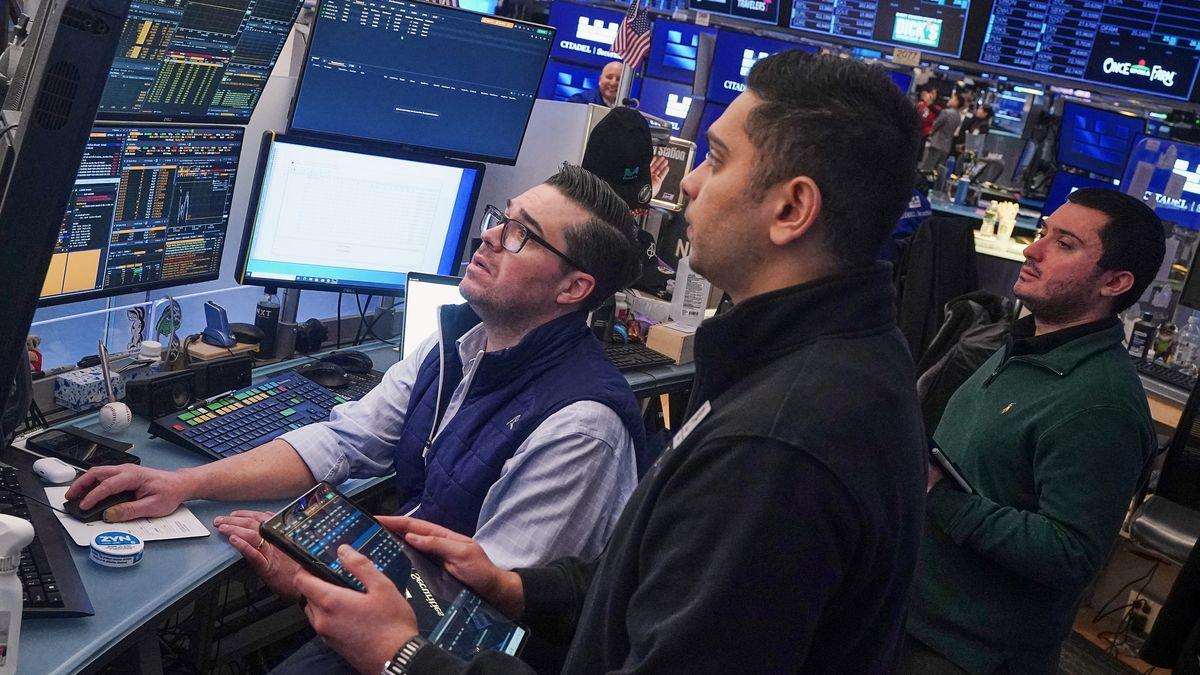
Historical market performance provides a strong counterargument to the current pessimism.
Deutsche Bank research covering the period from 1946 to 2022 found that the S&P 500 delivered positive returns in every 12-month period following midterm elections.
The average return was 14.4%, while the median gain reached 13.7%.
That compares favourably with the broader historical performance of American equities.
Since the Second World War, the S&P 500 has advanced in approximately 71% of calendar years, generating average annual gains of slightly more than 9%.
The post-midterm period has therefore historically been associated with stronger-than-average market performance.
One explanation is the reduction in political uncertainty.
Before elections, investors must consider multiple scenarios involving congressional control, taxation, government spending and regulation.
Once the results become clear, financial markets can assess the political environment with greater confidence.
Divided government may also reduce the likelihood of sweeping legislative changes, creating a degree of policy predictability that investors often welcome.
However, historical averages cannot establish what will happen during any individual election cycle.
Why the Third Year of a Presidency Is Often Wall Street’s Strongest
The historical pattern becomes even more striking when examining the third calendar year of a presidential term.
According to Keith Lerner, chief investment officer at Truist Wealth Advisory, the S&P 500 has historically delivered an average gain of 20.9% during the third year of a presidency.
That is the calendar year following midterm elections.
Lerner’s analysis also indicates that the US economy has avoided recession during the third presidential year in every cycle since 1950.
Several economic factors may help explain this performance.
Fiscal measures introduced earlier in a presidential term can take time to influence economic activity.
Meanwhile, the effects of monetary policy may evolve as the presidential cycle progresses.
By the third year, political uncertainty has often declined and the economic effects of earlier policy decisions may become more visible.
For investors looking towards 2027, these historical patterns are encouraging.
But the present economic cycle may be shaped by forces that differ significantly from those influencing earlier post-midterm recoveries.
The Magnificent Seven: Wall Street’s Dangerous Concentration
One of the biggest vulnerabilities in today’s market is the extraordinary concentration of value among a small number of technology companies.
The so-called Magnificent Seven, alongside major cloud computing providers and businesses connected to the artificial intelligence supply chain, account for a substantial share of US equity market capitalisation.
Their earnings, investment plans and share price movements therefore have an outsized influence on major stock indices.
This concentration has helped fuel the market’s rise as investors anticipate rapid growth in AI-related revenues.
However, it also creates systemic vulnerabilities.
When expectations are exceptionally high, even relatively modest disappointments can trigger significant declines.
A downward revision to earnings forecasts, weaker demand for computing capacity or delays in major AI projects could affect not only individual companies but the broader market.
The risk is that Wall Street has become increasingly dependent on the continued success of a narrow group of businesses.

The $10 Trillion AI Investment Boom: Innovation or Speculative Bubble?
Artificial intelligence has become one of the largest investment themes in modern financial history.
Some estimates suggest that global investment in AI infrastructure could exceed $10 trillion between 2025 and 2032.
Technology companies are committing enormous sums to semiconductor purchases, data centres, cloud computing infrastructure, electricity generation and advanced networking systems.
This investment has supported corporate earnings expectations and helped drive substantial gains in technology shares.
It has also generated demand across industries ranging from construction and engineering to utilities and industrial equipment.
Yet the scale of spending raises difficult questions about profitability.
How quickly will companies generate returns on these investments?
Will demand for AI services justify the enormous capital expenditure?
And what happens if the market has overestimated the speed at which artificial intelligence can produce commercially sustainable revenues?
The comparison with the dotcom boom of the late 1990s is increasingly relevant.
The internet ultimately transformed the global economy, creating some of the world’s most valuable businesses.
But that transformation was accompanied by speculative valuations, excessive investment and a devastating market correction.
A revolutionary technology can generate genuine long-term economic value while still producing a financial bubble along the way.
Could an AI Correction Trigger a Wider US Economic Shock?
The consequences of a slowdown in artificial intelligence investment could extend well beyond Silicon Valley.
Semiconductor manufacturers, data centre developers, construction companies, electricity suppliers and equipment manufacturers all benefit from the current spending cycle.
If major technology companies begin reducing capital expenditure, these industries could experience weaker demand.
The impact could then spread through corporate earnings, employment and investment.
Falling technology valuations could also affect household wealth.
American consumers have benefited from substantial gains in financial assets during the AI-driven market expansion.
A prolonged stock market decline could weaken consumer confidence and reduce spending, particularly among households with significant exposure to equities.
This creates the possibility that a correction initially concentrated in technology stocks could develop into a broader economic slowdown.
The critical issue is whether AI investment has become sufficiently important to the American economy that a sharp reversal would affect overall growth.
Federal Reserve Policy Could Undermine the Post-Midterm Rally
Interest rates represent another major challenge.
According to the figures cited in the underlying report, the Federal Reserve increased interest rates by 0.25 percentage points in September, while financial markets were anticipating another 0.50 percentage points of tightening in 2027.
That would bring the cumulative increase to 0.75 percentage points.
Historically, this would represent a relatively mild tightening cycle.
Data from the Federal Reserve Bank of Chicago indicates that the average monetary tightening cycle since 1954 has involved approximately four percentage points of rate increases over 23 months.
The difference raises the possibility that investors may be underestimating the risk of more aggressive monetary policy.
If inflation remains elevated, the Fed could be forced to maintain restrictive financial conditions for longer than markets currently expect.
Higher borrowing costs would place additional pressure on businesses financing large investment programmes.
They could also reduce the attractiveness of equity valuations, particularly among high-growth technology companies whose share prices depend heavily on expectations of future profits.
Inflation and Geopolitics: The Risk of Stagflation
The Federal Reserve’s challenge is complicated by geopolitical instability.
The conflicts involving Iran and Ukraine continue to influence energy markets, shipping costs and global inflation expectations.
Even if crude oil prices decline as Middle Eastern exports recover, renewed military escalation could quickly reverse that trend.
For the US economy, the most difficult scenario would involve slowing growth combined with persistent inflation.
Such an environment could produce stagflation, leaving the Federal Reserve with limited policy options.
Cutting interest rates might support economic activity but risk worsening inflation.
Maintaining or increasing rates could help contain prices while placing additional pressure on employment, investment and consumer spending.
This combination could be particularly damaging if technology companies simultaneously reduce AI-related expenditure.
The historical post-midterm pattern offers little protection against such developments.
Monetary policy has varied considerably across presidential cycles, and there is no consistent relationship between midterm elections and Federal Reserve interest rate decisions.
Why the 2026 Market Is Different
Despite the recent sell-off, the S&P 500 remained approximately 5% below its record high following Thursday’s decline, according to the market figures cited in the report.
This suggests that US equities entered the post-election period with relatively elevated valuations.
Before the latest turbulence, the index’s largest correction during 2026 had been approximately 9%.
By comparison, JPMorgan research indicates that the typical maximum drawdown during midterm election years has historically been around 18% to 19%.
This does not mean another major decline is inevitable.
It does, however, demonstrate that the market had experienced relatively limited corrections compared with the historical pattern.
Combined with concentrated technology valuations and uncertainty over AI investment returns, this leaves investors exposed to potentially significant changes in sentiment.
The question is not simply whether stocks have already fallen enough.
It is whether the earnings expectations supporting current valuations remain realistic.
The Historical Warning: When Economic Crises Overwhelmed Electoral Patterns
The broader historical record contains important warnings.
The post-midterm periods associated with the elections of 1930 and 1938 stand out as exceptions to the generally favourable market pattern when the analysis is extended further back in time.
Both occurred during periods of severe economic or geopolitical instability.
The early 1930s were dominated by the Great Depression, while the late 1930s were marked by growing international tensions ahead of the Second World War.
The circumstances of 2026 are fundamentally different.
Nevertheless, these episodes illustrate a crucial point: political cycles cannot protect financial markets from larger economic shocks.
Recession, monetary instability, geopolitical conflict or a collapse in investment expectations can outweigh the historical benefits associated with reduced election uncertainty.
Three Scenarios for Wall Street in 2027
The outlook for US equities depends on whether the economic forces supporting the market remain intact.
Scenario one: The historical rally returns. The American economy avoids recession, political uncertainty declines and AI-related companies continue delivering strong earnings. Under these conditions, Wall Street could experience another positive post-midterm year.
Scenario two: A prolonged market correction. Elevated valuations and doubts about AI investment returns produce further losses, particularly among technology stocks, without necessarily triggering a recession.
Scenario three: A broader economic shock. Slowing AI investment combines with persistent inflation, restrictive monetary policy and geopolitical disruption, transforming a market correction into a more serious economic downturn.
Each scenario carries different implications for investors, corporate investment and global financial markets.
Wall Street’s Next Test Is Economic, Not Electoral
The historical record provides investors with a reason to expect stronger stock market performance following midterm elections.
But the conditions supporting previous rallies cannot be assumed to exist in 2027.
The US equity market is unusually dependent on technology earnings and the continuation of an enormous artificial intelligence investment cycle.
At the same time, inflation, interest rates and geopolitical instability threaten to complicate the outlook.
The Democrats’ congressional gains may reshape the regulatory debate surrounding AI infrastructure, but the decisive factor for financial markets will be whether corporate profits and economic growth can justify current valuations.
For Wall Street, the next twelve months will therefore be less about whether history predicts a rally and more about whether the economic foundations of that rally remain intact.
The post-midterm pattern is encouraging. It is not a guarantee against a major correction.
Source: pagenews.gr
Διαβάστε όλες τις τελευταίες Ειδήσεις από την Ελλάδα και τον Κόσμο