Europe wants a seat at the negotiating table to end the war in Ukraine. But before it can confront Vladimir Putin, it must answer an increasingly contentious question: who has the authority to speak on Europe’s behalf?
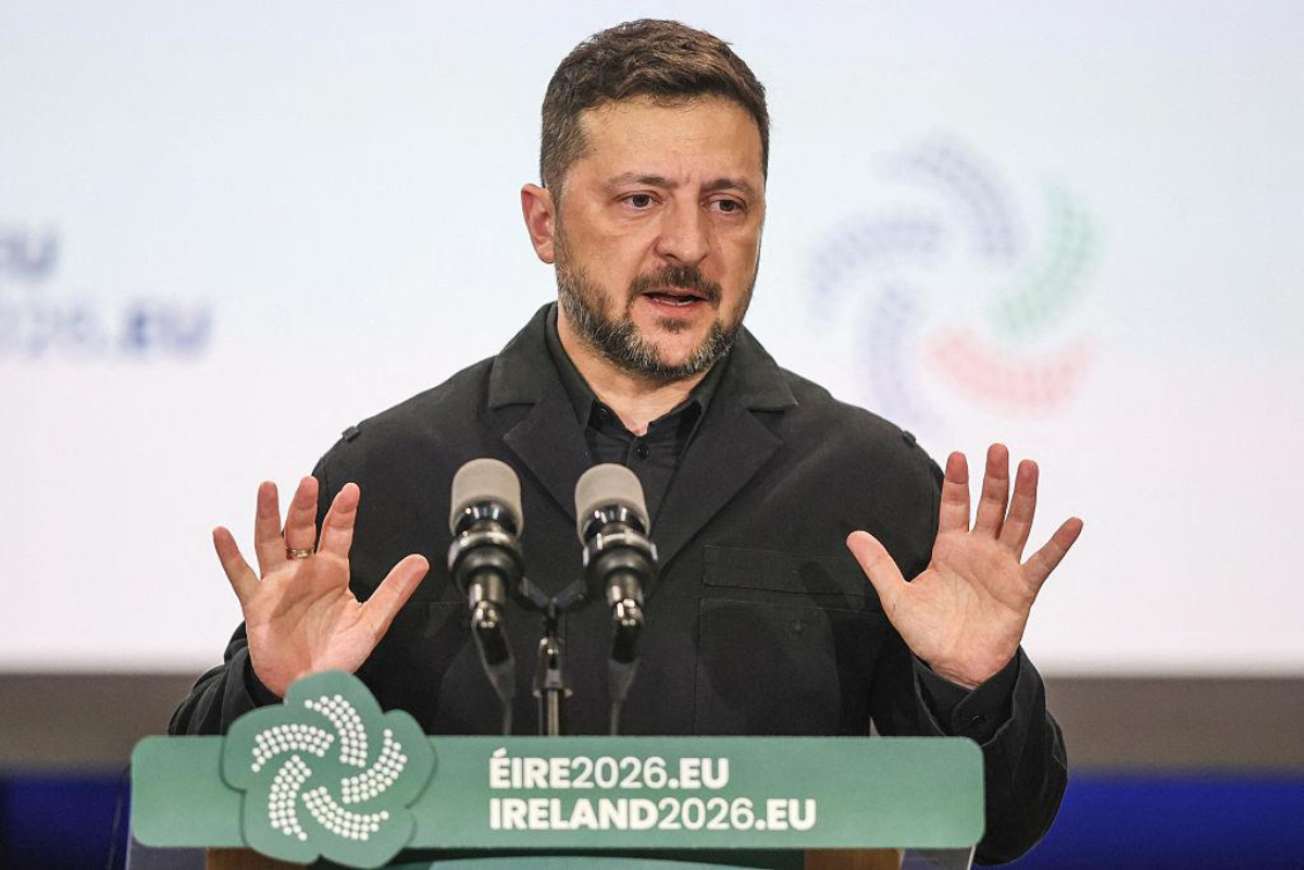
Moscow’s demand for a single European representative has exposed differences among EU leaders, turning the summit in Dublin on Friday, November 13, into a debate over the bloc’s diplomatic leadership.
The gathering was originally intended to focus on artificial intelligence, technological sovereignty and Europe’s economic competitiveness. Instead, developments surrounding the US-led peace initiative have pushed Ukraine and European security back to the top of the political agenda.
The dispute comes as Washington seeks to broaden negotiations involving Russia and Ukraine, while European governments struggle to agree on whether they should be represented by an EU institution, a specially appointed envoy or a smaller group of major European powers.
At stake is more than diplomatic protocol.
The outcome could determine whether Europe helps shape the postwar security order or is left implementing decisions negotiated by Washington and Moscow.
The Kremlin’s Ultimatum: Choose a Negotiator First
The Kremlin has made clear that European participation in the next round of Ukraine peace talks is not automatic.
Russian presidential spokesman Dmitry Peskov said European governments must first identify an authorized representative and clarify their intentions regarding the peace process.
Moscow’s position follows statements by US envoys Jared Kushner and Steve Witkoff indicating that European representatives should participate in the next stage of negotiations.
Washington considers European involvement essential because any lasting settlement would require substantial European commitments, including security guarantees, reconstruction financing and long-term support for Ukraine.
Russia, however, has stopped short of unconditionally accepting the proposed expanded format.
The Kremlin wants to establish whether European governments are prepared to discuss what Moscow describes as the broader causes of the conflict, including NATO’s role and the continent’s security architecture.
This creates a fundamental disagreement over the purpose of the negotiations.
For European governments, the immediate priority is ending the war while protecting Ukraine’s sovereignty.
For Moscow, the talks also provide an opportunity to pursue wider strategic demands affecting European security.


Meloni Warns: Too Many Diplomatic Formats Are Weakening Europe
Italian Prime Minister Giorgia Meloni has emerged as a prominent advocate of establishing a clearer European negotiating structure.
In a letter to European Council President António Costa, Meloni warned that overlapping diplomatic initiatives risk undermining the European Union’s credibility.
According to Euronews, the Italian leader argued that Europe’s participation in multiple formats makes it “less credible”.
Her intervention reflects growing concern that individual European governments are pursuing separate diplomatic channels without sufficient coordination.
Rome wants a clearly defined mandate that would allow Europe to present a coherent position to both Moscow and Washington.
The proposal also highlights a broader tension within the European Union.
Although member states share an interest in supporting Ukraine, they do not always agree on how negotiations with Russia should be conducted or who should lead them.
For Meloni, the solution lies in reducing diplomatic fragmentation and establishing a recognizable European voice.
António Costa: The EU Must Be Represented Through Its Institutions
European Council President António Costa has emphasized the importance of respecting the EU’s institutional framework.
Costa agreed to bring the question of European representation into the leaders’ discussions, while maintaining that the Union’s interests should be represented in accordance with its treaties.
His position has drawn support from Luxembourg Prime Minister Luc Frieden, who argued that European leaders have already chosen a president to represent them.
Frieden pointed to Costa’s role as president of the European Council, suggesting that the EU should make use of its existing institutional leadership rather than automatically creating another position.
However, the issue is more complicated than selecting an EU official.
Any negotiations concerning Europe’s security would also directly affect countries outside the European Union, particularly the United Kingdom and Norway.
That raises questions about whether a representative appointed by the EU’s 27 member states could speak for the wider European security community.
Kaja Kallas: The Treaties Already Define Europe’s Foreign Policy Leadership
EU foreign policy chief Kaja Kallas has also defended the institutional arrangements established when the bloc’s leadership positions were agreed in 2024.
The former Estonian prime minister argues that the EU treaties already provide a framework for representing the Union in foreign affairs and security policy.
Kallas has suggested that European leaders must either respect the arrangements they previously approved or reopen a potentially difficult debate over the allocation of responsibilities.
Her position places her at the center of the dispute.
As the EU’s High Representative for Foreign Affairs and Security Policy, Kallas has a formal role in coordinating European diplomacy.
However, Moscow has repeatedly criticized her positions on Russia and Ukraine.
The Kremlin’s reservations raise the possibility that Russia might resist negotiations led by an official who has strongly supported sanctions against Moscow and military assistance for Kyiv.
This creates a delicate diplomatic question: should Europe choose its representative solely according to its own institutional rules, or should the willingness of Russia to engage with that person also be considered?
For many European officials, allowing Moscow to influence the selection would set a troubling precedent.
Merz Defends the E3: Germany, France and Britain Already Have a Working Format
German Chancellor Friedrich Merz has taken a more cautious approach to the idea of creating a new European negotiating position.
Rather than establishing another diplomatic structure, Merz has defended the existing E3 format, bringing together Germany, France and the United Kingdom.
The three countries already coordinate closely on European security and maintain significant diplomatic and military capabilities.
Merz has also pointed to cooperation with Poland and Italy as part of a broader European framework.
His argument reflects a preference for established diplomatic mechanisms rather than a new institutional arrangement whose mandate and authority would need to be negotiated.
The E3 format offers practical advantages.
Germany, France and Britain are among Ukraine’s most important European partners and would likely play significant roles in any postwar security arrangements.
Yet the format also has limitations.
It does not formally represent all EU member states, and some governments may object to having Europe’s negotiating position determined by a small group of major powers.
The dispute therefore reflects competing visions of European diplomacy: institutional representation through Brussels or strategic coordination among influential national governments.
Denmark: The Substance of Peace Matters More Than the Name of the Envoy
Danish Prime Minister Mette Frederiksen has sought to shift attention away from the competition over individual representatives.
While acknowledging that the question of who speaks for Europe matters, Frederiksen emphasized that the substance of any peace agreement is ultimately more important.
Her position reflects concerns among northern European governments about maintaining a unified approach toward Russia.
Denmark and Sweden have expressed reservations about separate diplomatic contacts with Moscow conducted without sufficient consultation among European partners.
The underlying concern is that uncoordinated initiatives could allow Russia to exploit differences between European governments.
For Frederiksen, European unity must be measured not only by who participates in negotiations, but also by whether governments can maintain common positions on Ukrainian sovereignty, territorial integrity and security guarantees.
Zelensky Wants an Answer Before the End of November
Ukrainian President Volodymyr Zelensky has urged European governments to clarify their representation before the end of November.
Kyiv wants Europe to participate meaningfully in the next phase of negotiations, rather than merely endorse an agreement reached by other powers.
For Ukraine, European involvement has direct practical consequences.
European countries are major providers of military equipment, financial assistance and humanitarian support.
They would also be central to Ukraine’s reconstruction and could be asked to participate in mechanisms designed to guarantee a future ceasefire or peace settlement.
Without European involvement, Kyiv fears that essential elements of a postwar agreement could remain politically or financially uncertain.
The Ukrainian government therefore wants a clear negotiating structure capable of turning European commitments into enforceable arrangements.
Zelensky’s request adds urgency to a debate that might otherwise become an extended institutional disagreement.
The Financial Battle: Ukraine’s Future Funding Becomes Another Source of Tension
The disagreement over diplomatic representation is unfolding alongside difficult negotiations over financial assistance for Ukraine.
Merz has warned that Germany could block a broader European budget agreement if member states fail to reach a unanimous solution on support for Kyiv.
The warning links Ukraine’s financing requirements to negotiations over the EU’s wider financial priorities.
European leaders are expected to address the issue at the special European Council meeting scheduled for November 26–27, including Ukraine’s financial needs for 2027.
The stakes are considerable.
European governments are under pressure to maintain support for Ukraine while managing domestic budget constraints, defense spending commitments and competing economic priorities.
A prolonged disagreement over financing could complicate both Ukraine’s immediate needs and Europe’s ability to make credible commitments in peace negotiations.
The issue also demonstrates why European participation matters to Washington.
Any settlement that requires sustained economic assistance and reconstruction financing will depend heavily on European political support.
Artificial Intelligence Summit Overshadowed by Geopolitics
The diplomatic dispute has overshadowed the summit’s original agenda.
European leaders had gathered in Dublin to discuss artificial intelligence and the continent’s position in the global technology race.
The meeting was intended to examine Europe’s technological sovereignty, competitiveness and the social implications of rapidly advancing AI systems.
Among the invited participants were Arthur Mensch, chief executive of French AI company Mistral, and Geoffrey Hinton, the Nobel Prize-winning researcher widely recognized for his pioneering work in artificial intelligence.
Mensch was expected to address the challenges facing European AI companies as they compete with powerful American and Chinese technology groups.
Hinton’s contribution was expected to focus on the societal and potentially existential risks associated with increasingly advanced AI.
Yet the Ukraine negotiations have demonstrated how quickly geopolitical developments can overtake even the EU’s most ambitious economic and technological priorities.
The contrast is striking.
European leaders arrived to discuss how the continent could become more competitive in the technologies of the future, only to confront a more immediate question about Europe’s influence over its own security.
Putin’s Wider Objective: A New European Security Architecture
Behind Moscow’s demand for a single negotiator lies a broader Russian objective.
The Kremlin wants any settlement in Ukraine to address its longstanding demands concerning NATO enlargement, Western military deployments and the strategic balance in Europe.
Russian officials have repeatedly argued that the conflict cannot be resolved without discussing what Moscow considers the underlying causes of confrontation with the West.
European governments reject the suggestion that Russia should be able to determine the security choices of neighboring sovereign states.
They also insist that negotiations over the future of European security cannot take place without meaningful European participation.
The disagreement is fundamental.
Moscow seeks negotiations that could reshape the continent’s security arrangements.
European governments want a settlement that ends the war without granting Russia additional leverage over the sovereignty or defense policies of other countries.
These competing objectives explain why the selection of a European envoy has become such a politically sensitive issue.
Trump’s Diplomatic Challenge: Washington Needs Europe but Cannot Choose Its Representative
The dispute presents a further challenge for President Donald Trump’s efforts to negotiate an end to the war.
His administration has acknowledged that European participation is necessary for a durable settlement.
However, Washington cannot unilaterally determine who should represent European governments.
Nor can it guarantee that Moscow will accept the representative Europe chooses.
The United States must therefore manage several overlapping diplomatic relationships: negotiations with Russia, coordination with Ukraine and consultations with European allies.
Each involves different priorities.
Russia wants broader security concessions.
Ukraine wants territorial sovereignty and credible guarantees against renewed aggression.
European governments want to protect their own security interests while ensuring that any agreement remains politically and financially sustainable.
Washington’s challenge is to create a negotiating framework capable of accommodating those interests without allowing procedural disputes to prevent substantive progress.
The Bigger Question: Can Europe Turn Economic Power Into Diplomatic Influence?
The debate over Europe’s representative reveals a deeper structural challenge.
The European Union possesses considerable economic weight, provides substantial financial assistance to Ukraine and has imposed extensive sanctions on Russia.
Yet translating that influence into a unified diplomatic position remains difficult.
The Kremlin’s demand for a single negotiator has brought this contradiction into sharp focus.
Washington wants European participation.
Kyiv considers it essential.
Moscow is attaching conditions.
And European governments have yet to agree on the mechanism through which they will speak collectively.
The choice between Kallas, Costa, a special envoy or the E3 format is therefore not simply a contest over diplomatic prestige.
It reflects competing approaches to European leadership, institutional authority and strategic autonomy.
The central issue is whether Europe can transform its economic and political commitments into meaningful influence over the terms of peace.
The Dublin summit has exposed that challenge at a particularly consequential moment.
While European leaders were preparing to discuss the continent’s technological future, they found themselves confronting a more immediate test of geopolitical authority.
Before Europe can help write the rules of the postwar security order, it must decide who has the mandate to speak in its name.
And until that question is resolved, the struggle for a seat at the negotiating table may remain almost as politically contentious as the negotiations themselves.
Source: pagenews.gr