Kallas on Turkey: Greece Holds the Key to Activating the EU’s Mutual Defence Clause
 ΧΡΟΝΟΣ ΑΝΑΓΝΩΣΗΣ 11 '
Πηγή Φωτογραφίας: AP Photo//Kallas on Turkey: Greece Holds the Key to Activating the EU’s Mutual Defence Clause



A fundamental question about European security has returned to the political agenda: What happens if an EU member state comes under armed attack by a third country, and how would the European Union respond?
The issue has acquired particular significance for Greece and Cyprus amid continuing tensions in the Eastern Mediterranean and diplomatic disputes surrounding the strategic electricity interconnection project between the two countries.
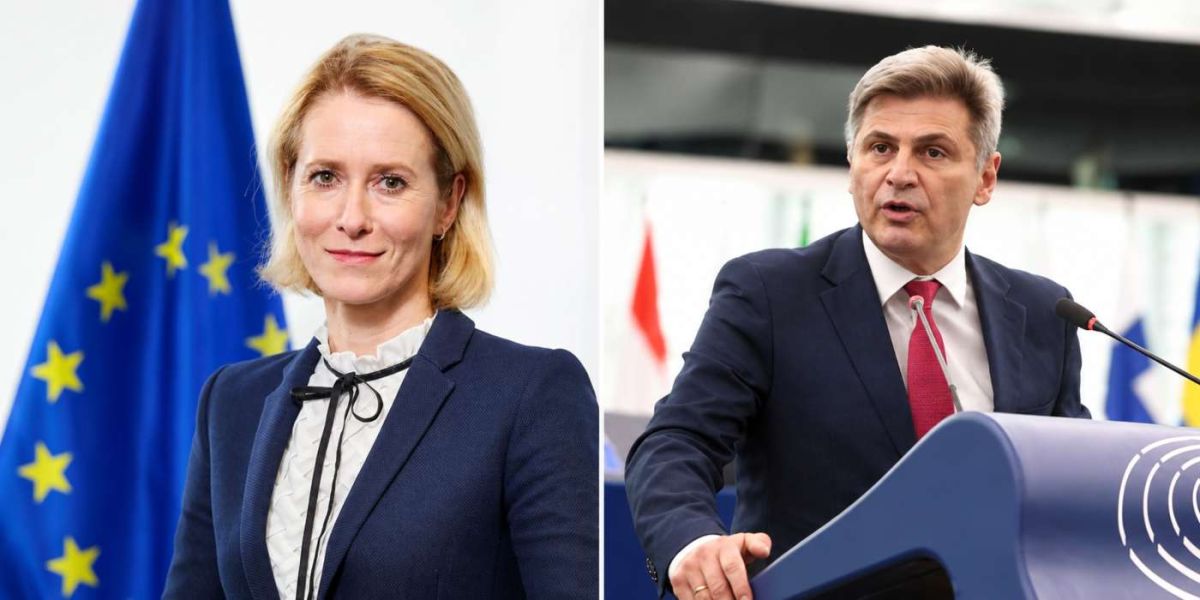
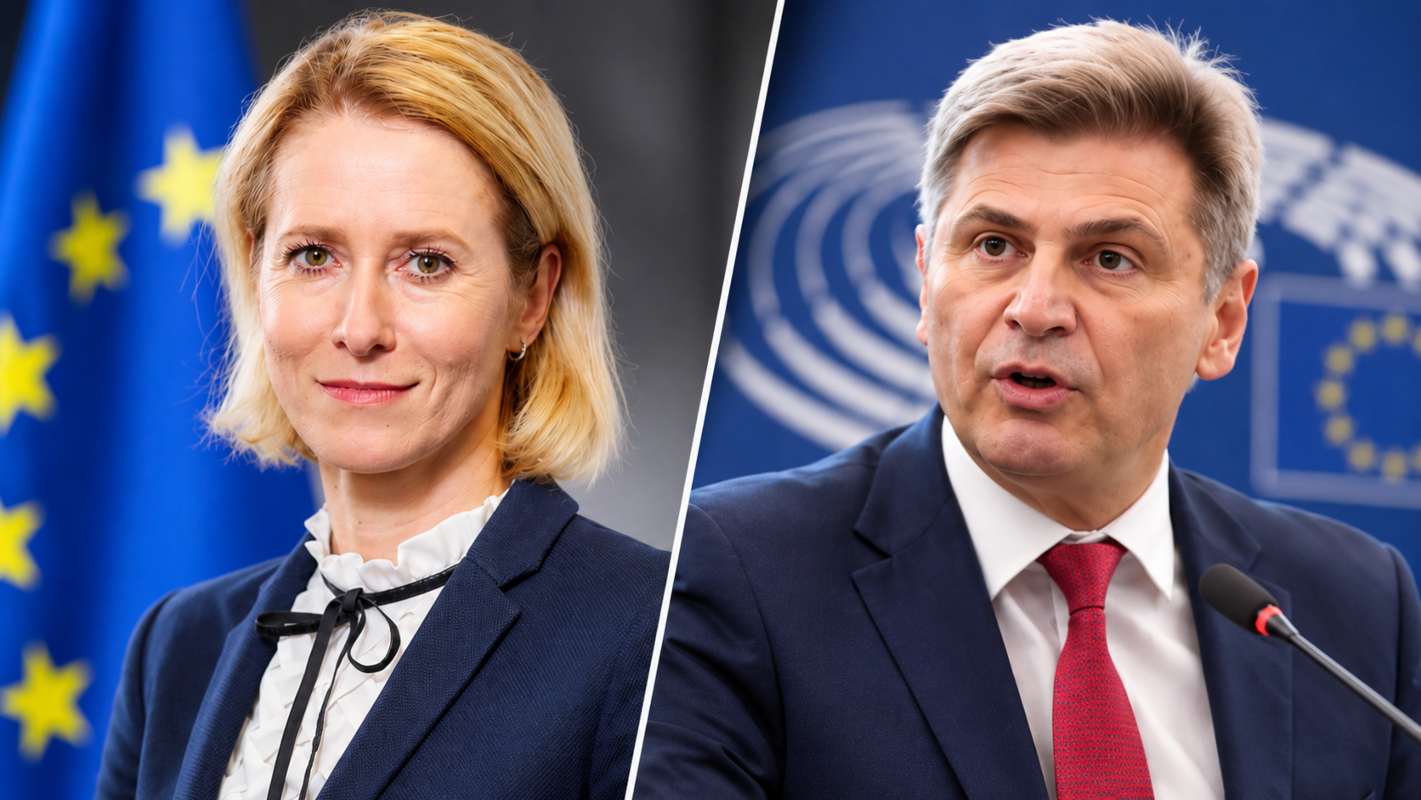
In a written response to Greek Member of the European Parliament Nikolas Farantouris, EU High Representative for Foreign Affairs and Security Policy Kaja Kallas addressed the possible activation of Article 42(7) of the Treaty on European Union, the bloc’s mutual assistance clause.
According to the response reported on November 12, Kallas acknowledged the relevance of the provision and stressed that invoking it remains the “sovereign prerogative of the member state that has been attacked.”
Her clarification places responsibility for initiating the mechanism firmly with the country concerned.
For Athens, the issue is no longer simply about the legal existence of European solidarity. It raises a broader question about whether the EU possesses the operational readiness to translate its treaty obligations into effective assistance during a serious security crisis.
Kallas: The Decision Belongs to the Member State Under Attack
The central point of Kallas’ response concerns the institutional procedure for invoking the EU’s mutual assistance clause.
Article 42(7) cannot be activated unilaterally by the European Commission or the High Representative.
Instead, the initiative belongs to the member state that considers itself the victim of an armed attack and requests assistance from its European partners.
Kallas described this decision as the “sovereign prerogative of the member state that has been attacked.”
For Greece, this means that Athens would retain the authority to invoke the clause if an armed attack occurred under circumstances meeting the treaty’s requirements.
However, invoking Article 42(7) would not automatically trigger a unified EU military operation.
The provision creates obligations for other member states, but the practical form of assistance would depend on national decisions, available capabilities and coordination between governments.
This distinction is central to the debate over European defence integration.
What Article 42(7) Actually Provides
Article 42(7) of the Treaty on European Union establishes a mutual assistance obligation among EU member states.
Its central provision states that, if a member state becomes the victim of armed aggression on its territory, the other member states must provide aid and assistance by all the means in their power, in accordance with Article 51 of the United Nations Charter.
The clause is among the strongest collective security commitments contained in the EU treaties.
Yet it has important limitations.
First, it does not establish a permanent European military command with automatic authority over national armed forces.
Second, the treaty respects the specific character of the security and defence policies of certain member states.
Third, it recognises that NATO remains the foundation of collective defence for countries belonging to the Alliance.
Article 42(7) is therefore distinct from NATO’s Article 5, although the two frameworks can complement one another.
The EU mechanism places mutual assistance obligations on member states, but does not prescribe an identical military response from each country.
Farantouris Calls for an Immediate Operational Plan
Following Kallas’ response, Nikolas Farantouris urged the Greek government to take the issue to the highest European political level.
“The prime minister should brief tomorrow’s European Council and immediately take the initiative to draw up an operational plan for implementing the mutual assistance clause under Article 42(7),” he said in his November 12 statement.
His intervention focuses on a critical gap between legal commitments and practical preparedness.
Although the EU treaties establish a mutual assistance obligation, the precise procedures for mobilising support during a crisis are not equivalent to an automatic, centrally directed military response.
Farantouris is calling for a more clearly defined operational framework.
Such a framework could involve crisis assessment, information sharing, military and civilian coordination, and procedures for mobilising available national capabilities.
It would also require agreement among member states, since the High Representative cannot independently impose military commitments on national governments.
The proposal should be understood as a call to strengthen and accelerate European preparedness, rather than evidence that no planning mechanisms currently exist.
The Greece–Cyprus Interconnector Becomes a European Security Issue
The debate is directly connected to the electricity interconnection project between Greece and Cyprus.
The planned subsea cable is designed to link Cyprus more closely to the European electricity system, strengthening energy security and reducing the island’s longstanding energy isolation.
The project carries strategic significance beyond its commercial and technical dimensions.
Its implementation requires maritime surveys and subsea operations in the Eastern Mediterranean, a region marked by competing claims and unresolved disagreements over maritime jurisdiction.
Turkey has repeatedly advanced positions concerning maritime zones and related activities that Greece and Cyprus dispute.
Consequently, the project has become a test of how the EU protects strategic infrastructure and supports member states exercising rights under international law.
The distinction between diplomatic tensions and armed aggression remains essential.
A dispute over maritime notifications, the issuance of NAVTEX messages or a threat to a commercial project would not, by itself, automatically satisfy the requirements for invoking Article 42(7).
The clause specifically concerns armed aggression against a member state.
Turkey, NATO and Europe’s Strategic Dilemma
The situation is particularly complex because Greece and Turkey are both NATO members, while Turkey is not a member of the European Union.
In a hypothetical serious military confrontation, Greece’s EU mutual assistance rights would exist alongside its NATO commitments.
The relationship between these two frameworks would require careful diplomatic and operational coordination.
Article 42(7) does not expressly exclude a scenario in which the attacking third country is itself a NATO member.
However, the treaty does not establish a predetermined military response for such a situation.
The type of assistance offered by European partners could vary according to the circumstances, national capabilities and applicable international law.
This uncertainty is one of the central issues raised by Farantouris.
His argument is that Europe should develop clearer arrangements before a crisis emerges, rather than determine the practical meaning of mutual assistance only after an attack has occurred.
Kallas Points to EU Crisis-Response Instruments
According to the published account of her answer, Kallas also referred to a “catalogue of EU tools that can be used in a crisis.”
This reference highlights the fact that the EU’s response capabilities extend beyond military assistance.
European institutions and member states possess diplomatic, economic, security and crisis-management instruments that may be relevant depending on the nature of a threat.
These include political coordination, sanctions frameworks where legally appropriate, intelligence cooperation and various civilian and defence-related capabilities.
Their deployment, however, depends on the applicable legal basis and decisions by the relevant European and national authorities.
The existence of such instruments does not necessarily guarantee that they can be deployed rapidly or in a coordinated manner.
That is precisely the operational challenge at the centre of the current debate.
The French Precedent: Article 42(7) Was Activated in 2015
The mutual assistance clause is not merely a theoretical treaty provision.
France invoked Article 42(7) in November 2015 following the terrorist attacks in Paris.
The other EU member states expressed their support, and assistance was subsequently organised through bilateral arrangements.
The experience demonstrated both the political importance and the practical limitations of the mechanism.
Rather than creating a unified EU military operation, the clause facilitated cooperation and support between individual member states.
The French precedent remains relevant because it illustrates how Article 42(7) can be adapted to the circumstances of a particular crisis.
It also demonstrates why advance coordination and clearly established procedures can matter.
European Strategic Autonomy Faces a Practical Test
The exchange between Kallas and Farantouris comes amid a broader debate over Europe’s capacity to provide for its own security.
Russia’s war against Ukraine, changing transatlantic relations and mounting geopolitical tensions have intensified calls for stronger European defence capabilities.
EU member states have been discussing increased defence investment, industrial cooperation and improved military readiness.
Yet additional funding and defence programmes do not automatically produce an integrated crisis-response system.
Effective mutual assistance requires political coordination, military interoperability and clarity about the responsibilities of national governments.
For Greece and Cyprus, these questions are particularly relevant because the Eastern Mediterranean combines critical energy infrastructure, contested maritime claims and significant regional security challenges.
The discussion therefore extends beyond the immediate future of one electricity project.
It concerns the credibility of European security commitments in a strategically sensitive region.
What the Debate Means for Athens and Brussels
Farantouris’ initiative moves the discussion surrounding the Greece–Cyprus interconnector from bilateral diplomacy into the wider framework of European defence.
The central question is whether the EU is adequately prepared to implement the commitments already contained in its founding treaties.
Kallas has clarified who holds the authority to invoke the mutual assistance clause.
Farantouris is asking how Europe would respond once that decision had been made.
For the Greek government, the debate provides an opportunity to pursue more detailed European coordination on defence preparedness and the protection of strategic infrastructure.
It does not mean that the conditions for invoking Article 42(7) currently exist.
Nor does it constitute an EU commitment to launch a specific military operation in response to developments involving the electricity interconnector.
The wider political significance lies in the distinction between European solidarity as a legal obligation and European solidarity as an operational capability.
As geopolitical tensions continue to challenge the EU’s security architecture, the Eastern Mediterranean is emerging as another region where that distinction matters.
Source: pagenews.gr
Διαβάστε όλες τις τελευταίες Ειδήσεις από την Ελλάδα και τον Κόσμο