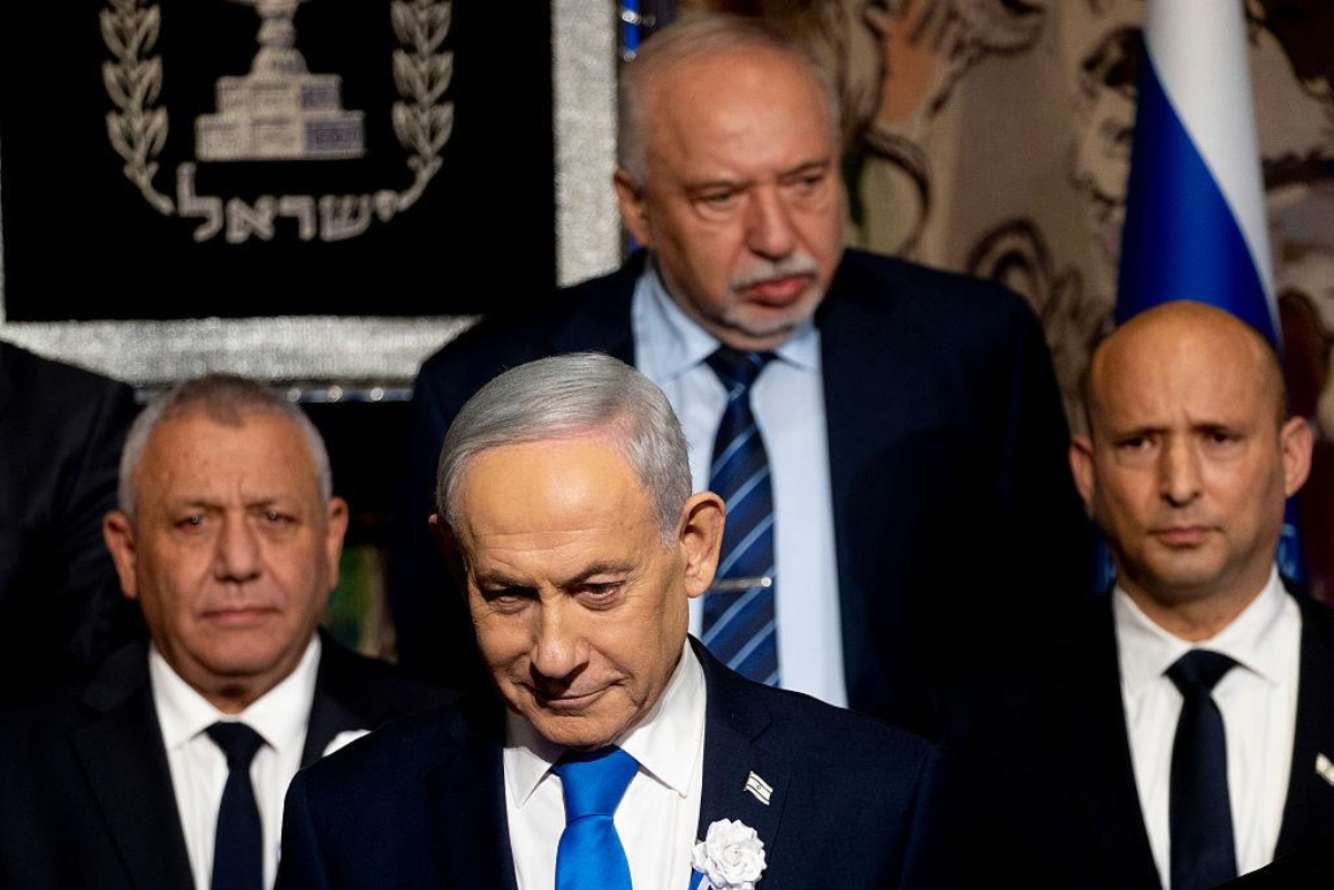
Two years in office for Benjamin Netanyahu while Donald Trump remains in the White House, followed by two years for Gadi Eisenkot under a potentially Democratic US administration.
That is the power-sharing arrangement Netanyahu is seeking, according to a report by journalist Ben Caspit in Al-Monitor. However, Eisenkot, leader of the Yashar party, and his political allies are unwilling to accept the proposed division of power.
Democratic gains on Capitol Hill and the prospect of a change in the White House are increasingly influencing negotiations over Israel’s next government.
Netanyahu’s Proposal: Two Years First, Eisenkot Later
Netanyahu’s central argument is that his close personal and political relationship with Donald Trump could serve Israel’s national interests over the next two years.
According to political sources cited by Al-Monitor, Likud negotiators have argued during discussions with Yashar representatives that Israel would benefit from Netanyahu remaining prime minister for the remainder of Trump’s presidency.
Under the proposed arrangement, Eisenkot would assume the premiership for the second half of the government’s four-year term, potentially coinciding with a Democratic administration in Washington.
The proposal effectively links Israel’s leadership succession to the American presidential calendar.


Eisenkot Rejects Netanyahu’s Terms
One of the principal obstacles to an agreement is Eisenkot’s campaign commitment to remove Netanyahu from power.
Israel’s October 27 elections, however, left both political blocs without a governing majority, complicating efforts to establish a stable coalition.
According to political sources cited by Al-Monitor, Eisenkot may be willing to consider joining a national unity government with Netanyahu, but he and his allies are unwilling to grant the incumbent prime minister the first two years in office.
The negotiations have therefore become increasingly focused on who should lead the government first and what guarantees would accompany the eventual transfer of power.
The Democratic Factor in Netanyahu’s Calculations
Democratic gains in the US Congress have introduced another dimension to Israel’s coalition negotiations.
Netanyahu is citing the possibility of a Democratic president succeeding Trump in 2028 as an additional argument for remaining in office during the next two years.
Israel’s military cooperation with Washington, policy toward Iran and broader developments across the Middle East are central to this calculation.
The prospect of a Democratic return to the White House remains an argument advanced by Netanyahu’s camp rather than an established political outcome.
A change in the US administration could bring different foreign policy priorities, although it would not necessarily fundamentally alter the longstanding strategic relationship between Washington and Israel.
The Gantz Precedent: A Premiership That Never Materialized
Netanyahu’s proposal recalls the power-sharing agreement he reached with Benny Gantz in 2020.
Under that arrangement, Netanyahu was to serve as prime minister first, with Gantz scheduled to succeed him according to an agreed timetable.
However, the government collapsed before the transfer of power could take place.
That experience underscores the importance of institutional safeguards, binding timelines and enforceable commitments in any new rotation agreement.
For Eisenkot, the question is not simply whether to participate in a unity government, but whether the proposed succession arrangements would guarantee an actual transfer of power.


Iran Remains a Major Point of Disagreement
Differences over Iran further complicate the prospect of a Netanyahu–Eisenkot coalition.
Eisenkot, a former chief of staff of the Israel Defense Forces, has questioned assessments of an immediate Iranian threat, according to previous reporting by Al-Monitor.
The prospect of renewed military operations against Iran, alongside US-led diplomatic efforts mediated by Qatar, presents another challenge for a potential unity government.
Washington’s attempts to restore the ceasefire and restart negotiations over Tehran’s nuclear program could require difficult decisions from Israel’s next leadership.
Israel’s Leadership Battle Meets America’s Political Calendar
The negotiations over Israel’s next government are increasingly intertwined with developments in Washington.
Netanyahu wants to remain in power while Trump occupies the White House. Eisenkot and his political allies, meanwhile, remain opposed to the proposed sequence of the rotation agreement.


With neither political bloc commanding a parliamentary majority, the dispute over who governs first remains a central obstacle to a coalition agreement.
The question is no longer simply who will lead Israel, but which American administration each potential Israeli prime minister will have to work with.
For now, Netanyahu is insisting on the first two years, Eisenkot’s camp is resisting, and negotiations have yet to produce a definitive agreement.
Source: pagenews.gr