Tasoulas and Bartholomew at the Phanar: Halki, Orthodox Unity and a Message to Ankara
 ΧΡΟΝΟΣ ΑΝΑΓΝΩΣΗΣ 9 '

Πηγή Φωτογραφίας: ΑΠΕ-ΜΠΕ, ΠΡΟΕΔΡΙΑ ΤΗΣ ΔΗΜΟΚΡΑΤΙΑΣ, ΘΟΔΩΡΗΣ ΜΑΝΩΛΟΠΟΥΛΟΣ//Tasoulas and Bartholomew at the Phanar: Halki, Orthodox Unity and a Message to Ankara



“May you continue, despite the challenges of our times, to safeguard the Hellenism of this City as a precious jewel in the mitre you wear upon your head.”
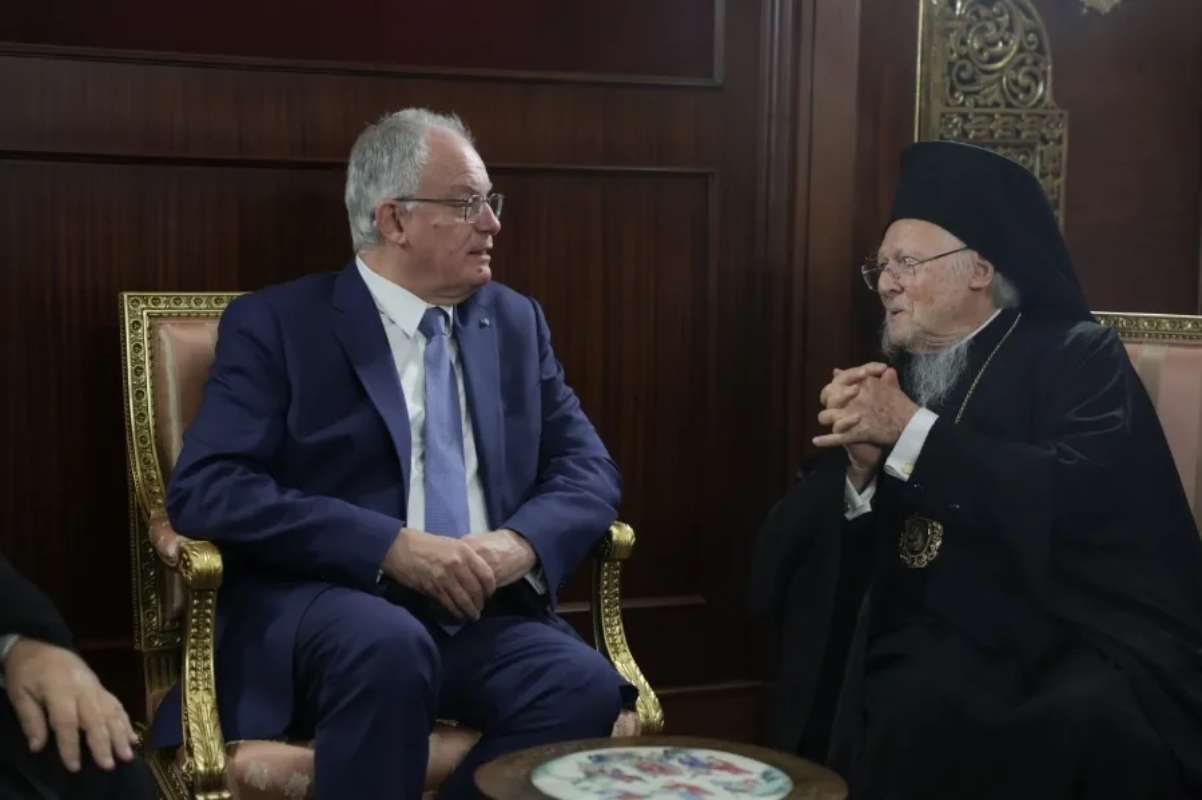
With these words, Greek President Konstantinos Tasoulas addressed Ecumenical Patriarch Bartholomew during their meeting at the Phanar on Saturday, November 28, 2026, highlighting the Patriarchate’s enduring responsibility for preserving the spiritual and cultural heritage of Hellenism in Constantinople.
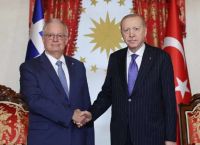
Coming after his meeting with Turkish President Recep Tayyip Erdoğan, Tasoulas’ visit to the Ecumenical Patriarchate carried considerable diplomatic, historical and religious significance.
The reopening of the Halki Theological School, peaceful coexistence between Greece and Turkey, Orthodox unity and the preservation of the historic Greek community in Istanbul dominated the exchanges between the two leaders.
The meeting also coincided with two significant anniversaries: Bartholomew’s 35 years on the Patriarchal Throne and 55 years since the suspension of theological education at Halki.
From Erdoğan’s Presidential Office to the Phanar
President Tasoulas is undertaking a three-day pilgrimage to Istanbul at the invitation of Ecumenical Patriarch Bartholomew to attend the Patriarchate’s Patronal Feast, commemorating Saint Andrew the First-Called Apostle.
Upon arriving at the Phanar, the Greek president was welcomed by Grand Protosyncellus Gregorios, students from the historic Zografeion High School and representatives of Istanbul’s Greek community.
Tasoulas lit a candle at the Patriarchal Cathedral of Saint George and attended a doxology presided over by Elder Metropolitan Emmanuel of Chalcedon before proceeding to the Throne Room for his meeting with Bartholomew.
The Greek president is accompanied by:
- Culture Minister Lina Mendoni.
- Deputy Foreign Minister Ioannis Loverdos.
- Deputy Foreign Minister Alexandra Papadopoulou.
The composition of the Greek delegation reflects the importance Athens attaches to the Ecumenical Patriarchate, religious freedom and the preservation of Greek cultural and educational institutions in Istanbul.
Bartholomew’s Message Across the Aegean
The Ecumenical Patriarch delivered a message of reconciliation, emphasizing the importance of strengthening relations between Greece and Turkey through dialogue and mutual understanding.
Bartholomew expressed his:
“Heartfelt wish that relations between Turkey and Greece be strengthened in a spirit of good neighbourliness and peaceful coexistence.”
Addressing younger generations on both sides of the Aegean, he added:
“May the young people on either side of the Aegean come to know one another more deeply and pass on to their children, as a precious inheritance, a lasting and sincere friendship.”
The remarks acquired particular diplomatic significance given that they followed the meeting between Tasoulas and Erdoğan earlier that day.
The Greek president, meanwhile, acknowledged the Patriarchate’s ability to fulfil its mission within Turkey’s legal framework while developing a substantial international presence.
“Over the past thirty-five years, this ecumenical institution has itself become an integral part of the international environment. And this is your achievement, Your All-Holiness,” Tasoulas said.
Halki: Breaking 55 Years of Silence
The reopening of the Halki Theological School remains one of the most significant unresolved issues concerning the Ecumenical Patriarchate.
Closed since 1971, the institution historically served as a major centre of Orthodox theological education, training generations of clergy and scholars.
Bartholomew highlighted the extensive renovation of the school, supported by Greek benefactor Athanasios Martinos, expressing hope that its classrooms would soon welcome students again.
“It patiently awaits the return of students after fifty-five years of silence,” the Patriarch said.
He continued:
“We wholeheartedly thank all those who have contributed and continue to contribute to this effort, and we pray that the voice of theology will soon be heard once again within its classrooms.”
Tasoulas is scheduled to visit Halki on Sunday, November 29, reinforcing the diplomatic and symbolic importance Athens attaches to the institution’s future.
Beyond its religious significance, the reopening of Halki would represent an important development for religious freedom, minority rights and relations between Greece and Turkey.
However, the renovation of its facilities does not itself constitute formal authorization from the Turkish authorities to resume theological education.

The Spiritual Thermopylae of Hellenism
One of the most moving moments of the meeting came when both leaders invoked the poetry of Constantine P. Cavafy.
Bartholomew drew upon Cavafy’s celebrated poem Thermopylae to describe the enduring mission of the Ecumenical Patriarchate.
“We shall remain faithful to these spiritual Thermopylae, which, by divine grace, we have been called to safeguard.”
The Patriarch emphasized the importance of remaining committed to duty and truth, connecting the institution’s historical responsibilities with the challenges it faces today.
Tasoulas responded with verses from Cavafy’s In Church, recalling the splendour of Byzantine civilization and the profound historical relationship between Hellenism and Orthodox Christianity.
The exchange placed the meeting within a broader historical framework, linking the contemporary presence of the Greek community in Istanbul with centuries of spiritual and cultural continuity.
Tasoulas: Humanity Needs the Light from the East
The Greek president also emphasized the Patriarchate’s international role as an institution promoting dialogue, reconciliation and peaceful coexistence.
“History teaches us that reconciliation, dialogue and mutual respect constitute the most enduring pillars of peace and understanding among peoples.”
He added:
“It is this Light from the East that humanity particularly needs, both as a teaching and as an example, especially in our times.”
Against a backdrop of international conflicts, geopolitical uncertainty and religious divisions, Tasoulas presented the Ecumenical Patriarchate as an institution whose message extends well beyond the Orthodox Christian world.
Its international mission, he suggested, offers an example of how historical religious institutions can contribute to contemporary efforts towards peace and mutual understanding.

Bartholomew: 35 Years of Leadership and Global Influence
Tasoulas paid particular tribute to Bartholomew’s 35 years of patriarchal service, describing his tenure as the longest in the institution’s seventeen-century history.
“In your person, Your All-Holiness, we honour the foremost hierarch of Orthodoxy, the tireless guardian of the Phanar, and a global spiritual leader.”
The Greek president credited Bartholomew with transforming the Patriarchate into an institution of international influence.
“The Phanar has evolved from a historic point of reference into a living place of encounter, dialogue and spiritual influence of global reach.”
Since assuming the Patriarchal Throne in 1991, Bartholomew has strengthened the institution’s international profile through interreligious dialogue, environmental advocacy and engagement with global political and religious leaders.
His leadership has also placed the preservation of Orthodox unity and the protection of religious communities at the centre of the Patriarchate’s international mission.
Three Days of Religious and Cultural Diplomacy
President Tasoulas’ itinerary includes several significant events:
- November 28: Meeting with Turkish President Recep Tayyip Erdoğan, visit to the Phanar and talks with Ecumenical Patriarch Bartholomew.
- November 29: Visit to the Halki Theological School and inauguration of The Radiance of the Phanar, an exhibition of Byzantine and post-Byzantine art at the Sismanoglio Megaron.
- November 30: Attendance at the Patriarchal and Synodal Divine Liturgy marking the Patronal Feast of the Ecumenical Patriarchate and commemorating Saint Andrew the First-Called Apostle.
The programme combines religious observance with cultural diplomacy, highlighting the historical depth of the Greek presence in Istanbul and the international significance of the Ecumenical Patriarchate.
The Phanar Between History and Geopolitics
The meeting between Tasoulas and Bartholomew brought together three interconnected priorities: peaceful Greek-Turkish relations, the protection of Istanbul’s historic Greek community and the preservation of the Ecumenical Patriarchate’s universal mission.
For Athens, the reopening of Halki remains a particularly important issue that could give tangible substance to declarations of goodwill between the two countries.
For the Patriarchate, the challenge extends beyond diplomatic relations. It concerns the ability of a centuries-old institution to preserve its spiritual heritage while continuing to engage with the contemporary world.
Bartholomew’s reference to Cavafy’s spiritual Thermopylae captured the essence of that responsibility: safeguarding a historical inheritance without abandoning the pursuit of dialogue, reconciliation and peace.
Source: pagenews.gr
Διαβάστε όλες τις τελευταίες Ειδήσεις από την Ελλάδα και τον Κόσμο