EU Budget Revolt: Four Nations Block €2 Trillion Deal as Meloni Defies Macron and Europe Splits
 ΧΡΟΝΟΣ ΑΝΑΓΝΩΣΗΣ 9 '
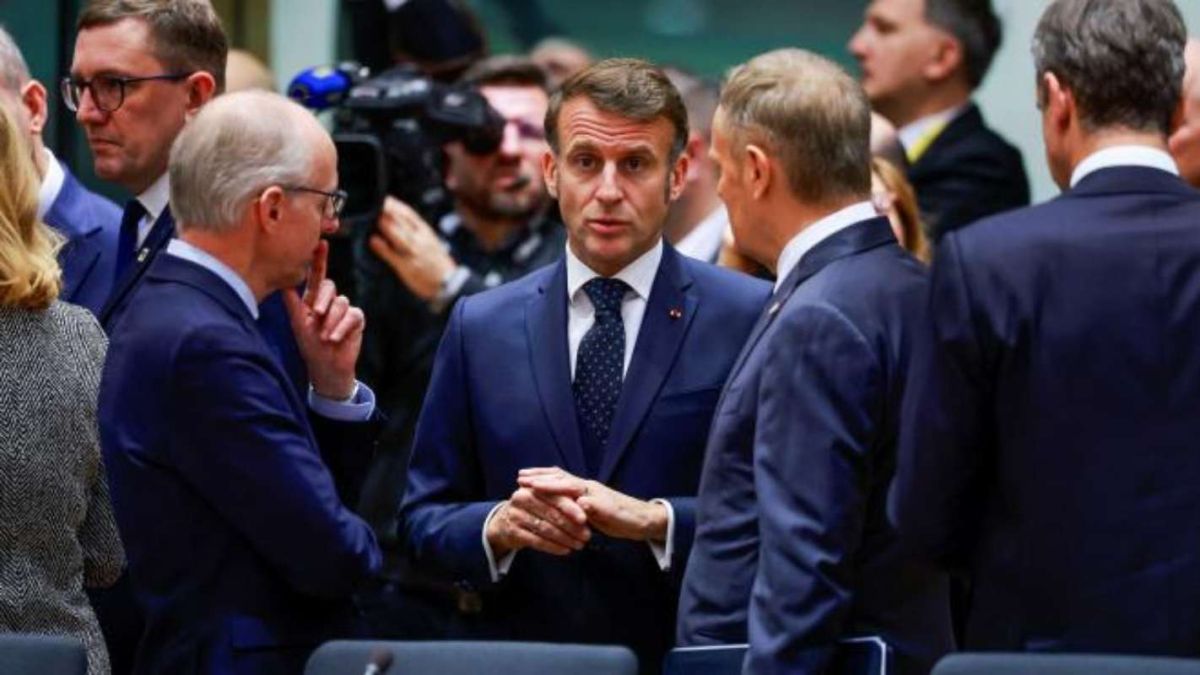
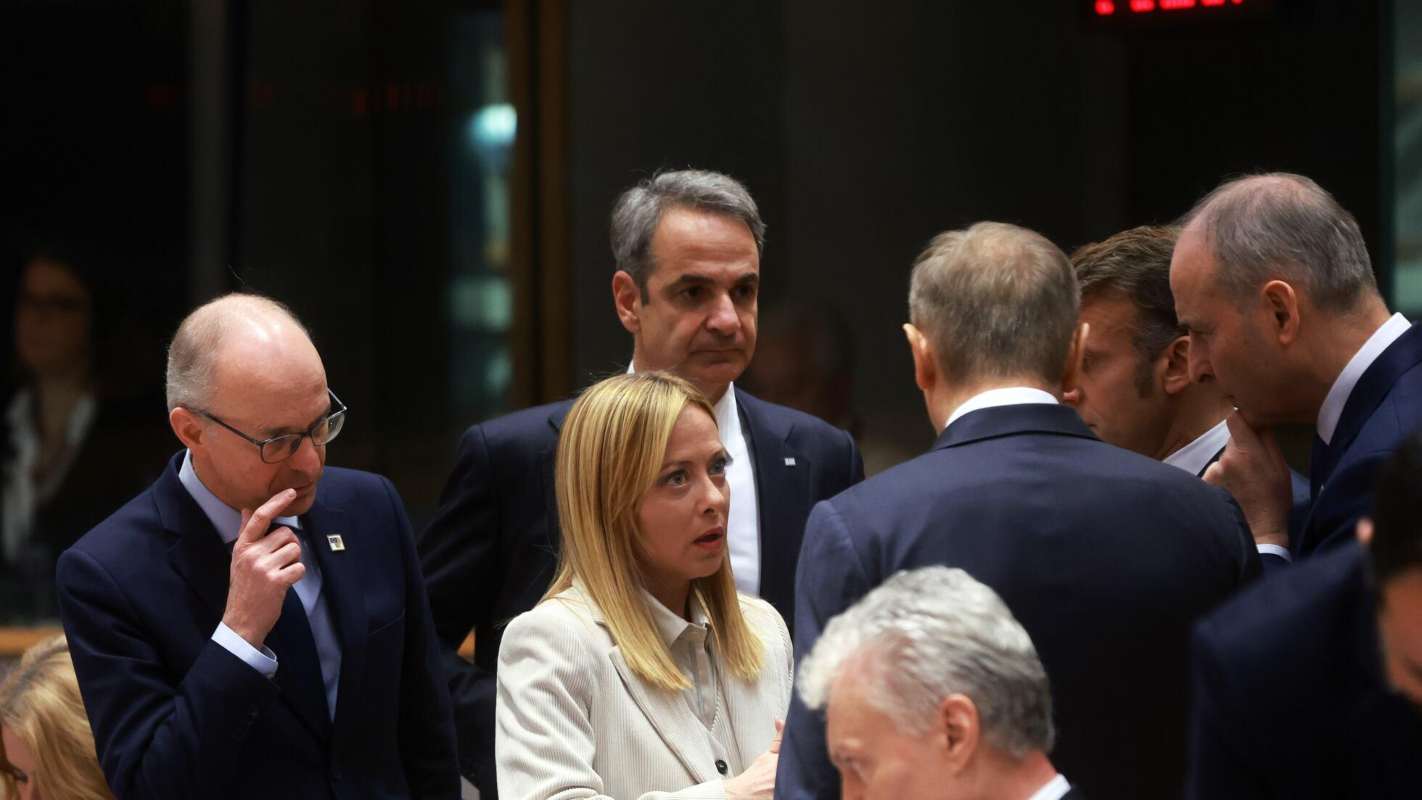
Πηγή Φωτογραφίας: AP Photo/EU Budget Revolt: Four Nations Block €2 Trillion Deal as Meloni Defies Macron and Europe Splits



“I have no deadline. I have conditions.”
With those words, Italian Prime Minister Giorgia Meloni captured the political impasse that brought the extraordinary European Council summit in Brussels to a premature end.
Negotiations over the European Union’s nearly €2 trillion budget for 2028–2034 collapsed on Thursday, November 26, without an agreement, forcing leaders to abandon the scheduled second day of discussions.
Austria, Belgium, Denmark and Sweden refused to participate in further small-group meetings organised by European Council President António Costa, exposing fundamental disagreements over the size, financing and strategic priorities of the EU’s next seven-year budget.
The confrontation now moves to the December 17–18 summit, where European leaders must determine not only how much Europe needs to spend, but also who will pay the bill.
The Revolt of the Four and the “Sensible Seven”
Costa attempted to overcome divisions among the 27 member states by organising successive meetings involving smaller groups of national leaders.
The strategy encountered resistance from governments advocating substantial spending reductions.
According to POLITICO, diplomats representing fiscally conservative countries interpreted the initiative as an attempt to weaken their negotiating alliance through selective concessions.
The Austrian government maintained that two rounds of discussions had already taken place and that further meetings were unlikely to produce meaningful progress.
Austria, Belgium, Denmark and Sweden belong to a broader coalition of seven governments known as the “Sensible Seven”, which advocates tighter fiscal discipline and a more restrained European budget.
Their refusal to continue participating contributed to the premature conclusion of the summit, leaving Costa with limited progress ahead of December’s negotiations.
Sweden: “We Cannot Be the European Union’s ATM”
Swedish Prime Minister Ulf Kristersson delivered one of the summit’s most striking statements.
“We cannot be the European Union’s ATM,” he declared, highlighting Stockholm’s opposition to a substantial increase in common European spending.
Germany and Sweden favour a smaller overall budget, with greater emphasis on security and the efficient allocation of resources.
Italy and Spain, meanwhile, insist on protecting agricultural subsidies and cohesion funding for economically disadvantaged regions.
Czech Prime Minister Andrej Babiš also defended regional funding, arguing that reducing economic disparities between European regions remains one of the Union’s fundamental objectives.
The disagreement reflects competing national priorities: limiting financial contributions, maintaining economic solidarity and responding to emerging geopolitical threats.
From €204 Billion to €250 Billion: The Battle Over Spending Cuts
The European Commission’s original proposal for the 2028–2034 Multiannual Financial Framework approaches €2 trillion.
Costa had already proposed spending reductions of €204 billion in an attempt to accommodate the demands of fiscally conservative governments.
However, according to diplomatic sources cited by POLITICO, potential cuts of €220–230 billion were also discussed behind closed doors.
It remains unclear whether those figures represent a revision of the original reductions or additional cuts.
Finnish Prime Minister Petteri Orpo went further, advocating a budget approximately €250 billion below the Commission’s initial proposal.
<escape> </escape>
| Budget proposal | Amount |
|---|---|
| European Commission proposal | Nearly €2 trillion |
| Costa’s initial proposed cuts | €204 billion |
| Further reductions under discussion | €220–230 billion |
| Finland’s proposed cuts | €250 billion |
The central question is increasingly shifting from the overall size of the budget to which European programmes will absorb the reductions.
Costa is reportedly considering deeper cuts to competitiveness programmes and external assistance while providing greater protection for agriculture and cohesion funding.
Such an approach could help secure support from Southern European governments, but it could also reduce investment in European industry, technological innovation and research at a time of intensifying competition with the United States and China.
Macron Warns of a “Strategic Mistake” as French Elections Loom
French President Emmanuel Macron described the proposed spending reductions as a “strategic mistake”, arguing for stronger European financial instruments.
For Paris, however, the negotiations also carry significant domestic political implications.
France’s presidential election, scheduled for April 2027, creates additional pressure to secure an agreement before the campaign enters its decisive phase.
Marine Le Pen has advocated reducing France’s contribution to the European budget, adding another layer of political uncertainty to the negotiations.
Although European governments technically have much of 2027 to reach an agreement, Macron is seeking to accelerate the process.
A prolonged budget dispute could become entangled with France’s electoral campaign, complicating negotiations over the country’s financial commitments to Brussels.

Meloni Refuses Macron’s Timetable
Despite sharing Macron’s opposition to extensive spending cuts, Giorgia Meloni has refused to commit to the French president’s preferred timetable.
“I have no deadline. I have conditions,” the Italian prime minister said, making clear that Rome would endorse an agreement only when it considered the outcome fair to Italy.
Meloni also suggested that European leaders remained “light-years” away from a compromise.
Her intervention exposed the limits of the emerging Franco-Italian alignment.
While Paris and Rome share concerns about excessive budget reductions, they differ over the urgency of reaching a deal and the conditions under which they would accept one.
For Italy, agricultural subsidies, regional investment and national economic interests remain central negotiating priorities.
Tusk: “A Cheap Europe Could Be a Very Expensive Mistake”
Polish Prime Minister Donald Tusk introduced a broader geopolitical dimension into the budget confrontation.
“A cheap Europe could be a very expensive mistake,” he wrote during the summit.
For Poland and other Eastern European countries, the debate over spending is inseparable from defence requirements, the Russian security threat and uncertainty surrounding the future scale of American military engagement in Europe.
Governments are being asked to finance stronger European defence capabilities while simultaneously responding to domestic demands for fiscal restraint.
The challenge is particularly acute as Europe seeks greater strategic autonomy without undermining its existing economic and social commitments.

Ukraine’s €45 Billion Loan Adds Another Fault Line
The proposed €45 billion loan to Ukraine has introduced a separate but politically connected dispute.
Although the financing mechanism is distinct from the seven-year EU budget, Germany and the Netherlands reportedly want governments that opt out of supporting Kyiv to lose access to certain budgetary benefits.
Hungary, Slovakia and the Czech Republic oppose such a linkage and insist on maintaining their exemptions.
According to Bloomberg, the issue received limited attention during the closed-door summit discussions and the disagreement does not appear to threaten the loan itself.
Nevertheless, the controversy illustrates the growing difficulty of separating European security commitments from broader negotiations over financial solidarity.
What Is at Stake for Greece?
For Greece, the outcome of the negotiations carries significant economic and strategic implications.
The 2028–2034 budget will influence agricultural subsidies, regional development, infrastructure investment, technological modernisation and European defence financing.
Protecting the Common Agricultural Policy and cohesion funding remains particularly important for countries that rely heavily on European resources to support regional economic development.
At the same time, increased defence spending creates additional financial demands that must be accommodated within the broader European framework.
Athens therefore faces a dual challenge: supporting stronger European security while ensuring that new strategic priorities do not come at the expense of agricultural production and regional investment.
December 17–18: Europe’s Next Budget Showdown
Costa defended his negotiating strategy, arguing that approximately ten hours of discussions had helped identify potential areas of compromise ahead of December.
European officials speaking to Bloomberg, however, questioned whether the extraordinary summit had been necessary while national positions remained largely unchanged.
Negotiations will now return to ambassadors and national government teams before leaders reconvene on December 17–18.
Berlin and Stockholm want spending restraint. Rome and Madrid seek protection for agriculture and regional development. Paris is pushing for an agreement before its presidential election campaign intensifies, while Warsaw warns against underfunding European security.
The European Union must reconcile these competing demands while financing defence, technological sovereignty, industrial competitiveness, agricultural production and support for Ukraine.
Behind the confrontation over billions of euros lies a more fundamental question: what kind of Europe are its 27 governments prepared to finance over the next decade?
Source: pagenews.gr
Διαβάστε όλες τις τελευταίες Ειδήσεις από την Ελλάδα και τον Κόσμο