Meloni Challenges Merz Over EU’s €2tn Budget as Greece Joins the Coalition of 17
 ΧΡΟΝΟΣ ΑΝΑΓΝΩΣΗΣ 10 '

Πηγή Φωτογραφίας: AP Photo//Meloni Challenges Merz Over EU’s €2tn Budget as Greece Joins the Coalition of 17



The European Union is increasingly divided into two competing fiscal camps as Italian Prime Minister Giorgia Meloni takes a leading role in negotiations over the bloc’s 2028–2034 budget, while German Chancellor Friedrich Merz spearheads efforts to reduce expenditure.
“I don’t have a deadline, I have conditions,” Meloni declared upon arriving at the extraordinary European Council summit in Brussels on Thursday, November 26, 2026.
According to POLITICO, European governments remain deeply divided over both the overall size of the seven-year budget, originally estimated at nearly €2tn, and the allocation of resources between traditional funding programmes and emerging strategic priorities.
Greece has joined a coalition of 17 member states seeking to protect agricultural subsidies and regional development funding against proposed spending reductions.
Meloni: Italy Will Not Pay More to Receive Less
The Italian prime minister rejected pressure to conclude negotiations before the end of 2026, making clear that Rome would not accept an agreement that increases Italy’s financial contributions while reducing the benefits it receives.
Meloni argued that the proposed criteria for allocating European funds risk penalising Italy and other economies that depend on agricultural and regional development programmes.
She insisted that Italy would only endorse an agreement it considers fair, irrespective of the political deadlines established by other European governments.
Rome is particularly opposed to financing new European priorities through reductions in the Common Agricultural Policy and cohesion funding.
Asked whether meaningful progress could be achieved during Thursday’s negotiations, Meloni replied: “I’m not optimistic.”

The Coalition of 17: Greece Joins Italy, Spain and Poland
Leaders of the Friends of Cohesion group met on Thursday morning in Brussels to coordinate their negotiating positions ahead of discussions with European Council President António Costa.
The coalition comprises 17 member states:
Greece, Italy, Spain, Portugal, Cyprus, Malta, Poland, Romania, Bulgaria, Czechia, Hungary, Slovakia, Slovenia, Croatia, Estonia, Latvia and Lithuania.
The group appointed Italian Prime Minister Giorgia Meloni and Romanian President Nicușor Dan to represent its common positions during negotiations with Costa.
The meeting was scheduled for 4:45–5:15 p.m. Brussels time.
Spanish Prime Minister Pedro Sánchez was absent from the summit, with French President Emmanuel Macron expected to represent Spain during the discussions, according to POLITICO.
The coalition’s central objective is to preserve sufficient European funding for agriculture, infrastructure, regional development and economic convergence.
For Greece and several Southern and Eastern European economies, these programmes remain important sources of public investment and economic modernisation.
Germany’s “Sensible Seven” Demand Billions in Spending Cuts
Opposing the Friends of Cohesion is a coalition of seven fiscally conservative governments, which have adopted the name “Sensible Seven.”
The group includes Germany, the Netherlands, Austria, Belgium, Denmark, Sweden and Finland.
Their leaders were scheduled to meet Costa between 4:15 and 4:45 p.m. Brussels time.
According to POLITICO, the coalition is seeking spending reductions worth tens of billions of euros, with particular emphasis on cutting regional development expenditure.
The confrontation exposes a longstanding divide between Northern European governments seeking to contain their financial contributions and Southern and Eastern European countries seeking to preserve funding for economic development.
The European Commission’s original budget proposal approached €2tn, while subsequent compromise proposals have sought to reduce the overall financial envelope.
The dispute is increasingly focused on which programmes will absorb those reductions.

€60bn in Cuts Threaten Europe’s Competitiveness Agenda
The proposed spending reductions extend beyond agriculture and regional development.
The Council’s latest budget proposal envisages approximately €60bn in cuts to the European Competitiveness Fund compared with the European Commission’s original plan.
The fund is intended to support investment across several strategic sectors:
- Clean technologies and the energy transition.
- Healthcare and pharmaceutical innovation.
- European defence manufacturing.
- Digital technologies.
- Research and industrial development.
Under the Commission’s original proposal, 43 per cent of the fund would be allocated to climate and environmental projects.
Although governments have not challenged that percentage, reducing the fund’s overall size would inevitably mean fewer financial resources for environmental investment.
The proposed cuts highlight a fundamental economic challenge for Europe.
The bloc is seeking to strengthen its industrial and technological position against the United States and China while several member states are simultaneously demanding tighter controls on common European expenditure.
Washington Pushes Back Against an EU Big Tech Tax
The United States has also entered the debate, opposing Costa’s proposal to revive discussions on a European digital services tax.
The initiative is being considered as a potential source of additional revenue for the next EU budget, potentially reducing the need for higher national contributions.
A US State Department spokesperson told POLITICO that Washington opposes the proposed EU-wide levy, arguing that digital services taxes discriminate against American companies and ultimately increase costs for consumers.
The intervention introduces another complication into the European budget negotiations.
Brussels is seeking new revenue sources to finance growing expenditure requirements, while Washington remains opposed to measures that could disproportionately affect American technology companies.
Meloni Draws a Mediterranean Red Line Over Ukraine
The Italian prime minister also addressed Ukrainian attacks against Russian military vessels in Libyan waters, warning against an escalation of the conflict in the Mediterranean.
Meloni stressed that European countries must continue supporting Ukraine’s ability to defend itself while protecting the security of their own borders and citizens.
She made clear that the conflict must not extend into the Mediterranean.
However, the Italian leader insisted that the incidents should not undermine European financial support for Kyiv.
Her intervention carries particular significance for Southern European countries, where maritime security, commercial shipping and energy infrastructure are closely linked to stability across the Mediterranean.
Le Pen Accuses Macron of Seeking to Pre-Empt France’s Election
The budget negotiations have also become entangled with France’s 2027 presidential election.
Marine Le Pen has renewed accusations that Emmanuel Macron is attempting to accelerate negotiations to prevent his successor from influencing the next European financial framework.
In a social media statement, the National Rally leader argued that concluding an agreement before the election could restrict a future French administration’s ability to defend its national interests during European budget negotiations.
Macron has rejected those accusations and indicated that he is unwilling to continue negotiations indefinitely into 2027.
Paris and Berlin are seeking an agreement before the end of the year, while Rome insists that political deadlines cannot override national economic interests.
The disagreement introduces another layer of uncertainty into negotiations already complicated by competing fiscal priorities.
Metsola Warns: The European Parliament Needs 361 Votes
European Parliament President Roberta Metsola reminded national leaders that an agreement among governments alone would not be sufficient.
The next Multiannual Financial Framework also requires the consent of the European Parliament, where 361 votes are needed to secure approval.
Metsola urged governments to move beyond rigid negotiating positions and identify areas where compromises can be reached.
She warned that securing the necessary parliamentary majority would become considerably more difficult if national leaders failed to take the demands of European lawmakers into account.
The parliamentary dimension adds further pressure to the negotiations, particularly given the approaching French presidential election and the political timetable favoured by Paris and Berlin.
Farmers Protest Outside the European Council
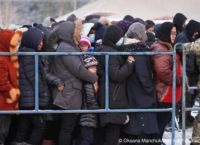
While European leaders negotiated inside the Council building, farmers demonstrated in the streets of Brussels against proposed reductions in agricultural expenditure.
Protesters highlighted concerns over food security, the sustainability of European agricultural production and the financial pressures facing farming communities.
Their mobilisation underscores the domestic political significance of the Common Agricultural Policy, particularly in countries such as France, Italy, Poland, Spain and Greece.
Agricultural funding has become one of the most sensitive elements of the negotiations, as governments seek to accommodate rising defence and industrial expenditure without undermining established support programmes.
What Is at Stake for Greece?
For Athens, the outcome of the negotiations will have direct implications for European investment and development funding beyond 2027.
Greece’s priorities include protecting:
- Agricultural subsidies and rural development programmes.
- Regional cohesion and infrastructure investment.
- Energy interconnections and strategic transport networks.
- Industrial modernisation and digital transformation.
- Funding for border management and European security.
Greece’s participation in the coalition of 17 places Athens within a broad alliance seeking to prevent traditional European funding programmes from absorbing a disproportionate share of the proposed budget cuts.
The negotiations will help determine the availability of European resources for Greek public investment well into the next decade.
Europe’s €2tn Budget Battle Is Far From Over
The extraordinary summit has exposed the scale of disagreement between European governments over the bloc’s financial priorities.
Germany wants tighter spending controls. Italy and the Friends of Cohesion are demanding protection for agriculture and regional development. France is seeking an accelerated agreement before its presidential election, while the European Parliament insists that its own priorities must be incorporated.
Meanwhile, Washington’s opposition to a digital services tax complicates efforts to identify alternative revenue sources.
The negotiations are no longer simply about the size of the European budget. They concern how Europe will finance its security, competitiveness, agricultural production and economic development through 2034.
And as Meloni’s warning makes clear, a compromise remains a considerable distance away.
Source: pagenews.gr
Διαβάστε όλες τις τελευταίες Ειδήσεις από την Ελλάδα και τον Κόσμο