


Turkey, the U.S., and the Aegean: Mediation, F-35s, and S-400s in a High-Stakes Geopolitical Game
 ΧΡΟΝΟΣ ΑΝΑΓΝΩΣΗΣ 3 '
Πηγή Φωτογραφίας: AP Photo//Turkey, the U.S., and the Aegean: Mediation, F-35s, and S-400s in a High-Stakes Geopolitical Game



Ankara Conditionally Open to U.S. Mediation
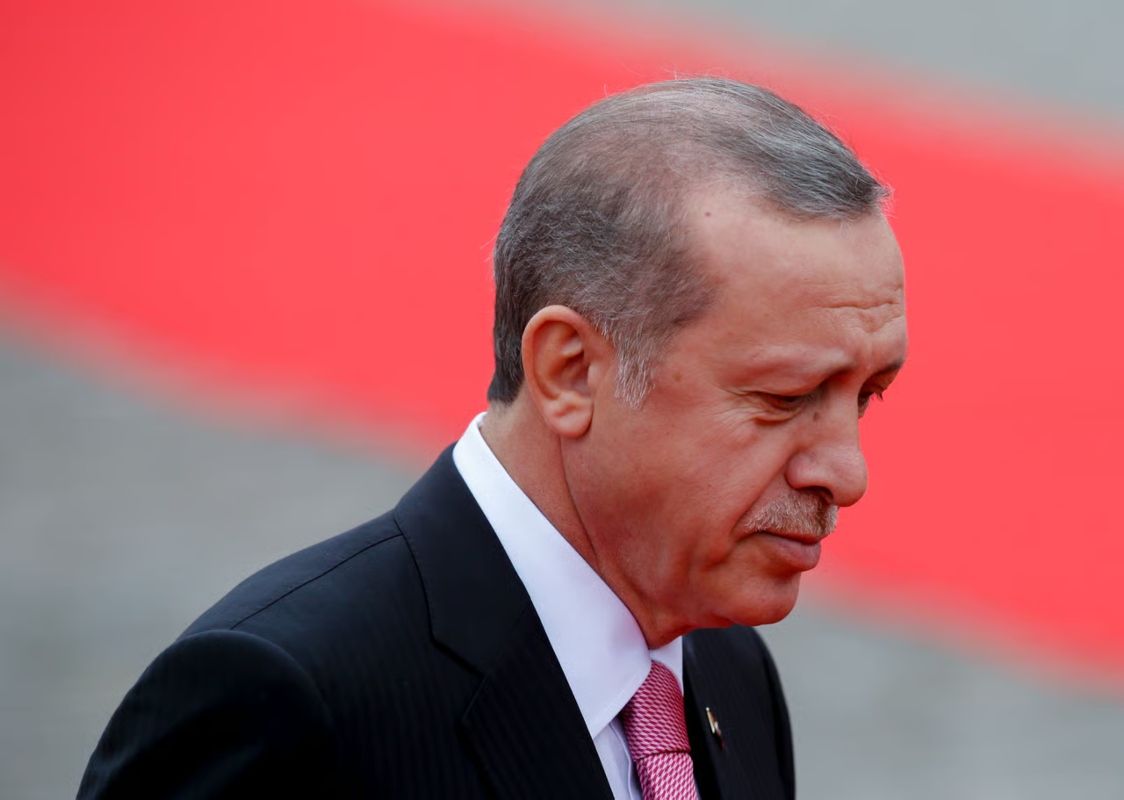
A Turkish source told Al-Monitor that Ankara could accept a role for the United States in de-escalating tensions with Greece, but strict conditions apply. Turkey emphasizes that all issues should first be addressed on a bilateral basis, while any third-party involvement must be fair, avoid supporting Greece’s maximalist positions, and not act as an arbitrator.
This position reflects Ankara’s concern that the Trump administration might continue policies perceived as favorable to Greece, especially after the strengthening of U.S.-Greece military cooperation and the deployment of U.S. armored vehicles on Greek Aegean islands—a move Turkey officially protested in 2022.
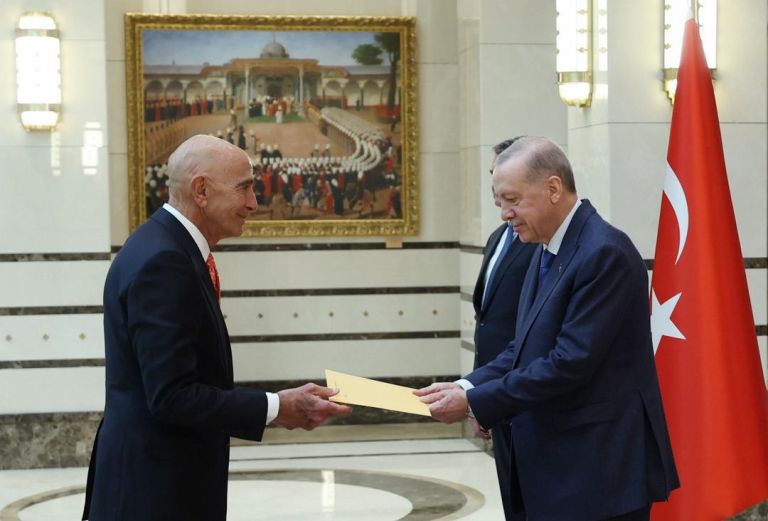
Despite Ambassador Tom Barrett’s statement that the U.S. is ready to act as a “bridge” between Athens and Ankara, the Greek side has made it clear that disputes are handled strictly bilaterally and in accordance with international law.
Barrett’s Double Messaging: S-400s and F-35s
In a matter of days, the U.S. ambassador sent conflicting signals to Ankara. On one hand, he indicated that Turkey is “close” to resolving the main obstacles to rejoining the F-35 program. On the other, he stressed that under U.S. law, Turkey cannot operate or even possess the Russian S-400 system.
This dual messaging reflects Barrett’s attempt to keep channels open with Turkey without provoking opposition in Congress or within NATO.
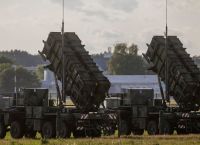
Officially, the S-400s are considered a threat to F-35s and NATO’s overall security architecture. In practice, however, they have become a political leverage tool, masking deeper geopolitical concerns: Turkey’s revisionist role in the Eastern Mediterranean, its strategic ties with Russia, and—crucially—Israel’s strong opposition to Ankara acquiring fifth-generation fighters.
Israeli pressure, along with Greek and Armenian groups in Congress, represents one of Ankara’s most difficult obstacles, making the S-400s more of a pretext than the primary reason for the deadlock.
The Future of the S-400s: Five Scenarios
Public debate points to five possible scenarios for the fate of Turkey’s S-400s and its participation in the F-35 program, ranging from full disengagement and reintegration into the program to limited retention or replacement with another system. The outcome will depend on diplomatic negotiations, Congressional pressure, and allied commitments.
Turkey is navigating a narrow path: trying to maintain strategic autonomy, avoid alienating NATO allies, and simultaneously manage multi-layered geopolitical challenges in the Eastern Mediterranean.
Ankara’s conditionally open stance toward U.S. mediation and Ambassador Barrett’s dual messaging highlight the complex regional balances. From the Aegean disputes to S-400s and F-35s, the geopolitical reality requires diplomatic flexibility, strategic prudence, and close monitoring of developments.
In this context, the U.S. appears to be attempting to manage conflicts between allies without undermining core national interests, ensuring Turkey remains within the NATO framework while avoiding full compliance with American demands.
Source: pagenews.gr
Διαβάστε όλες τις τελευταίες Ειδήσεις από την Ελλάδα και τον Κόσμο







Το σχόλιο σας