Souda on High Alert: US Unmanned Patrols and Athens’ Message on the Iran War
 ΧΡΟΝΟΣ ΑΝΑΓΝΩΣΗΣ 4 '
Πηγή Φωτογραφίας: eurokinissi//Souda on High Alert: US Unmanned Patrols and Athens’ Message on the Iran War



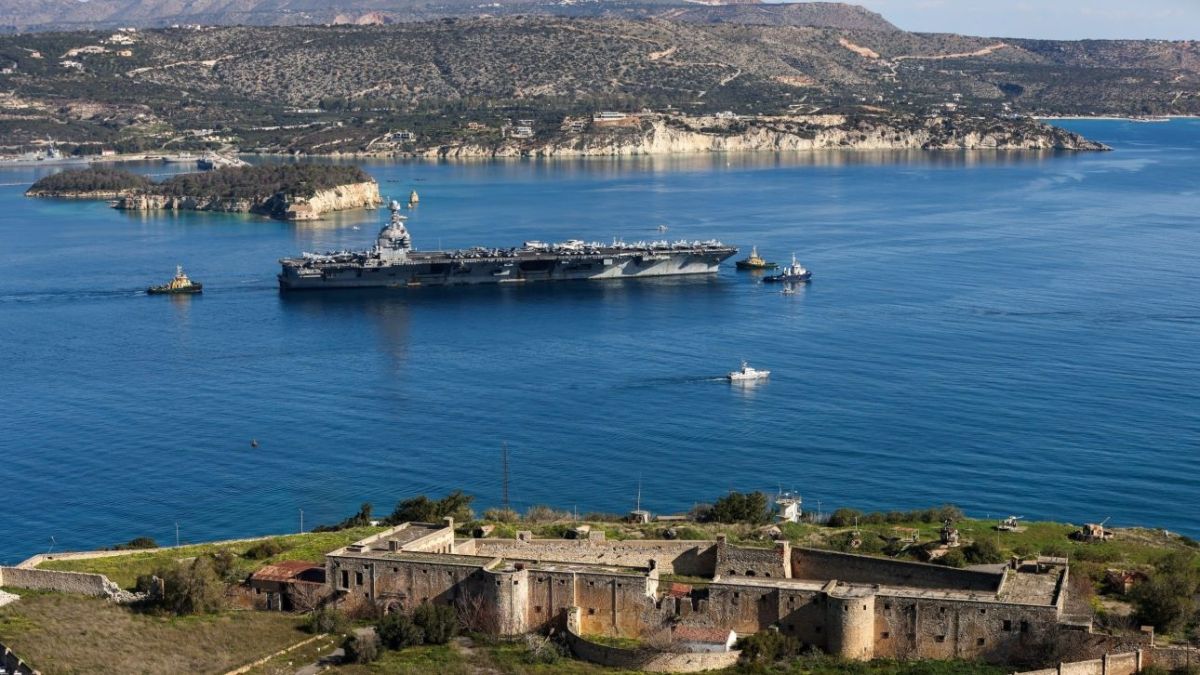
The escalating crisis in the Middle East is turning Greece—and particularly the naval base at Souda Bay Naval Base—into one of the most critical strategic hubs for NATO in the Eastern Mediterranean.
As United States forces expand their presence in the region with new surveillance systems and maritime patrols, the Greek government is attempting to maintain a delicate balance between alliance commitments and avoiding direct involvement in the war against Iran.
According to Greek and international sources, U.S. patrols using unmanned surface vessels (USVs) have already begun operating around Souda Bay, reinforcing security measures around the strategic base on the island of Crete.
The move comes as the Eastern Mediterranean increasingly becomes a major gathering point for Western naval forces.
Souda at the Center of the Geopolitical Confrontation
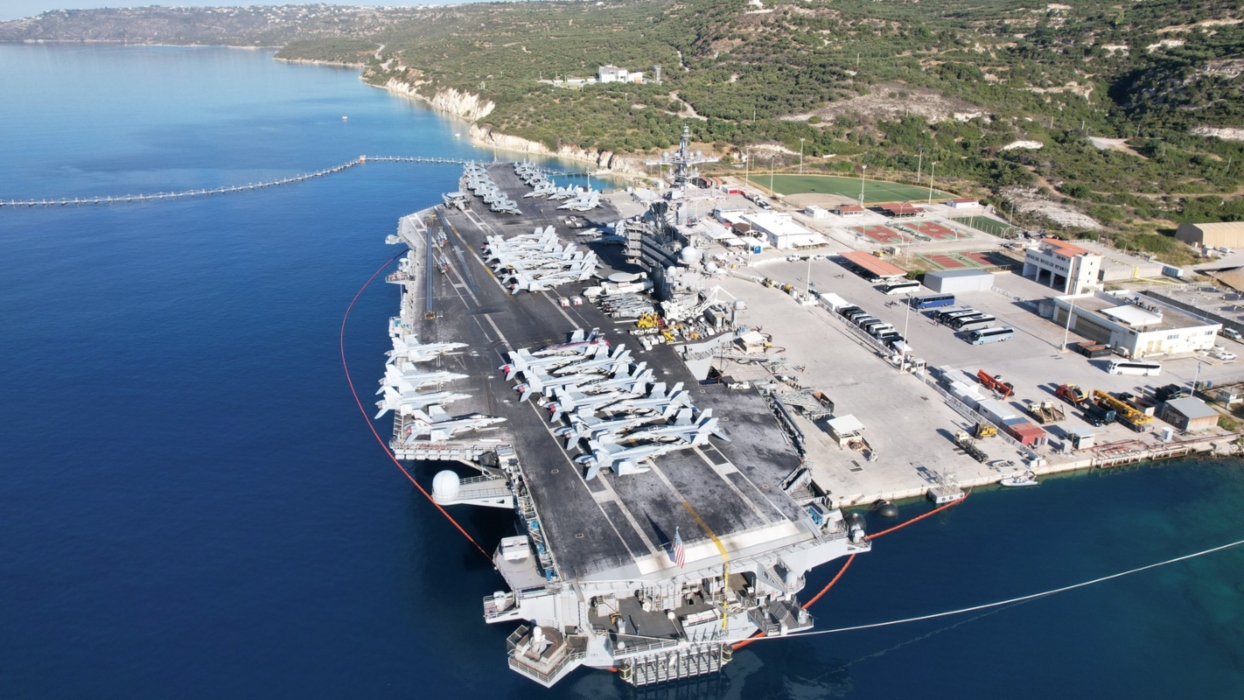
The naval installation at Souda Bay is widely regarded as one of the most important facilities used by the United States and NATO in the region.
The base supports:
- aircraft carrier deployments
- naval logistics and refueling
- operational support and surveillance missions
In recent years, the base has hosted major U.S. naval assets, including the aircraft carrier USS Gerald R. Ford.
Security upgrades are not coincidental. After drone attacks targeting the British military installation at RAF Akrotiri, Western countries significantly increased their military presence in the region to deter further strikes.
At the same time, security concerns have intensified after Greek authorities arrested a suspect allegedly spying on the Souda base, raising fears of possible intelligence-gathering operations by foreign services.
Athens Sends a Clear Message: “We Are Not Participating in Attacks on Iran”
Amid the rising tensions, the Greek government has sought to clarify the country’s position.
The Greek Minister of National Defence, Nikos Dendias, stated clearly that Greece is not participating in military operations against Iran.
“Greece is not involved in military operations against Iran,” he said, stressing that the measures taken are defensive and preventive.
During a visit to Cyprus, the defense minister added:“Countries that are not participating in hostilities should not become targets.”
Deterrence Moves by the Greek Armed Forces
Despite avoiding direct involvement in attacks, Greece has implemented several military measures aimed at strengthening regional security.
Among them:
- Greek frigates and F‑16 Fighting Falcon fighter jets deployed to reinforce the defense of Cyprus
- MIM‑104 Patriot missile batteries relocated to northern Greece for ballistic protection
- Participation in broader NATO surveillance and maritime security missions in the Eastern Mediterranean
These actions form part of a broader deterrence strategy, as Athens aims to protect critical infrastructure and allied territories without entering the conflict directly.
Eastern Mediterranean Emerging as a Strategic Military Hub
The concentration of military power in the region is striking.
Currently deployed in the Eastern Mediterranean are:
- the U.S. aircraft carrier USS Gerald R. Ford
- the French aircraft carrier Charles de Gaulle
- warships from Germany, Italy, Spain and Netherlands
- aircraft and air-defense systems deployed across Greece and Cyprus.
This buildup highlights the region’s importance as a strategic corridor controlling maritime routes, energy flows and potential military operations.
Greece’s Delicate Strategic Balance
Greece finds itself in a complex geopolitical position.
On one hand, it is a key ally of the United States and NATO in the Eastern Mediterranean. On the other, Athens seeks to avoid direct involvement in a broader regional war that could destabilize the entire area.
The deployment of U.S. patrols around Souda Bay—combined with Greece’s defensive military moves—suggests that the country is preparing for every possible scenario while carefully avoiding becoming an active participant in the conflict.
In an environment where geopolitical dynamics are shifting rapidly, Souda Bay once again emerges as a crucial Western strategic outpost in the Eastern Mediterranean.
Source: pagenews.gr
Διαβάστε όλες τις τελευταίες Ειδήσεις από την Ελλάδα και τον Κόσμο