


Brent crude at a fragile balance: Geopolitical risks and OPEC+ decisions threaten Greece’s economy
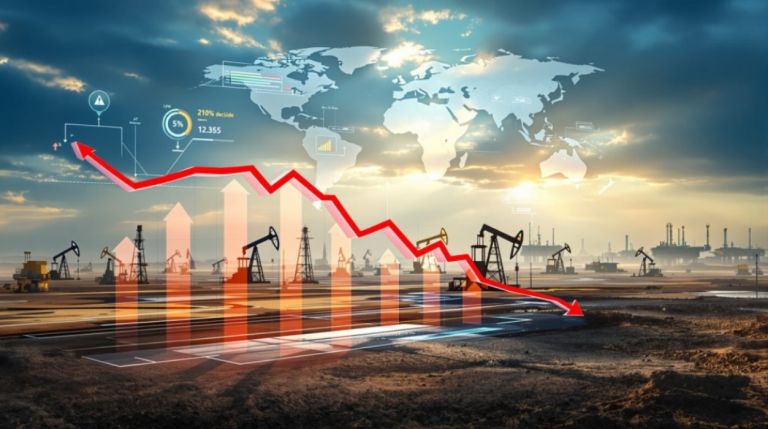
Πηγή Φωτογραφίας: freepik//Brent crude at a fragile balance: Geopolitical risks and OPEC+ decisions threaten Greece’s economy



The international oil market is navigating a period of high uncertainty, with Brent crude trapped in the $71–76 per barrel range. Behind this apparent stability lies a delicate equilibrium between geopolitical risks — mainly in the Middle East and Latin America — and production decisions by major oil producers.
For a net importer like Greece, every $10 change in Brent translates to roughly 5–10 euro cents per liter at the pump, directly impacting inflation, disposable income, and growth rates.
Geopolitical Catalysts and Three Price Scenarios
- Middle East / Strait of Hormuz Risk
- Around 30% of seaborne oil passes through this corridor.
- Any escalation, U.S. military moves, or navigational incidents could add $5–10 per barrel in risk premium, even without actual supply disruption.
- OPEC+ Production Decisions
- A gradual increase in production from April could signal that the cartel seeks to prevent overheating prices.
- Additional hundreds of thousands of barrels per day could cap Brent prices during spring.
- Venezuela and U.S. Sanctions
- Relaxation of sanctions could increase supply, exerting downward pressure on prices.
- Stricter sanctions or disruption would reduce supply, triggering upward price pressure.
Scenario Analysis
| Scenario | Brent Price Range | Key Drivers | Implications for Greece |
|---|---|---|---|
| Baseline / Neutral | $70–78 | Controlled geopolitics, moderate OPEC+ actions | Stable pump prices, limited inflation impact |
| Bearish / Supply-Driven | $62–68 | Higher OPEC+ output, Venezuela resumes exports | Lower fuel costs, temporary relief for consumers, minor growth boost |
| Bullish / Risk Premium | $85–95+ (up to $100 extreme) | Middle East escalation, sanctions tighten | Pump prices €1.85–1.95/l, higher inflation, reduced disposable income, slower growth |
Impacts on Greece: Fuel, Inflation, Growth
- Greece’s high fuel taxation amplifies international price changes.
- €0.05–0.10 per liter effect per $10 Brent move.
- Extended Brent rise of $15–20 can reduce GDP growth by 0.2–0.4 percentage points through higher energy import costs and dampened domestic demand.
- Sectors affected include transportation, shipping, tourism, and current account balances.
The current $71–76 Brent zone provides temporary relief, but the equilibrium is extremely fragile.
Strategic Takeaway
Greece remains highly exposed as a net energy importer with elevated fuel taxes. Without targeted energy cost reductions and improved energy efficiency, even minor price shocks could:
- Erode purchasing power
- Push up inflation
- Constrain medium-term growth prospects
The coming weeks will reveal whether geopolitical tensions remain rhetorical or evolve into real supply shocks, with immediate consequences for domestic markets and households.
Source: pagenews.gr
Διαβάστε όλες τις τελευταίες Ειδήσεις από την Ελλάδα και τον Κόσμο







Το σχόλιο σας