Adonis Georgiadis: “No to the criminalisation of parliamentary activity” – A clear institutional stance
 ΧΡΟΝΟΣ ΑΝΑΓΝΩΣΗΣ 4 '
Πηγή Φωτογραφίας: eurokinissi-screenshot SKAI/Adonis Georgiadis: “No to the criminalisation of parliamentary activity” – A clear institutional stance



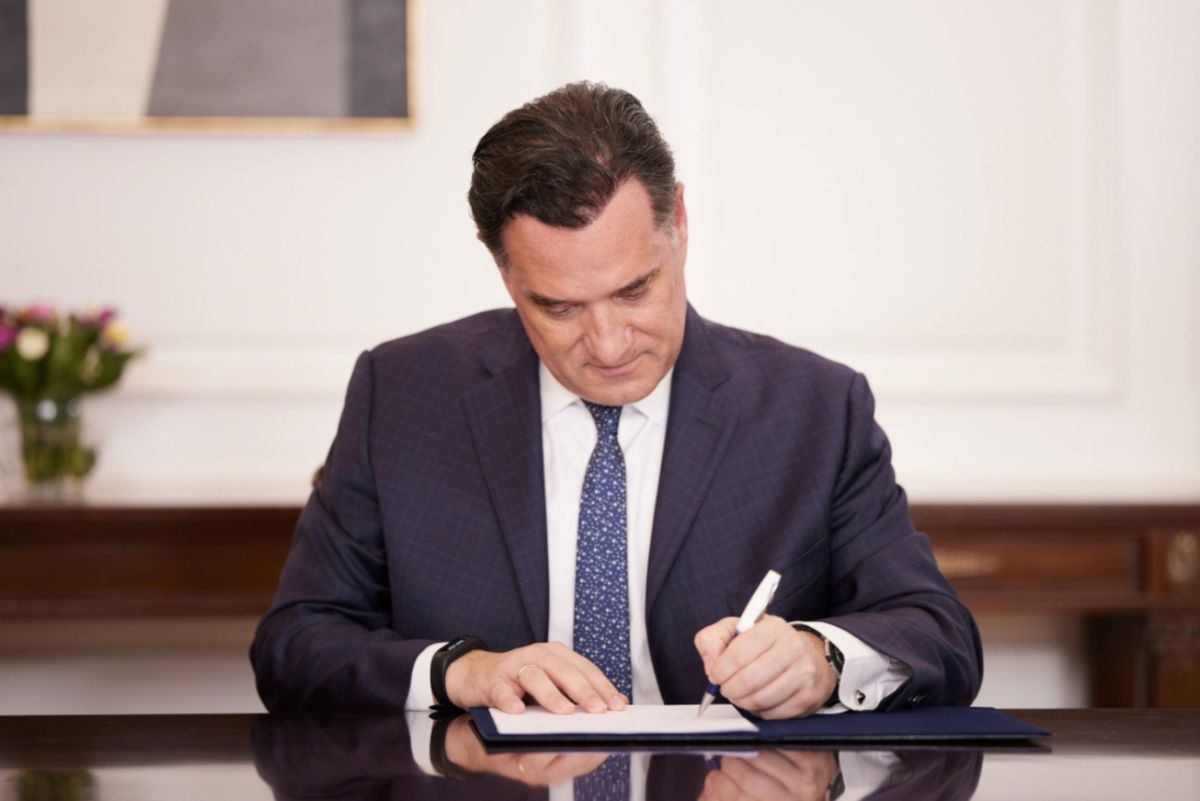
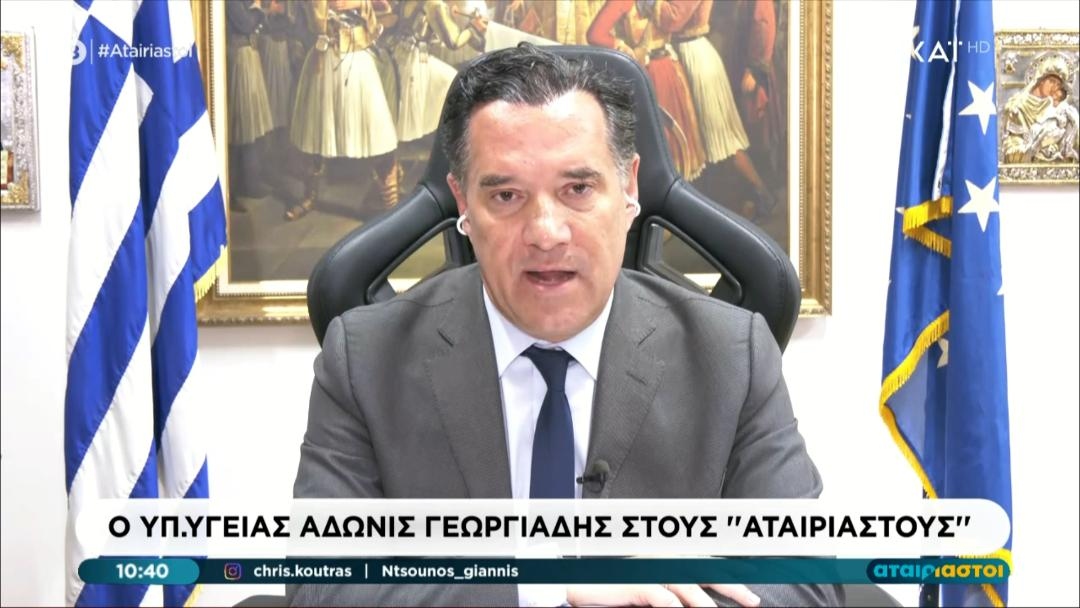
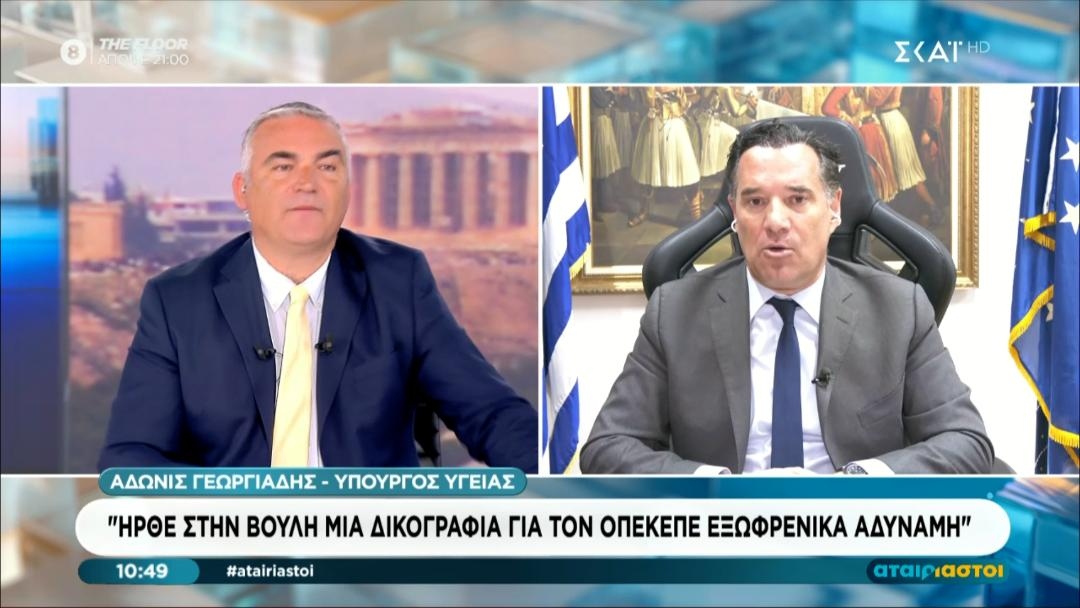
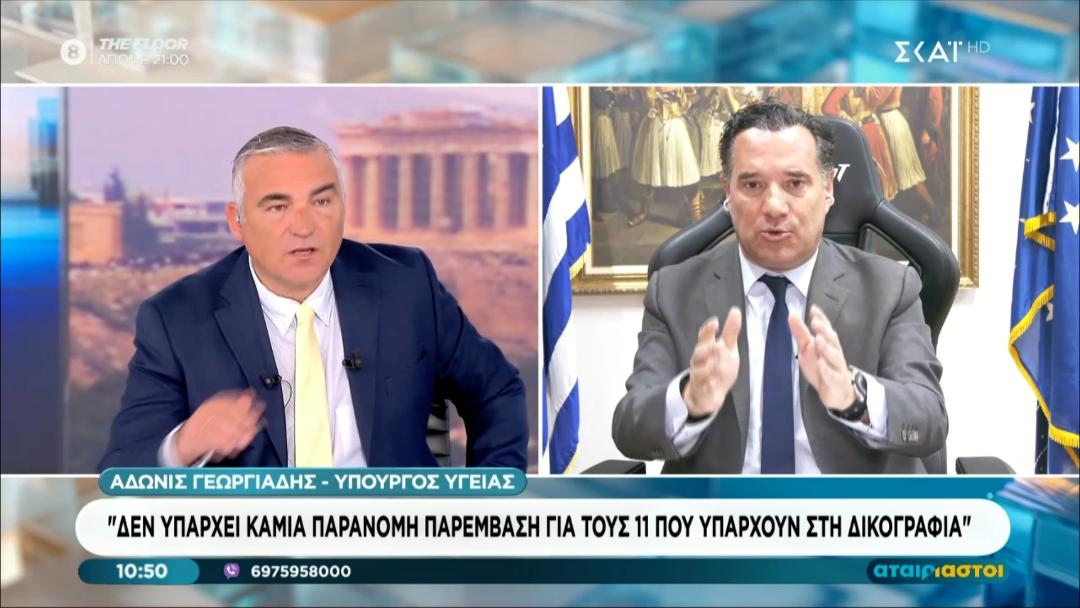
Health Minister Adonis Georgiadis, speaking on SKAI TV in the “Ataireiasto” program, made extensive comments on the OPEKEPE case, the case files forwarded to the Greek Parliament by the European Public Prosecutor’s Office, as well as on the constitutional framework governing parliamentary immunity and the institutional role of elected representatives.
His intervention outlined a clear institutional position: the need to distinguish political activity from criminal assessment of routine parliamentary actions.
“Respect for Justice – but also for the role of the legislator”
Mr. Georgiadis stated that he fully respects the Association of Judges and Prosecutors, while emphasizing that democracy is founded on the principle of separation of powers.
“I never intervene in judicial functions. But just as I respect judges, I also ask them to respect the role of the legislator,” he said.
He stressed that, as an MP, he has the constitutional right to express political views on institutions:
- the European Public Prosecutor’s Office was established by law
- therefore, it can also be amended or abolished by a new law passed by Parliament
European Public Prosecutor & OPEKEPE case files
The minister argued that the case files submitted to Parliament have created an environment of excessive criminalisation.“They have criminalised the daily, normal functioning of parliamentary work,” he noted.
He explained that communication between MPs, citizens, and public services is a core element of parliamentary duties.
He also argued that many of the examined cases:
- involve simple forwarding of citizens’ requests
- contain no evidence of illegal instructions or data manipulation
- do not, in his view, constitute criminal offences
“Clientelism or parliamentary function?”
Georgiadis referred to the long-standing relationship between citizens and MPs, stating that:
- citizens routinely approach MPs for assistance with state-related issues
- political intervention in administrative matters is a daily occurrence
- such practices cannot automatically be treated as criminal behaviour
“The goal is to reduce this need through a more efficient state, not to criminalise the contact between MPs and citizens,” he said.
He cited digital reforms in public administration (EFKA, tax authority, and other services) as steps toward reducing bureaucratic dependence on political intervention.
Parliamentary immunity: “An institutional safeguard, not a political weapon”
Georgiadis described the issue of parliamentary immunity as complex.
He stated that:
- constitutionally, immunity protects parliamentary activity (Articles 61–62)
- representation of citizens is part of the political function
- therefore, in such cases, there is no justification for lifting immunity
At the same time, he acknowledged the political dimension:
- public perception of politicians is affected by such cases
- there is increasing social distrust toward political institutions
Criticism of “anti-parliamentarianism”
He concluded by referring to what he described as a broader social trend:
“A strong anti-parliamentarian sentiment has taken hold in Greece. The MP has shifted from a position of honour to an easy target of public hostility,” he said.
According to him, this trend:
- undermines the institutional role of Parliament
- creates a toxic environment for democratic governance
Georgiadis’ position can be summarised as follows:
- defense of the separation of powers
- rejection of the criminalisation of political communication
- reinforcement of the MP’s role as a citizen representative
- warning against growing anti-parliamentarian sentiment
Source: pagenews.gr
Διαβάστε όλες τις τελευταίες Ειδήσεις από την Ελλάδα και τον Κόσμο