OECD: Greece Shows Resilient Growth but Faces 4.2% Inflation Shock and Energy Exposure
 ΧΡΟΝΟΣ ΑΝΑΓΝΩΣΗΣ 4 '
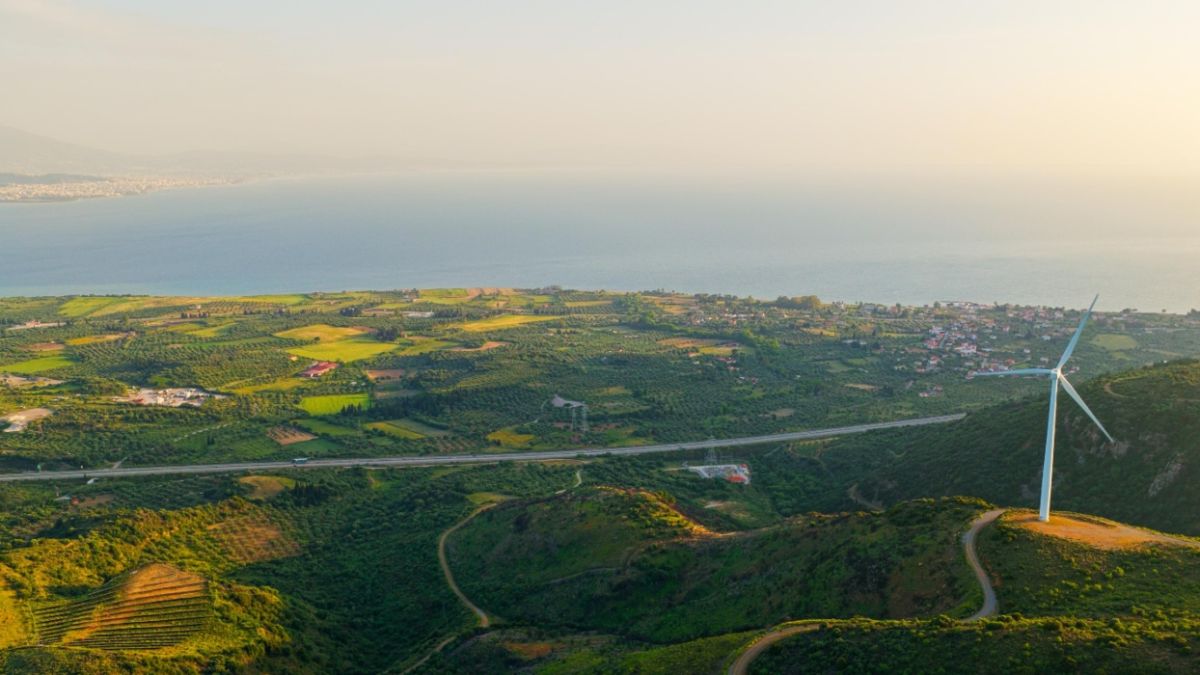
Πηγή Φωτογραφίας: pixabay//OECD: Greece Shows Resilient Growth but Faces 4.2% Inflation Shock and Energy Exposure



EXECUTIVE SUMMARY – THE BIG PICTURE
Greece enters the 2026–2027 period with a macro profile defined by stability, fiscal discipline, and external sensitivity.
The OECD projects:
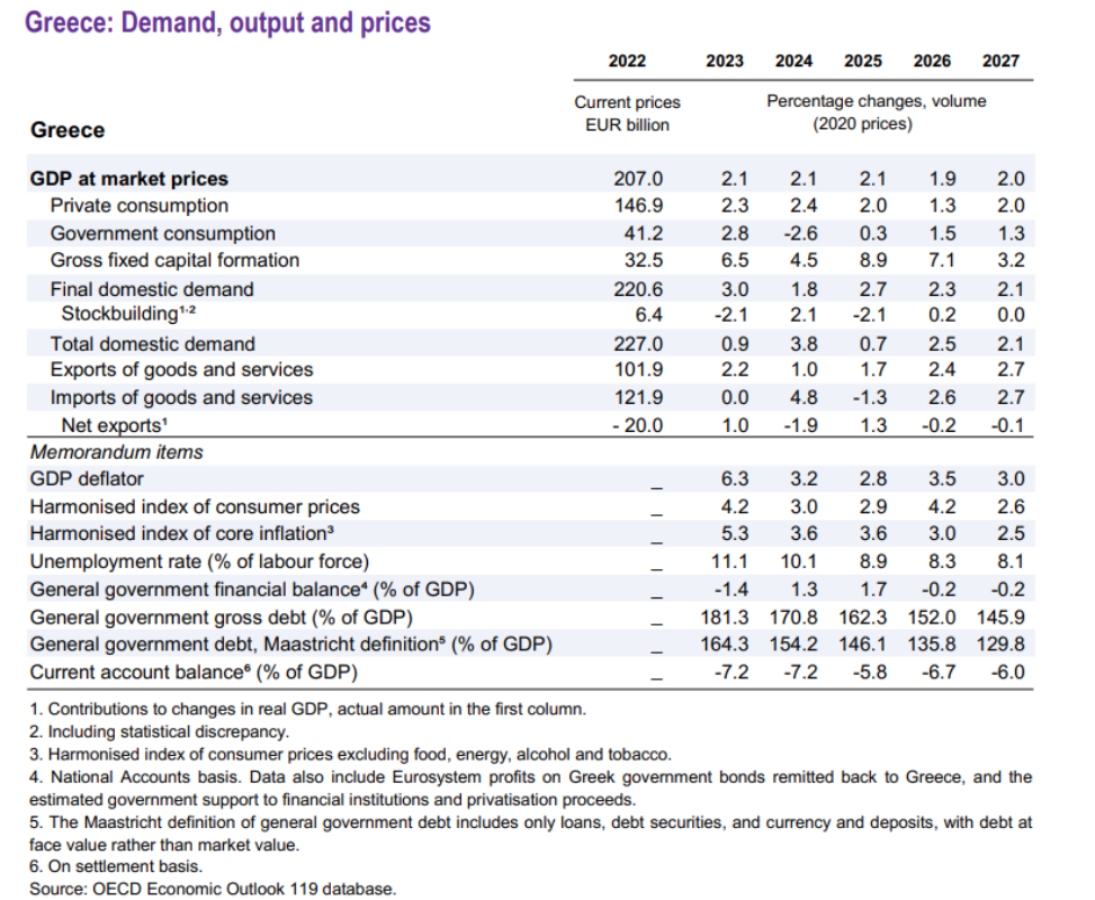
- GDP growth: 1.9% (2026) and 2.0% (2027)
- Inflation: 4.2% (2026)
- Public debt: falling below 130% of GDP by 2027
- Primary surplus: stabilising above 2.5% of GDP
Behind the positive headline figures lies a structural constraint: high energy dependency and limited productive diversification.
MACRO AUTOPSY – WHAT THE NUMBERS REALLY MEAN
The OECD framework highlights three core growth engines:
1. EU funding as the main investment accelerator
RRF disbursements are expected to rise to 4.4% of GDP in 2026, acting as:
- a capex multiplier
- a catalyst for private co-investment
- a temporary buffer for weak domestic investment cycles
2. Labour market resilience vs consumption pressure
Employment growth and tax cuts support household demand, but:
- energy prices act as a structural cost burden
- consumption remains highly sensitive to external shocks
3. Exports – gradual normalization
External demand is expected to recover in late 2026, but Greece’s export base remains relatively narrow compared to peer EU economies.

INFLATION STRESS TEST – THE KEY WEAK LINK
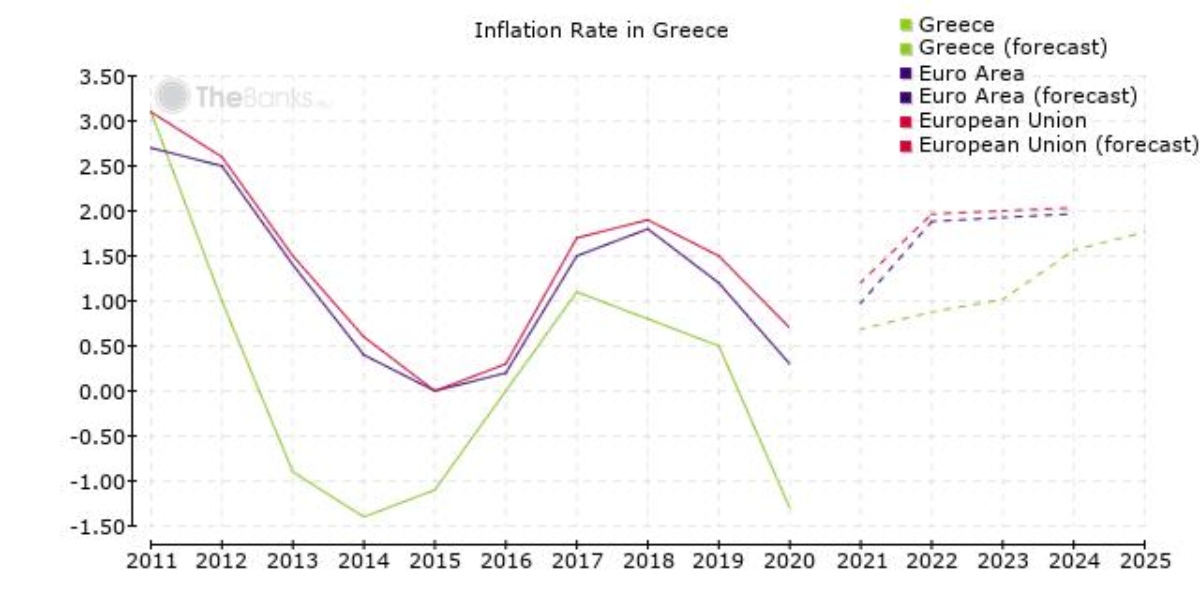
Inflation emerges as the most critical macro risk:
- 2.9% (2025)
- 4.2% (2026)
- 2.6% (2027)
The spike is primarily driven by:
- imported energy inflation
- oil and gas price volatility
- exposure to global supply shocks
This is effectively imported inflation rather than domestic overheating.
DEBT TRAJECTORY – FAST DELEVERAGING STORY
Debt dynamics remain Greece’s strongest macro signal:
- 146.1% (2025)
- 135.8% (2026)
- 129.8% (2027)
The OECD confirms a rapid deleveraging cycle, driven by:
- sustained primary surpluses
- nominal GDP growth
- disciplined fiscal management
POLICY STACK – OECD RECOMMENDATIONS
1. Energy transition acceleration
- simplify licensing for renewables (RES)
- reduce administrative friction for investment
- accelerate grid and permitting efficiency
2. Household energy transition support
- targeted building renovation programs
- EV adoption incentives
- gradual phase-out of fossil fuel dependency
3. Structural competitiveness reforms
- regulatory simplification for firms
- reduction of barriers for self-employed professions
- labour market upskilling and advisory systems
STRUCTURAL RISK – ENERGY DEPENDENCY EXPOSURE
A key vulnerability highlighted:
Greece relies on imported fossil fuels for approximately 93% of its total energy supply.
This creates:
- high exposure to geopolitical volatility
- imported inflation sensitivity
- external balance fragility
SCENARIO FRAMEWORK – GLOBAL UNCERTAINTY
The OECD outlines two global trajectories:
Base scenario
- global growth: 2.8% (2026) → 3.1% (2027)
- gradual easing of energy prices from mid-2026
Stress scenario
- growth falls to ~1.8% in 2027
- prolonged energy disruption
- weaker investment and labour demand
- higher financial market repricing risks
Greece’s open economy profile places it closer to the energy-sensitive tail risk zone.
FINAL TAKE – STABILITY WITHOUT STRUCTURAL TRANSFORMATION
Greece presents a dual macro identity:
- Strong fiscal credibility and declining debt
- But persistent structural dependence on imported energy and limited productivity depth
The OECD message is clear: macroeconomic stability is no longer the challenge — structural upgrading is.
The next phase of Greek economic performance will depend less on headline growth rates and more on whether investment momentum translates into a durable productivity and energy independence model.
Source: pagenews.gr
Διαβάστε όλες τις τελευταίες Ειδήσεις από την Ελλάδα και τον Κόσμο