Greece Is Finally Off Europe’s Economic Watchlist. The Hard Part Starts Now
 ΧΡΟΝΟΣ ΑΝΑΓΝΩΣΗΣ 6 '

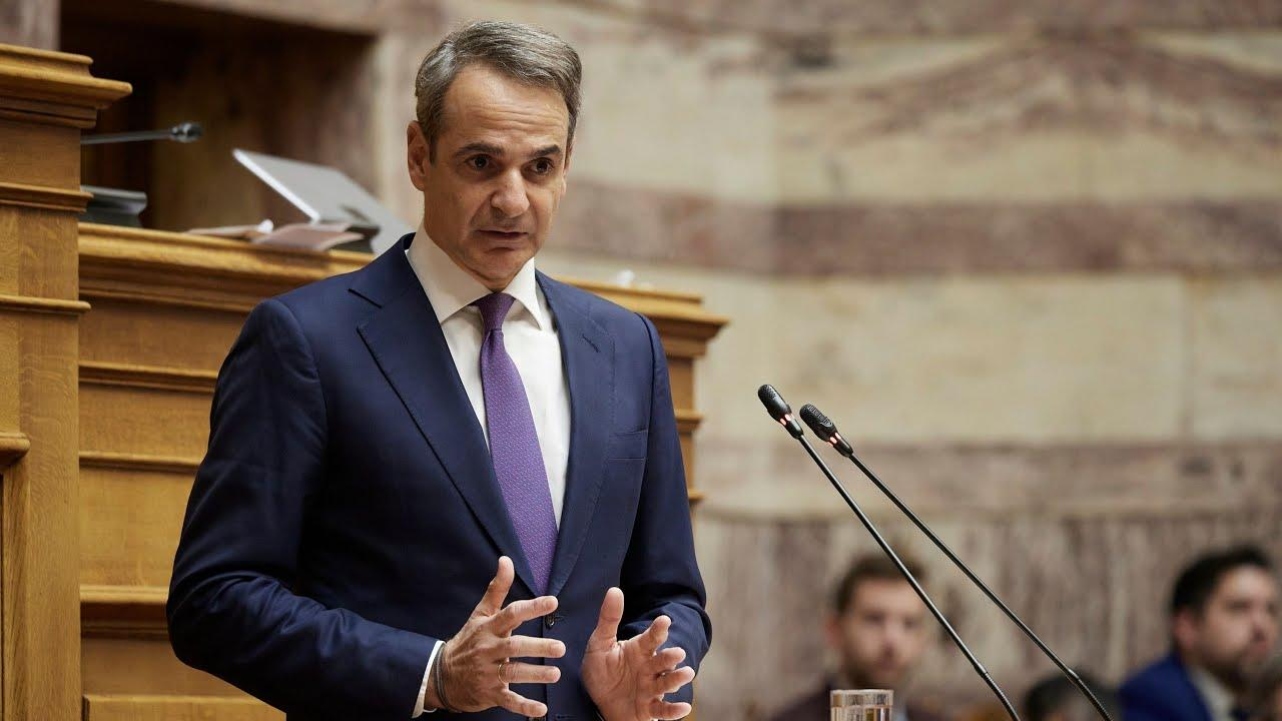
Πηγή Φωτογραφίας: eurokinissi//Greece Is Finally Off Europe’s Economic Watchlist. The Hard Part Starts Now



Fifteen years after becoming the epicenter of the Eurozone’s debt crisis, Greece has reached a milestone few would have predicted during the darkest days of austerity.
The European Commission has removed the country from its list of member states facing macroeconomic imbalances, effectively closing the last major chapter of the crisis-era oversight framework that shaped Greek economic policy for more than a decade.
The decision is more than a technical assessment.
It is an institutional acknowledgment that Greece is no longer viewed as a systemic economic risk to the European Union.
For investors, policymakers and markets, the move signals something equally important: Europe’s former problem child has become one of its most closely watched turnaround stories.
The Numbers Behind the Comeback
The data explain why Brussels has changed its assessment.
Greece’s economy expanded by 2.1% in 2025, more than twice the average growth rate of the Eurozone. The European Commission expects growth to remain resilient at 1.8% in 2026, despite mounting geopolitical uncertainty and sluggish economic activity across much of Europe.
Fiscal performance has also improved dramatically.
The country recorded a general government surplus of 1.7% of GDP in 2025, extending a trend that has surprised many economists who once questioned Athens’ ability to sustain fiscal discipline after the bailout era.
Perhaps the most striking indicator remains public debt.
While Greece still carries the highest debt burden in the European Union relative to GDP, the trajectory has changed dramatically. Public debt is projected to fall from 154.2% of GDP in 2024 to 134.4% by 2027—a decline of nearly twenty percentage points in just three years.
Few advanced economies have achieved a comparable pace of debt reduction in the post-pandemic period.
At the same time, the banking sector has undergone a profound transformation.
Non-performing loans, which once threatened the stability of the financial system, have been reduced to levels broadly comparable with European averages. Bank balance sheets have strengthened, capital positions have improved and credit conditions have gradually normalized.
For Brussels, these developments collectively signal that the vulnerabilities that once defined the Greek economy have largely receded.
From Eurozone Crisis to European Success Story
The symbolism is difficult to overstate.
In 2010, Greece became the focal point of an existential crisis for the euro.
Financial markets questioned the viability of the single currency. Emergency summits dominated European politics. Bailouts, austerity packages and political upheaval became defining features of the era.
For years, Greece operated under an extraordinary level of external supervision.
The country endured three bailout programs, years of enhanced surveillance and repeated concerns over debt sustainability, banking stability and fiscal credibility.
Today, the same European institutions that once imposed strict oversight are formally recognizing Greece’s progress.
That transformation represents one of the most remarkable economic reversals in modern European history.
Why the Story Is More Complicated Than It Appears
Yet the Commission’s decision does not mean Greece’s economic challenges have disappeared.
Rather, it means they have changed.
The country has largely solved its stability problem.
It has not fully solved its prosperity problem.
Productivity remains below the European average. Investment levels, while improving, still lag behind leading European economies. Demographic pressures continue to weigh on long-term growth prospects. The current account balance remains vulnerable to external shocks.
More importantly, many households have not experienced the same recovery reflected in macroeconomic indicators.
Economic growth has returned, but purchasing power remains under pressure.
Employment has improved significantly, yet wage convergence with Western Europe remains incomplete.
Housing affordability has emerged as a growing concern in major urban centers, while inflation over recent years has eroded part of the gains generated by economic expansion.
This is the central paradox of modern Greece.
Financial markets have regained confidence faster than society has regained prosperity.
A New Role Inside Europe
The timing of the Commission’s decision is significant.
Europe itself is entering a new phase.
The continent’s priorities are shifting away from crisis management and toward strategic resilience.
Energy security, defense investment, critical infrastructure and industrial competitiveness increasingly dominate the European agenda.
In this environment, Greece occupies a very different position than it did fifteen years ago.
Its geographic location places it at the crossroads of Europe’s emerging energy architecture. LNG infrastructure, electricity interconnections, shipping routes and logistics networks are transforming the country into a strategic hub connecting Europe, the Eastern Mediterranean and the Middle East.
Recent European initiatives allowing greater fiscal flexibility for energy-security investments further strengthen this role.
For Brussels, Greece is no longer merely an economic recovery story.
It is becoming a strategic asset.
The Next Decade Will Be the Real Test
The removal of macroeconomic imbalance status marks the end of one era.
But it also marks the beginning of another.
For the first time since the crisis, Greece will no longer be judged primarily on whether it can avoid financial instability.
Instead, it will be judged on whether it can close the gap with Europe’s most advanced economies.
That challenge is arguably more difficult.
Fiscal discipline can restore credibility.
Debt reduction can reassure markets.
But long-term prosperity requires something deeper: sustained productivity growth, innovation, investment and rising living standards.
Greece has won the battle for stability.
The next decade will determine whether it can win the battle for convergence.
The debt crisis defined Greece’s recent past.
Its ability to transform recovery into lasting economic strength will define its future.
Διαβάστε όλες τις τελευταίες Ειδήσεις από την Ελλάδα και τον Κόσμο