Adonis Georgiadis: Greece Brings Smart Prescribing to Europe First
 ΧΡΟΝΟΣ ΑΝΑΓΝΩΣΗΣ 5 '
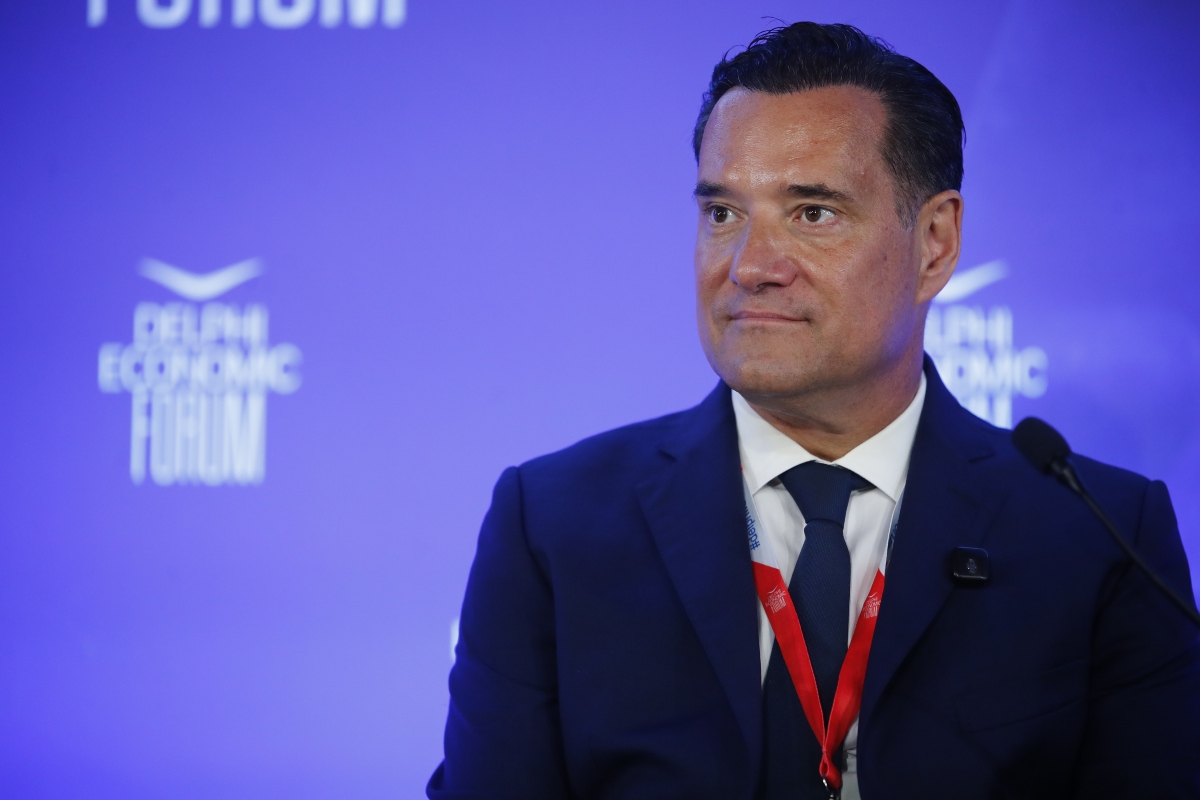
Πηγή Φωτογραφίας: eurokinissi//Adonis Georgiadis: Greece Brings Smart Prescribing to Europe First



Smart prescribing: a silent revolution in healthcare
One of the most striking announcements by Adonis Georgiadis at the Delphi Economic Forum was the rollout of a digital system set to fundamentally change how medicines are prescribed.
At the core of this reform are the so-called SPC filters, integrated into the national e-prescription platform. These act as intelligent safeguards, preventing unsafe or incompatible drug combinations in real time.
“We are not interfering with medical judgment. We are enforcing the terms of drug authorization,” the minister emphasized.
The system embeds all officially approved contraindications directly into prescribing workflows—meaning that unsafe prescriptions can be automatically flagged or blocked before they are issued.
Cutting waste: hundreds of millions at stake
According to Georgiadis, early data analysis reveals systemic inefficiencies that cost the healthcare system vast sums annually.
“Our models show hundreds of millions of euros in waste each year,” he stated.
The expected impact of the new system includes:
- significant reduction in pharmaceutical expenditure
- improved patient safety
- elimination of unnecessary or overlapping prescriptions
Initially, the system will operate in an advisory mode, allowing physicians time to adapt before stricter enforcement is introduced.
The innovation paradox: better care, higher costs
Georgiadis highlighted a critical paradox facing modern healthcare systems: innovation is accelerating—but so are costs.
“Ten years ago, we had one major new drug per year. Today, we have one per month.”
This rapid pace of development means:
- more treatment options for patients
- better clinical outcomes
- but exponentially rising financial pressure on public systems
The central policy challenge, he argued, is how to sustain innovation without destabilizing healthcare budgets.
Innovation Fund: paying for results, not promises
A key pillar of the new strategy is the creation of an Innovation Fund, designed to link reimbursement directly to real-world outcomes.
“If a drug proves its value, it will face lower clawback,” Georgiadis explained.
Under this model:
- new medicines are introduced under conditional reimbursement
- evaluated over a three-year period
- assessed based on clinical effectiveness and cost-benefit performance
This aligns Greece with emerging European trends toward outcome-based healthcare financing.
Oncology in focus: targeting high-cost treatments
Special attention is being given to oncology, one of the most resource-intensive areas of healthcare.
At the Agios Savvas Cancer Hospital, pilot programs are underway to implement structured treatment protocols combined with digital tumor boards.
These tools aim to:
- optimize treatment selection
- ensure evidence-based prescribing
- monitor outcomes in real time
The goal is to improve care quality while controlling excessive spending.
Europe under pressure: a race for innovation
Georgiadis also framed the issue within a broader geopolitical and economic context.
Europe, he warned, is losing ground in pharmaceutical innovation:
- the United States now produces significantly more new drug discoveries
- China is rapidly closing the gap
- Europe’s share continues to decline
“Europe must not fall behind. It must become more competitive,” he stressed.
He noted that Greece has played a role in preventing regulatory changes that could have discouraged pharmaceutical investment across the continent.
Debunking myths: is Greece really underfunding healthcare?
The minister challenged a widely held belief that Greece underinvests in pharmaceuticals.
“It is a myth that Greece spends less. As a percentage of GDP, we are at or even above the European average.”
He further argued that:
- access to reimbursed medicines in Greece is among the easiest in Europe
- uninsured citizens are also covered
- the system is more inclusive than often acknowledged
The reality of the market: no illusions
In one of the most candid moments of his speech, Georgiadis addressed the role of pharmaceutical companies:
“Companies are not monasteries. They are profit-driven mechanisms.”
And added:
“My role is to protect taxpayers and patients.”
This reflects a pragmatic policy stance: cooperation with industry, but under strict oversight and accountability.
The road ahead: balancing access, innovation, and sustainability
The strategy outlined rests on three core pillars:
- digital control and transparency
- support for innovation
- fiscal discipline
Smart prescribing stands at the center of this transformation.
If successfully implemented, Greece could emerge as a model for healthcare reform in Europe.
The question now is not whether change is coming—but how effectively it will be delivered.
Source: pagenews.gr
Διαβάστε όλες τις τελευταίες Ειδήσεις από την Ελλάδα και τον Κόσμο