Gerapetritis – Wadephul: United Front on the Strait of Hormuz and Global Security
 ΧΡΟΝΟΣ ΑΝΑΓΝΩΣΗΣ 3 '
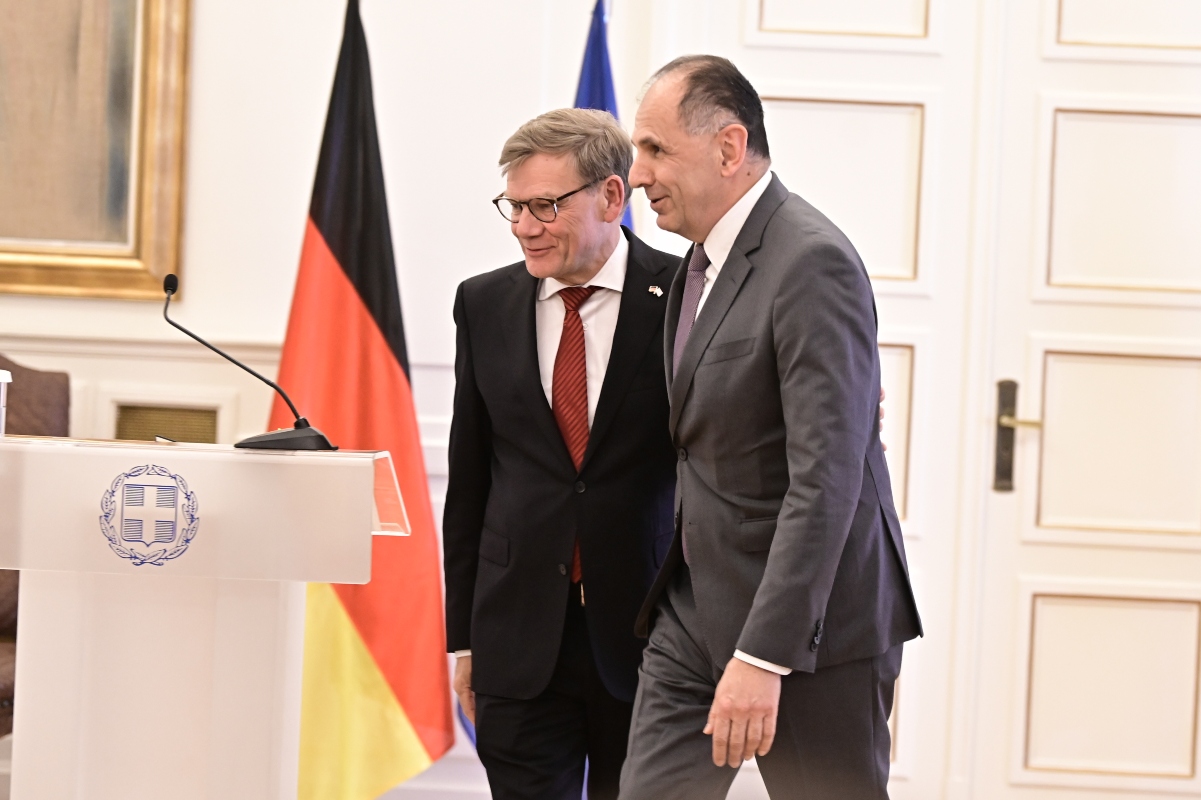
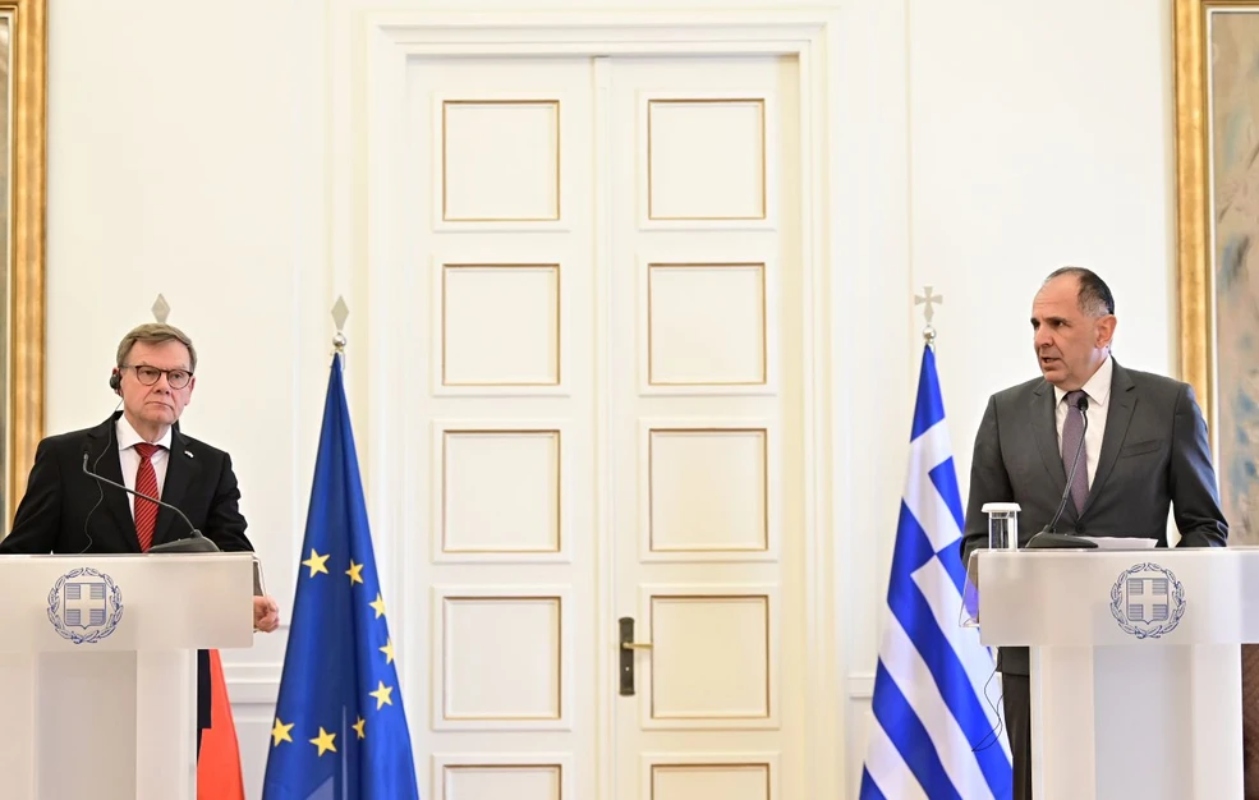
Πηγή Φωτογραφίας: eurokinissi//Gerapetritis – Wadephul: United Front on the Strait of Hormuz and Global Security



Diplomatic coordination in a volatile geopolitical environment
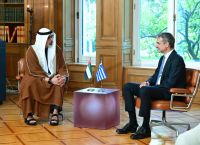
In a period of heightened international instability, Athens became a focal point of European diplomacy, hosting a high-level meeting between Greek Foreign Minister Giorgos Gerapetritis and his German counterpart Johann Wadephul.
The talks centered on maritime security and developments in the Middle East, with both sides acknowledging growing risks to global trade flows and energy stability.
Greece signals active role in the Strait of Hormuz
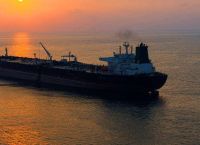
Gerapetritis stressed Greece’s intention to play a more active role in ensuring safe navigation through the Strait of Hormuz.
“We support international initiatives for the uninterrupted and safe passage through the Strait of Hormuz and intend to take an active role in cooperation with the shipping community,” he stated.
He also emphasized that freedom of navigation is a core principle of international law and a cornerstone of global peace and prosperity.
Risk of global economic spillover
Escalating tensions involving Iran, combined with broader regional instability, are raising concerns over:
- rising energy prices
- disruptions to global supply chains
- pressure on global food security
“It is crucial to prevent the crisis from escalating uncontrollably, affecting the global economy and citizens’ daily lives,” Gerapetritis warned.
The German perspective: stability and institutional response
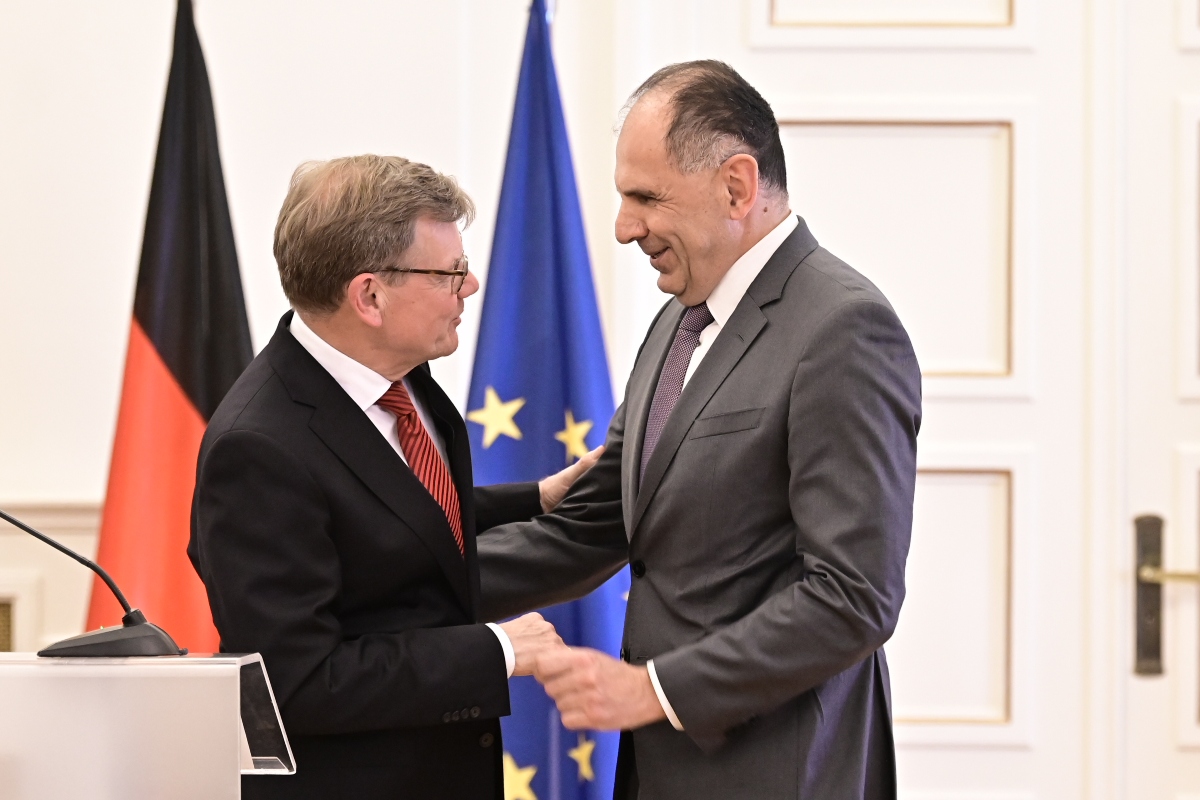
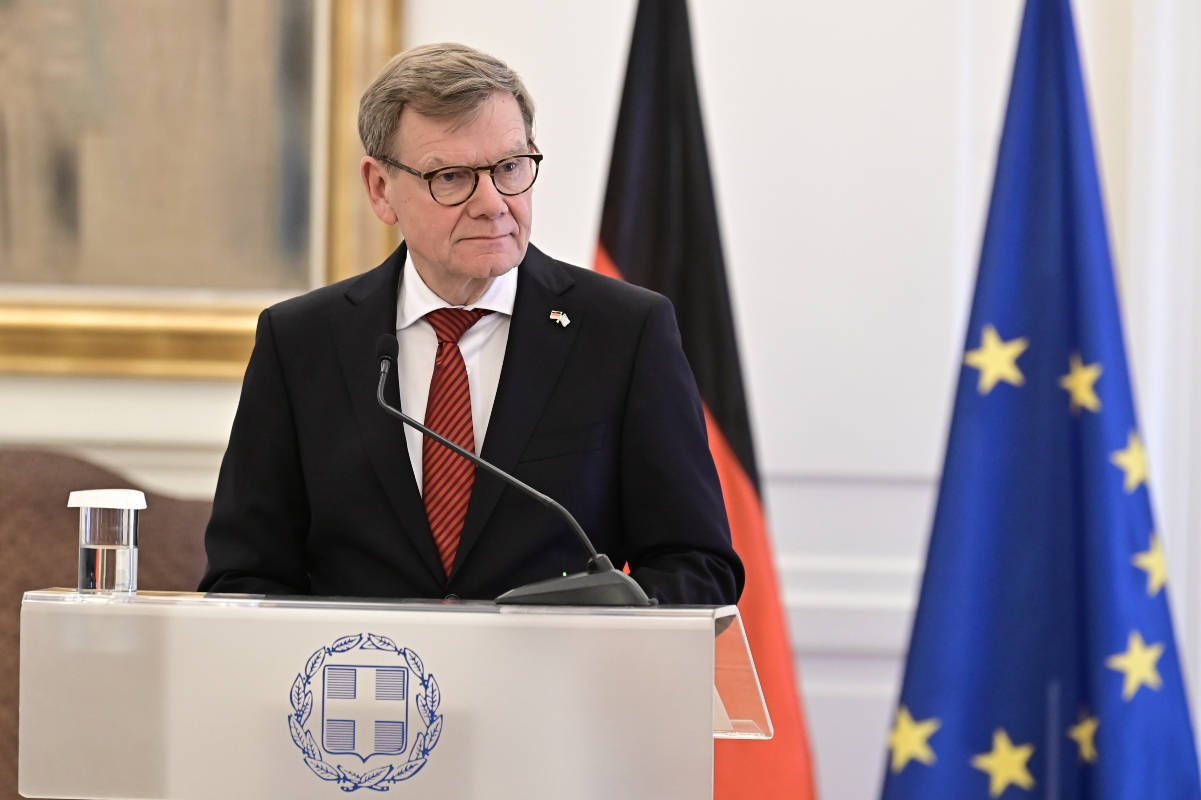
From Berlin’s perspective, Johann Wadephul adopts a more cautious and institutional approach, emphasizing EU unity and de-escalation.
Germany views the Strait of Hormuz as a critical node for European energy security and global trade stability, warning that any disruption could trigger widespread economic consequences.
In this context, Berlin advocates:
- coordinated EU action through institutional frameworks
- avoidance of unilateral escalation
- maintaining open channels with the United States
“Regional stability is a prerequisite for European economic resilience,” diplomatic sources in Berlin underline.
European convergence with different approaches
Despite differing emphases, Athens and Berlin converge on key priorities:
- protection of maritime security routes
- prevention of an energy shock
- strengthening Europe’s strategic presence
Greece is pushing for a more operational and visible role, while Germany favors a more gradual, institution-driven response.
Greece’s expanding international role
Greece’s initiative is reinforced by its participation in the United Nations Security Council, where it has already highlighted maritime security as a global priority.
This reflects a broader ambition to position Greece as a stabilizing actor in the Eastern Mediterranean and global shipping architecture.
The Gerapetritis–Wadephul alignment illustrates a Europe navigating between geopolitical pressure and economic vulnerability.
As the Strait of Hormuz emerges as a critical pressure point for global stability, Europe faces a strategic question: remain a reactive observer—or become an active shaper of international security outcomes.
Source: pagenews.gr
Διαβάστε όλες τις τελευταίες Ειδήσεις από την Ελλάδα και τον Κόσμο