The €421bn Debt Mountain Left Outside TIF: Greece’s Private Debt Problem Is Back in Focus
 ΧΡΟΝΟΣ ΑΝΑΓΝΩΣΗΣ 7 '
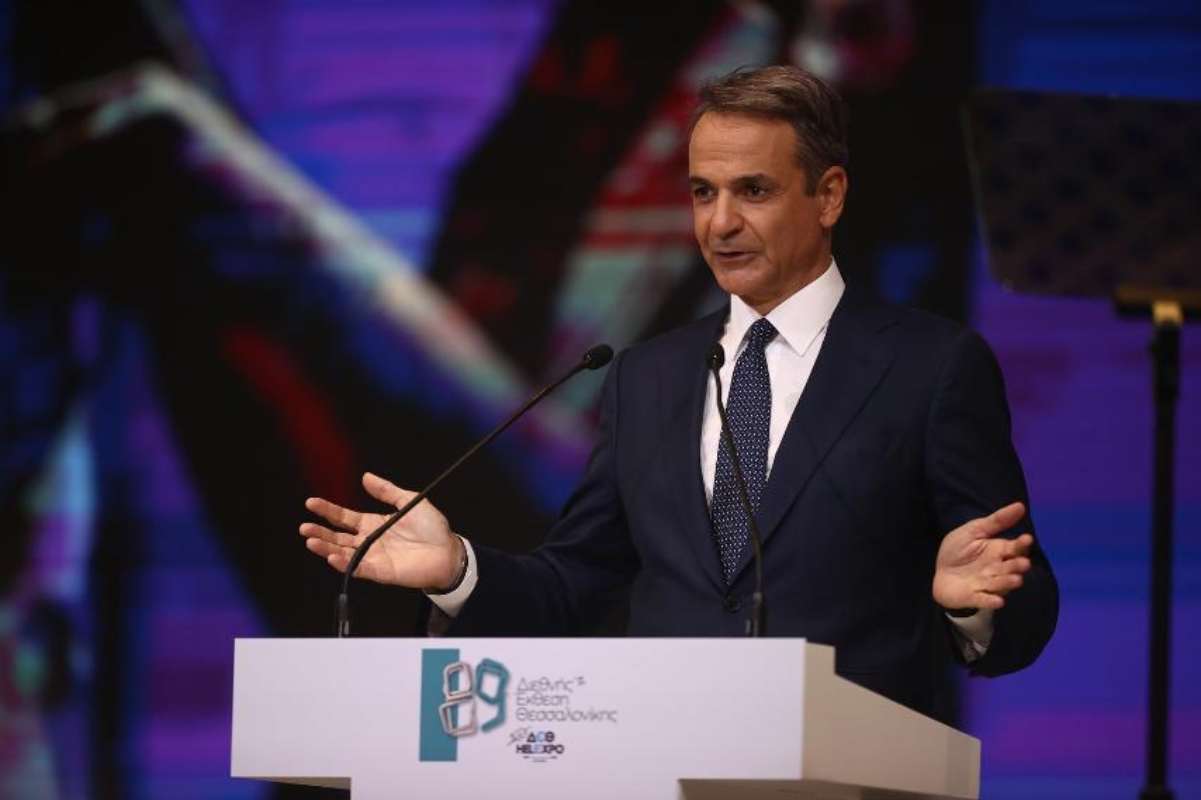
Πηγή Φωτογραφίας: eurokinissi//The €421bn Debt Mountain Left Outside TIF: Greece’s Private Debt Problem Is Back in Focus



There is one number that did not dominate Kyriakos Mitsotakis’s economic narrative at the Thessaloniki International Fair, yet it may describe one of the biggest unresolved vulnerabilities of the Greek economy.
€421 billion.
That is the overall level of liabilities owed by households and businesses to the state and the financial sector, according to figures highlighted by Kathimerini.
Even more striking is the amount classified as overdue: €238.6 billion.
The figures open a very different conversation just hours after the prime minister presented a broad package of tax relief, income support, wage increases and measures aimed at distributing what the government describes as Greece’s “growth dividend.”
The question after TIF is therefore no longer simply who gets more.
It is also who still owes — and whether Greece’s economic recovery has reached those carrying the legacy debts of the crisis years.
From the “Growth Dividend” to a €421bn Liability
Mitsotakis built his TIF speech around a straightforward political proposition: Greece’s economic progress must increasingly translate into gains for households.
The package reaches across large sections of society, from pensioners, farmers and self-employed professionals to private-sector workers, civil servants and families.
But private debt reveals the other side of the balance sheet.
A household can receive a tax cut while remaining trapped by old arrears.
A small business can increase its turnover while continuing to owe money to the tax authorities, social security funds or financial creditors.
And a borrower may no longer be dealing with the bank that originally issued a loan, but with a fund or loan-servicing company.
That legacy has not disappeared simply because Greece’s headline economic indicators have improved.
Greece Cleaned Up Its Banks — But the Debt Did Not Disappear
This is the crucial distinction.
Greece has made enormous progress in cleaning up bank balance sheets since the sovereign debt crisis.
Non-performing exposures that once threatened the stability of the banking system have been dramatically reduced.
But transferring problematic loans away from banks does not extinguish the underlying debt.
A substantial stock of loans has moved outside traditional bank balance sheets and is now managed by funds and servicers.
That means Greece has largely succeeded in addressing the banking dimension of the problem without necessarily resolving the household and corporate dimension to the same extent.
A healthier bank is not automatically the same thing as a debt-free borrower.
€238.6bn Overdue: The Number That Matters Most
The €421bn headline figure is enormous.
But the more politically and economically sensitive number is €238.6bn — the amount identified as overdue.
That distinction matters.
The entire €421bn should not be described as “bad” or non-performing debt. It represents total liabilities across different categories.
The overdue portion is the stronger warning signal because it points directly to debt that is not being serviced according to schedule.
And that creates an uncomfortable contrast with Greece’s broader macroeconomic story.
Growth may continue.
Unemployment may fall.
Wages may rise.
Public debt as a share of GDP may decline.
Yet if a significant part of the private economy remains burdened by unresolved arrears, part of the recovery remains locked outside the balance sheets of households and businesses.
Funds and Servicers Move Back to the Centre of Politics
The issue is already becoming a major political battleground.
PASOK has placed borrowers, funds and servicers near the centre of its opposition strategy.
Its spokesman, Kostas Tsoukalas, has framed the issue with a politically potent question:
“Can a fund purchase a claim at a much lower value while the borrower himself is denied the opportunity to secure a correspondingly sustainable settlement?”
PASOK is calling for stronger borrower rights, tighter oversight of funds and servicers, more effective debt restructuring and greater protection for vulnerable primary residences.
The government, by contrast, can point to the expansion of Greece’s out-of-court debt settlement mechanism and other restructuring tools.
That shifts the debate to a more difficult question: not whether mechanisms exist, but whether they are resolving enough debt quickly enough.
The Political Test Is No Longer Just About Income
This changes the debate triggered by TIF.
The government has concentrated heavily on increasing disposable income through lower taxation, higher wages, lower social contributions and targeted benefits.
But disposable income has two sides.
There is what comes in.
And there is what must go out to service old obligations.
For a household with substantial arrears, an additional few hundred euros in annual income may help, but it does not necessarily restore financial normality.
The same applies to a small business carrying accumulated tax, social-security or loan obligations.
This is why private debt could become one of the most consequential economic issues on the road to Greece’s 2027 election.
The Question Mitsotakis Now Has to Answer
The timing is particularly significant.
Mitsotakis faces the press at TIF after unveiling a package designed to demonstrate that the benefits of economic growth are reaching society.
The €421bn figure creates an obvious counter-question:
What happens to those still carrying the debts of the previous era?
Is the existing out-of-court settlement framework sufficient?
Does Greece need another intervention for viable borrowers struggling with accumulated liabilities?
Should the rules governing servicers be tightened further?
And can Greece claim to have fully escaped the economic legacy of the crisis while such a large stock of overdue private debt remains?
These are questions that go beyond one TIF package.
They concern the structure of Greece’s post-crisis economy.
TIF Distributed the New Money — The Harder Battle Is the Old Debt
This is the paradox confronting Greece.
The state has regained fiscal room.
The banking system is far stronger than it was during the crisis.
Investment has recovered and the economy has returned to growth.
Yet a substantial part of the private sector continues to carry accumulated debt.
For Mitsotakis and New Democracy, the political challenge is therefore to demonstrate that economic recovery is not visible only in GDP, fiscal performance, investment-grade ratings and bank profitability, but also on the household and small-business balance sheet.
For the opposition, the €238.6bn in overdue liabilities provides an obvious line of attack: Greece may have repaired its macroeconomic picture, but many citizens have not yet repaired their personal finances.
TIF showed how the government intends to distribute new income.
The next, and potentially much harder, political debate is about what Greece does with its old debt.
Source: pagenews.gr
Διαβάστε όλες τις τελευταίες Ειδήσεις από την Ελλάδα και τον Κόσμο