The Mecca defense agreement is beginning to look far more substantial than an ordinary trilateral pact.
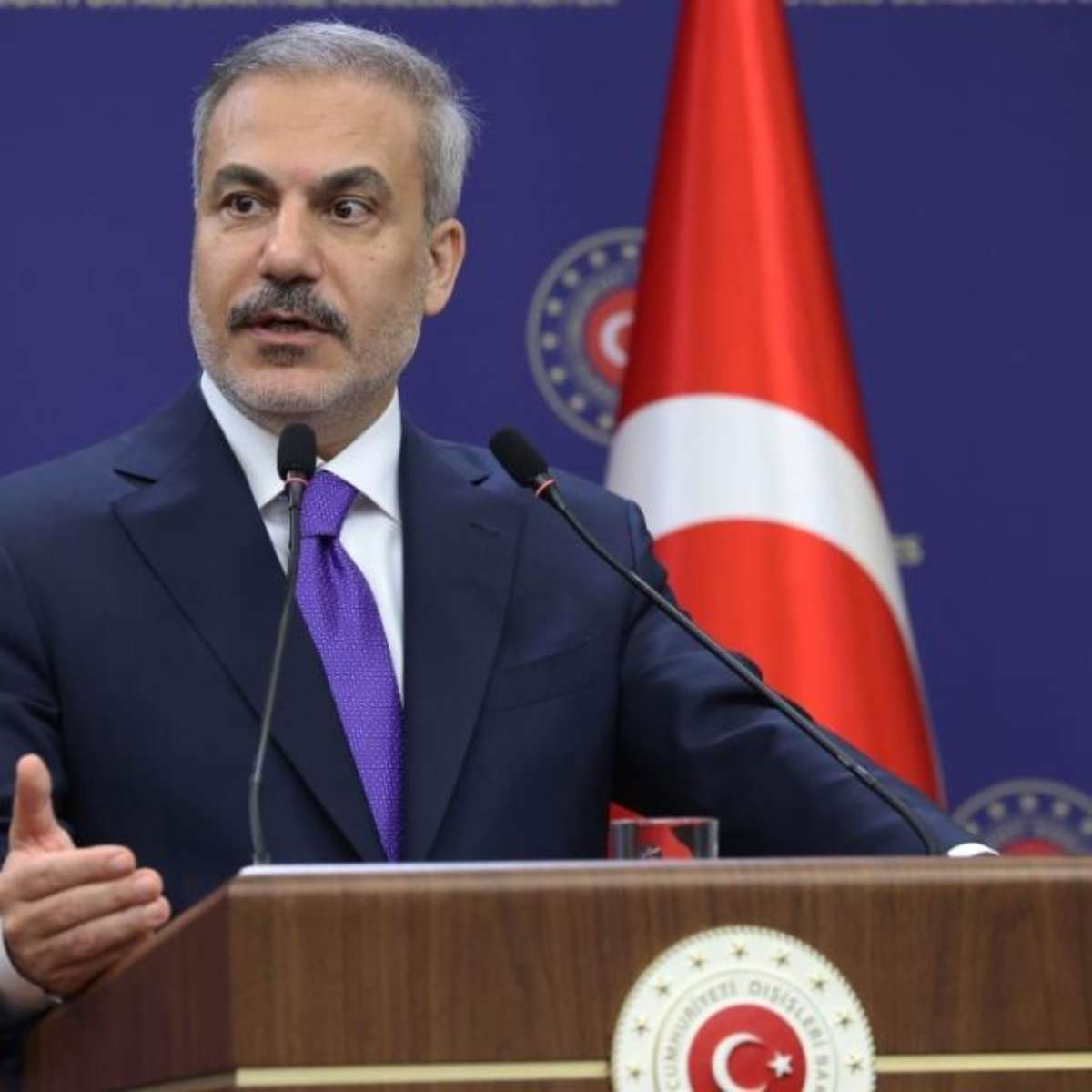
Turkish Foreign Minister Hakan Fidan said on Saturday that the mutual-defense clause linking Türkiye, Saudi Arabia and Pakistan is “technically the same” as NATO’s Article 5, while also revealing that the new alliance will have a ministerial committee and a permanent secretariat based in Saudi Arabia.
Fidan went further.
He said Egypt could eventually join the pact once certain technical issues are resolved, and made clear that Ankara sees the structure as something that may eventually expand beyond its three founding members.
That changes the entire strategic picture.
What was initially presented as a defensive agreement among three major Muslim powers is beginning to acquire the characteristics of a more institutionalized security architecture.
“An attack on one is an attack on all”
At the heart of the agreement is a principle of collective defense:
an armed attack against one member is to be treated as an attack against all.
That is the basis for Fidan’s direct comparison with NATO’s Article 5.
But the two systems are not identical.
NATO has decades of integrated military planning, permanent command structures, interoperability standards, standing forces and a nuclear-deterrence framework.
The Mecca pact is only beginning to build such institutions.
Still, the fact that Ankara is now openly discussing a permanent secretariat and a ministerial decision-making structure matters enormously.
It means this is no longer just a political declaration.
A permanent secretariat changes the game
Alliances become durable when they create bureaucracy.
Permanent officials.
Regular meetings.
Common procedures.
Joint planning.
Institutional memory.
A secretariat based in Saudi Arabia would give the pact continuity beyond individual summits and leadership changes.
If that body eventually develops military planning, intelligence-sharing mechanisms and common procurement structures, Mecca could evolve from a defensive promise into a functioning strategic organization.
Egypt could be the real game changer
Fidan’s comments about Egypt are potentially even more important than the original agreement.
Egypt brings enormous strategic weight.
It has one of the largest armed forces in the region, controls the Suez Canal, sits at the intersection of the Mediterranean, Red Sea and Arab world, and remains a central player in Gaza, Libya and regional security.
If Cairo joins, the pact would no longer look like a Saudi-Turkish-Pakistani triangle.
It could begin to resemble a security system stretching from the Eastern Mediterranean to South Asia.
That is a very different geopolitical proposition.
Ankara does not want the club to stop at three
Fidan made clear that Türkiye’s vision is broader.
He said the objective is not necessarily to limit the alliance to the three founding states and suggested that more countries could eventually come “under this umbrella” if necessary.
Pakistan is making similar noises.
Pakistani Defense Minister Khawaja Asif has also argued that such a framework should not become an “exclusive club” and should remain open to wider participation by Muslim-majority states.
That means the key question is no longer simply what Saudi Arabia, Türkiye and Pakistan have signed.
It is:
who joins next?


Fidan: No conflict with Türkiye’s NATO obligations
One obvious question is whether Türkiye can simultaneously remain bound by NATO and participate in another collective-defense pact.
Fidan’s answer was unequivocal:
yes.
He said Ankara had examined the issue in depth from both legal and strategic perspectives and found no contradiction between the two sets of commitments.
His argument is that NATO states already maintain bilateral and multilateral defense arrangements outside the Alliance.
The United States, for example, has major security commitments with countries such as Japan, Australia and other non-NATO partners.
From Ankara’s perspective, therefore, Mecca does not replace NATO.
It gives Türkiye another layer of strategic relationships beyond NATO.
And that is precisely why Europe will be watching
Even if there is no formal legal contradiction, there is an obvious political consequence.
Türkiye is gaining a second collective-security network outside the Western alliance.
Ankara can now operate simultaneously:
inside NATO,
with Saudi Arabia,
with Pakistan,
and potentially with Egypt.
That increases Türkiye’s strategic autonomy.
It also strengthens President Recep Tayyip Erdogan’s long-standing approach of remaining indispensable to several different power centers at the same time.
Iran remains the elephant in the room
Fidan insists that the agreement is not directed against Iran.
Officially, that distinction matters.
The pact is being presented as defensive and without a formally designated enemy.
But the timing cannot be ignored.
The region is dealing with the consequences of war involving Iran, missile and drone attacks, threats to energy infrastructure and instability in the Strait of Hormuz.
Even if Tehran is not named, the alliance is being built in a security environment heavily shaped by Iranian military power and regional proxy networks.
That alone means Tehran will study every institutional development very carefully.
If Egypt joins, Israel will watch even more closely
Egypt’s possible accession would also immediately add an Israeli dimension.
Cairo has a peace treaty with Israel and remains indispensable in negotiations over Gaza, Sinai security and Red Sea stability.
A defense architecture bringing together:
Türkiye, Egypt, Saudi Arabia and Pakistan
would inevitably attract intense Israeli scrutiny.
That would not automatically make the alliance anti-Israel.
But it would create a formidable geographic and military bloc stretching from the Mediterranean to the Arabian Sea.
For Greece, Egypt’s role may matter even more than Saudi Arabia’s
From Athens’ perspective, Cairo’s possible participation deserves particular attention.
Greece and Egypt have built a strong strategic relationship over the past decade.
They cooperate on:
maritime delimitation,
energy,
defense exercises,
and Eastern Mediterranean diplomacy.
So Egyptian membership in a pact that also includes Türkiye would create a new and highly complex situation.
It would not make Egypt anti-Greek.
On the contrary, Greece’s close relationship with Cairo could become an important balancing factor inside the new alliance.
The Greek question becomes sharper: Who decides who was attacked?
If Fidan is correct that the clause is technically equivalent to Article 5, then a hypothetical Greek-Turkish military crisis becomes particularly sensitive.
A collective-defense clause applies to a member that has been attacked.
So the decisive question becomes:
who is judged to be the aggressor?
If Türkiye launched hostilities, the pact should not logically function as automatic protection for an offensive operation.
But if Ankara claimed it had been attacked first, Saudi Arabia, Pakistan and any future members would have to determine what actually happened.
That is where political relationships with Greece could become decisive.
Saudi Arabia maintains strong ties with Athens.
Egypt has an even deeper strategic partnership with Greece.
Those relationships could act as a brake against any automatic alignment with Ankara.
Fidan also hardened the line on Cyprus
The Turkish foreign minister’s comments were not limited to Mecca.
On Cyprus, Fidan defended the continued Turkish military presence and argued that stability on the island over the past five decades has existed because Turkish forces are there.
He also repeated Ankara’s position that a two-state solution is the only realistic path forward.
That remains fundamentally at odds with the UN framework, which continues to support a bizonal, bicommunal federation.
The timing matters.
Türkiye is simultaneously reinforcing its position on Cyprus while building a broader regional defense network.
For Athens and Nicosia, the two developments cannot be viewed entirely separately.
Black Sea diplomacy completes the picture
Fidan also called on Russia and Ukraine to establish a moratorium on attacks against shipping in the Black Sea.
Türkiye has expressed concern to both sides and says it is taking its own security measures.
Taken together, Ankara is trying to position itself as:
a NATO military power,
a mediator between Russia and Ukraine,
a major Middle Eastern security actor,
and a founding member of a new defense architecture centered on Mecca.
That is not accidental.
It is Türkiye’s wider strategic doctrine:
be present at every table and become difficult for every major power to bypass.
It may not be “Islamic NATO” yet — but the blueprint is becoming clearer
Until now, calling the Mecca pact an “Islamic NATO” could easily be dismissed as journalistic exaggeration.
After Fidan’s latest comments, that comparison becomes harder to brush aside.
Not because the two systems are equal.
They are not.
But because Türkiye itself is now talking openly about:
an Article 5-style clause, a ministerial body, a permanent secretariat and future enlargement.
Those are the building blocks of an alliance.
The real question is no longer whether Mecca resembles NATO
It is how far its founders want to take it.
If Egypt joins — and if other major states follow — the pact could evolve into something much larger than a trilateral agreement.
A new security axis combining:
Saudi financial power,
Turkish defense technology,
Pakistani nuclear status,
and potentially Egyptian strategic weight.
At that point, the issue would no longer be whether an “Islamic NATO” is being born.
It would be whether Mecca is becoming the institutional center of a new regional power system — one that forces the United States, Europe, Israel, Iran, Greece and Cyprus to rethink their strategic calculations.
Source: pagenews.gr