Dendias in Cairo:Egypt “Locks In” Athens–Nicosia Axis—Defense,Eastern Mediterranean and New Strategic Balance
 ΧΡΟΝΟΣ ΑΝΑΓΝΩΣΗΣ 8 '
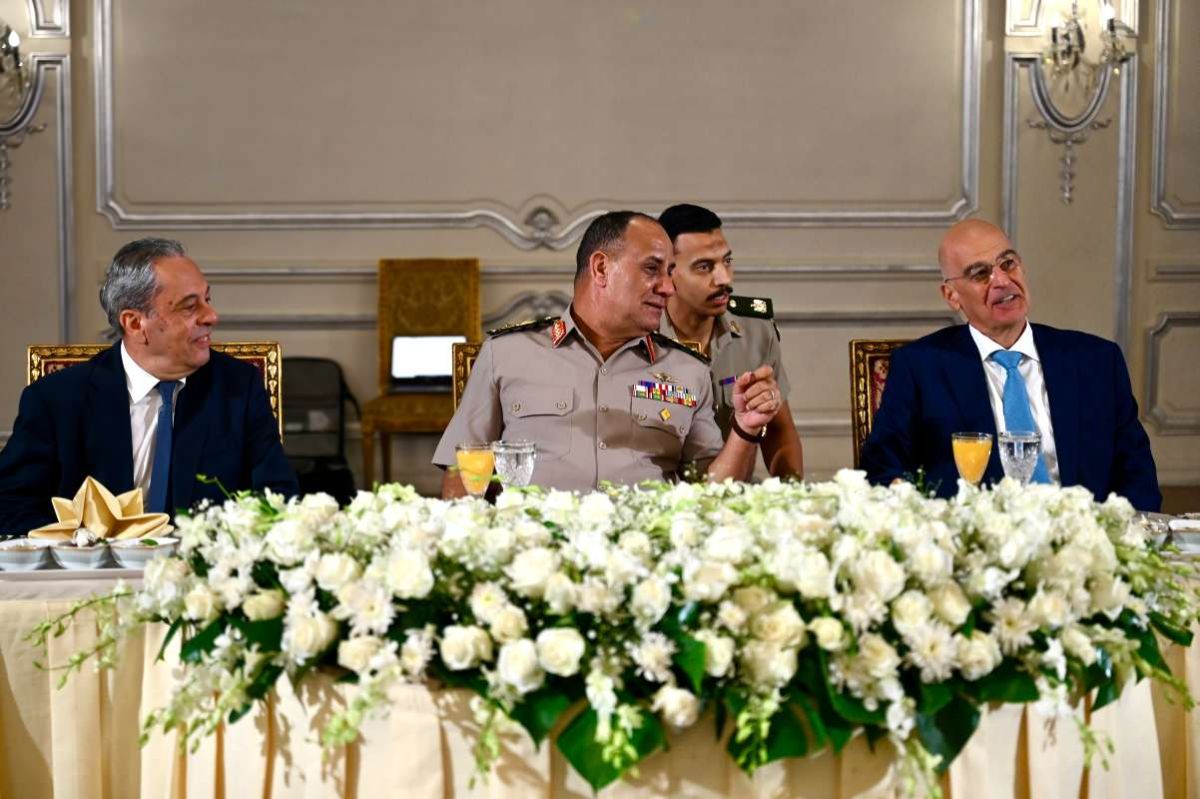
Πηγή Φωτογραφίας: eurokinissi//Dendias in Cairo: Egypt “Locks In” the Athens–Nicosia Axis — Defense, Eastern Mediterranean and a New Strategic Balance



At a time when the Eastern Mediterranean is once again becoming a focal point of geopolitical competition, Athens is moving to strengthen one of the region’s most established trilateral mechanisms: the partnership between Greece, Cyprus and Egypt.
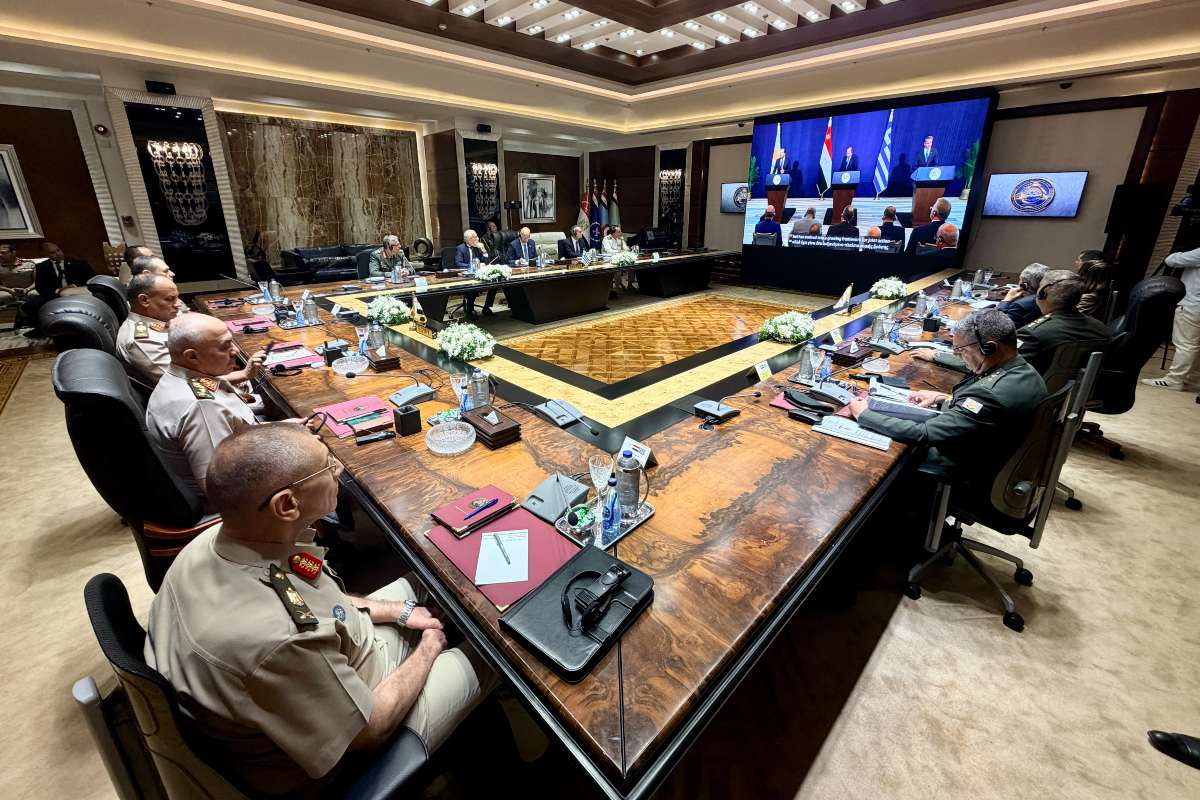
Greek Defense Minister Nikos Dendias traveled to Cairo for talks with his Egyptian counterpart and Cypriot Defense Minister Vasilis Palmas, with the agenda extending well beyond diplomatic coordination.
Defense cooperation, joint military exercises and training, interoperability, new technologies and defense innovation were among the issues officially placed on the table.
The visit carries additional strategic weight because it follows the recent Greece–Cyprus–Egypt summit, where the three countries reaffirmed their commitment to regional stability, security and closer cooperation.
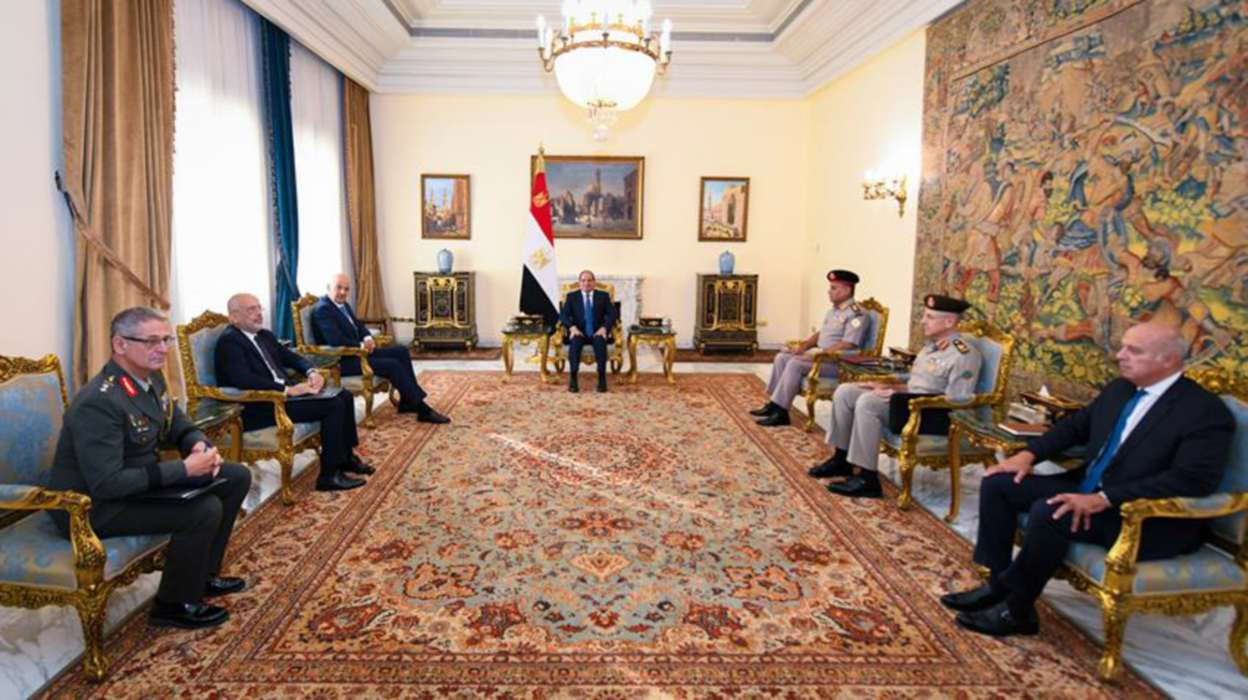
Dendias meets el-Sisi
The political significance of the visit was reinforced by Dendias’ meeting with Egyptian President Abdel Fattah el-Sisi.
The Greek defense minister said he presented Athens’ perspective on developments in the Eastern Mediterranean and the wider region, while also briefing the Egyptian president on the ongoing transformation of the Greek Armed Forces.
“I presented to him the Greek perspective on the Eastern Mediterranean and our wider region,” Dendias said.
He added:
“I also had the opportunity to present our effort to reform the Greek Armed Forces, as well as our thoughts on further deepening the defense relations between our two countries.”
The discussion therefore went beyond current regional crises. It also addressed the longer-term architecture of Greek–Egyptian defense cooperation.
Egypt as a “strategic and indispensable ally”
Dendias described Egypt as a strategic and indispensable partner for both Greece and Cyprus.
That characterization reflects the depth of a relationship that has developed steadily over the past decade.
For Athens and Nicosia, Cairo is no longer simply another important regional capital. Egypt has become a central component of a wider network of cooperation covering defense, maritime security, energy and regional diplomacy.
The Egyptian leadership has used similarly strong language regarding the trilateral format, presenting it as a model of regional cooperation based on mutual respect, shared interests and international law.
The trilateral format is no longer just diplomatic
The most important shift is the growing operational dimension of the relationship.
The Greece–Cyprus–Egypt framework is increasingly moving beyond summits, joint communiqués and diplomatic signaling.
The defense agenda now includes joint exercises, military training, interoperability, exchange of expertise, defense innovation and emerging technologies.
In practical terms, Athens, Nicosia and Cairo are trying to translate their political convergence into deeper cooperation between their Armed Forces.
That distinction matters.
Diplomatic partnerships demonstrate political intent. Military interoperability creates capabilities that can function during a crisis.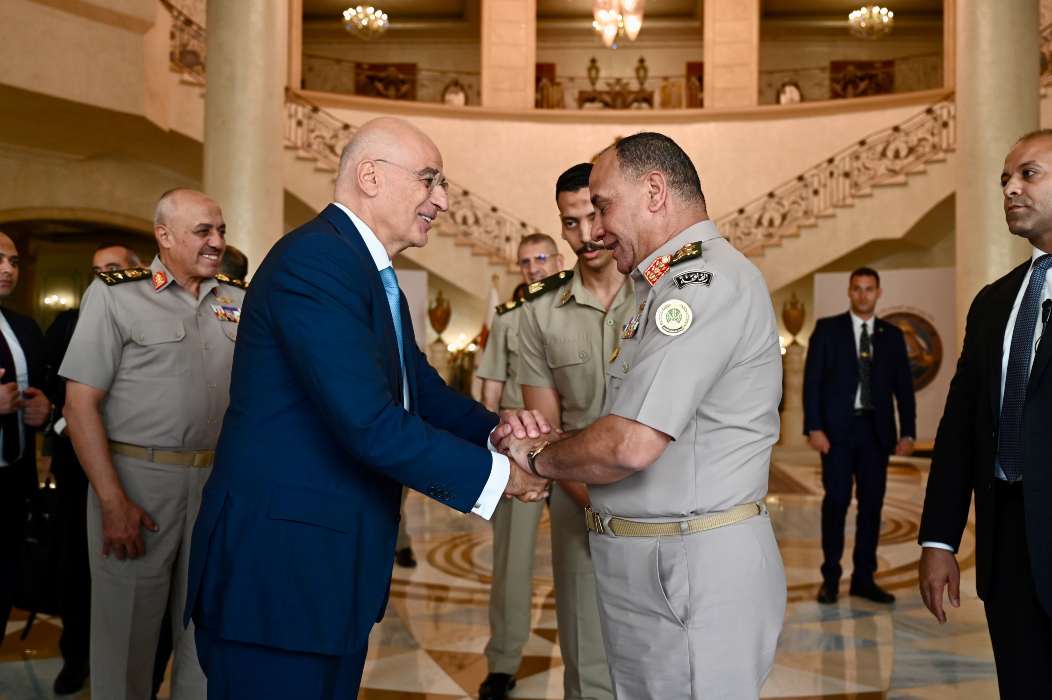
MEDUSA shows the direction
The multinational MEDUSA exercise has become one of the most visible manifestations of this strategy.
The latest edition brought together Greece, Egypt and Cyprus alongside additional partners and tested cooperation across naval, air, amphibious and land operations.
Dendias’ reference to the capabilities of the Egyptian Armed Forces following MEDUSA was therefore not merely ceremonial.
Egypt possesses significant military capabilities, controls one of the world’s most important geopolitical crossroads and sits at the intersection of the Eastern Mediterranean, North Africa, Gaza, the Red Sea and the Suez Canal.
For Greece, that makes Cairo a partner whose strategic importance extends far beyond bilateral relations.
Why Egypt matters more than ever
Geography explains much of Egypt’s value.
The country is simultaneously an Eastern Mediterranean power, a neighbor of Gaza, the guardian of the Suez Canal and a critical link between the Mediterranean and the Red Sea.
It is also positioned close to some of the world’s most important maritime and energy routes.
With continuing instability across the Middle East and pressure on shipping routes through the Red Sea and Bab el-Mandeb, Cairo’s role becomes even more consequential.
For Athens, therefore, strengthening relations with Egypt is not simply an Eastern Mediterranean policy. It is part of a broader strategy stretching from Europe to the Middle East and the Indo-Pacific trade routes that pass through Suez.
Energy adds another layer
Defense is only one part of the relationship.
Energy cooperation is becoming increasingly important, particularly through plans for electricity connectivity between Egypt and Greece and, ultimately, the European market.
That adds a second strategic dimension to the partnership.
Egypt can potentially become not only a security partner but also an energy bridge between North Africa and Europe.
For Greece, the combination of energy infrastructure, maritime routes and defense cooperation makes the relationship with Cairo substantially more important than a conventional bilateral partnership.
The Turkey factor — without turning the partnership into an anti-Turkish alliance
The trilateral relationship inevitably has a Turkish dimension.
Greece and Cyprus have strong incentives to maintain close coordination with Egypt on the Eastern Mediterranean, maritime zones and regional security, particularly as Ankara simultaneously seeks to improve its own relationship with Cairo.
But the Greece–Cyprus–Egypt mechanism is not formally an anti-Turkey alliance.
Its official framework emphasizes stability, development, international law and regional cooperation.
The geopolitical competition is subtler.
As Ankara works to rebuild influence in Cairo, Athens has an interest in ensuring that the strategic relationship constructed with Egypt over the past decade remains deep, institutionalized and resilient to changing regional alignments.
That is one of the most important contexts surrounding Dendias’ visit.
From political coordination to military interoperability
The strategic message from Cairo is therefore broader than another successful trilateral meeting.
Greece wants the relationship with Egypt to move further into the operational sphere: common training, interoperability, technology, defense-industry cooperation and continuous coordination during regional crises.
For Cyprus, the same architecture offers another channel through which Nicosia can deepen its security relationships in the Eastern Mediterranean.
And for Egypt, Greece and Cyprus provide two EU partners with which Cairo has built a long-running framework of political, energy and defense cooperation.
A partnership designed to endure regional shocks
The Eastern Mediterranean is entering another period of rapid change.
Wars in the wider region, competition over energy routes, pressure on global shipping, Turkish regional ambitions and the growing importance of the Red Sea are forcing governments to reassess old assumptions.
Against that background, Athens appears determined to invest in relationships that are not dependent on a single crisis.
The Dendias–Sisi meeting and the trilateral defense talks in Cairo point in that direction.
The objective is not simply to demonstrate diplomatic alignment, but to build a partnership capable of functioning across different scenarios — from maritime security and military exercises to energy infrastructure and wider regional instability.
For Greece, the strategic value of Egypt is therefore increasingly clear: Cairo is becoming one of the central pillars of Athens’ security architecture in the Eastern Mediterranean.
Source: pagenews.gr
Διαβάστε όλες τις τελευταίες Ειδήσεις από την Ελλάδα και τον Κόσμο