El Alamein Summit: Greece, Egypt and Cyprus Navigate the New “Mecca” Security Order
 ΧΡΟΝΟΣ ΑΝΑΓΝΩΣΗΣ 10 '
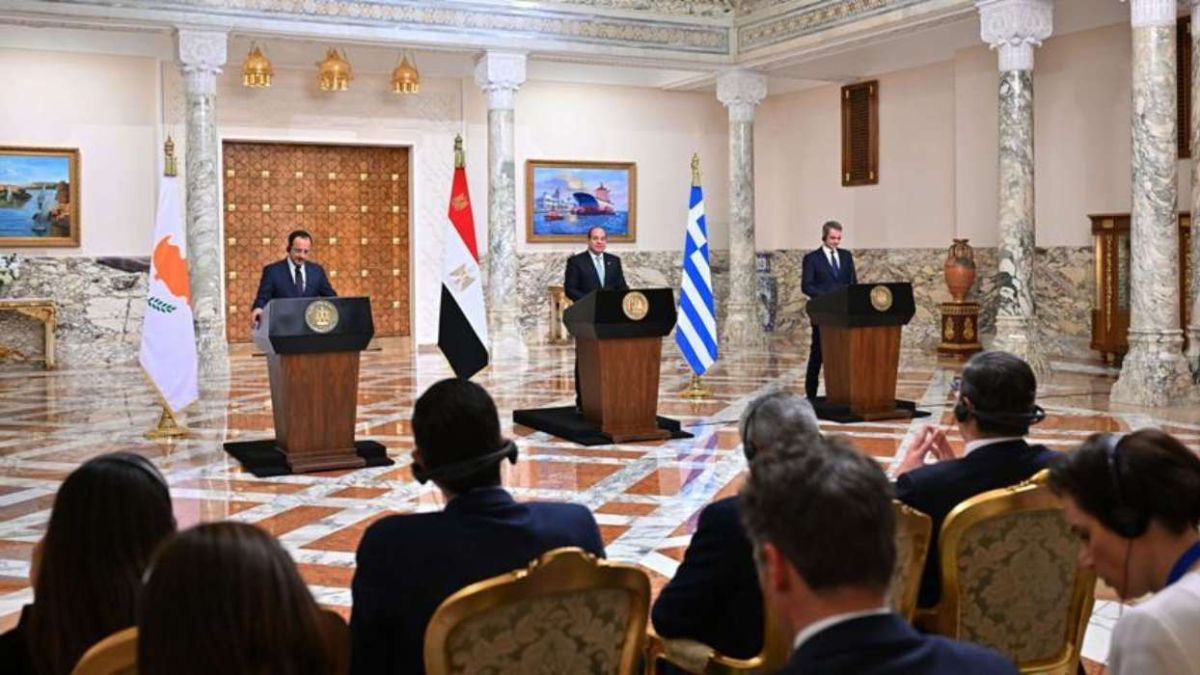
Πηγή Φωτογραφίας: eurokinissi//El Alamein Summit: Greece, Egypt and Cyprus Navigate the New “Mecca” Security Order



El Alamein is hosting much more than another diplomatic meeting between Greece, Cyprus and Egypt.
The timing transforms today’s summit between Greek Prime Minister Kyriakos Mitsotakis, Egyptian President Abdel Fattah al-Sisi and Cypriot President Nikos Christodoulides into a test of how three established partners intend to adapt to a rapidly changing regional balance of power.
Security arrangements are shifting. New partnerships are emerging across the Gulf and Eastern Mediterranean. Energy corridors are becoming instruments of geopolitical influence.
And looming over the talks is one particularly important development: the Mecca agreement between Turkey, Saudi Arabia and Pakistan.
The central question for Athens, Cairo and Nicosia is therefore bigger than Turkey.
It is about their place in the new security and economic architecture stretching from Europe and the Eastern Mediterranean to the Gulf.
The Mecca Agreement Changed the Regional Board
The August 7 agreement between Turkey, Saudi Arabia and Pakistan introduced a powerful collective-deterrence principle: an armed attack against one of the three countries would be treated as an attack against all.
That alone made the agreement significant.
But subsequent moves toward institutionalizing cooperation suggest that it should not be dismissed as a ceremonial declaration.
The three countries have moved toward deeper coordination in defence, military affairs, technology and the defence industry.
For Greece, Cyprus and Egypt, therefore, the issue is no longer simply an improvement in relations between Ankara and Riyadh.
It is the emergence of a new security mechanism connecting three major powers with very different but complementary assets.
Turkey brings military weight, strategic geography and an expanding defence industry.
Saudi Arabia brings financial and energy power.
Pakistan brings one of the region’s largest armed forces — and is a nuclear-armed state.
That combination inevitably attracts attention across the Eastern Mediterranean.
Athens Is Avoiding the Trap of Rival Blocs
Yet Greece’s response is notably cautious.
Mitsotakis has avoided portraying the Mecca agreement as the birth of an automatically anti-Greek alliance.
That distinction matters.
Athens itself has developed an important strategic relationship with Saudi Arabia and has no interest in sacrificing it simply because Riyadh is simultaneously deepening cooperation with Ankara.
This reflects a broader change in Middle Eastern diplomacy.
Countries increasingly maintain multiple strategic relationships at the same time, even when their partners compete with one another.
Saudi Arabia can cooperate with Turkey while retaining strong ties with Greece.
Egypt can deepen its partnership with Greece and Cyprus while maintaining its own regional channels.
Greece can maintain a strategic relationship with Israel while simultaneously expanding ties with Egypt, Saudi Arabia, the UAE, Qatar and Jordan.
The old model of rigid regional camps is giving way to something much more fluid.
El Alamein Is the Other Side of That Strategy
This is precisely why the Greece-Cyprus-Egypt trilateral format remains important.
It is not a new alliance created in reaction to Mecca.
It is an established mechanism of regional cooperation covering diplomacy, security, energy and economic connectivity.
But its role is evolving.
Today, it must demonstrate that the older cooperation structures of the Eastern Mediterranean can remain strategically relevant in a region increasingly shaped by flexible partnerships and overlapping alliances.
That is why the bilateral Mitsotakis-Sisi meeting before the trilateral summit carries particular weight.
Egypt Is Becoming Even More Important for Greece
Cairo occupies an extraordinary strategic position.
Egypt controls the Suez Canal.
It faces the Eastern Mediterranean.
It borders Gaza.
It remains one of the Arab world’s most consequential political and military powers.
And for Greece and Cyprus, it is a crucial partner in the emerging maritime and energy architecture of the region.
The Greek-Egyptian relationship therefore cannot be understood solely through the prism of Turkey.
It is bigger than Turkey.
It concerns Greece’s position on the wider Europe-Eastern Mediterranean-Middle East axis.
Mitsotakis has described the bilateral relationship as having geopolitical, military and energy dimensions.
The challenge now is to translate those dimensions into infrastructure, investment and strategic interdependence.
GREGY: When a Power Cable Becomes Geopolitics
That is where the GREGY electricity interconnector becomes central.
The planned Egypt-Greece connection is designed to carry renewable electricity generated in Egypt across the Mediterranean to Greece and, ultimately, into the wider European market.
On paper, it is an energy infrastructure project.
Strategically, it is much more.
GREGY could connect three different Greek advantages:
geography, EU membership and access to North Africa’s renewable-energy potential.
For Europe, it offers another route toward energy diversification and greater access to green electricity.
For Egypt, it offers access to the European energy market.
For Greece, it reinforces its ambition to become an energy and connectivity hub between continents.
In other words, Athens is attempting to transform geography into infrastructure — and infrastructure into geopolitical influence.
Mecca and El Alamein Represent Two Different Models of Power
There is an important contrast between the two emerging structures.
The Mecca framework is built primarily around collective deterrence and defence cooperation.
Turkey contributes military power and defence-industrial capacity.
Pakistan contributes considerable military capabilities.
Saudi Arabia provides financial, political and energy weight.
The Greece-Cyprus-Egypt framework operates differently.
Security and defence matter, but the partnership also rests heavily on:
energy,
electricity interconnections,
maritime cooperation,
investment,
European market access,
and diplomatic coordination.
These are not two symmetrical alliances.
And it would therefore be misleading to portray them as two rival “NATOs” competing for control of the region.
They represent different forms of strategic power.
Pakistan Adds a New Strategic Dimension — But Not Automatically a Nuclear Umbrella
Pakistan’s participation nevertheless makes the Mecca agreement particularly noteworthy.
It is a nuclear-armed state, and its defence relationship with Saudi Arabia has deep historical roots.
That inevitably raises questions about the ultimate scope of the new security arrangement.
But an important distinction is necessary.
There is currently no basis for automatically describing the agreement as extending a Pakistani nuclear umbrella over Saudi Arabia or Turkey.
The publicly described framework is one of collective defence and deterrence.
That is already geopolitically significant without attaching additional nuclear commitments that have not been publicly established.
The New Middle East Is About Networks, Not Fixed Camps
The larger lesson from both Mecca and El Alamein is that the regional system itself is changing.
The Middle East and Eastern Mediterranean are no longer easily divided into two stable blocs.
Turkey remains a NATO member while simultaneously constructing new security relationships beyond the alliance.
Saudi Arabia remains closely connected to Washington while expanding its strategic options across Asia, Europe and the wider Muslim world.
Egypt cooperates closely with Greece and Cyprus without closing the door to other regional relationships.
Greece has strategic ties with Israel while building deeper partnerships across the Arab world.
The new regional order is increasingly defined by overlapping networks rather than exclusive alliances.
That makes diplomatic flexibility an instrument of power.
Mitsotakis’ Bet: Greece as the Bridge
Athens believes this environment can actually strengthen Greece’s position.
Its strategy is to avoid dependence on a single regional axis.
Egypt provides strategic depth in North Africa and the Eastern Mediterranean.
Cyprus anchors the established trilateral mechanism.
Saudi Arabia and the UAE connect Greece to the Gulf.
Israel remains a major defence, technology and energy partner.
Jordan and Lebanon provide additional regional links.
And Greece’s EU membership offers something few of these partners possess directly: a gateway into Europe’s political, investment and energy architecture.
That is the logic behind Mitsotakis’ description of Greece as a “bridge” between Europe, the Middle East and the Gulf.
The concept only matters, however, if it is supported by physical and economic infrastructure.
That is why projects such as GREGY are so important.
The Real Competition Is Over Corridors, Capital and Connectivity
Seen from this perspective, the most important geopolitical contest is not simply Greece versus Turkey.
It is a broader competition over who will shape the networks connecting Europe, the Eastern Mediterranean, North Africa and the Gulf.
Those networks include military partnerships.
But they also include electricity cables, shipping routes, energy infrastructure, investment flows, ports, defence industries and diplomatic access.
Turkey is expanding its strategic depth through new security and defence arrangements.
Greece is trying to expand its own through a dense web of bilateral and trilateral relationships tied directly to Europe.
Egypt occupies a critical position between the two wider systems.
And Saudi Arabia increasingly has the ability to participate in several strategic networks simultaneously.
El Alamein Is Not an “Answer to Turkey”
It would therefore be tempting — but too simplistic — to describe today’s El Alamein summit as a Greek-Cypriot-Egyptian response to Turkey and the Mecca agreement.
The stakes are larger.
The real question is:
Who will control and influence the security, energy, investment and connectivity networks of the emerging regional order?
Turkey is increasing its strategic depth through a collective-defence framework involving two major Muslim powers.
Greece is pursuing a different strategy: building relationships from Israel and Egypt to Saudi Arabia and the UAE, while using projects such as GREGY to give those partnerships physical infrastructure and European depth.
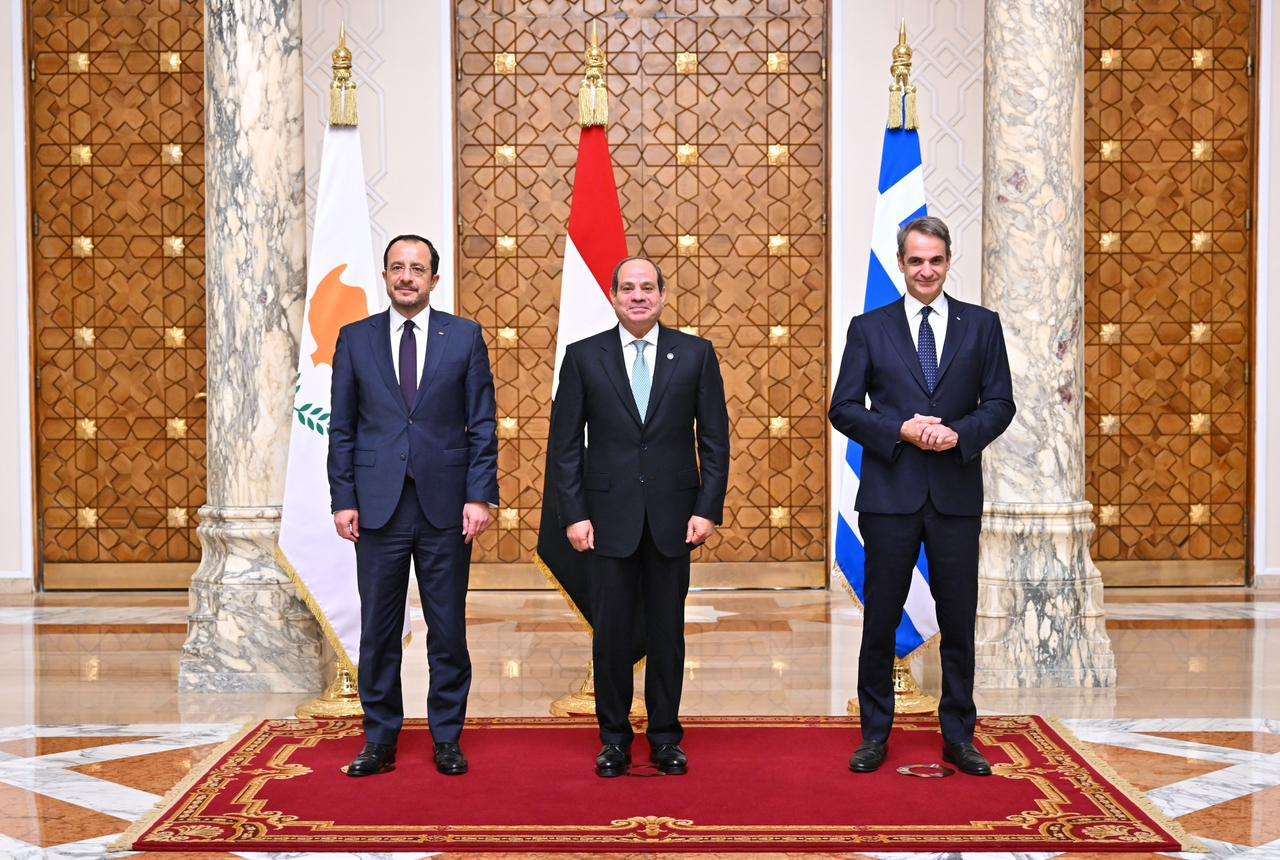
That is what makes today’s image of Mitsotakis, Sisi and Christodoulides in El Alamein more important than another trilateral photo opportunity.
It represents an attempt by Athens, Cairo and Nicosia to preserve — and expand — their strategic relevance in a regional order changing at remarkable speed.
And the key to understanding that order is no longer simply who is allied with whom.
It is who can connect whom — militarily, economically, energetically and politically.
Πηγή: pagenews.gr
Διαβάστε όλες τις τελευταίες Ειδήσεις από την Ελλάδα και τον Κόσμο