Egypt Draws a Red Line Against Turkey: Cairo Escalates Legal Battle Over Libya Maritime Deal
 ΧΡΟΝΟΣ ΑΝΑΓΝΩΣΗΣ 11 '
Πηγή Φωτογραφίας: AP Photo//Egypt Draws a Red Line Against Turkey: Cairo Escalates Legal Battle Over Libya Maritime Deal



A new diplomatic confrontation is unfolding in the Eastern Mediterranean as Egypt intensifies its opposition to the Turkey–Libya maritime agreement, following its recent ratification by Libya’s House of Representatives.
The development has triggered renewed concern in Athens, Nicosia, Cairo and Brussels, bringing one of the region’s most contentious maritime disputes back to the forefront of international diplomacy.
Egypt’s response is particularly significant because Cairo is moving beyond political objections and preparing a comprehensive legal dossier challenging the agreement.
The Egyptian Foreign Ministry is examining potential legal avenues with the assistance of international law specialists, while maintaining diplomatic communication with both Turkey and Libya.
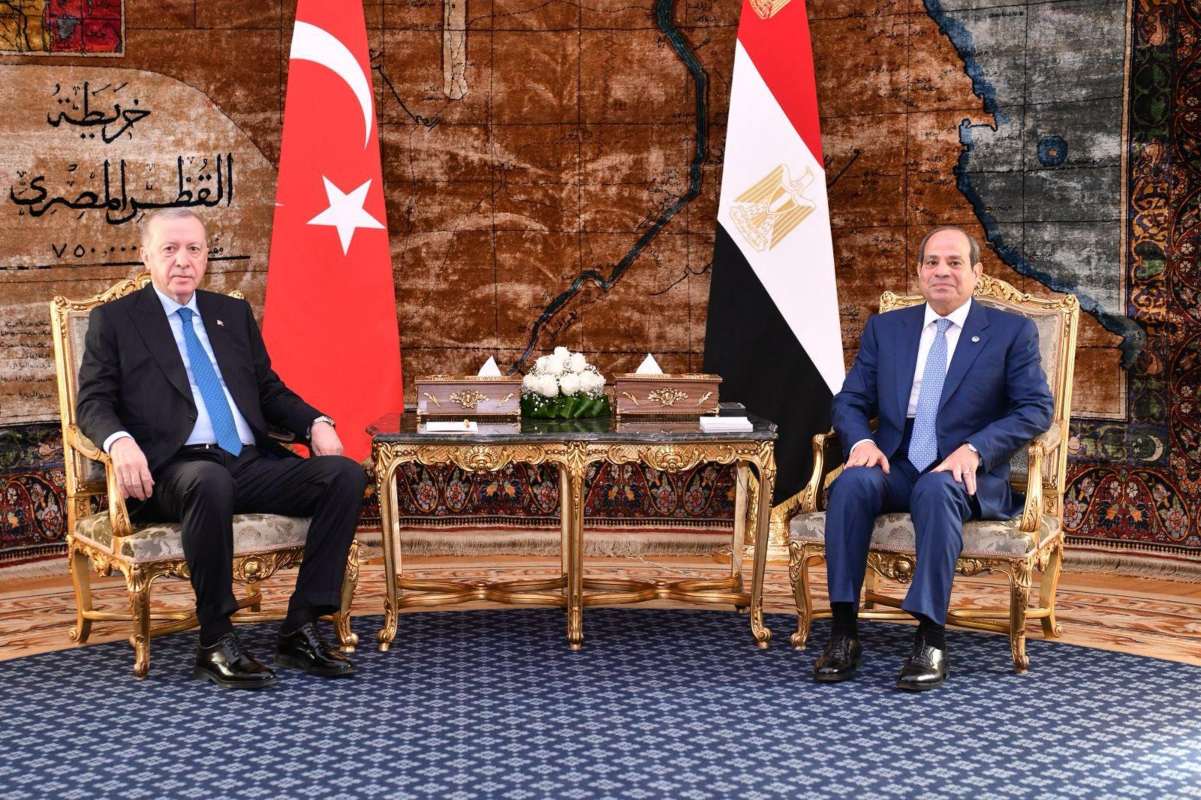
For Egyptian President Abdel Fattah el-Sisi, the dispute touches on fundamental national interests: maritime sovereignty, regional security, energy development and Egypt’s strategic influence in neighboring Libya.
For Greece, Cairo’s position reinforces an important diplomatic partnership at a moment when Turkey is seeking to consolidate its maritime arrangements with Libya.
Cairo’s Message: “Invalid in 2019, Invalid in 2026”
Egypt has reiterated its rejection of the maritime memorandum originally signed between Turkey and Libya in November 2019.
Egyptian Foreign Ministry spokesman Nader Zaki has emphasized that the agreement cannot establish maritime rights at the expense of third countries.
In remarks reported by Egyptian media, he summarized Cairo’s position in particularly direct terms:
“Invalid in 2019, invalid in 2026, and invalid at any time.”
The statement reflects Egypt’s argument that the Libyan parliament’s ratification cannot resolve the underlying legal objections to the agreement.
Cairo maintains that the memorandum affects areas in which Egypt claims sovereign rights and jurisdiction under international maritime law.
Egyptian officials are consequently preparing a legal assessment of possible responses to future exploration or resource-development activities in disputed maritime areas.
The country’s strategy combines legal pressure with diplomatic engagement, reflecting its interest in defending maritime claims without allowing the dispute to escalate uncontrollably.

Libya’s Ratification Changes the Diplomatic Equation
The latest confrontation follows the October 20 decision by Libya’s eastern-based House of Representatives to ratify the maritime delimitation memorandum with Turkey.
The move is politically significant because the eastern Libyan authorities had previously opposed the agreement.
Their change of position suggests an evolution in the relationship between Ankara and political forces in eastern Libya.
Turkey has expanded its diplomatic engagement with Libyan actors across the country’s political divisions, seeking to strengthen its position in a state that remains central to Eastern Mediterranean geopolitics.
For Greece and Egypt, the concern extends beyond the legal text itself.
A broader acceptance of the agreement within Libya could complicate future maritime delimitation negotiations and strengthen Turkey’s influence over regional energy and security arrangements.
Nevertheless, ratification by the parties to a bilateral agreement does not automatically settle objections raised by third countries concerning their own maritime entitlements.
That distinction remains central to the positions advanced by Athens and Cairo.
Greece and Egypt: A Strategic Partnership Under Renewed Pressure
The Greek-Egyptian relationship has acquired increasing importance in Eastern Mediterranean diplomacy.
In 2020, the two countries signed an agreement partially delimiting their exclusive economic zones, establishing a legal and diplomatic framework for cooperation on maritime boundaries.
Athens maintains that the Turkey–Libya memorandum disregards the geographical position and maritime entitlements of Greek islands.
Turkey rejects that interpretation and argues that its agreement with Libya reflects an equitable delimitation of maritime jurisdictions.
The dispute involves competing interpretations of international maritime law, particularly the effect of islands in delimiting overlapping maritime claims.
Egypt has its own direct interests in the matter.
Cairo seeks to protect its maritime jurisdiction and preserve the stability necessary for offshore energy investment and infrastructure development.
Those interests create substantial common ground with Greece, although the two countries do not necessarily share identical positions on every aspect of regional diplomacy.
The possibility of further Greek-Egyptian maritime delimitation discussions has therefore acquired renewed strategic relevance.
A Coordinated Diplomatic Response at the United Nations
One of the most important developments has been the coordinated response at the United Nations.
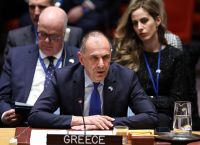
Greek Foreign Minister George Gerapetritis presented a joint statement on behalf of Greece, Egypt, Cyprus, Bahrain, the United Arab Emirates and the European Union.
The statement challenged the legality of the Turkey–Libya maritime memorandum and rejected the notion that it could establish legal consequences for third states.
Gerapetritis emphasized the collective position:
“The memorandum remains null and void, contrary to international law, and cannot serve as a lawful basis for the delimitation of maritime zones or produce legal effects for third states.”
The joint intervention carries significance beyond the immediate Greek-Turkish dispute.
Egypt’s participation, alongside two Gulf countries and the European Union, demonstrates that opposition to the memorandum extends across a wider diplomatic network.
For Athens and Nicosia, this provides an opportunity to frame the dispute as an issue of international maritime law rather than an exclusively bilateral disagreement with Ankara.
For Cairo, it offers an additional means of defending Egyptian interests through multilateral diplomacy.
European Union Rejects the Agreement
The European Union has also reaffirmed its opposition to the memorandum.
European Council President António Costa and European Commission President Ursula von der Leyen criticized the Libyan parliament’s ratification and reiterated the EU position established in 2019.
According to that position, the Turkey–Libya agreement infringes the sovereign rights of third states, does not comply with the Law of the Sea and is considered invalid by the European Union.
The two European leaders also reaffirmed solidarity with Greece and Cyprus.
This stance is politically and institutionally significant, although an EU declaration is not equivalent to a binding ruling by an international court.
The European position nevertheless strengthens the diplomatic framework within which Greece and Cyprus challenge the agreement.
It also places the maritime dispute within the EU’s broader relationship with Turkey and its policy toward the Eastern Mediterranean.
Ankara Stands Behind Its Blue Homeland Strategy
Turkey has shown no indication that it intends to abandon the maritime agreement.
Ankara welcomed the Libyan parliament’s ratification, presenting it as a positive development for bilateral cooperation and the protection of maritime interests.
Turkish officials have linked the agreement to the country’s broader maritime strategy, commonly associated with the concept of Blue Homeland, or Mavi Vatan.
The doctrine reflects Turkey’s ambition to defend extensive maritime claims in the Aegean and Eastern Mediterranean.
Ankara argues that its approach is consistent with equitable principles of maritime delimitation.
Greece and Cyprus maintain that the Turkish interpretation fails to give appropriate effect to the maritime entitlements of islands.
These competing positions lie at the heart of the dispute.
The issue is especially sensitive because maritime delimitation determines the areas in which countries may exercise rights over offshore resources and other economic activities.
El-Sisi’s Strategic Dilemma: Libya, Turkey and Egypt’s Security
For President Abdel Fattah el-Sisi, developments in Libya have direct national security implications.
Egypt shares a long land border with Libya, making political instability, armed conflict and the activities of external powers matters of immediate concern for Cairo.
Egypt has historically maintained close relationships with political and military actors in eastern Libya.
The eastern parliament’s decision to ratify the Turkey–Libya memorandum therefore introduces a new complication into Cairo’s regional strategy.
Egypt must balance several objectives simultaneously.
It seeks to preserve influence in Libya, defend its maritime claims, maintain regional stability and manage its evolving relationship with Turkey.
The recent improvement in Egyptian-Turkish relations creates opportunities for direct dialogue, even as the two governments remain divided over the maritime agreement.
This explains why Cairo is pursuing a combination of firm legal objections and continued diplomatic communication.
Its opposition to the memorandum does not necessarily imply a broader breakdown in relations with Ankara.
Energy Security Raises the Stakes
The dispute is about far more than maritime maps.
The Eastern Mediterranean has become a strategically important region for offshore energy exploration, electricity interconnections and infrastructure investment.
Unresolved maritime claims can complicate exploration licensing, create uncertainty for energy companies and increase the risk of diplomatic or operational incidents.
For Egypt, offshore resources and energy infrastructure form part of its wider economic and regional strategy.
For Greece, maritime jurisdiction is closely connected to national sovereignty, energy development and its position as a regional connectivity hub.
Turkey also views maritime access and resource rights as important elements of its strategic influence.
The involvement of Libya adds further complexity because of the country’s divided political institutions and competing international relationships.
As a result, the dispute over the memorandum has become intertwined with broader questions concerning the regional balance of power.
Three Critical Developments to Watch
The next phase of the confrontation will depend on developments across three interconnected areas.
First, Egypt’s legal response. Cairo’s preparation of a legal dossier could clarify which international procedures it considers available and whether it intends to pursue formal legal action.
Second, regional diplomacy. Coordination among Greece, Egypt, Cyprus and European institutions may reinforce their collective position, while direct Egyptian-Turkish discussions could help manage tensions.
Third, maritime operations. Any new exploration or development activity in areas subject to overlapping claims could test the ability of regional governments to prevent further escalation.
The interaction between these three factors will help determine whether the dispute remains primarily diplomatic or develops into a more serious regional confrontation.
The Wider Geopolitical Message
The Libyan parliament’s ratification of the Turkey–Libya maritime memorandum has not resolved the underlying dispute.
Instead, it has revived competing legal arguments and accelerated diplomatic activity across the Eastern Mediterranean.
Turkey is seeking to consolidate its agreement with Libya as part of its regional maritime strategy.
Greece, Cyprus and Egypt continue to challenge the memorandum, invoking international law and their respective sovereign rights.
The European Union has reaffirmed its opposition, while the joint statement at the United Nations has broadened the diplomatic response.
Egypt’s most consequential move is not a threat of military confrontation but its decision to pursue a coordinated legal and diplomatic challenge to the agreement.
For Cairo, the objective is to protect its maritime interests without destabilizing its relationships with neighboring countries.
For Athens, Egypt’s position represents an important element of its diplomatic strategy in the Eastern Mediterranean.
For Ankara, the dispute highlights the continuing resistance to its maritime arrangements with Libya.
The coming weeks will reveal whether renewed diplomatic engagement can create space for negotiations or whether conflicting maritime claims will continue to generate instability.
What is already clear is that the Eastern Mediterranean remains a critical intersection of international law, energy security and regional power politics — and Egypt intends to remain a central player in shaping its future.
Source: pagenews.gr
Διαβάστε όλες τις τελευταίες Ειδήσεις από την Ελλάδα και τον Κόσμο