There are moments in foreign policy when a political statement and a major defense agreement converge to reveal something much larger than the news cycle of the day.
That is precisely what is happening in Greece’s relationship with Israel.
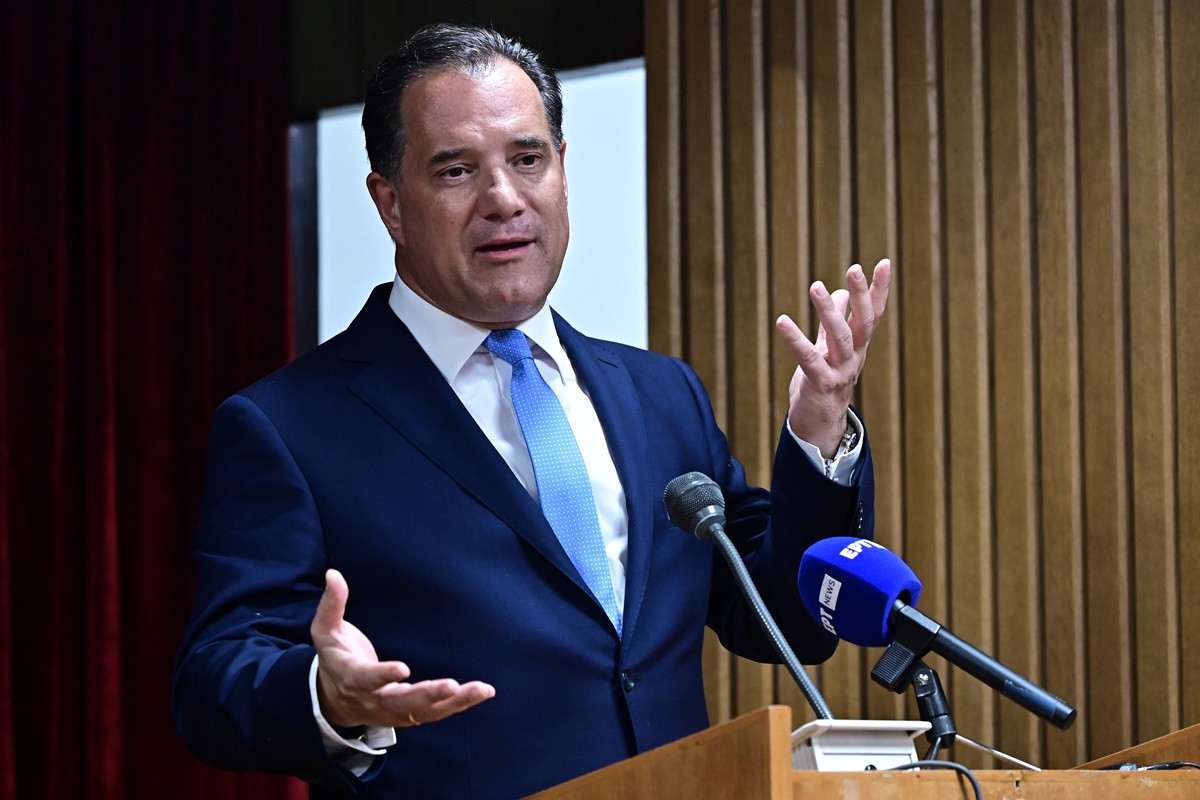
As Athens and Jerusalem move forward with agreements linked to Achilles Shield, Greece’s planned multi-layered air and missile defense architecture, Health Minister Adonis Georgiadis offered the political interpretation of that strategic choice during an interview with Aris Portosalte on SKAI 100.3.
“Greece is not allied with Prime Minister Netanyahu. Greece is allied with the State of Israel.”
He then made the distinction even clearer:
“Who serves as prime minister of Israel is decided by Israeli citizens and their democracy. We do not choose Israel’s prime minister. We choose a strategic ally: Israel.”
Those remarks encapsulate a broader doctrine of foreign policy: strategic relationships between states are not built around the governments of the moment, but around interests designed to endure for decades.
From Diplomacy to Defense: The Greece-Israel Partnership Deepens
The timing is particularly significant.
Athens is moving beyond declarations about the strategic nature of Greek-Israeli relations toward one of the most consequential practical manifestations of that partnership.
Achilles Shield is intended to create a new multi-layered Greek air defense architecture capable of responding to an increasingly complex threat environment involving aircraft, drones, cruise missiles and ballistic missiles.
The program is expected to become a major component of Greece’s broader military modernization.
It is therefore about much more than the acquisition of another weapons system.
Athens is seeking to connect a critical part of its future defensive architecture with Israeli technology and operational expertise.
€3.1 Billion and the Push for Greek Technological Sovereignty
The air-defense component of the broader program has been estimated at approximately €3.1 billion, with Athens seeking substantial participation by the Greek defense industry.
Particularly important is Greece’s objective of securing meaningful access to the technology and software architecture supporting the system.
This is strategically significant.
Athens does not want a defense architecture that operates as a technological “black box,” entirely dependent on a foreign manufacturer for future upgrades and integration.
The longer-term objective is greater national control over command-and-control capabilities and the ability to incorporate additional sensors and weapons as threats evolve.
In other words, Greece is seeking not only weapons.
It is seeking greater technological sovereignty.


Georgiadis: “Israel Is a Miracle of the Modern World”
Georgiadis went further during his SKAI interview in explaining why he considers Israel strategically important for Greece.
“I will say it exactly as I believe it. Israel, Aris, whatever anyone may say, is a miracle of the modern world.”
He pointed to Israel’s achievements in technology, science and medicine.
In the case of Achilles Shield, however, Israel’s technological capabilities have an immediate strategic application.
Israel has accumulated extensive real-world experience in multi-layered air and missile defense, including responses to simultaneous threats ranging from unmanned aerial vehicles to ballistic missiles.
Greece is seeking to adapt part of that technological and operational expertise to its own — very different — geography and security environment.
The Message to Turkey
Achilles Shield does not need to explicitly mention Turkey for it to affect the deterrence equation in the Aegean and Eastern Mediterranean.
Ankara has invested heavily in drones, missiles, electronic warfare and its domestic defense industry, developing an increasingly sophisticated ecosystem of indigenous military capabilities.
Athens is not attempting simply to replicate the Turkish model.
Its objective is to make any potential air or missile operation against Greek territory and critical infrastructure significantly more difficult, expensive and uncertain.
The emerging architecture is intended to integrate different sensors, interceptors and command networks with Greece’s existing capabilities.
If implemented as planned, the result would be a denser defensive network capable of detecting, assessing and responding to multiple categories of threats.
“Calm Waters” Do Not Mean Disarmament
This is where the political significance becomes particularly important.
The Mitsotakis government has faced criticism over the so-called policy of “calm waters” with Turkey, with critics arguing that efforts to reduce tensions with Ankara risk weakening Greece’s deterrent posture.
Achilles Shield points toward a very different interpretation.
Greece can seek lower tensions with Turkey while simultaneously undertaking one of the most ambitious air-defense upgrades in its modern history.
It can maintain diplomatic channels with Ankara while investing billions in deterrence.
It can pursue de-escalation without abandoning military preparedness.
Under this doctrine, “calm waters” are not an alternative to deterrence.
They are sustainable precisely because credible deterrence exists behind them.
“Greece Has No Foreign Policy?” — Georgiadis Fires Back
This wider picture also explains Georgiadis’ sharp response to comments by Nikos Tsoutsias suggesting that Greece lacks a coherent foreign policy.
“Greece has no foreign policy?” Georgiadis asked rhetorically.
He pointed to the network of strategic relationships Athens has developed with the United States, France, Egypt and Israel, while also referring to major decisions concerning maritime zones.
“We have extended to 12 nautical miles in the Ionian Sea. We have established an EEZ agreement with Egypt.”
His argument is straightforward: Greek foreign policy cannot be evaluated solely through day-to-day developments in Greek-Turkish relations.
It must also be assessed through the strategic network Athens has built around the country.
Achilles Shield now gives that argument a tangible military dimension.
Mitsotakis’ Strategy: Alliances as a Force Multiplier
Behind the Israeli partnership lies a broader strategic approach pursued under Prime Minister Kyriakos Mitsotakis: Greek power should not be measured solely by Greece’s national military capabilities, but also by the network of partnerships surrounding the country.
The defense partnership with France, the strategic relationship with the United States, cooperation with Egypt and the Greece-Cyprus-Israel framework constitute different components of that architecture.
They are not identical relationships and do not create identical obligations.
Collectively, however, they increase Greece’s diplomatic, military and technological depth.
That matters especially in the Eastern Mediterranean, where military capabilities, energy interests, maritime boundaries and competing regional alliances increasingly intersect.
Athens Is Betting on the State of Israel — Not Netanyahu
This is why Georgiadis’ distinction between Benjamin Netanyahu and the State of Israel carries genuine geopolitical significance.
Greece cannot design its defense strategy for the next 20 or 30 years according to who happens to occupy the Israeli prime minister’s office today.
Nor does Israel build its long-term strategic partnerships on the assumption that a particular Greek government will remain permanently in power.
That is precisely the difference between a temporary political relationship and a state-to-state strategic partnership.
“We do not choose Israel’s prime minister. We choose a strategic ally.”
Achilles Shield could become one of the most consequential material expressions of that principle.
From Rafale and FDI Frigates to the Greek “Shield”
Greece’s deterrence architecture has been changing rapidly.
The Rafale fighters brought new sensors and weapons to the Hellenic Air Force.
The F-16 Viper modernization is upgrading the backbone of Greece’s fighter fleet.
The FDI frigates are introducing new capabilities for the Hellenic Navy.
Achilles Shield is intended to add another critical layer: an integrated, networked defensive architecture designed to detect, classify and respond to increasingly diverse aerial and missile threats.
The broader objective is no longer simply to possess sophisticated individual platforms.
It is to make those platforms, sensors and interceptors operate as part of a connected defense ecosystem.
Diplomacy Backed by Deterrence
This is ultimately what makes the Greek-Israeli development larger than another defense procurement.
Athens is not choosing between diplomacy and deterrence.
It is attempting to use diplomacy to build stronger alliances — and those alliances to generate stronger deterrence.
That is why Georgiadis’ remarks about Israel go far beyond a radio interview or an internal Greek political dispute.
“Greece is allied with the State of Israel.”
Today, that strategic alliance is increasingly acquiring a military and technological architecture of its own.
And for Greece, Achilles Shield could become one of its most visible manifestations.
Source: pagenews.gr