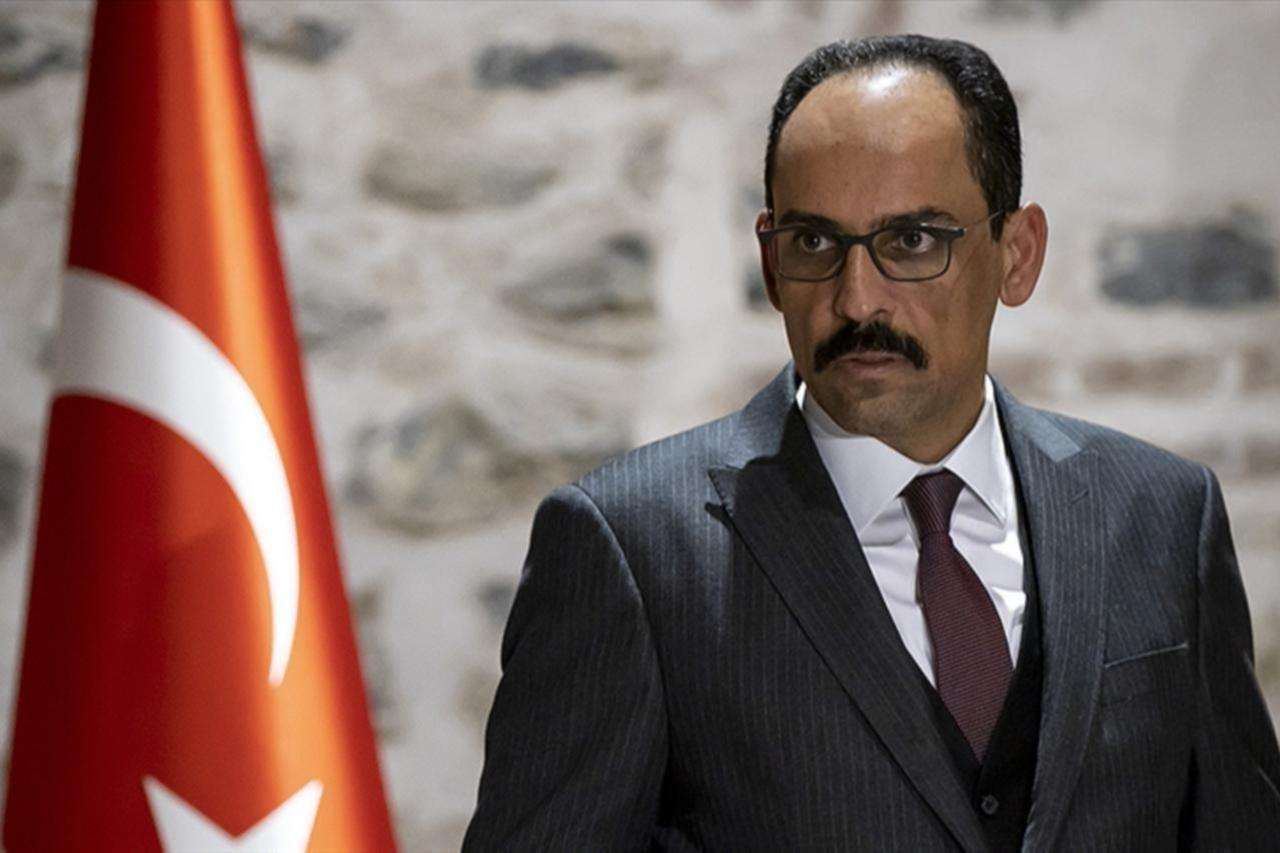
A visit that was never officially announced and took place away from the public spotlight has brought one of the most sensitive channels in Greek-Turkish relations back into focus: direct communication between the two countries’ intelligence services.
Ibrahim Kalin, the head of Turkey’s National Intelligence Organization (MIT), was in Athens late last week, where he met with Themistoklis Demiris, the director of Greece’s National Intelligence Service (EYP).
The visit was first reported by the Greek newspaper Ta Nea, while additional Greek media reports have corroborated the central element of the story: Kalin’s presence in the Greek capital and his meeting with the EYP chief.
The development carries particular weight not only because of Kalin’s position, but also because of its timing.
The former senior adviser to Turkish President Recep Tayyip Erdogan is far more than a conventional intelligence chief. For years, he has belonged to Erdogan’s inner circle and has been entrusted with highly sensitive diplomatic and geopolitical missions.
His presence in Athens therefore raises an important question:
Was this purely an operational EYP–MIT meeting, or was Kalin also acting as a political messenger for Erdogan?
So far, there is no public confirmation of the latter.
What Is Confirmed About the Kalin–Demiris Meeting
According to the information made public, Kalin arrived in Greece late last week without any official announcement accompanying the visit.
His meeting with Demiris is the most significant confirmed element of the trip.
There is, however, another detail that gives the Athens meeting greater context.
This was not the first contact between the two intelligence chiefs.
Demiris had previously travelled to Ankara in connection with the Greece-Turkey High-Level Cooperation Council, where he met Kalin.
The latest encounter should therefore not be viewed simply as an isolated secret meeting.
An active Demiris–Kalin channel — and, by extension, an EYP–MIT channel — appears to be in place.
Its importance increases precisely when the political and geopolitical relationship between Greece and Turkey enters more difficult waters.
Around 300 Turkish Criminals in Greece
According to Ta Nea, one of the principal issues discussed was the presence of approximately 300 Turkish criminals in Greece.
They are reportedly associated with around 15 criminal organizations and are believed to have established a presence in the country over the past four years.
The issue has become an increasingly serious security concern for Greek authorities, particularly as violent confrontations involving Turkish organized-crime networks have spilled onto Greek territory.
For both Athens and Ankara, this creates an area where security interests can converge despite their broader strategic differences.
Migration Networks, Terrorism and the Aegean
A second reported component of the talks involved organized migrant-smuggling networks operating between the Turkish coast and the Greek islands.
According to the original report, the activity of terrorist networks was also discussed, particularly against the backdrop of renewed instability across the Middle East.
This highlights one of the contradictions at the heart of contemporary Greek-Turkish relations.
Greece and Turkey may remain strategic competitors on major geopolitical questions, yet they simultaneously have strong reasons to cooperate on terrorism, organized crime, irregular migration and transnational security networks.


Why Kalin — and Why Now?
This is where the confirmed facts end and geopolitical interpretation begins.
There has been no public confirmation that Kalin carried a personal message from Erdogan to Athens.
It would therefore be premature to present such a scenario as established fact.
Yet the identity of Ankara’s envoy matters.
Kalin is deeply embedded in Erdogan’s power structure and has extensive experience across foreign policy, diplomacy and national security.
His presence in another capital can consequently carry operational, diplomatic and political significance at the same time.
That does not prove that a broader political message was delivered in Athens.
It does, however, explain why the visit deserves attention beyond the technical agenda of intelligence cooperation.
The Timing Changes the Meaning of the Visit
The meeting comes as the wider regional security architecture is undergoing significant change.
Developments across the Middle East, shifting defense partnerships, security calculations in the Eastern Mediterranean and persistent differences over the Aegean are creating an increasingly complex environment for both Athens and Ankara.
In such circumstances, direct communication between officials close to the centers of political power becomes more valuable.
This does not mean that every intelligence meeting amounts to a secret diplomatic negotiation.
It means that keeping channels open can become particularly important when the official political relationship comes under pressure.
Intelligence Services as a Strategic Safety Valve
This may ultimately be the most important geopolitical dimension of Kalin’s visit.
Intelligence backchannels are not used solely for exchanging information. They can also help prevent miscalculation when tensions increase.
Greece and Turkey may compete strategically across several fronts, but neither has an interest in allowing a crisis to spiral out of control because one side misread the intentions of the other.
Intelligence services cannot resolve the fundamental disputes in the Aegean.
They cannot redefine competing positions over maritime zones.
Nor can they replace diplomacy.
But they can operate as a quiet strategic safety valve when formal political communication becomes more difficult.
That is why Ibrahim Kalin’s discreet visit to Athens potentially carries greater significance than an ordinary meeting between two intelligence chiefs.
The safest conclusion is not that Kalin delivered a “secret message” from Erdogan — there is currently no public evidence confirming that.
The more consequential fact is different:
Despite persistent geopolitical differences and emerging sources of tension, Athens and Ankara are keeping one of their most sensitive communication channels open. And when Turkey’s interlocutor is Ibrahim Kalin, Athens knows it is dealing not merely with the head of MIT, but with a figure who has direct access to Recep Tayyip Erdogan and the heart of Turkey’s decision-making system.
Source: pagenews.gr