Erdoğan Tests Mitsotakis: Election Politics Raise the Stakes in the Aegean
 ΧΡΟΝΟΣ ΑΝΑΓΝΩΣΗΣ 8 '
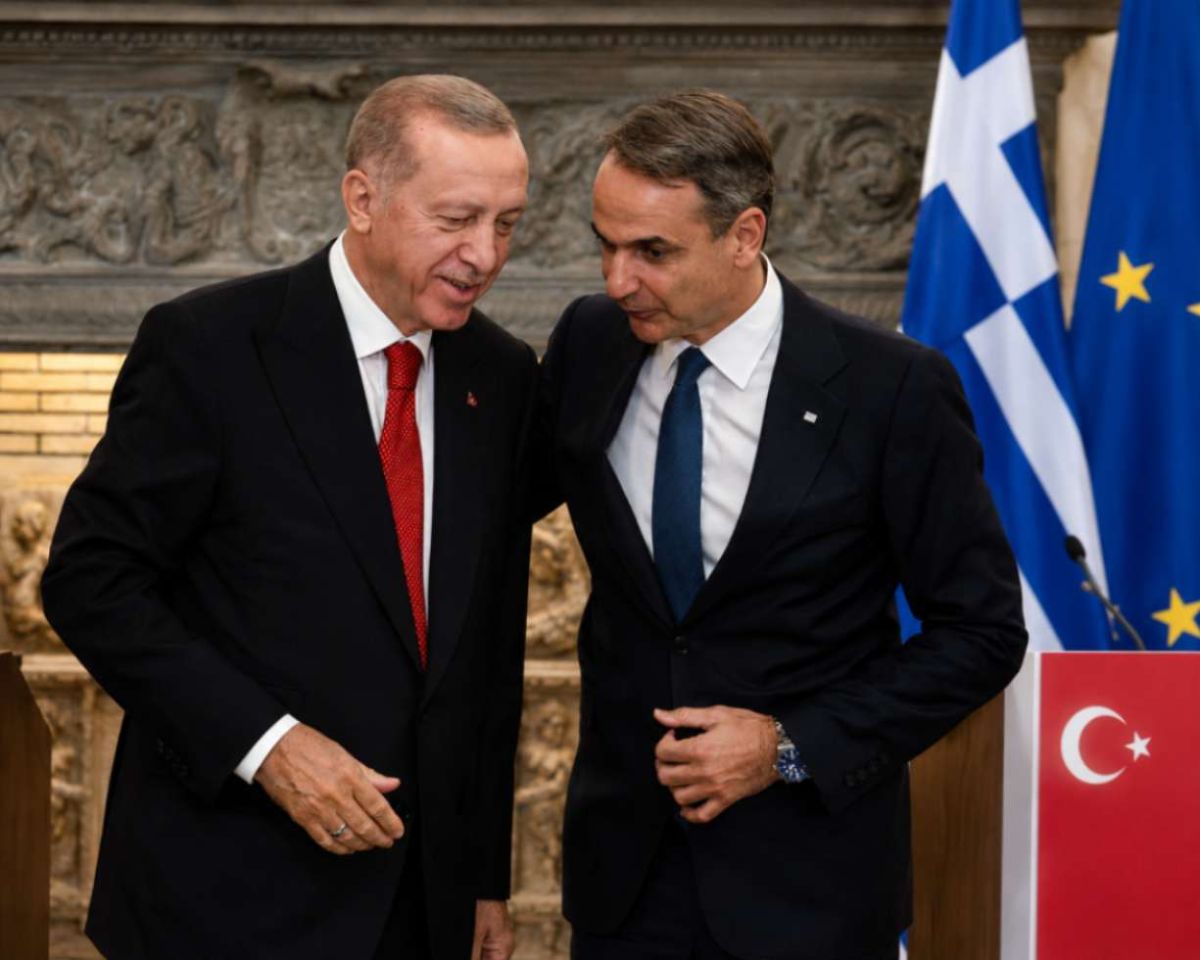
Πηγή Φωτογραφίας: eurokinissi//Erdoğan Tests Mitsotakis: Election Politics Raise the Stakes in the Aegean



Greek-Turkish relations are entering a considerably more complex — and potentially more dangerous — phase than a simple return to the familiar tensions of the past.
The real story is not only that Turkey has resumed increased activity in the Aegean, deployed the TÜBİTAK MARMARA southwest of Kastellorizo or brought the demilitarisation of Greek islands back to the forefront.
The deeper risk is that tension is beginning to acquire domestic political value.
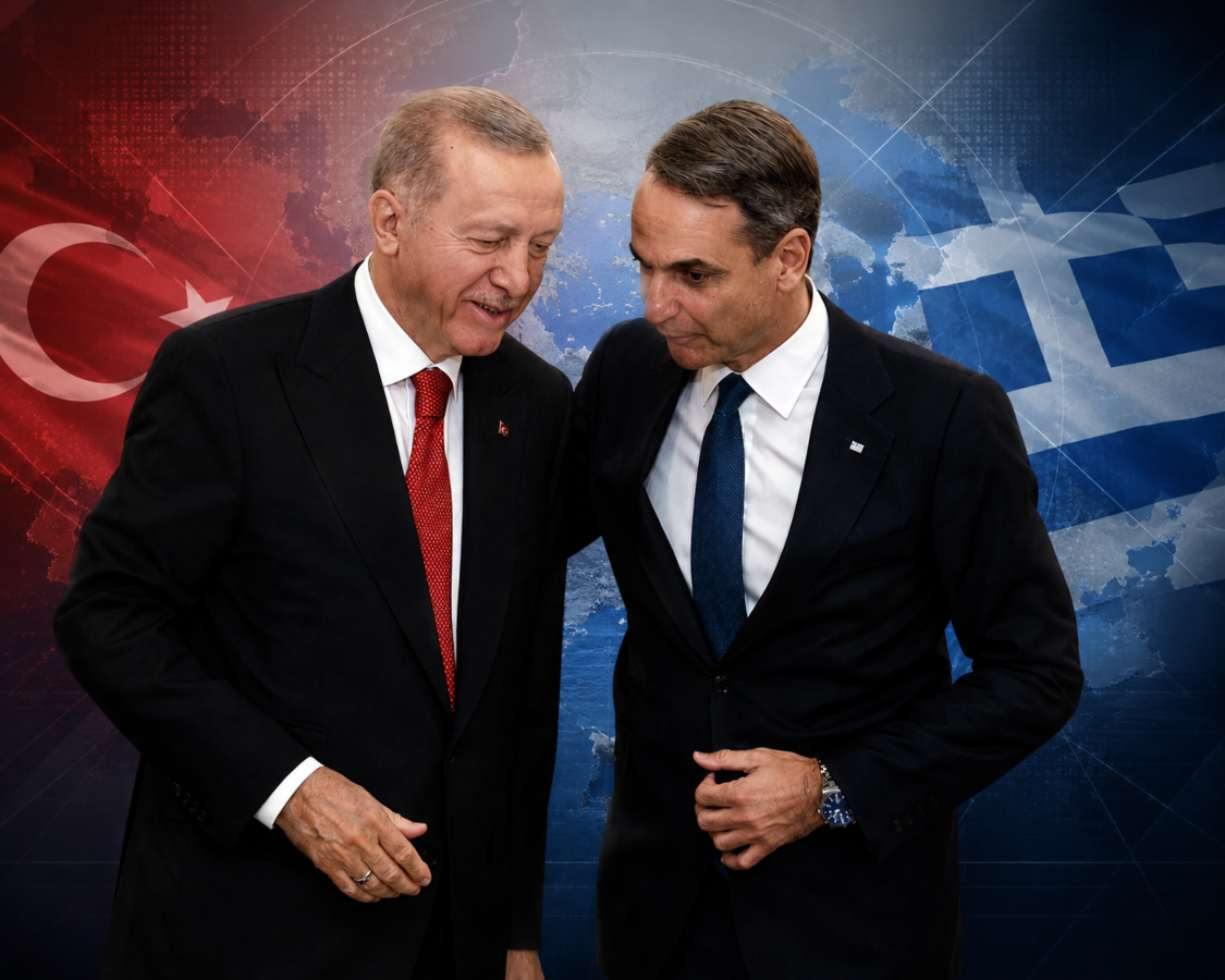
As Greece moves closer to its next electoral cycle, and as Recep Tayyip Erdoğan seeks to preserve his political dominance at home while strengthening Turkey’s regional position, the Aegean once again offers both leaders an arena in which resolve can be demonstrated.
That changes the risk equation.
Because when foreign policy becomes intertwined with domestic political calculations, backing down becomes considerably more difficult.
Ankara is not simply returning to provocations — it is changing tactics
Turkey’s latest pressure appears carefully calibrated.
On September 2, a Turkish CN-235 maritime patrol aircraft and four UAVs were reported to have carried out six air traffic infringements in the Athens FIR and 11 violations of Greek national airspace.
There were no engagements, and the Turkish aircraft were not armed.
That distinction matters.
Ankara is increasing its operational footprint without yet accepting the level of risk associated with the armed F-16 formations that characterised previous periods of acute Greek-Turkish tension.
UAVs and surveillance aircraft allow Turkey to maintain persistent pressure, force Greek monitoring and interception responses and reinforce the image of a continuous Turkish presence — while reducing the immediate possibility of an air-to-air confrontation.
Turkey can therefore generate pressure more frequently, more cheaply and at lower operational risk.
TÜBİTAK MARMARA sends a different message
A similar pattern is emerging at sea.
Turkey issued NAVTEX 0862/26 for TÜBİTAK MARMARA activities between September 1 and 15 in waters southwest of Kastellorizo.
Athens responded with its own navigational warning, challenging Ankara’s authority to issue the notice and objecting to parts of the designated area.
There is an important distinction from previous crises.
According to the available information, TÜBİTAK MARMARA is conducting research in the water column rather than seismic exploration of the seabed.
This is therefore not a repeat of the Oruc Reis crisis of 2020.
But that does not make the move geopolitically insignificant.
The key issue is presence.
Ankara is increasingly seeking to translate longstanding claims into recurring operational practice: NAVTEX notices, research vessels, maritime planning and persistent activity in strategically sensitive waters.
Such actions do not by themselves alter the legal status of maritime zones.
They can, however, create a political and operational footprint.
Erdoğan puts the islands back on the table
The renewed Turkish focus on the status of Greek islands fits the same pattern.
Erdoğan has warned that Turkey will do “whatever is necessary” to protect what Ankara regards as its rights, while arguing that interpreting Turkey’s restraint as weakness would be a serious mistake.
The underlying Turkish position is not new.
Ankara has long argued that the military status of certain eastern Aegean islands is restricted by international agreements.
Athens categorically rejects any attempt to connect those provisions to questions of Greek sovereignty and invokes its inherent right of self-defence under Article 51 of the UN Charter, particularly in light of Turkey’s Aegean Army, amphibious capabilities and the continuing Turkish casus belli.
The significant development, therefore, is not the existence of the dispute.
It is Erdoğan’s decision to bring it personally back to the centre of the political agenda.
Why now?
Timing is crucial.
Turkey is attempting to expand its regional influence from Syria and Libya to the Eastern Mediterranean, while simultaneously rebuilding its strategic relationship with Washington and seeking a path back toward the F-35 programme.
Greece, meanwhile, is strengthening its defence relationship with Israel, moving ahead with its own F-35 programme and developing diplomatic, energy and security partnerships across the Eastern Mediterranean.
Athens and Ankara are therefore competing over much more than individual disputes in the Aegean.
They are competing over their respective positions in the emerging security architecture of the Eastern Mediterranean and the wider region.
And as that competition intensifies, demonstrating that neither side can be pressured into retreat acquires greater strategic value.
The election factor raises the danger
This is where the equation becomes more dangerous.
When a bilateral dispute simultaneously becomes useful for domestic political mobilisation, the space available for compromise shrinks.
Erdoğan has every incentive to portray himself as the leader who refuses to surrender any of Turkey’s longstanding claims.
Kyriakos Mitsotakis, conversely, has virtually no political room to appear conciliatory when Ankara publicly raises issues involving sovereignty, demilitarisation or so-called “grey zones.”
A potentially dangerous dynamic follows.
Each leader knows that the other has limited room to retreat.
And every new move becomes politically more expensive to leave unanswered.
That does not mean either Athens or Ankara wants a military confrontation.
It does mean that domestic politics can gradually narrow the number of available exits from a crisis.
The Kalın–Demiris paradox
Yet behind the public confrontation, another mechanism remains active.
Turkish intelligence chief İbrahim Kalın recently travelled to Athens and met with the head of Greece’s National Intelligence Service, Themistoklis Demiris, according to Greek media reports.
The meeting reportedly followed an earlier visit by Demiris to Ankara.
This may be one of the most important elements of the current situation.
While Erdoğan hardens his public rhetoric and Turkey increases its operational activity, Athens and Ankara continue to maintain a direct, high-level intelligence channel behind closed doors.
That is not necessarily a contradiction.
It is a classic mechanism for managing controlled escalation.
Both sides want the ability to apply pressure without losing control of the consequences.
The new dangerous equilibrium
The “calm waters” period has therefore not yet been replaced by an outright crisis.
It is increasingly being replaced by something else: managed friction.
Turkey applies pressure through UAVs, NAVTEX notices, research vessels and political statements.
Greece responds through interceptions, counter-NAVTEX notices, surveillance and accelerated defence modernisation.
But so far, both sides appear to be avoiding moves that would make a military confrontation significantly more likely.
That equilibrium could survive for months.
The danger is cumulative.
The more operational incidents take place, the greater the possibility of miscalculation.
A UAV flies closer than expected.
A research vessel changes the nature or location of its activity.
A naval unit responds differently than anticipated.
Or a political statement creates domestic pressure for an immediate response.
Controlled escalation is only controlled until somebody miscalculates.
The Aegean is becoming a bargaining instrument again
The most plausible reading at this stage is not that Erdoğan necessarily wants a major Greek-Turkish crisis.
What he appears to want is to restore the strategic cost of ignoring Turkey.
Ankara wants Athens, Brussels and Washington to understand that Turkey retains the ability to generate pressure across several interconnected theatres: the Aegean, Eastern Mediterranean, Cyprus, Libya and Syria.
Mitsotakis faces an equally complicated calculation.
Greece wants to demonstrate that dialogue remains possible, but not at the cost of sovereign rights or the suspension of its strategic choices.
That will be the real test over the coming months.
The question is no longer whether there will be further Turkish pressure.
There already is.
The question is whether Mitsotakis and Erdoğan can exploit controlled tension for strategic and political purposes without eventually becoming trapped by the escalation they are trying to manage.
Because in the Aegean, starting a controlled crisis is not necessarily the hardest part.
The hardest part is making sure it remains controlled.
Source: pagenews.gr
Διαβάστε όλες τις τελευταίες Ειδήσεις από την Ελλάδα και τον Κόσμο