This is no longer simply another period of tension in Greek-Turkish relations.
The more important shift lies deeper: in the narrative Ankara is trying to build around Greece, and in the way Turkey appears to be preparing the international environment for the next phase of the bilateral dispute.
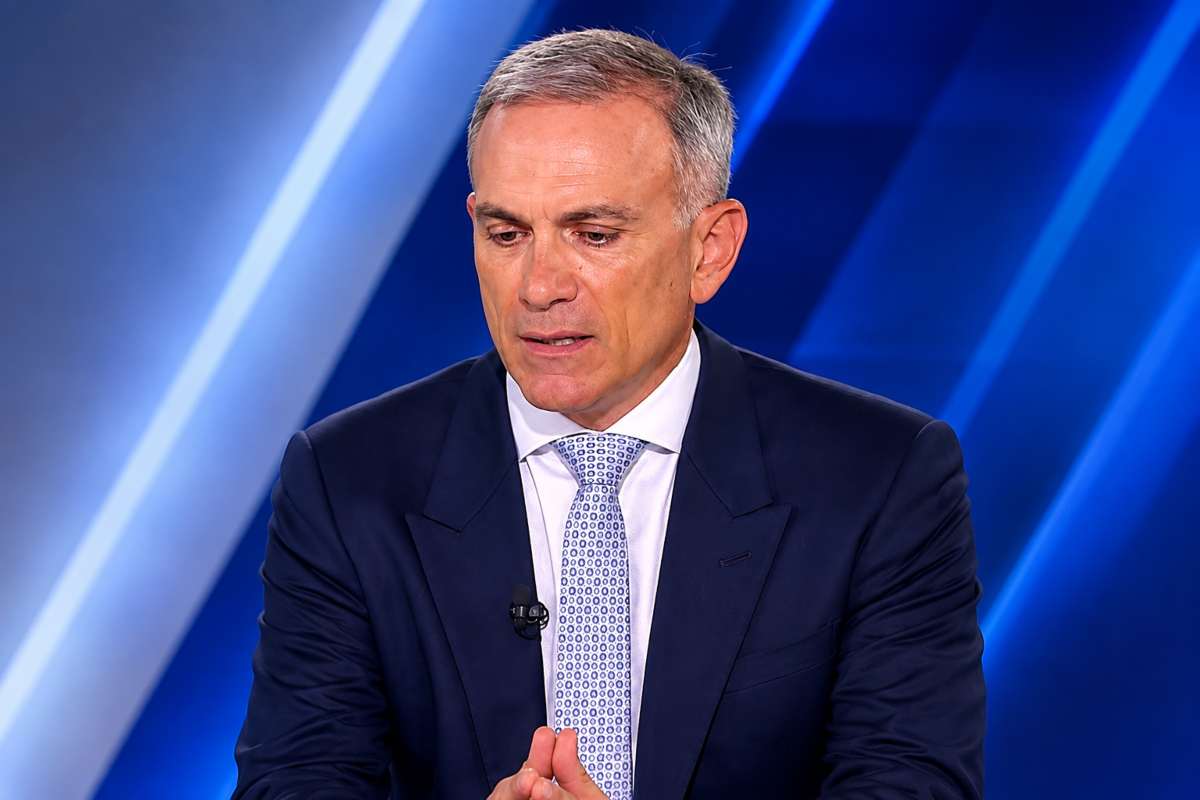
That was the central warning from international relations expert Konstantinos Filis during a discussion on SKAI, as tensions between Athens and Ankara once again intensify.
Filis’ point was precise: Turkey’s basic positions have not changed.
What is changing is the framework in which they are presented.
“There is an adaptation of the Turkish narrative, not a change, because Turkey’s positions are longstanding.”
That shift could ultimately matter more than another NAVTEX or another sharp statement from Ankara.
The new Turkish narrative: Greece as the destabilising power
Filis’ most important observation concerns an apparent Turkish effort to reverse the roles.
According to his assessment, Ankara is increasingly trying to present itself as a stabilising and defensive power, while depicting Greece as the actor disturbing the regional balance.
“At this stage they are portraying us as the aggressor. They are portraying us as a country that acts in a destabilising way by militarising, wrongly according to Turkey, its islands.”
This is the core of the issue.
Turkey does not need to convince Greece that its position is right.
It needs to create enough ambiguity in Washington, Brussels and major European capitals so that, if another crisis erupts, responsibility for escalation is not automatically attributed to Ankara.
The Achilles Shield changes the strategic picture
The timing is particularly significant.
Greece and Israel have just moved forward with the large-scale Achilles Shield air and missile defence programme, a project designed to create a multilayered architecture against missiles, drones and other aerial threats.
For Athens, the system is defensive.
For Ankara, however, the concern is not only what can be intercepted.
It is also what can be detected.
The deployment of advanced radar and command-and-control systems can significantly improve Greece’s awareness of aerial activity across the Aegean and Eastern Mediterranean.
That helps explain why the Turkish debate over the militarisation of the Greek islands has once again moved to the centre of the agenda.


Why Ankara is worried about the sensors
Modern air defence is not only about missiles.
It is about information.
Radar coverage, early warning and networked command systems can transform the way Greece sees and responds to activity in the wider region.
During the SKAI discussion, this dimension was highlighted directly: the new architecture would improve Greece’s ability to detect UAVs and other airborne platforms.
For Turkey, that alters the operating environment.
And that is why the dispute over the islands is no longer just a legal or diplomatic argument.
It is increasingly connected to the military balance.
Erdoğan puts the islands back at the centre
The renewed Turkish pressure also follows fresh rhetoric from President Recep Tayyip Erdoğan over the status and military reinforcement of Greek islands.
What matters, as Filis stressed, is that the Turkish message did not appear to be an accidental improvisation.
“This is not an oral statement where one might say something slipped out. It was recorded and then transferred into written form.”
In other words, the message was not corrected or withdrawn.
It was allowed to stand.
That makes the language more politically significant.
Greece–Israel becomes a central Turkish fixation
The second pillar of the evolving Turkish narrative is Israel.
Filis drew an important comparison with the past.
Turkey once tended to portray Greece as acting under American influence.
Now, he argued, Ankara increasingly presents Greece as aligned with — or even acting on behalf of — Israel.
“Now it considers Greece an instrument of Israel.”
That is strategically important.
Athens sees its relationship with Israel as part of a broader deterrence and security framework.
Turkey is trying to portray the same relationship as part of a wider anti-Turkish alignment.
The same strategic reality is therefore being presented through two completely different narratives.
Israel is also a politically useful adversary for Erdoğan
Filis added another layer.
Israel is not only a strategic rival in Ankara’s regional calculations.
It is also politically useful.
“Israel is also a convenient adversary for Erdoğan, both for his domestic audience and for his external audience, because he wants to present himself as the defender and protector of Muslims everywhere.”
Linking Greece more closely to Israel therefore allows Ankara to place Greek-Turkish tensions inside a much broader regional narrative.
The dispute is no longer presented only as a disagreement in the Aegean.
It can be framed as Greece–Cyprus–Israel on one side and Turkey’s own regional ambitions on the other.


TÜBİTAK MARMARA was not just a research mission
The narrative is also being accompanied by activity on the ground.
Turkey recently deployed the research vessel TÜBİTAK MARMARA in waters near Kastellorizo.
The vessel later returned, but the location it had entered was politically sensitive.
During the SKAI discussion, the issue was treated as part of a larger pattern: Turkey is testing presence, jurisdiction and reaction in areas where Greece and Turkey hold fundamentally different views over maritime rights.
That does not automatically make every research mission a crisis.
But it does mean that operational activity and political messaging are increasingly reinforcing each other.
Kastellorizo remains the pressure point
The discussion also returned repeatedly to Kastellorizo.
The retired military participant in the programme described the island as a recurring focus in Turkish planning and stressed the strategic sensitivity of the area.
That is important because Kastellorizo is not simply another Greek island in the Turkish narrative.
It sits at the centre of competing maritime claims in the Eastern Mediterranean.
Any Turkish activity around it therefore carries a symbolic weight far beyond the immediate operational move.
And in the background: the Greece–Cyprus electricity cable
Filis also pointed to another potential future flashpoint:
the Greece–Cyprus electricity interconnection.
His warning was that Ankara could frame the project as another example of Greece and Cyprus — potentially supported by Israel and France — advancing a strategic design contrary to Turkish interests.
He described the kind of argument Ankara could make:
“Greece and Cyprus, let us leave Israel aside, and some Europeans, specifically the French, are trying to advance a plan that runs against Turkey’s interests, and we are obliged to respond to that plan.”
This is precisely where rhetoric could acquire operational consequences.
Any renewed work on the cable could bring Greek and Turkish assets into closer proximity in contested waters.
That makes the project much more than an energy issue.
It becomes a test of sovereignty, jurisdiction and deterrence.
Filis’ core warning: Ankara is preparing for “what comes next”
This was the most important part of his intervention.
Filis did not argue that a military incident is inevitable.
His warning was more subtle.
“This Turkish narrative is adapted to the new reality and it is building something.”
What is it building?
“The possibility — not necessarily of a crisis or a hot incident, although that too may happen — but in any case to make it appear that Turkey is not responsible for whatever happens from this point onward.”
That changes the way the current escalation should be read.
Turkey may not necessarily be preparing the next incident.
It may be preparing the argument over who will be blamed if an incident occurs.
The next Aegean confrontation may begin with a battle over narrative
The period of “calm waters” has not yet been replaced by open crisis.
But the strategic environment has clearly changed.
Greece is building the Achilles Shield.
The Athens–Jerusalem relationship is deepening.
Turkey is reviving pressure over the militarisation of the islands.
Kastellorizo is again in focus.
NAVTEX notices and research missions are becoming tools of strategic signalling.
And the Greece–Cyprus electricity link remains a potential test point ahead.
None of this means that Greece and Turkey are inevitably moving toward confrontation.
It does mean, however, that the era in which de-escalation could be treated almost as an automatic process is ending.
And Filis’ warning captures the central point:
the next Greek-Turkish crisis, if it comes, may begin long before warships face each other in the Aegean — with a battle over who is presented internationally as the aggressor and who as the defender.
Source: pagenews.gr