Mitsotakis: EU Green Light for Three Greek Initiatives — Support Package Ahead of a Difficult Winter
 ΧΡΟΝΟΣ ΑΝΑΓΝΩΣΗΣ 7 '
Πηγή Φωτογραφίας: eurokinissi//Mitsotakis: EU Green Light for Three Greek Initiatives — Support Package Ahead of a Difficult Winter



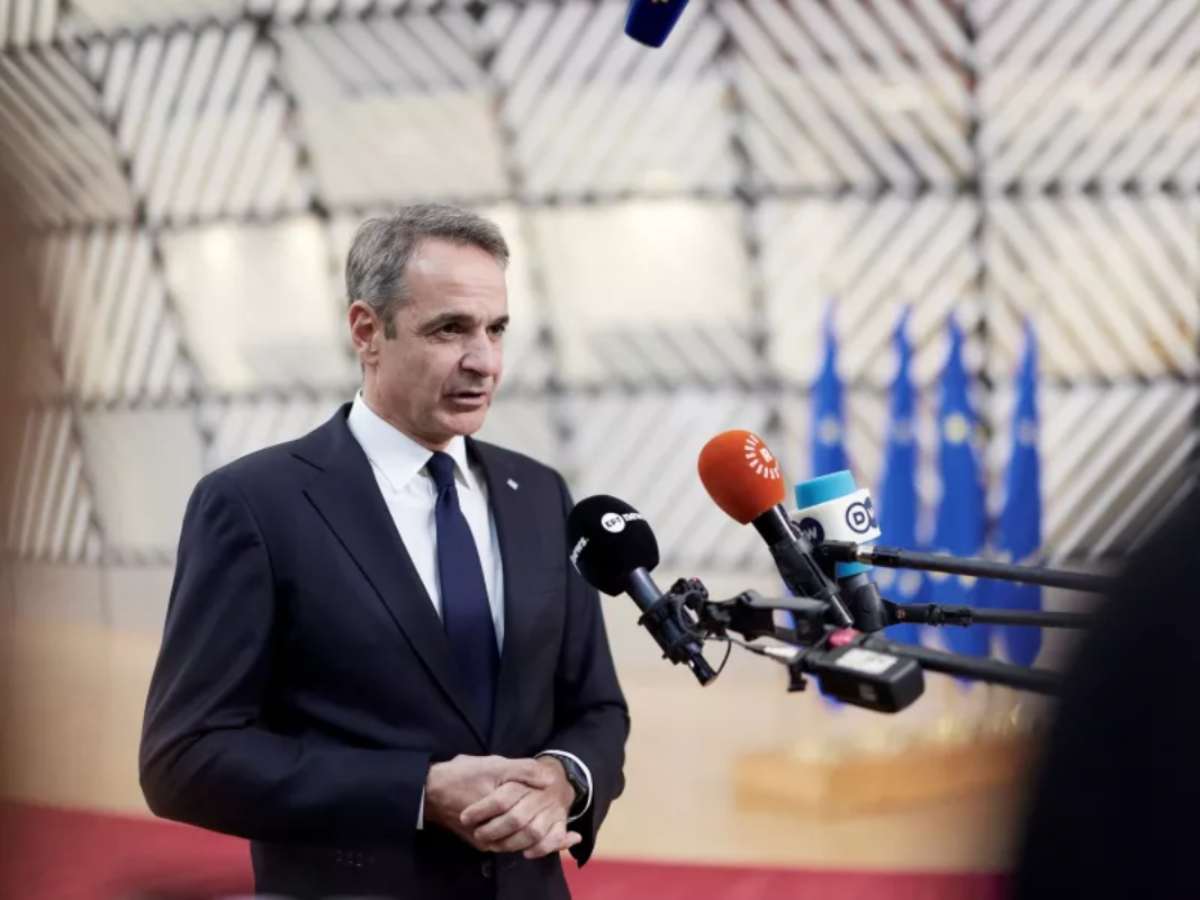
Kyriakos Mitsotakis has outlined the government’s priorities for the coming months, combining pressure for greater European flexibility with domestic measures intended to ease energy costs for households and businesses.
In his weekly Sunday review, the Greek prime minister highlighted three initiatives discussed at the European Council that received political backing for further development. Fiscal flexibility, a response to hybrid migration threats and stronger protection for children on social media form the European dimension of his intervention.
His message to Brussels also included a clear demand for faster action. Athens wants political commitments translated swiftly into practical instruments, while moving domestically to support heating, transport and fishing.
“Three major Greek initiatives received the green light”
Mitsotakis opened with the European Council, emphasising Greece’s role in shaping the European agenda:
“I will begin with the European Council, which concluded on Friday and had a strong Greek presence, as three major Greek initiatives were discussed extensively and received the green light from European leaders for further development.”
His wording identifies the current stage of the process: political support for the proposals, followed by further work on their details. The final design of the measures will determine their practical impact.
Fiscal flexibility for countries running surpluses
At the forefront is Greece’s proposal for an emergency adjustment to European fiscal rules in response to the energy crisis.
The prime minister explained:
“I am referring to our proposal for an emergency adjustment to European fiscal rules because of the energy crisis, so that countries with surpluses, such as Greece, can provide targeted support to households and businesses for as long as the crisis lasts. The European Council asked the Commission to come forward with proposals on this issue immediately.”
Athens is seeking to connect its fiscal performance with greater scope to intervene during an exceptional period. The political argument is straightforward: achieving surpluses should allow targeted protection for society when external pressures increase.
Migration threats and children’s online protection
The other two initiatives concern separate but equally important areas of European coordination.
“I am also referring to the European mechanism for addressing hybrid threats on the migration front, such as those we experienced at Evros in 2020 and recently in Spain’s Ceuta, and, of course, to establishing a stricter framework of age limits for children’s access to social media,” he said.
On migration, the objective is a coordinated response to the instrumentalisation of migration flows. In the digital sphere, it concerns stronger safeguards for minors and greater responsibility for platforms.
The message to Brussels: Move faster
The prime minister linked support for the Greek initiatives to the country’s broader standing in Europe:
“These are all Greek proposals that are becoming European policies. Europe must move faster on all three fronts, and we are here to continue pushing in that direction. Greece now has a strong voice in Europe and uses it in the interests of Greek citizens and, naturally, European citizens.”
His emphasis on speed also defines the next political test. Support for a proposal becomes meaningful when decisions follow within a timeframe that meets actual needs.
Heating oil: A 40-cent subsidy and a higher allowance
Domestically, Mitsotakis presented a combination of measures affecting the price of heating oil and the assistance available to heating-allowance recipients.
“For our part, this week we introduced new measures to limit the impact of the energy crisis on households and businesses. First of all, on heating. We are subsidising heating oil by 40 cents per litre, with the cost shared between the state and refineries, and increasing the heating allowance by 30%, regardless of the heating method used.”
On the financial impact, he added:
“As a result, heating oil will be available at €1.55 rather than €1.95, while for those also receiving the allowance, the cost falls to approximately €1.35 per litre. Overall, the support covers almost 1.2 million households.”
The government’s aim is to reduce the burden before winter heating needs peak. The prices presented by the prime minister reflect the calculation underpinning the intervention, with additional assistance for allowance recipients.
Motor fuels: The reduction reaches the pump
He described a corresponding intervention for everyday transport:
“We are also intervening in motor fuels, reducing pump prices by 20 cents for diesel and 10 cents for unleaded petrol until October 31, without applications or income criteria. The reduction is reflected directly in the price paid by drivers.”
The measure’s defining feature is its application at the pump, without consumers having to submit an application.
Mitsotakis nevertheless acknowledged that energy pressures remain:
“I know that the pressures remain considerable and that no single measure is enough to eliminate them. That is why we will monitor international developments and adapt our interventions, preserving capacity for the difficult months ahead.”
The reference to preserving capacity indicates that the government is planning beyond the immediate weeks ahead.
Additional support for fishers
The review included separate measures for fishing, addressing both fuel costs and damage to equipment:
“We are adding support for fishers to these measures. Beyond what we announced last week, we are increasing the fishing-fuel subsidy from 16 to 40 cents per litre for September and October, while allocating €15 million to compensate coastal fishers for damage caused to their nets by protected marine species, addressing a problem that has concerned them for years.”
Energy storage as part of the response
Beyond subsidies, the prime minister also included energy infrastructure development in his review:
“In Nees Karyes, Thessaly, we inaugurated Greece’s largest standalone battery energy-storage facility, one of the largest in Europe, a project by Metlen and the Karatzis Group. Simply put, it stores surplus energy from the sun and wind so that it can be supplied to the system whenever needed.”
The reference connects immediate relief with investments that influence the energy system’s operation over the longer term.
The government faces a twofold political test: securing rapid European follow-through on Greece’s proposals and turning domestic interventions into measurable relief for citizens and businesses.
Source: pagenews.gr
Διαβάστε όλες τις τελευταίες Ειδήσεις από την Ελλάδα και τον Κόσμο