Rubio Puts Greece at Heart of Europe’s New Energy Map–Vertical Corridor Becomes National Strategic Priority
 ΧΡΟΝΟΣ ΑΝΑΓΝΩΣΗΣ 9 '
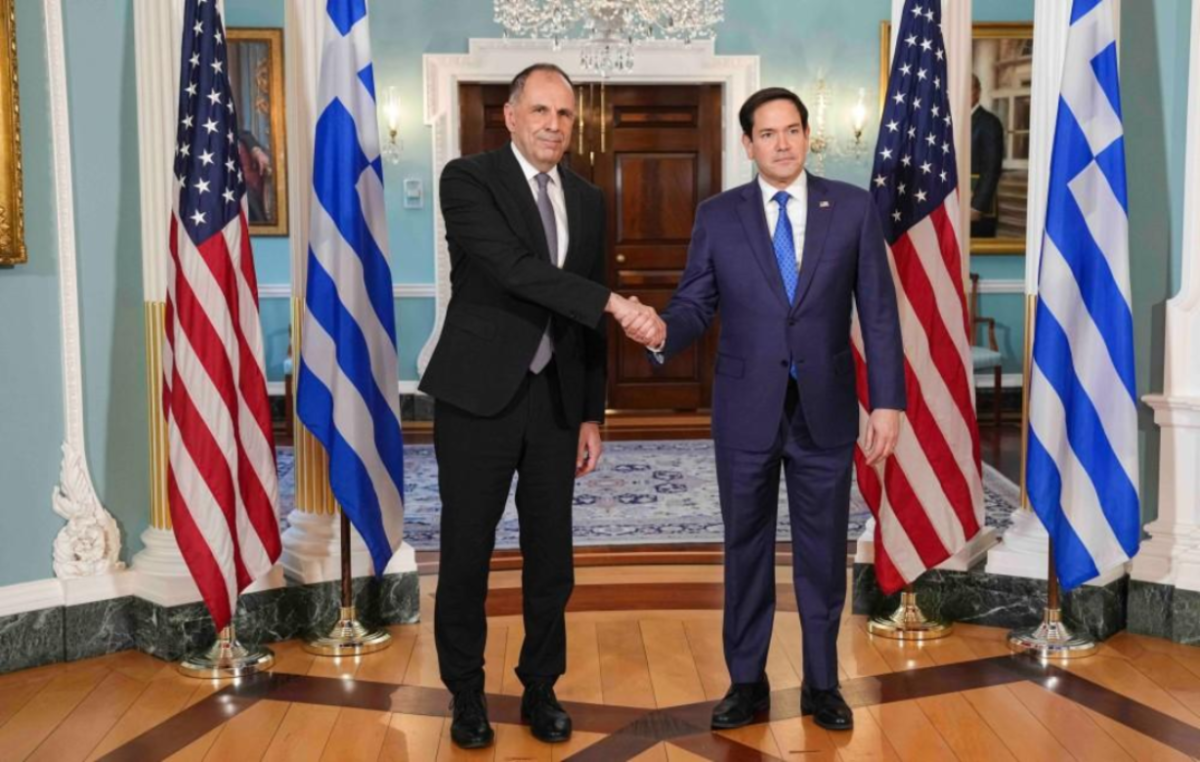
Πηγή Φωτογραφίας: Rubio Puts Greece at the Heart of Europe’s New Energy Map – The Vertical Corridor Becomes a National Strategic Priority



US Secretary of State Marco Rubio’s visit to Athens is placing the Vertical Corridor squarely at the heart of the Greece-US strategic relationship, elevating what began as an energy infrastructure initiative into a project with much broader geopolitical implications.
Rubio described Greece as a secure energy hub capable of facilitating the transportation of US LNG into Europe, while presenting the country more broadly as an indispensable US ally and a source of stability at a time of heightened international uncertainty.
The timing is critical. Europe is seeking new sources and routes for natural gas, the United States is pursuing a larger role for American LNG in European markets, and Greece is geographically positioned at the point where those two strategies can converge.
And this is precisely where the fundamental shift is taking place: the Vertical Corridor is no longer merely a technical energy project. It is acquiring the characteristics of a national strategic priority.
The Vertical Corridor as a National Strategic Priority
Earlier today, Marco Rubio stressed the need to broaden the close cooperation between Greece and the United States and pursue joint action in the energy sector, highlighting the US administration’s desire for Greece to become a hub for energy and security in Europe through the Vertical Corridor. His remarks came during his visit to Athens, at a joint press conference with Greek Foreign Minister George Gerapetritis.
This development reinforces the view that the Vertical Corridor constitutes a project of national importance, placing Greece at the center of energy developments and giving the country a leading role not only in European energy policy but also in Europe’s broader security architecture.
In this direction, the government and the opposition appear, for the first time, to be converging. Recent statements by members of the Greek Left Alliance, including Deputy Defence Sector Head Katerina Berdou, as well as by PASOK MEP, Vice-President of the Socialists & Democrats (S&D) and former Environment and Energy Minister George Maniatis, have also highlighted the geopolitical significance of the project, indicating broader political consensus regarding its importance.
The geopolitical dimension of the project is becoming increasingly significant, as it enhances Greece’s role in Europe’s energy architecture and offers an alternative model to previous arrangements that would have kept Europe dependent on Russian natural gas as well as on its transportation through Turkey’s TurkStream pipeline.
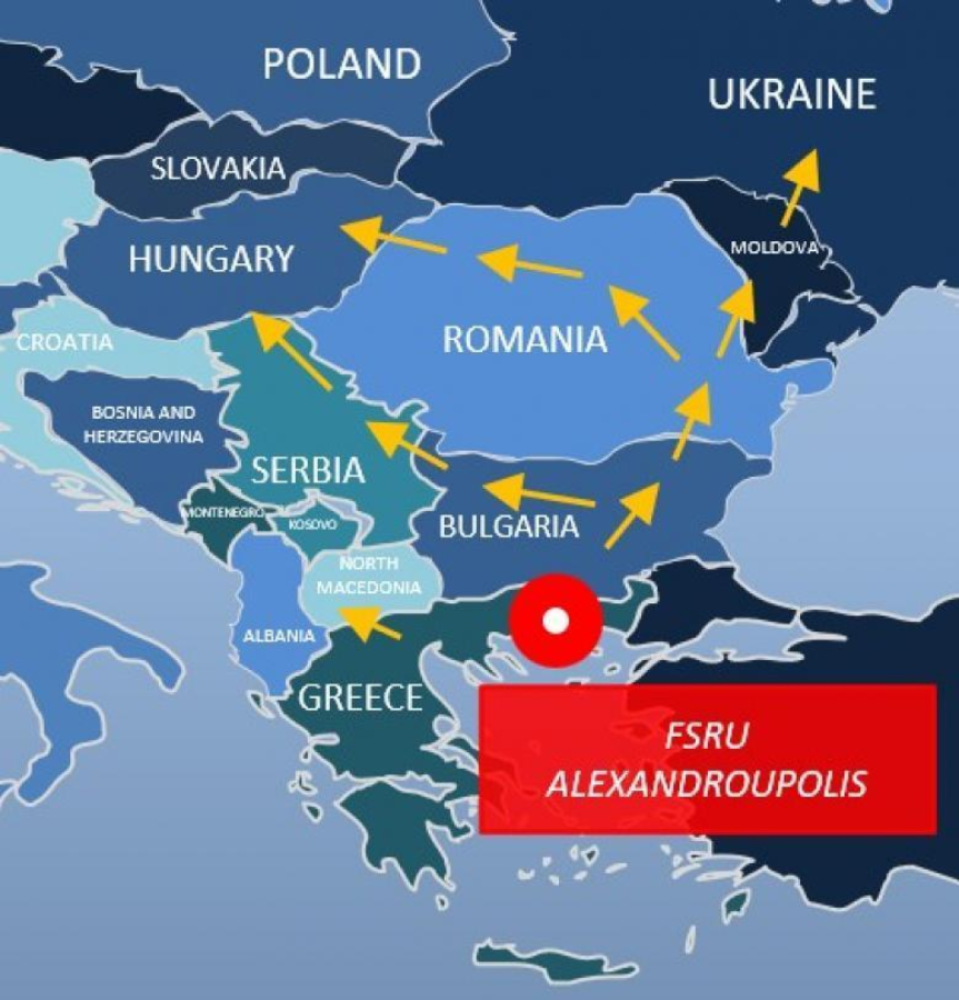
Greece gains the opportunity to operate as a southern gateway for natural gas, which can travel through the Vertical Corridor via Bulgaria and Romania toward Central and Eastern Europe, strengthening the country’s position as a regional energy hub and contributing to the security of supply of European markets. At the same time, through long-term agreements for the purchase and sale of LNG from the United States, Greece will be able to offer greater predictability and stability in energy costs.
The project will also contribute to the development of new infrastructure, attract investment and, most importantly, strengthen Greece’s relations with the United States and European institutions, creating the conditions for the country’s long-term economic and geopolitical upgrading.
Finally, the importance of the Vertical Corridor as infrastructure of national strategic significance should not be underestimated, as it will directly connect energy security with Greece’s national security, creating additional incentives for stability across the wider region.
At the same time, Greece is being transformed from an energy transit country into a decisive factor in the energy security of Southeastern and Central European states. The more countries link their energy sufficiency to infrastructure passing through Greek territory, the greater Greece’s strategic and geopolitical weight becomes within the European environment.
Rubio’s Stamp: US LNG Through Greece
Rubio’s statements in Athens add further political weight to precisely this strategy.
“Greece is a secure energy hub, facilitating the transportation of US LNG to Europe,” was the central message delivered by the US Secretary of State.
Rubio also linked the importance of the US-Greece alliance to the highly unstable international environment, presenting Greece as a source of stability in an increasingly uncertain world.
Washington’s message therefore extends far beyond a commercial natural gas arrangement.
Greece is increasingly being viewed as part of the region’s broader energy and geopolitical security architecture.
AKTOR and Atlantic SEE: From Strategy to Actual Energy Flows
Within this emerging energy architecture, there is also a significant Greek corporate dimension.
Atlantic SEE LNG Trade, in which the AKTOR Group holds a 60% stake and DEPA Commercial 40%, has already positioned itself commercially along the Vertical Corridor.
This is not merely about a future plan.
Atlantic SEE secured approximately 13,000 MWh per day of capacity in annual auctions, equivalent to roughly 4.7 TWh per year, for the 2026-2027 gas year.
The move is important on two levels.
First, it demonstrates that a Greek corporate platform is already positioning itself to make commercial use of the new energy route.
Second, it gives real commercial substance to a corridor that, if it is to achieve genuine strategic importance, needs actual cargoes, buyers and booked transportation capacity.
Atlantic SEE has already taken another step with considerable geopolitical significance: its first commercial agreement for the sale of US LNG to Ukraine, with BP as supplier and Naftogaz as buyer.
The transaction envisaged the LNG entering through Greece, demonstrating in practice the potential to connect US LNG supplies with Eastern European markets through Greek infrastructure.
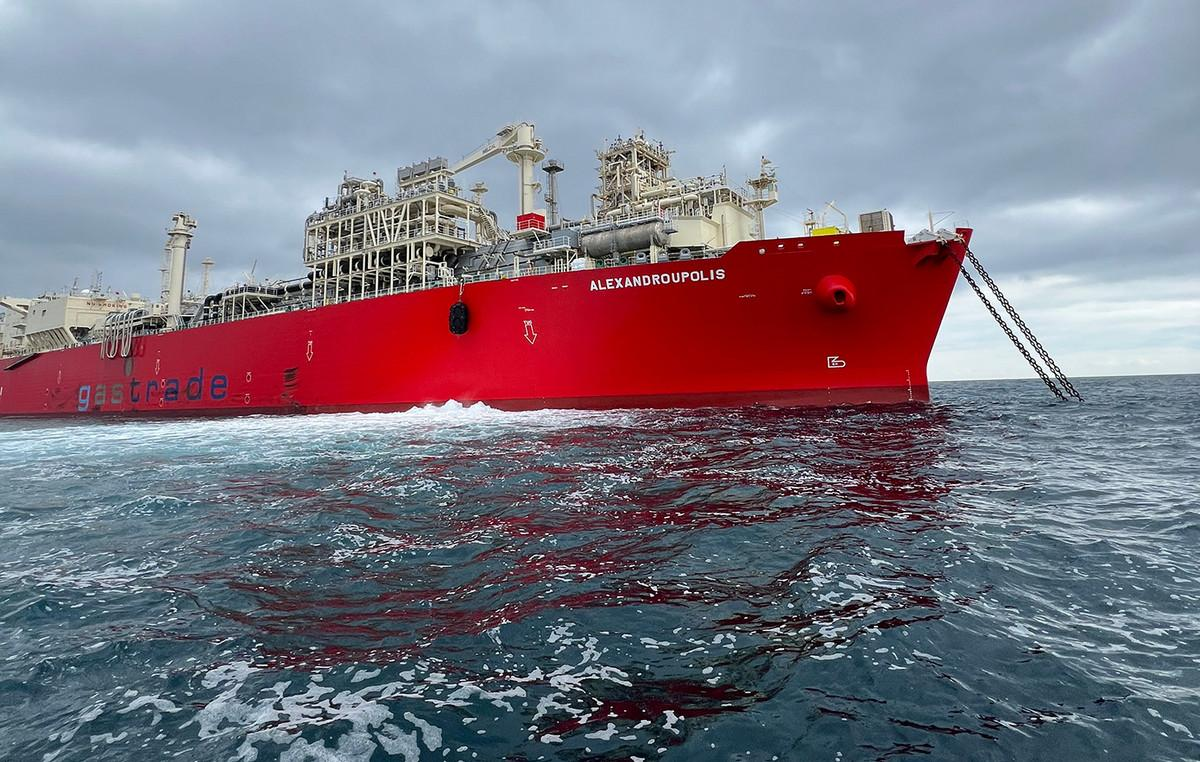
The Major 20-Year US LNG Agreement
Even more significant is the long-term dimension of the strategy.
Atlantic SEE has expanded its LNG sale and purchase agreement with US producer Venture Global, doubling the contracted quantity from at least 0.5 million tonnes annually to 1 million tonnes of LNG per year.
That corresponds to approximately 1.3 billion cubic meters of natural gas annually, under a 20-year agreement beginning in 2030.
This gives Atlantic SEE’s presence — and, by extension, AKTOR’s participation — a different strategic depth.
Because the Vertical Corridor does not need pipelines and interconnections alone.
It needs long-term supply, actual LNG volumes, booked transportation capacity and markets capable of absorbing the gas.
These are precisely the areas in which the commercial foundations of the project are now beginning to take shape.
From Greece to Ukraine: A New Energy Axis
The geography of the project explains why the Vertical Corridor carries such substantial geopolitical significance.
US LNG can enter the European market through Greek infrastructure and subsequently move north through Bulgaria and Romania, with the possibility of continuing toward Moldova and Ukraine.
In effect, this represents a reversal of the region’s traditional direction of energy flows.
Instead of gas moving southward from the north and east, Greece is seeking to establish an axis along which energy can move from south to north.
That means Greek LNG terminals and interconnections acquire a value extending far beyond the requirements of Greece’s domestic market.
Energy Security Is Increasingly National Security
This is perhaps the most important political conclusion.
In a Europe tested by the energy crisis, the war in Ukraine and the effort to reduce dependence on Russia, the ability of a country to provide alternative energy sources and routes becomes a strategic asset.
The more countries depend on infrastructure located in or originating from Greece, the more the security of that infrastructure acquires a broader European dimension.
And the greater Greece’s geopolitical footprint becomes.
This is why Rubio’s intervention in Athens cannot be viewed in isolation.
It coincides with a strategy already under way, a market beginning to develop real flows and Greek companies already positioning themselves on the emerging energy map.
The Vertical Corridor is evolving from an energy project into a national strategic priority.
And the real challenge now is whether Greece can transform its geographical advantage into lasting energy, economic and geopolitical leverage in Europe.
Source: pagenews.gr
Διαβάστε όλες τις τελευταίες Ειδήσεις από την Ελλάδα και τον Κόσμο