China’s Rare Earth Truce Gets a Two-Month Extension — Industry Still Faces a Supply Deadline
 ΧΡΟΝΟΣ ΑΝΑΓΝΩΣΗΣ 4 '
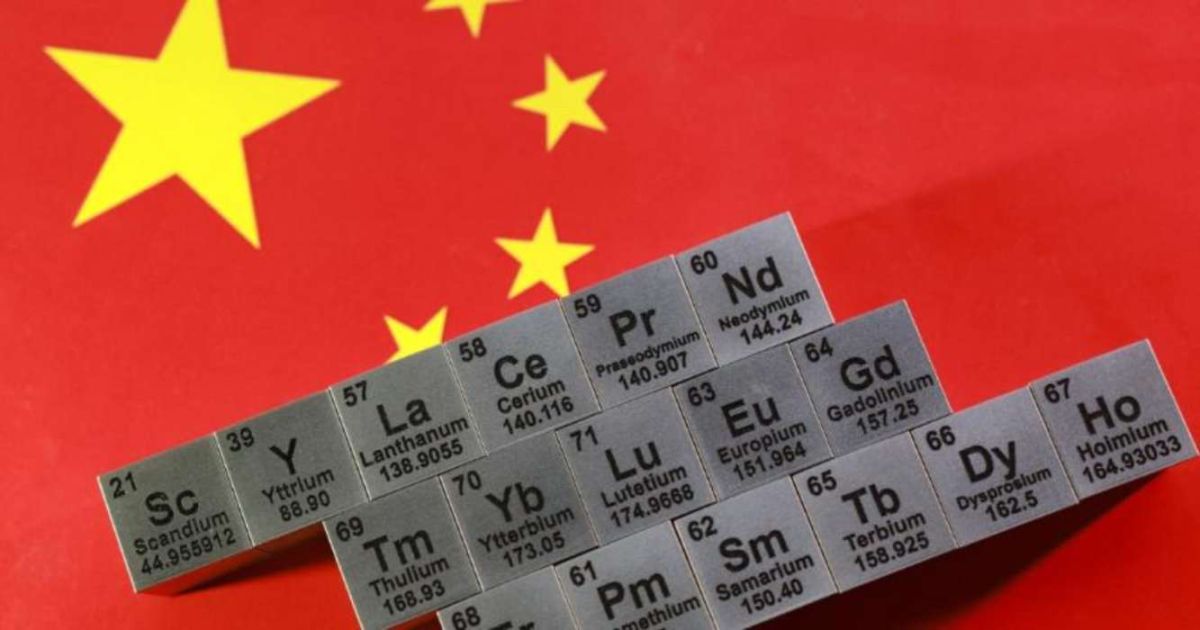
Πηγή Φωτογραφίας: Blocks with symbols and atomic numbers of Rare Earth Elements (REE) are placed on a Chinese flag in this illustration taken on Jan 21.



China has kept a window open for critical mineral exports—but this time for just two months. The extension postpones the implementation of additional controls while giving manufacturers another approaching deadline to manage.
On November 9, China’s Ministry of Commerce and General Administration of Customs extended the suspension of six measures announced in October 2025. The extension covers November 11, 2026, through January 10, 2027. The official notice gave no explanation for the two-month duration.
The change is in the planning horizon. The previous suspension lasted roughly a year. Its replacement gives buyers considerably less time to organize purchases, inventories and production.
What remains suspended
The package extends beyond rare earth elements. It includes controls announced in October 2025 covering:
- Five additional rare earths: holmium, erbium, thulium, europium and ytterbium.
- Certain rare earth processing equipment, materials and technologies.
- Specified products manufactured overseas using Chinese-origin inputs or technology.
- Certain lithium batteries, graphite materials and superhard materials.
The overseas provisions are particularly significant. Their application could extend Chinese licensing requirements into manufacturing outside China, affecting companies purchasing components from third countries that depend on Chinese inputs.
An extension does not mean unrestricted exports
The October measures have been suspended, not repealed.
Meanwhile, export controls introduced in April 2025 on seven other rare earth elements remain in effect. These include dysprosium and terbium, which are important to powerful permanent magnets.
The latest decision therefore preserves relief from a specific additional package. It does not dismantle China’s broader export licensing system or remove all restrictions affecting rare earth supplies.
Why two months matter
For manufacturers, the difference between a year and two months is practical.
A longer suspension provides greater scope to arrange supply contracts and production schedules. A shorter one brings the possibility of changed export conditions back into view much sooner.
The strategic interpretation is that Beijing retains an early opportunity to reconsider its concession, keeping supply uncertainty connected to negotiations.
That is an assessment of the decision’s implications. China’s announcement did not explicitly describe a strategy of maintaining pressure through successive short deadlines.
China’s leverage extends beyond mining
Dependence on China is concentrated at several stages of production.
According to the International Energy Agency, China accounted for approximately 60% of global mined production of magnet rare earths in 2024, but 91% of refined output and 94% of sintered permanent magnet production.
These are historical figures for specific parts of the supply chain. They nevertheless explain why developing mines elsewhere cannot, by itself, eliminate dependence on Chinese processing and manufacturing.
Small components, substantial industrial exposure
Rare earth magnets support industries including electric vehicles, wind power and industrial equipment.
The IEA reports that the April 2025 restrictions and the initial decline in exports disrupted magnet supplies, prompting some automakers to reduce utilization or temporarily halt production.
A shortage of a relatively small component can consequently interrupt the manufacture of a much more valuable finished product. That makes supply reliability important far beyond the market value of the minerals themselves.
A negotiating window, not a supply settlement
The suspension forms part of the broader trade negotiations between Washington and Beijing. The original pause followed the 2025 meeting between Donald Trump and Xi Jinping in South Korea; November’s extension preserved part of that arrangement.
For US and European manufacturers, the period before January 10, 2027, offers time to secure supplies and assess alternatives. It cannot deliver a complete replacement supply chain.
The next deadline is fixed. A durable framework for access to critical materials remains unresolved.
Source: pagenews.gr
Διαβάστε όλες τις τελευταίες Ειδήσεις από την Ελλάδα και τον Κόσμο