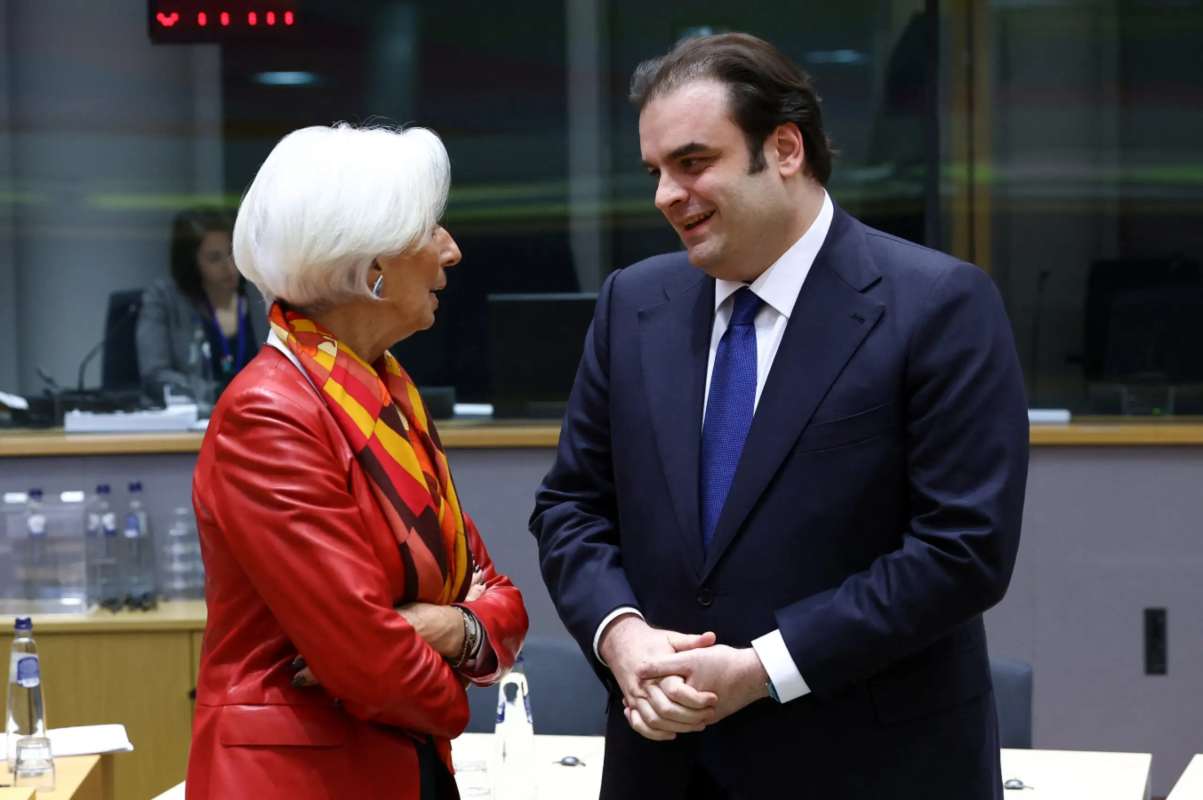
Bangkok is becoming the focal point of global economic diplomacy as European Central Bank President Christine Lagarde highlights the challenges facing the international economy, while Greek Minister of National Economy and Finance Kyriakos Pierrakakis prepares for a series of high-level meetings with leading policymakers and financial institutions.
The Annual Meetings of the International Monetary Fund (IMF) and the World Bank, taking place from October 12 to 18, 2026, come at a particularly sensitive moment for the global economy.
Geopolitical tensions, renewed energy pressures, financial market volatility and concerns over Europe’s competitiveness are dominating the international economic agenda.
Against this backdrop, Lagarde’s message from Bangkok and Pierrakakis’ participation in the discussions underscore the growing importance of international coordination, monetary stability and policies capable of supporting sustainable economic growth.
Lagarde’s Message from Bangkok: Competitiveness and Monetary Policy Take Center Stage
In a video posted on Instagram, Christine Lagarde offered a glimpse of the atmosphere in central Bangkok ahead of the international economic meetings.
The ECB President described the activity surrounding the gathering and outlined the issues expected to dominate discussions among central bankers, finance ministers and representatives of international institutions.
Lagarde emphasized the importance of discussing the ECB’s policies while listening to perspectives from other participants.
Competitiveness, productivity and monetary policy are among the central themes of the meetings.
Her intervention comes as the Eurozone faces a complex economic environment, with policymakers seeking to maintain price stability while supporting investment and economic activity.
The ECB must navigate these challenges without compromising its primary mandate of maintaining price stability.
For European businesses and households, the consequences of monetary policy decisions remain significant, particularly in relation to borrowing costs, investment conditions and economic confidence.


Pierrakakis and Georgieva: A High-Level Discussion on the Future of the Global Economy
One of the most significant events involving the Greek delegation will be a public discussion between Kyriakos Pierrakakis and IMF Managing Director Kristalina Georgieva.
The discussion will focus on building resilient and dynamic economies for the future.
The meeting comes as governments face several simultaneous challenges, including geopolitical uncertainty, rising energy costs, investment requirements and the need to maintain fiscal credibility.
For Greece, the discussion provides an opportunity to present its economic policy priorities to an international audience.
The Greek government has placed particular emphasis on fiscal discipline, structural reforms, digital transformation and investment-led growth.
However, the broader challenge extends beyond national economic performance.
Governments must increasingly find ways to strengthen productivity and economic resilience while maintaining sustainable public finances.
Greece at the G7 Table: Pierrakakis Participates as Eurogroup President
Pierrakakis’ presence in Bangkok carries additional institutional significance because of his role as President of the Eurogroup.
In that capacity, he is scheduled to participate in the meeting of G7 finance ministers and central bank governors, as well as a preceding European coordination meeting.
The discussions will address the international economic outlook, financial stability and the need for coordinated responses to common challenges.
The G7 economies are facing an increasingly complicated global environment.
Energy market uncertainty, geopolitical conflicts, international trade tensions and financial market fluctuations are influencing economic policymaking.
For the Eurozone, the central challenge is to combine financial stability with policies that strengthen investment, competitiveness and long-term growth.
Pierrakakis’ participation places the Eurogroup presidency within these broader international discussions, providing an opportunity to communicate European economic priorities.
Europe’s Competitiveness Challenge: Energy, Investment and Technology
Competitiveness is emerging as one of the defining themes of the international meetings.
The European Union faces mounting pressure to address structural weaknesses that affect its economic performance.
High energy costs, fragmented capital markets, insufficient investment and intensifying competition from the United States and China remain major concerns.
European policymakers are increasingly focused on strengthening the Single Market, accelerating technological innovation and improving access to financing for businesses.
Artificial intelligence, industrial modernization and digital infrastructure are also becoming central to the debate over Europe’s future economic position.
Against this backdrop, Pierrakakis is scheduled to participate in a public discussion organized by the Atlantic Council on boosting productivity in Europe.
The event will examine the conditions necessary to strengthen European competitiveness and support sustainable economic expansion.
For Greece, the issue is particularly relevant as the country seeks to attract investment, modernize its productive base and improve its position within European value chains.
IMF Meetings: Global Imbalances and Financial Stability Under Scrutiny
On October 16 and 17, Pierrakakis is also scheduled to participate in the work of the International Monetary and Financial Committee (IMFC).
The discussions will focus on global economic prospects, international imbalances and risks to financial stability.
The international economy continues to face uncertainty surrounding energy prices, public debt, financing conditions and geopolitical developments.
These challenges are particularly important for economies seeking to maintain fiscal stability while financing infrastructure, technological transformation and industrial investment.
The IMF meetings provide an opportunity for policymakers to exchange views on the economic outlook and the measures needed to strengthen resilience.
During his stay in Bangkok, Pierrakakis is also expected to hold bilateral meetings with fellow finance ministers and representatives of international financial organizations.
Monetary Policy and Economic Growth: A Difficult Balance for Europe
Lagarde’s presence at the meetings highlights the critical role of central banks in navigating the current economic environment.
The European Central Bank must assess inflation developments, economic activity and financial conditions while remaining attentive to external risks.
Energy price fluctuations can complicate the inflation outlook, while prolonged economic uncertainty may discourage investment and weaken consumer confidence.
At the same time, European governments face pressure to strengthen competitiveness without undermining fiscal sustainability.
The challenge is to develop policies that encourage innovation, productivity and investment while preserving confidence in public finances and financial institutions.
This balance will remain central to economic policymaking across the Eurozone.


From Bangkok to Brussels: Decisions That Could Shape Europe’s Economic Future
The international meetings in Bangkok represent more than a routine gathering of finance ministers and central bankers.
They provide an important forum for discussing the economic challenges that could influence global growth, investment flows and financial stability in the months ahead.
Christine Lagarde’s focus on competitiveness and monetary policy reflects the pressures facing Europe’s economic institutions.
Meanwhile, Kyriakos Pierrakakis’ participation in the IMF meetings, his discussion with Kristalina Georgieva and his involvement in G7 consultations underline the Eurogroup’s role in international economic coordination.
For Greece, the meetings also offer an opportunity to present its economic priorities and strengthen dialogue with international partners.
The central question remains whether Europe can preserve economic stability while accelerating investment, boosting productivity and strengthening its position in an increasingly competitive global economy.
The discussions in Bangkok may not deliver immediate solutions, but they will help shape the international economic debate at a time when cooperation and policy coordination are becoming increasingly important.
Source: pagenews.gr