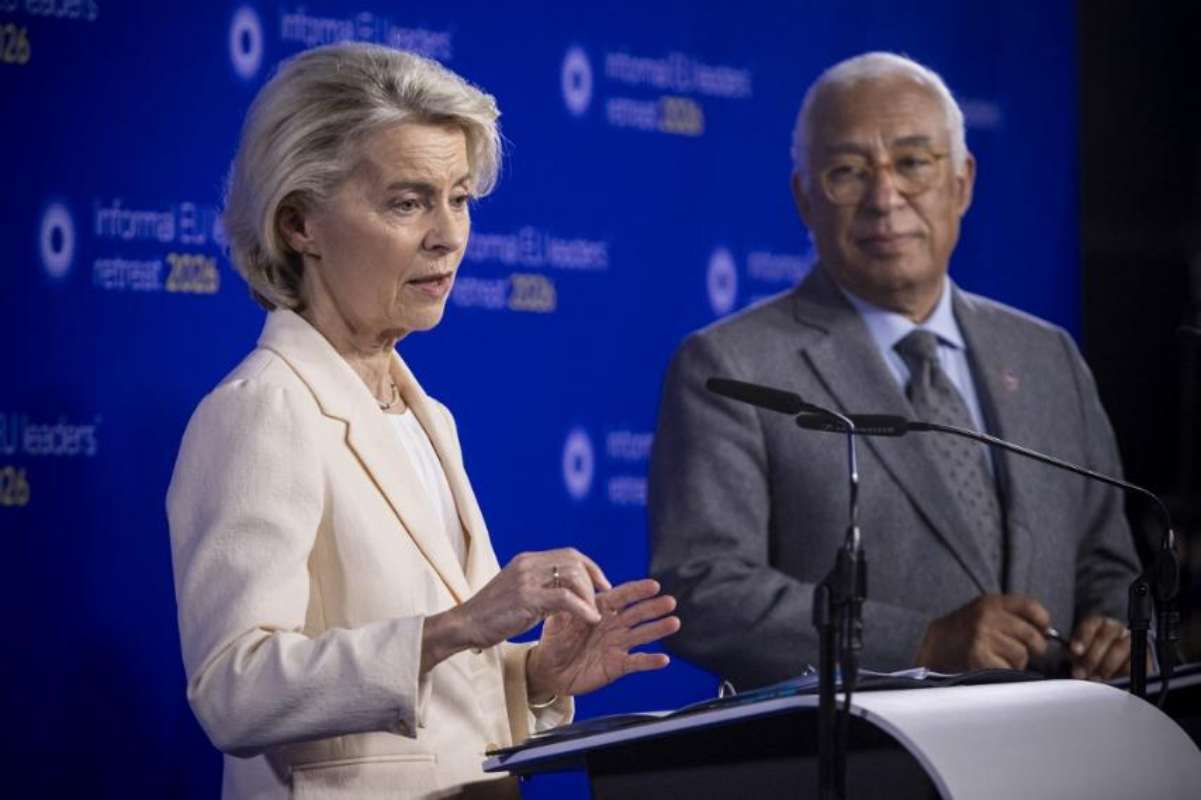
The dispute over the Libyan House of Representatives’ approval of the 2019 Turkey–Libya maritime memorandumhas prompted a joint intervention by European Commission President Ursula von der Leyen and European Council President António Costa.
The two leaders expressed deep regret over the parliamentary decision and reaffirmed their solidarity with Greece and Cyprus.
Their central message was unequivocal: Libya’s approval does not change the European position on an agreement they say infringes the sovereign rights of third countries and fails to comply with the law of the sea.
“This agreement infringes upon the sovereign rights of third states, does not comply with the law of the sea and is null and void,” they stated.
European Leaders Reaffirm the 2019 Position
The joint statement explicitly refers to the position adopted by the European Council in 2019.
That reference carries political weight. It presents opposition to the memorandum as an established European position that remains unchanged despite the eastern Libyan parliament’s reversal.
The explicit expression of solidarity with Greece and Cyprus also places their sovereign rights within the broader framework of European diplomatic support.
For Athens, the intervention provides important political backing. The statement does not, however, announce sanctions or other specific new measures.
The Full Joint Statement
“We deeply regret today’s ratification by the Libyan Parliament of the so-called Libya–Turkey Memorandum of Understanding on the delimitation of maritime jurisdictions in the Mediterranean Sea.
We recall that the EU’s position on this issue was clearly set out by the European Council in 2019 and remains unchanged.
This agreement infringes upon the sovereign rights of third states, does not comply with the law of the sea and is null and void.
We reaffirm our solidarity with Greece and Cyprus.
We reiterate the EU’s well-known position against any external interference in Libya.”


Athens: “Geography Cannot Be Changed”
The European intervention followed the Greek Foreign Ministry’s rejection of the Libyan parliamentary decision.
Athens described the memorandum as illegal, null and void, arguing that it contravenes the international law of the sea and infringes the sovereign rights of countries in the region.
“Geography and the international law of the sea cannot be changed through unilateral, legally unfounded parliamentary decisions,” the ministry stated.
Greek islands and their entitlement to maritime zones are central to Athens’ objections. Greece maintains that the memorandum disregards those rights and that Turkey and Libya do not possess opposite or adjacent coasts providing a lawful basis for the attempted delimitation.
The ministry also pointed to Greece’s maritime delimitation agreements with Egypt and Italy, presenting them as evidence of its commitment to negotiated arrangements under the international law of the sea.
“Greece has already informed its partners and allies and will take every appropriate action to safeguard its sovereign rights,” it added.
Gerapetritis Coordinates With Egypt and Cyprus
Greek Foreign Minister George Gerapetritis also held telephone conversations with Egyptian Foreign Minister Badr Abdelatty and Cypriot Foreign Minister Constantinos Kombos.
The discussion with Abdelatty focused on developments surrounding the Turkey–Libya memorandum and their implications for security and stability in the Eastern Mediterranean.
The conversation with Kombos addressed the same developments and regional risks.
The contacts illustrate Athens’ effort to coordinate with regional partners while keeping European institutions informed.
Cyprus: No Legal Effects for Third Countries
The Republic of Cyprus also condemned the Libyan parliament’s approval.
Its Foreign Ministry said the memorandum violates the sovereign rights of third countries and contradicts recognised principles of UNCLOS and customary international law.
Nicosia specifically highlighted islands’ entitlement to maritime zones, including an exclusive economic zone and a continental shelf.
The ministry reiterated that it considers the memorandum:
“Illegal, null and void, producing no legal effects whatsoever for third states.”
The Cypriot response reinforces the shared Greek and Cypriot objection that an agreement between Turkey and Libya cannot disregard other countries’ maritime rights.
Ankara Welcomes the Decision and Invokes “Blue Homeland”
The Turkish presidency took the opposite position.
Presidential Communications Director Burhanettin Duran welcomed the Libyan parliament’s unanimous approval, describing it as an important development for bilateral relations and the Eastern Mediterranean.
“The unanimous approval by Libya’s House of Representatives of the memorandum of understanding on maritime jurisdiction areas signed with Turkey constitutes an important and welcome step for Turkey–Libya relations and developments in the Eastern Mediterranean,” he stated.
Duran argued that the decision advances the protection of the two countries’ shared rights and interests, invoking equitable maritime delimitation and regional cooperation.
He also referred explicitly to Turkey’s “Blue Homeland” policy:
“Under the leadership of President Recep Tayyip Erdoğan, Turkey will continue to protect its legitimate rights and interests in the Blue Homeland, further developing relations with friendly and brotherly Libya and supporting fair sharing, peace and stability in the Eastern Mediterranean.”
The statement underscores the fundamental disagreement between Ankara and the positions expressed by Athens, Nicosia and the European leaders.
Libya’s Political Shift Meets European Opposition
The parliamentary approval broadens political support for the memorandum within Libya. For Turkey, that creates a more favourable domestic Libyan environment for advancing bilateral cooperation.
The von der Leyen–Costa statement establishes that this political shift has not changed the European assessment of the agreement.
The dispute is therefore developing on two fronts: Ankara’s effort to capitalise on Libya’s reversal, and Athens’ mobilisation to maintain international support for its maritime positions.
The next significant question is whether parliamentary approval will be followed by practical initiatives to implement the memorandum.
Greece has pledged appropriate action to safeguard its sovereign rights. The European leadership, meanwhile, has expressly reaffirmed its solidarity with Athens and Nicosia.
Source: pagenews.gr