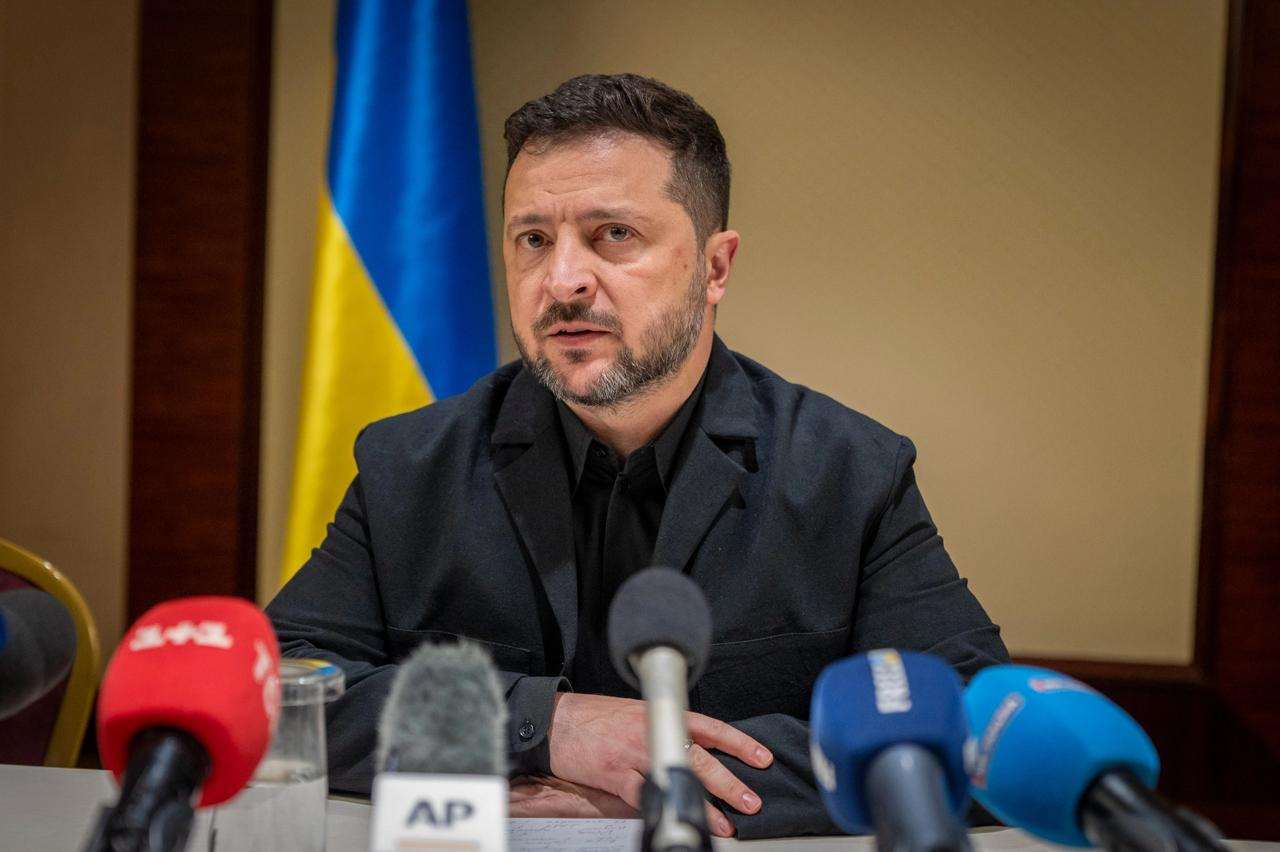
Ukrainian President Volodymyr Zelenskyy has opened the door to discussing security guarantees for Russia, introducing a new dimension into diplomatic efforts to end the war in Ukraine.
As reported by the Financial Times on October 28, 2026, Zelenskyy’s remarks suggest that Kyiv is prepared to consider Russia’s security demands within a wider negotiating framework, provided that the war is resolved and Ukraine receives credible guarantees against renewed aggression.
The distinction is critical.
Zelenskyy has not accepted Moscow’s territorial demands, endorsed restrictions on NATO or offered Russia unconditional security commitments.
Instead, he has indicated that discussions about Russia’s future security could take place after the fundamental questions surrounding Ukraine’s security and the terms of a peace settlement have been addressed.
The development raises a broader geopolitical question: Could negotiations over Ukraine eventually become negotiations over the security order of the entire European continent?
Zelenskyy’s message: Ukraine’s security must come first
The Ukrainian president’s position rests on a clear sequence.
Any discussion of guarantees for Moscow must follow an agreement on how the war ends and what protections Ukraine receives.
In remarks reported by the Financial Times, Zelenskyy argued that Russia’s security concerns could be considered only after the immediate conflict had been addressed.
His argument distinguishes between two very different objectives: ending the war in Ukraine and negotiating the long-term relationship between Russia, NATO and the United States.
For Kyiv, the first cannot be subordinated to the second.
Ukraine’s central demand remains a framework capable of deterring another Russian invasion.
That could involve long-term military assistance, defence cooperation, monitoring arrangements and commitments from Western partners.
The precise legal and military structure of such guarantees remains a matter for negotiation.


What does Russia actually want?
Moscow’s security demands extend beyond assurances that Ukraine will not attack Russian territory.
For years, the Kremlin has sought restrictions on NATO enlargement, limits on Western military deployments and recognition of what it describes as its legitimate security interests.
Before Russia’s full-scale invasion in February 2022, Moscow presented proposals seeking legally binding commitments from the United States and NATO.
Those proposals included restrictions on further NATO expansion and changes to the alliance’s military posture in Europe.
Western governments rejected provisions that would have allowed Russia to determine the security choices of sovereign states.
The same fundamental disagreement remains relevant to the current diplomatic debate.
Russia argues that NATO’s military presence near its borders threatens its security.
Ukraine and NATO members maintain that independent European states have the right to choose their own security arrangements.
The challenge for negotiators is whether mutual risk-reduction measures can be developed without giving Moscow a veto over the foreign and defence policies of its neighbours.
NATO’s eastern flank: The central strategic dilemma
Any discussion of security guarantees for Russia has immediate implications for NATO’s eastern members.
Poland, Estonia, Latvia, Lithuania and other countries view the alliance’s military presence as essential to deterring potential Russian aggression.
For these governments, the prospect of reducing NATO deployments or accepting restrictions on future military infrastructure would raise serious strategic concerns.
Zelenskyy’s position reflects that sensitivity.
While he has acknowledged that Russia’s security demands could be discussed, he has also argued against concessions that would weaken the alliance.
The distinction matters because a future agreement could take several forms.
Mutual transparency measures, military communication channels and arms-control arrangements would not necessarily require NATO to abandon its existing commitments.
By contrast, a settlement granting Moscow influence over the defence policies of neighbouring countries would raise fundamental questions about sovereignty and European security.
The issue is therefore not simply whether Russia receives security guarantees, but what those guarantees would contain and whose rights they might affect.
Washington’s role: Can the United States bridge the divide?
The United States remains central to any prospective settlement.
Washington has the diplomatic influence, military capabilities and alliance relationships necessary to play a leading role in discussions about Ukraine’s future security.
However, American mediation faces competing demands.
Kyiv wants credible protection against renewed Russian military action.
Moscow seeks changes to the strategic environment that it considers threatening.
European NATO members want to ensure that their security arrangements are not renegotiated without their participation.
These objectives do not automatically align.
The challenge for American diplomacy is to determine whether a settlement can address specific security risks without accepting territorial conquest or compromising the sovereignty of other states.
Economic considerations could also become part of the wider discussions, including sanctions, energy trade and possible postwar commercial arrangements.
Any such proposals would require separate negotiations and should not be confused with an agreed peace settlement.
Why Europe insists on a seat at the negotiating table
One of the most consequential aspects of Zelenskyy’s remarks concerns Europe’s role.
A settlement involving NATO deployments, arms control or the continent’s broader security architecture would directly affect European governments.
That makes European participation essential to the legitimacy and practical implementation of any agreement.
France, Germany, Poland, the Baltic states and other European countries have different security priorities, but all would be affected by decisions concerning Russia’s relationship with NATO.
The European Union would also have a major role in reconstruction, sanctions policy, financial assistance and Ukraine’s long-term economic integration.
For Kyiv, excluding European partners from a settlement could create a dangerous imbalance between the countries negotiating an agreement and those expected to help enforce or finance it.
The debate therefore reaches beyond the immediate question of a ceasefire.
It concerns who has the authority to shape Europe’s security arrangements and how those decisions should be made.
The territorial question remains unresolved
Despite renewed diplomatic discussions, the fundamental territorial dispute remains one of the greatest obstacles to a settlement.
Russia has maintained claims over Ukrainian territory and has sought political and military concessions from Kyiv.
Ukraine continues to defend its sovereignty and territorial integrity under international law.
A ceasefire, even if achieved, would not automatically resolve those competing positions.
Negotiators would also need to address monitoring, troop deployments, sanctions, reconstruction, prisoners of war and mechanisms for responding to potential violations.
Security guarantees are particularly important in this context.
A settlement without credible enforcement arrangements could leave Ukraine exposed to renewed military pressure.
Conversely, Moscow could reject arrangements that it believes would permit a substantial expansion of Western military infrastructure in Ukraine.
These disagreements explain why an opening to discuss Russia’s security concerns does not necessarily mean that a comprehensive agreement is close.
Three scenarios for the next phase of negotiations
Scenario one: A ceasefire followed by separate security arrangements
Ukraine receives commitments from Western partners, while Russia’s concerns are addressed through separate talks on military transparency, arms control and risk reduction.
This approach could allow negotiators to distinguish the immediate need to stop the fighting from the longer-term debate about European security.
Scenario two: A broader European security agreement
The United States, European governments, Ukraine and Russia explore a wider framework covering military deployments, communication mechanisms, arms control and mutual security commitments.
Such an agreement would be highly complex and would require the consent of the countries directly affected.
Scenario three: Diplomatic engagement without a comprehensive settlement
Negotiations continue, but disagreements over territory, NATO and security guarantees prevent a final agreement.
Limited humanitarian arrangements or measures to reduce military escalation could still be possible without resolving the central political disputes.
These are analytical scenarios, not agreed negotiating outcomes or forecasts.
The geopolitical significance: A peace deal or a new European security order?
Zelenskyy’s remarks suggest that the diplomatic discussion may be expanding beyond the immediate terms of ending the war.
The possibility of addressing Russia’s security concerns raises questions about the future relationship between Moscow and NATO, the role of Washington and the participation of European governments.
Yet the Ukrainian president’s position also establishes an important condition: Russia’s security cannot be negotiated at the expense of Ukraine’s sovereignty or without credible guarantees for Kyiv.
That distinction will shape the debate over any future settlement.
The central question is no longer only how the war in Ukraine might end. It is whether the parties can establish security arrangements that reduce the risk of another conflict without compromising the independence and security of European states.