Greenland Security Shifts Toward NATO — Trump Claims “Permanent Control,” Denmark Draws a Red Line
 ΧΡΟΝΟΣ ΑΝΑΓΝΩΣΗΣ 8 '
Πηγή Φωτογραφίας: AP Photo//Greenland Security Shifts Toward NATO — Trump Claims “Permanent Control,” Denmark Draws a Red Line



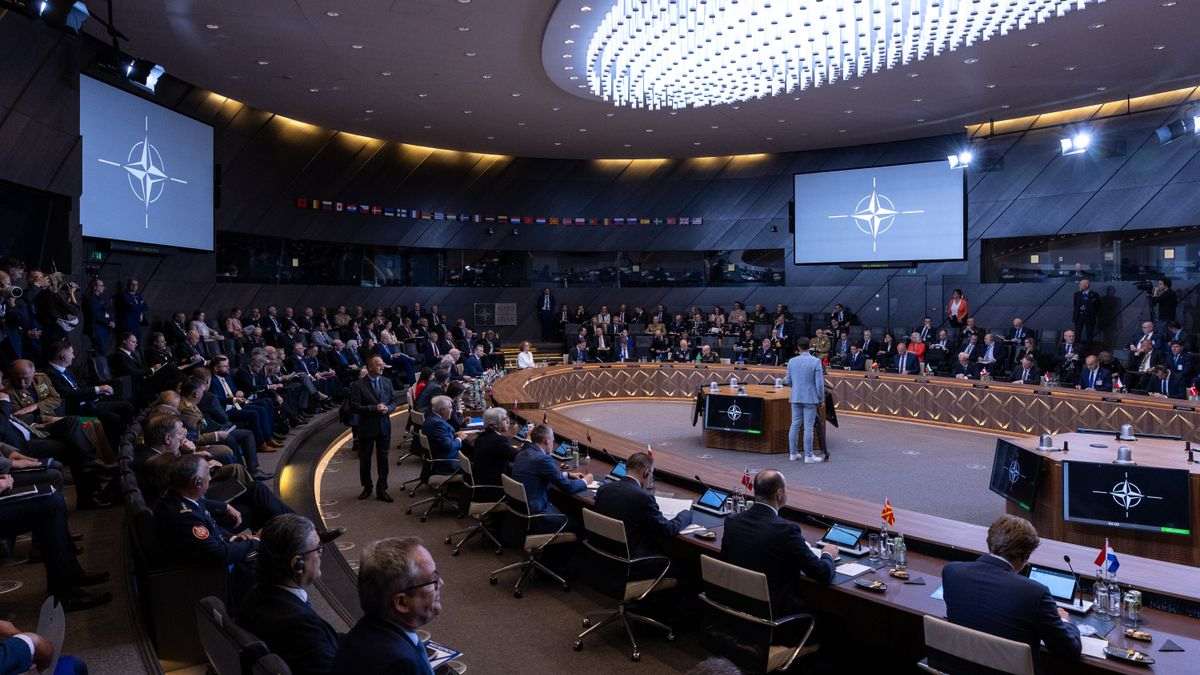
One of NATO’s most sensitive internal disputes is moving toward a potentially significant new security arrangement in the Arctic.
Denmark, Greenland and the United States are set to sign an agreement in New York that Copenhagen says will expand NATO’s role in protecting Greenland and, more broadly, the Arctic.
The full text has not yet been made public. That matters because Washington and Copenhagen are not using the same language to describe exactly what has been agreed.
President Donald Trump has portrayed the deal as giving the United States “permanent control” over Greenland’s security.
Denmark and Greenland have not endorsed that interpretation. Both maintain that the arrangement is designed to strengthen security while preserving Greenland’s sovereignty.
Until the agreement is published, the precise scope of US military access, infrastructure rights and NATO responsibilities remains unresolved.
From “We Need Greenland” to a Bigger NATO Role
The political shift is significant.
Trump’s repeated demands for greater American control over Greenland had triggered a serious diplomatic confrontation inside the Atlantic Alliance.
Copenhagen’s response was that Denmark was prepared to discuss a stronger US military presence and deeper Arctic cooperation — but not a transfer of sovereignty.
Danish Foreign Minister Lars Løkke Rasmussen has publicly articulated that red line:
“We are ready for an even stronger cooperation with the United States in the Arctic. But we want to be treated with respect.”
He has also stressed:
“The future of Greenland belongs to no one else but the people of Greenland.”
The emerging agreement appears designed to bridge those positions: greater security guarantees and strategic access for Washington without a formal change in sovereignty.
The Bigger Change: Arctic Security Becomes a NATO Mission
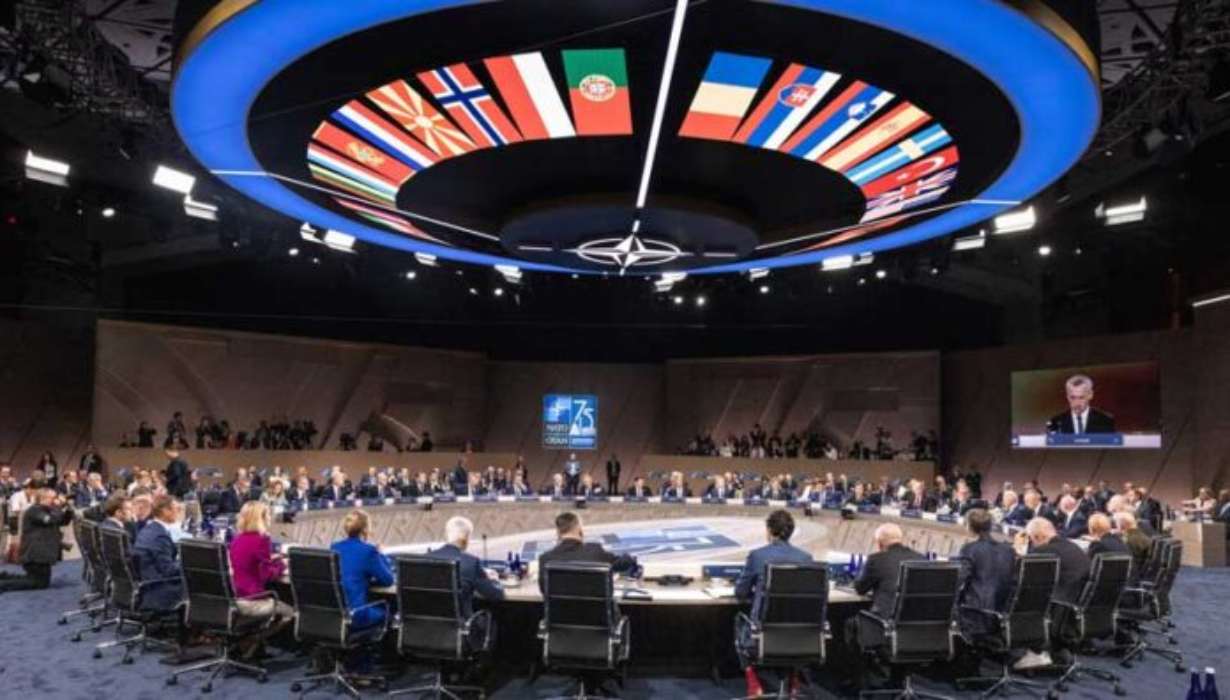
The most consequential geopolitical element is the potential shift from a primarily US-Danish framework toward a broader alliance architecture.
That process is already underway.
NATO has established Arctic Sentry, bringing together the seven Arctic Allies — the United States, Canada, Denmark, Iceland, Norway, Sweden and Finland — within a more coordinated approach to security in the High North.
Secretary General Mark Rutte has described the objective as closer cooperation among those Arctic Allies, supported by the rest of NATO, to ensure the region remains secure.
The new Greenland agreement could push that process considerably further.
Russia and China Are Changing the Arctic
NATO increasingly views the Arctic as an emerging strategic theater rather than a remote northern flank.
Russia maintains extensive military capabilities across its Arctic territory, while China has sought a larger economic, scientific and strategic footprint in the region.
Greenland sits at the center of that changing geography.
Its location between North America and Europe makes the island strategically important for missile warning, space surveillance, air operations and control of the North Atlantic approaches.
The American military presence there is not new. Its legal foundations stretch back to the 1951 US-Denmark defence agreement.
What is changing is the strategic environment surrounding that presence.
What Exactly Did Trump Get?
This is the central political question.
Trump says the agreement gives the United States permanent control over security requirements in Greenland and the ability to prevent adversaries from establishing military facilities on the island.
Copenhagen and Nuuk have not publicly confirmed that characterization.
The distinction is fundamental.
Expanded US rights to deploy forces, construct infrastructure or operate military systems would be one thing.
Something that could legally be characterized as American “control” over Greenland’s security would be something considerably different.
Until the agreement itself is released, claims about its precise legal meaning should therefore be treated cautiously.
Golden Dome Puts Greenland at the Center
There is, however, another major piece of the puzzle.
NATO Secretary General Mark Rutte said earlier this year that trilateral discussions involving the United States, Denmark and Greenland included potential investments connected to Golden Dome and possible future troop deployments in Greenland.
That gives the negotiations a much broader strategic dimension.
Greenland is not valuable merely because of its enormous territory.
It could become an important node in the future American missile-defence architecture protecting North America.
For Washington, that creates a long-term requirement: ensuring that US defence arrangements survive even if Greenland’s constitutional relationship with Denmark changes in the future.
That issue has itself been publicly acknowledged by NATO leadership.
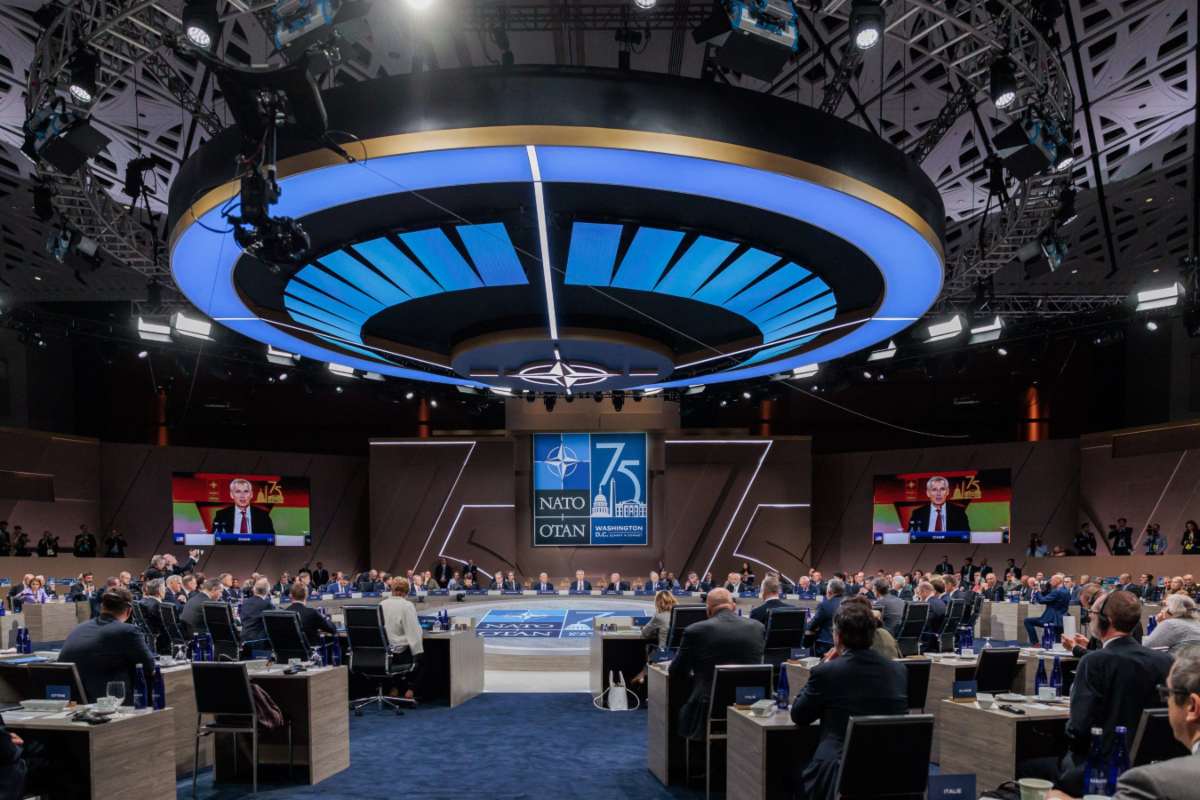
NATO Steps Into What Began as a Bilateral Crisis
For Europe, this may be the most important political consequence.
The dispute began as a confrontation between Trump and Denmark over who should control Greenland.
It is increasingly becoming a debate over how NATO collectively defends the Arctic.
For Copenhagen, multilateralising the issue provides a framework in which Greenland’s security is not treated solely as a bilateral US-Danish matter.
For Washington, however, it also advances one of Trump’s central demands: European Allies assuming a greater share of the military burden in the Arctic.
In that sense, both sides can potentially claim something from the compromise.
Denmark Rearms the High North
The diplomatic change is being accompanied by military investment.
Denmark has acknowledged that it underinvested in Greenland’s defence and Arctic surveillance for years and has since moved to expand its capabilities in the region.
The timing is notable.
NATO’s Chiefs of Defence met in Copenhagen on September 18–19 to discuss collective deterrence, readiness and new military capabilities.
The alliance’s senior military leadership has increasingly connected those requirements with Russian military activity, drone threats, airspace incidents and hybrid operations.
The High North is becoming part of that same deterrence picture.
Sovereignty Remains the Red Line
There is also a political dimension that cannot be separated from the military one.
Greenland enjoys extensive autonomy within the Kingdom of Denmark, and the question of eventual independence has long been part of the island’s domestic political debate.
Denmark retains constitutional responsibilities for foreign and defence policy, but Greenland’s government participates in international negotiations that directly concern the island.
That makes Nuuk more than an observer in a negotiation between Washington and Copenhagen.
It is a party whose consent and domestic political legitimacy matter.
And that is why the distinction between greater American military access and American control is so sensitive.
From Diplomatic Crisis to a New Arctic Architecture
The eventual consequences could be much larger than the dispute that triggered the negotiations.
If the agreement embeds Greenland more deeply in NATO’s collective defence architecture, the Arctic will have taken another step from the periphery toward the center of Euro-Atlantic security planning.
For the United States, that could mean stronger protection of North America’s northern approaches and new options for missile defence.
For Denmark, it could mean sharing an Arctic defence burden that Copenhagen cannot realistically carry alone.
For Greenland, however, the equation is different: more security without surrendering political control over its own future.
And for NATO, the strategic picture is broader still.
Greenland is no longer merely the subject of a Trump-Copenhagen dispute. It is becoming a critical node in the emerging northern deterrence line facing Russia and an increasingly active China.
How far that transformation actually goes will become clearer only when the full agreement is released.
Source: pagenews.gr
Διαβάστε όλες τις τελευταίες Ειδήσεις από την Ελλάδα και τον Κόσμο