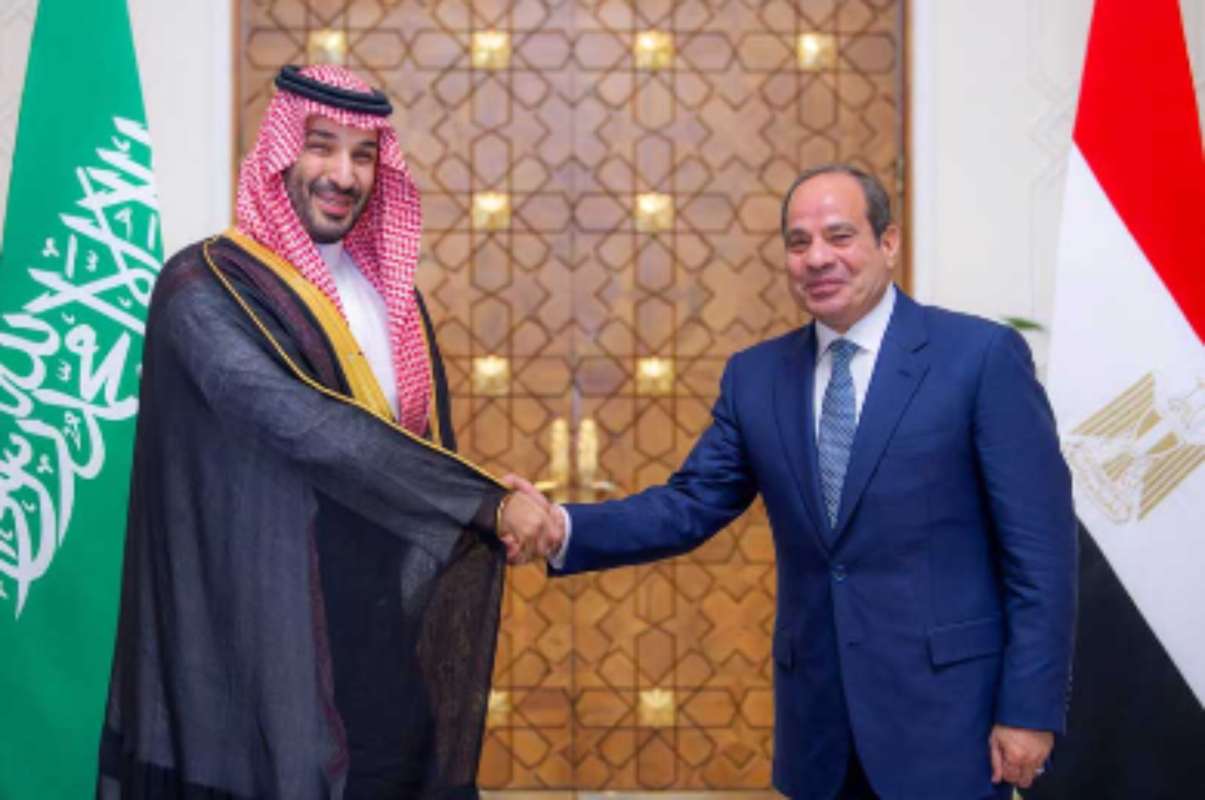
Egypt says it is prepared to help defend Saudi Arabia. It has also made clear that this commitment does not include attacking Yemen.
The distinction is crucial. Behind declarations of solidarity, a regional security system is taking shape in which each state carefully defines what it will provide, where it will operate and how much risk it will accept.
On October 26, Egypt’s House of Representatives authorized President Abdel Fattah el-Sisi to take the necessary measures to support Saudi Arabia against external attacks. The decision followed closed-door deliberations and postponements, receiving the required two-thirds majority.
The authorization creates the capacity to act. It does not constitute an announcement of a specific military deployment.
Cairo’s Red Line
Before parliamentary approval, Sisi publicly defined the limits of Egyptian assistance: protecting Saudi territory and borders, without launching attacks on Yemen.
That framework allows several forms of support while rejecting the interpretation of an unlimited military commitment.
When the authorization was announced, no specific force size, duration or complete operational plan had been disclosed. Nor had a formal Saudi request for Egyptian troops been announced.
The wording serves two purposes. Riyadh receives substantial political backing, while Cairo retains room to determine the form and extent of its participation.
Suez Explains Egypt’s Strategic Interest
Egypt’s support for Saudi Arabia has a clear economic and geographical foundation.
The kingdom is an important financial partner. Meanwhile, Red Sea security directly affects the Suez Canal and the revenue it generates for the Egyptian state.
The Bab el-Mandeb Strait, at the southern entrance to the Red Sea, is a critical passage for ships heading toward the canal. Disruption there affects the viability of the entire route.
For Cairo, protecting the region is a matter of both security and economic resilience.
That helps explain why Egypt considers support for Riyadh important. It does not establish a specific transaction exchanging financial assistance for military participation. The economic relationship creates political incentives without eliminating each country’s separate strategic calculations.


Reservations Inside Egypt
Even within Egypt’s tightly controlled political environment, the authorization prompted objections.
The Civil Democratic Movement opposed military involvement in a regional war and called for a focus on mediation. The Egyptian Social Democratic Party had announced that it would abstain, citing insufficient information about the mission’s objectives, duration and cost.
Those concerns address a fundamental problem with defensive commitments: who decides when the mission is complete?
Protecting borders or critical facilities can become a prolonged undertaking if the threat persists. Operational rules and an exit mechanism therefore matter as much as the initial political decision.
Washington Remains, but Protection Becomes More Selective
New regional agreements are often presented as signs of a Middle East organizing its defense without the United States.
The reality is more complicated. America’s military presence continues. The uncertainty concerns whether that presence translates into immediate assistance against every threat faced by a partner.
According to Reuters, Saudi Arabia requested American military help against the Houthis but did not secure a Trump order for strikes. Washington instead offered intelligence-sharing and targeting support.
For regional capitals, the message is that they need additional options. Maintaining American relationships increasingly goes alongside seeking other partners and capabilities.
The Mecca Pact and the Implementation Gap
Cooperation among Saudi Arabia, Turkey and Pakistan forms part of that diversification.
The Mecca pact declares that an attack against one member will be treated collectively. But a political declaration requires operational substance to function as a credible deterrent.
Joint command arrangements, available forces, decision-making procedures and clearly assigned responsibilities determine whether an agreement can quickly translate into action.
Egypt participated in earlier four-way consultations with the three countries but did not join the pact. Bilateral support for Riyadh allows Cairo to retain tighter control over its commitments.
That distinction separates solidarity in a particular case from accepting a broader collective-defense obligation.
Somalia and the Nile: Egypt’s Other Strategic Theater
Egypt’s attention also extends south toward the Horn of Africa.
Reporting by The EastAfrican describes plans to deploy forces to Somalia under a bilateral agreement, with approximately 1,000 personnel subsequently expected to transfer into the African Union mission. Details of that plan and its implementation must be distinguished from confirmed operational movements.
Cairo’s security cooperation with Mogadishu has an official foundation. How bilateral forces would connect with the African mission nevertheless raises questions about command, financing and coordination.
For Egypt, the region is also connected to its dispute with Ethiopia over Nile waters. Cooperation with Somalia therefore has a broader strategic dimension, although it cannot be attributed exclusively to the dam dispute.
Parallel commitments also increase the risk of overstretch. Additional missions require personnel, logistics and sustained funding for as long as they continue.
More Partnerships, Different Limits
Regional security is acquiring additional layers. Riyadh is seeking different partners for different requirements, reducing its dependence on a single political decision in Washington.
Diversification provides alternatives. It also creates a need to coordinate countries that do not always define threats — or acceptable response costs — in the same way.
Egypt’s mandate captures that logic: a defined geographical objective, a defensive purpose and continued national control over participation.
Sisi has summarized the boundary of that commitment:
“We are talking about defending the land and borders of the kingdom.”
Source: pagenews.gr