Europe wants stronger military capabilities, a more competitive defence industry and greater independence from external powers. Yet behind these ambitions lies a political dispute that could determine the future of European security.
EU governments agree that Europe must spend more effectively on defence. They remain deeply divided over how the additional spending should be financed.
The November 11 agreement between the Council of the European Union and the European Parliament on the 2027 EU budget provides €3.08 billion in commitments for security and defence, representing a 9.4% increase compared with 2026.
But this is only a preliminary battle.
The European Commission has proposed €131 billion for defence, security and space under the 2028–2034 Multiannual Financial Framework (MFF), a dramatic increase compared with the current budgetary period.
Germany is pushing for spending restraint. The European Parliament is warning against shrinking the EU budget. Meanwhile, financial support for Ukraine has become another contentious issue in negotiations.
The central dilemma is increasingly difficult to avoid: Can Europe become a serious defence power without fundamentally changing the way it finances its security?
Merz Draws a Red Line: Spending Must Be Reduced
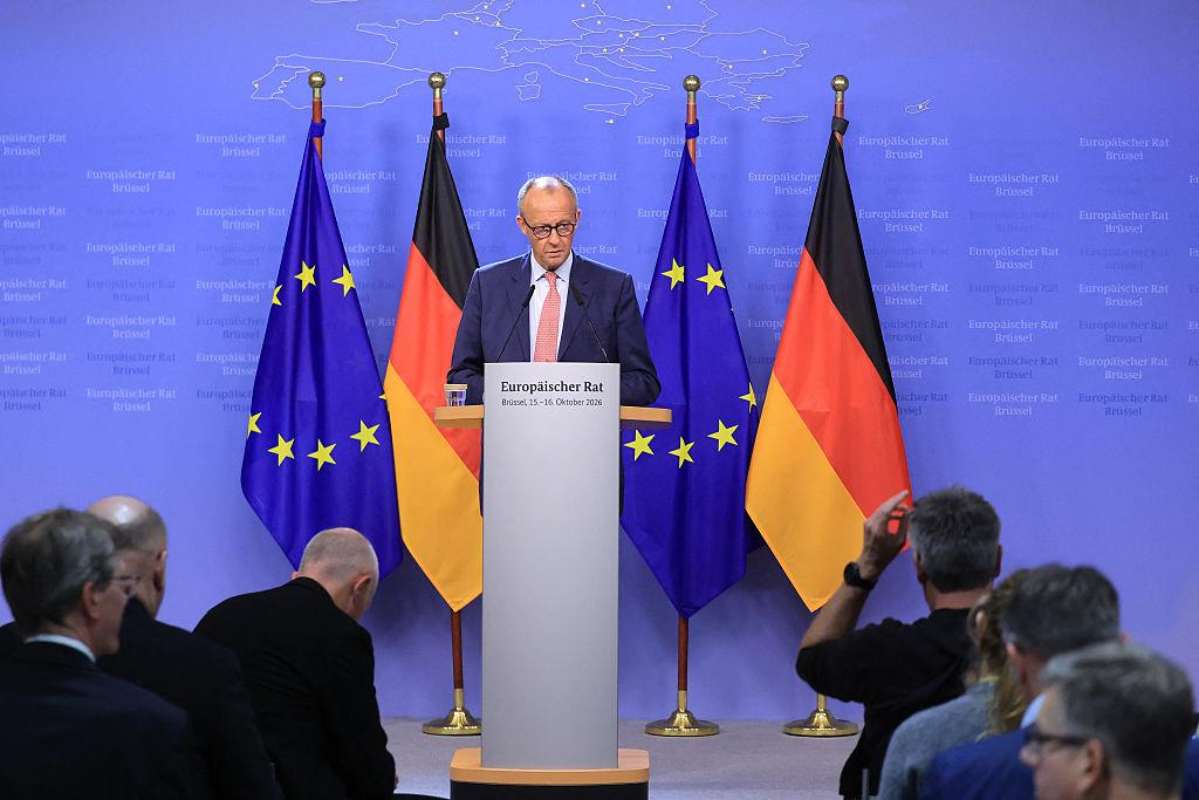
German Chancellor Friedrich Merz has emerged as a leading voice demanding fiscal discipline in the negotiations over the EU’s next seven-year budget.
Addressing the Bundestag ahead of the negotiations, Merz warned that the European Union could not avoid reducing spending under the Commission’s existing proposal.
“We will therefore not be able to avoid once again reducing the allocations in the current proposal across all areas,” he said.
The intervention carries considerable political weight.
Germany is the largest net contributor to the EU budget, and Berlin is concerned about the financial consequences of a substantial expansion in European spending.
According to the German government’s assessment, the Commission’s proposal could increase Germany’s contribution by approximately 40% to 50% from 2028.
This creates an increasingly visible contradiction.
Germany supports strengthening European defence capabilities but is unwilling to accept an unlimited expansion of the EU budget.
For Berlin, additional defence spending must be accompanied by a broader reassessment of European financial priorities.
That raises an uncomfortable question for other member states: which existing programmes should receive less funding to make room for defence?


Ukraine Becomes Another Front in the Budget Negotiations
Merz has also linked Germany’s support for the next EU budget to the question of financing Ukraine.
According to a Financial Times report published on November 9, the German chancellor demanded that all EU member states contribute fairly to future financial assistance for Kyiv.
In a letter to European Council President António Costa, Merz argued that shared responsibility was essential.
“A collective commitment that all of us, without exception, contribute fairly to closing the gap is an essential prerequisite for resolving this issue and discussing any further matters, particularly those with budgetary implications,” he wrote.
The message was directed at governments reluctant to accept additional financial obligations.
Berlin does not want Germany to shoulder a disproportionate share of the costs associated with supporting Ukraine while other countries resist increasing their contributions.
The dispute is significant because it connects two major European priorities: strengthening the continent’s defence capabilities and maintaining financial support for Ukraine.
Both require substantial resources.
Both also raise difficult questions about solidarity, fiscal responsibility and national interests.
As a result, negotiations over the next EU budget are becoming inseparable from the broader debate over Europe’s security architecture.
European Parliament Pushes Back: Europe Is Being Asked to Do More
While Germany and other fiscally cautious governments are seeking reductions, the European Parliament is moving in the opposite direction.
Leaders of four major political groups — the European People’s Party, Socialists and Democrats, Renew Europe and the Greens — have rejected a restrictive negotiating proposal for the 2028–2034 budget.
Their objection is that the proposal would reduce the size of the EU budget relative to the European economy.
In their joint intervention, they warned that such a reduction would come “precisely when Europe is being asked to do more.”
The statement captures the central disagreement between the Parliament and governments seeking tighter spending limits.
MEPs argue that the EU cannot simultaneously assume greater responsibilities for defence, industrial competitiveness, geopolitical security and technological innovation while reducing its financial capacity.
The disagreement is more than rhetorical.
The European Parliament must give its consent before the next Multiannual Financial Framework can be adopted.
Consequently, its opposition represents a significant obstacle to any agreement built primarily around spending reductions.


From €3 Billion in 2027 to €131 Billion in the Next Budget Cycle
The agreement on the 2027 EU budget includes two separate financial figures for security and defence.
The first is €3.08 billion in commitment appropriations.
The second is €2.23 billion in payment appropriations.
The distinction is essential.
Commitments represent the new financial obligations the EU is authorised to undertake during a particular year.
Payments represent the money expected to be disbursed during that year, including expenditure related to programmes approved previously.
A defence project authorised in 2027 may therefore receive funding over several subsequent years.
The 9.4% increase in commitments indicates that security and defence are gaining importance within the EU’s financial priorities.
However, the much larger transformation is contained in the Commission’s proposal for the 2028–2034 period.
The proposed €131 billion allocation would support defence, security and space activities through the new European Competitiveness Fund framework.
The objective is not simply to finance additional research.
It is to strengthen Europe’s ability to develop, manufacture and deploy strategically important technologies.
Brussels wants to move beyond financing defence innovation and towards building a stronger European defence production base.
The €141 Billion Gap Exposes the Scale of the Dispute
The confrontation between European institutions is already reflected in competing proposals for the overall size of the next EU budget.
The European Commission initially presented a framework approaching €2 trillion in current prices.
The Irish presidency of the Council subsequently introduced a more restrictive negotiating proposal.
According to an analysis by the European Parliament Research Service, that proposal would reduce the Commission’s initial financial framework by approximately €141 billion.
The European Parliament, by contrast, has advocated a more ambitious budget.
Defence is only one part of this wider confrontation.
Agriculture, regional development, research, innovation, infrastructure and external relations are all competing for financial resources.
Every government is seeking to protect the spending programmes it considers most important to its national interests.
The result is a complex political negotiation in which additional defence funding could come at the expense of other established European priorities.
SAFE: The €150 Billion Defence Facility Is Not Free Money
Alongside the regular EU budget, Europe has introduced the Security Action for Europe (SAFE) instrument, providing up to €150 billion in loans for defence investments.
The mechanism is designed to facilitate major military procurement programmes, particularly those involving cooperation between participating countries.
Under the scheme, the European Union raises financing on capital markets and makes it available to eligible states through loans.
This arrangement can offer favourable financing conditions and support larger procurement programmes.
However, there is a crucial distinction between SAFE and conventional EU budget grants.
SAFE loans must ultimately be repaid by the borrowing countries.
The €150 billion figure therefore represents lending capacity, not an equivalent amount of direct financial assistance.
It cannot simply be added to the proposed €131 billion allocation under the next Multiannual Financial Framework.
The two instruments have different financial structures, obligations and budgetary implications.
For national governments, the central issue is not merely the availability of financing.
It is also the long-term cost of accessing it.


Military Mobility: Europe Prepares to Move Forces Faster
Another important element of the Commission’s defence strategy concerns military mobility.
The proposed financial framework envisages a tenfold increase in relevant funding through the Connecting Europe Facility.
The objective is to improve infrastructure capable of supporting both civilian and military transport.
Railways, bridges, highways, ports and logistical hubs are becoming increasingly important to European security planning.
Military readiness depends not only on the number of available weapons systems but also on how quickly forces and equipment can be transported across borders.
This has become particularly significant as European governments reassess their ability to reinforce NATO’s eastern flank during a crisis.
Investment in dual-use infrastructure could therefore support both economic development and defence preparedness.
For countries with strategically important transport networks, the programme may also create new opportunities for infrastructure investment.
European Auditors Warn: More Money Does Not Guarantee Greater Military Power
The expansion of European defence financing also raises questions about efficiency and accountability.
In an assessment released on November 10, the European Court of Auditors examined elements of the proposed financial architecture for the 2028–2034 period.
The auditors acknowledged that the new framework could offer greater flexibility.
However, they also identified unresolved issues concerning performance, accountability and the monitoring of results.
Of 28 opportunities for improvement identified in an earlier assessment, only one had been fully addressed.
Another 19 had been partially addressed, while eight remained unaddressed.
The findings underline a broader problem facing European defence policy.
Approving additional billions does not automatically translate into more military equipment or stronger operational capabilities.
Europe’s defence industry continues to face structural challenges, including fragmented procurement, differing national technical standards and limitations in production capacity.
These problems can delay deliveries, increase costs and reduce the effectiveness of public investment.
The real test will be whether European institutions can translate financial commitments into measurable industrial and military results.
Greece Sees Opportunities — and New Financial Challenges
For Greece, the next European budget cycle could create significant opportunities for domestic defence companies and strategic infrastructure.
The country has industrial capabilities in shipbuilding, aircraft maintenance, electronic systems, aerospace technology and unmanned platforms.
Greater European cooperation could provide Greek companies with access to larger procurement programmes and partnerships with major defence manufacturers.
Military mobility funding could also prove relevant.
Greece’s geographical position gives its ports, airports and transport networks strategic importance in southeastern Europe and the Eastern Mediterranean.
However, access to European funding is not automatic.
Companies and public authorities will need technically mature projects, competitive proposals and effective international partnerships.
Athens must also assess the financial implications of borrowing through instruments such as SAFE.
The challenge is to ensure that European defence spending strengthens domestic industrial capabilities rather than simply increasing imports of military equipment.
November 26: The Next Political Test for Europe’s Budget
The failure of EU leaders to reach an agreement on the 2028–2034 budget during their October summit has increased the importance of the next round of negotiations.
A special European Council meeting is scheduled for November 26–27, with the next Multiannual Financial Framework at the centre of discussions.
The divisions are substantial.
Germany is demanding fiscal restraint and a fairer distribution of financial obligations.
The European Parliament is resisting proposals that would reduce the EU’s capacity to finance its expanding responsibilities.
The Commission is seeking to preserve the resources necessary to support strategic autonomy, industrial competitiveness and defence readiness.
Ukraine remains an additional financial and geopolitical challenge.
Reaching a compromise will require difficult decisions about the scale of European spending and the distribution of costs among member states.
Europe Wants Strategic Autonomy — But Who Will Pay?
The €3.08 billion defence allocation for 2027 demonstrates that security is becoming a more prominent priority in European budget negotiations.
But the decisive confrontation lies ahead.
The proposed €131 billion for 2028–2034 represents more than a significant increase in financial resources.
It is part of a wider attempt to redefine Europe’s role in the international security system.
For that ambition to become reality, the EU must resolve three fundamental questions.
How much should Europe spend collectively on defence?
How should the financial burden be distributed among member states?
And how can additional funding be transformed into stronger industrial production and genuine military capabilities?
The disagreement between Friedrich Merz and the European Parliament demonstrates that these questions remain unresolved.
Europe has begun designing its next era of defence and strategic autonomy. What it has not yet decided is who will pay for it.
That is the real political battle behind the billions — and one that could shape the European Union’s security and economic priorities for the next decade.
Source: pagenews.gr