Battle for the ECB Begins Early: Europe’s Political Shift Accelerates the Succession Power Game
 ΧΡΟΝΟΣ ΑΝΑΓΝΩΣΗΣ 9 '
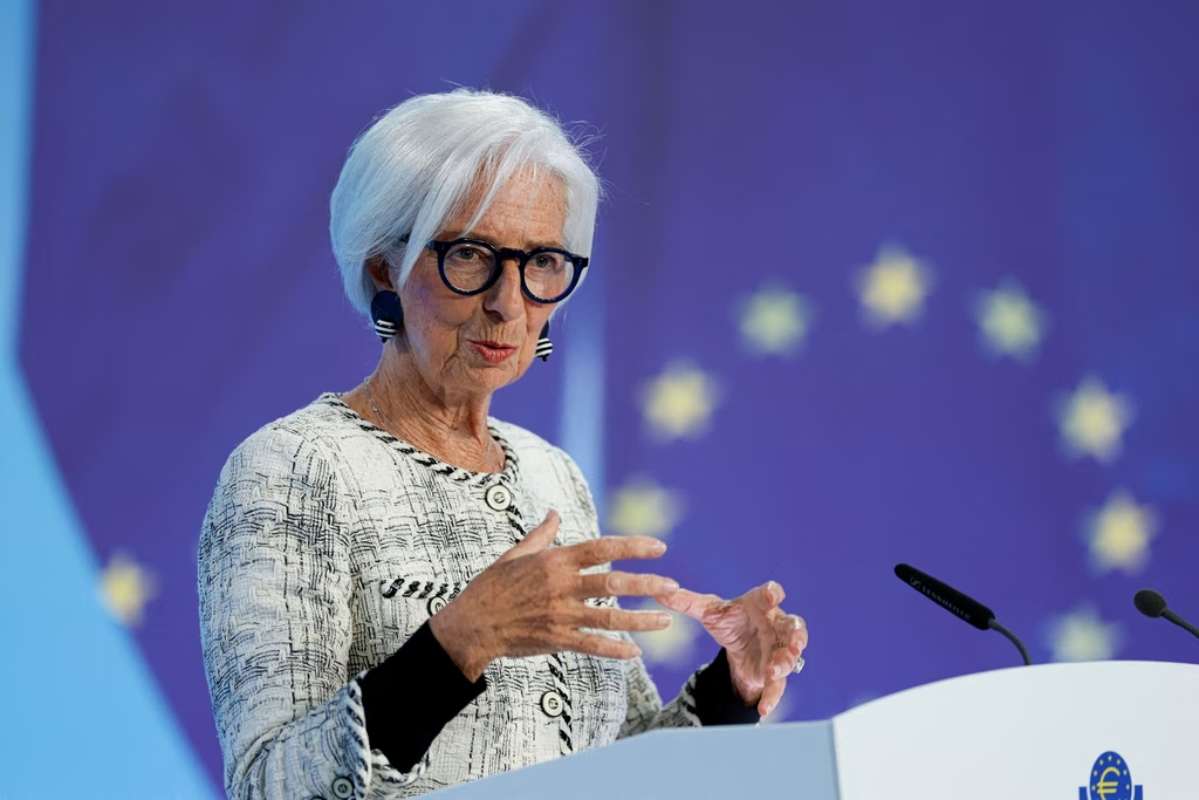
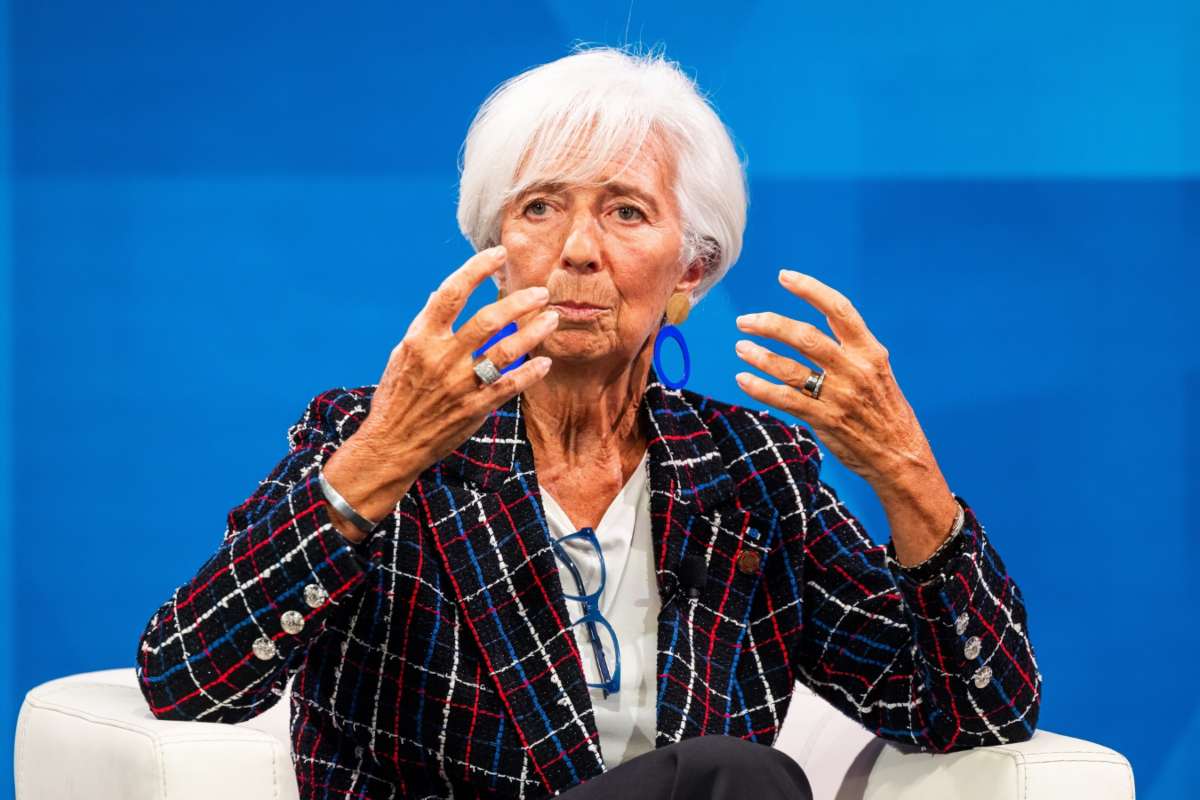
Πηγή Φωτογραφίας: AP Photo//Battle for the ECB Begins Early: Europe’s Political Shift Accelerates the Succession Power Game



This is no longer about replacing a single official at the European Central Bank.
Within months, a significant part of the ECB’s leadership could change.
And this time, the battle for Frankfurt is unfolding against a rapidly shifting European political landscape, with increasingly fragmented party systems and stronger radical and far-right forces in several major member states.
The result is clear:
What looked like a 2027 succession story has already become a 2026 European power game.
Schnabel Has Set the Dominoes in Motion
The first change is confirmed.
Isabel Schnabel will leave the ECB’s Executive Board on January 3, 2027, almost a year before her original term was due to expire.
A day later, she is expected to take over as Financial Counsellor and Director of the Monetary and Capital Markets Department at the International Monetary Fund.
That immediately creates one vacancy at the six-member Executive Board.
The second change is already scheduled.
ECB Chief Economist Philip Lane’s Executive Board term expires on May 31, 2027.
So even without any change involving Lagarde, two highly influential positions will have to be filled within approximately five months.
And Then There Is Lagarde
Christine Lagarde’s term formally runs until October 31, 2027.
But uncertainty over the precise timing of her departure remains.
On September 18, Lagarde said that she would leave in 2027. When asked whether that meant staying until October, her answer was:
“We’ll see.”
That is not an announcement of an early resignation.
But it is enough to keep speculation alive.
If the presidency were to become vacant earlier than scheduled, euro-area governments could find themselves negotiating over three of the six Executive Board positions within a compressed period.
And that would transform a normal succession process into a wholesale redistribution of influence at the top of the ECB.
These Are Not Three Separate Chairs — They Could Become One Package
This is where the real political game begins.
Formally, Executive Board members are appointed in a personal capacity and are required to act independently.
In practice, European governments inevitably consider a wider set of political factors when negotiating senior appointments:
nationality, economic philosophy, professional background, geographical balance and gender representation.
The first possible trade-offs are already emerging.
Reuters has reported an informal scenario under which France could support former Dutch central bank governor Klaas Knot to succeed Lagarde, while seeking a French appointment to the Executive Board and ultimately the influential chief economist portfolio.
The proposal has reportedly received support from President Emmanuel Macron, but it remains a negotiating position rather than an agreed European deal.
That is European dealmaking in its purest form.
The argument is no longer simply about who becomes ECB president.
It is about the balance of the entire next leadership team.
Paris Wants to Lock In Influence
For France, timing matters.
Macron is approaching the end of his presidency while France’s domestic political landscape remains highly fragmented.
That gives Paris an incentive to shape major European institutional appointments while the current administration still has the political leverage to negotiate them.
The potential formula is revealing:
Knot for the presidency, a French figure for the economic portfolio.
That would not amount to “French control” of the ECB. The central bank’s institutional independence remains fundamental, and Executive Board members do not formally represent their home governments.
But it would give France an important role in shaping the ECB’s next leadership architecture.
Germany Has Lost Schnabel — Now Berlin Must Choose Its Priority
For Germany, Schnabel’s early departure changes the calculation.
Berlin must decide whether its priority is to secure another German on the Executive Board, pursue a particularly powerful portfolio, or negotiate a broader package involving the presidency and other vacancies.
There is one crucial institutional detail:
Schnabel’s seat does not belong to Germany.
Nationality is an important element of the political negotiations, but Executive Board seats are not national quotas.
Germany therefore needs allies.
Bundesbank President Joachim Nagel has been discussed in the broader succession debate, but reporting also points to disagreements inside Germany over how strongly Berlin should push his candidacy.
Spain Is Openly Entering the Race
Madrid has also put its cards on the table.
Prime Minister Pedro Sánchez has publicly spoken positively about Pablo Hernández de Cos, the former governor of the Bank of Spain and current General Manager of the Bank for International Settlements, as a possible future ECB president.
Spain has an additional reason to push hard.
Following Luis de Guindos’s departure from the Executive Board, there is currently no Spanish member on the six-person body.
Securing the presidency would therefore restore a powerful Spanish presence at the top of European monetary policy.
The names most frequently discussed around the presidency currently include:
- Klaas Knot, the former Dutch central bank governor;
- Pablo Hernández de Cos, former Bank of Spain governor;
- Joachim Nagel, president of the Bundesbank.
There is no final shortlist and no agreed successor.
The Far Right Is Not “Appointing” the ECB — But It Changes the Political Clock
This distinction is essential.
There is no evidence that the rise of far-right parties caused Schnabel’s early departure, nor that the ECB has formally accelerated Lagarde’s succession to prevent particular political forces from influencing future appointments.
Schnabel is leaving for a specific senior position at the IMF.
And Lagarde has not announced an early resignation.
What has changed is the political environment surrounding the appointments.
As national governments change, so do the leaders sitting around the European table when senior appointments are negotiated.
That creates an incentive for current governments to reach agreements while they still possess the political authority to shape them.
The far right does not control the ECB succession — but electoral change can alter who negotiates it.
That is the more precise political issue.
Why the Next ECB Leadership Matters Far Beyond the Names
The succession battle is also taking place at a particularly difficult moment for monetary policy.
On September 10, the ECB raised its three key interest rates by 25 basis points, citing renewed inflationary pressure associated with the Middle East conflict.
Its projections put inflation at:
- 3.0% in 2026,
- 2.5% in 2027,
- 2.1% in 2028.
Growth, meanwhile, is projected at just 0.9% in 2026 and 1.4% in 2027.
The next ECB leadership could therefore inherit an uncomfortable combination of elevated inflation, energy shocks and weak economic growth.
That means the appointments could matter directly for debates over:
interest rates, sovereign borrowing costs, corporate financing, financial stability and the ECB’s response to another market shock.
And the Banks Want Their Say on the Next Policy Era
There is another power struggle developing around Frankfurt.
European banks are pushing for simpler regulation, fewer overlapping supervisory requirements and reforms designed to improve their ability to finance the European economy.
That does not mean banking organisations get to select ECB officials.
They do not.
But the leadership transition is occurring at the same time as a much broader debate over whether Europe’s financial system is sufficiently competitive against the United States and Asia.
So the question facing the next ECB will not simply be:
Hawk or dove on interest rates?
It will also be:
How much regulation, how much capital, how much financial integration and how much room should European banks have to take risk and finance growth?
Could Greece Enter the Wider Bargaining?
Bank of Greece Governor Yannis Stournaras is not currently among the names at the centre of the publicly reported presidential race, where Knot, Hernández de Cos and Nagel feature more prominently.
That does not mean smaller euro-area countries are irrelevant.
The appointment process requires a sufficiently broad coalition of governments, meaning Paris, Berlin or Madrid cannot simply impose an entire leadership package alone.
That gives smaller member states bargaining power as different combinations of nationality, geography and portfolios are assembled.
Any discussion of a specific Greek candidacy, however, needs to distinguish between an actual nomination and political speculation.
Three Chairs, One Deal
The calendar now explains the urgency.
Schnabel leaves on January 3.
Lane’s term expires on May 31.
Lagarde’s mandate formally ends on October 31, 2027, although the precise timing of her departure remains an open question.
Suddenly, the battle for the future of the ECB is no longer waiting for 2027.
It has already begun.
Paris wants to preserve significant influence.
Berlin must decide how to respond to the Schnabel vacancy.
Madrid is openly interested in the presidency.
And all three know that Europe’s political map could look very different a year from now.
That makes the central question larger than who replaces Christine Lagarde.
It is about what balance of power will be established in Frankfurt before Europe’s political balance changes again.
Source: pagenews.gr
Διαβάστε όλες τις τελευταίες Ειδήσεις από την Ελλάδα και τον Κόσμο