Europe has decided who will speak in negotiations over Ukraine. It has not given those representatives a blank cheque to bind the entire European Union.
The selection of EU institutions alongside five countries — France, Germany, the United Kingdom, Italy and Poland— addresses the question of representation. It leaves a harder question unresolved: who can approve the commitments made at the negotiating table?
The five capitals can coordinate positions and make national commitments. They cannot independently promise to lift EU sanctions, admit Ukraine to the bloc or rewrite European energy legislation.
That gap between representation and decision-making authority will determine Europe’s actual weight in the talks.
Five Capitals Instead of One Envoy
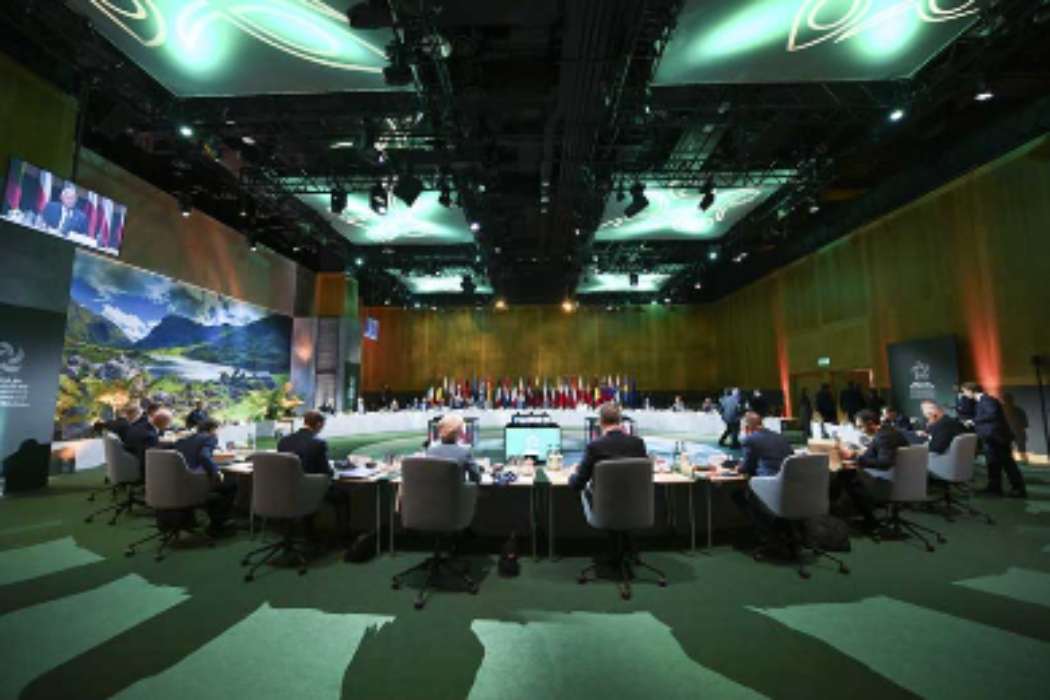
Meeting in Dublin on Friday, November 13, European leaders settled on a collective arrangement rather than appointing a single negotiator.
European Council President António Costa summarised the political objective: “Europe must speak with one clear and united voice.”
The arrangement seeks to combine the military influence of major European countries with the institutional authority of the EU. Poland brings the perspective of the eastern flank, while Britain’s participation keeps a major military partner outside the Union involved.
The division of responsibilities also matters. The EU has a central role in Ukraine’s European future, reconstruction and prosperity. Security guarantees belong within the Coalition of the Willing, in coordination with NATO.
Sanctions Cannot Be Offered Without Member-State Approval
For Moscow, relief from European sanctions would represent a significant negotiating prize.
But that prize is not exclusively at the European team’s disposal. The underlying foreign-policy decisions to impose, amend or renew sanctions require unanimity in the Council.
Any political understanding reached in negotiations would therefore still have to pass through the relevant European procedures.
The veto cuts both ways. It can prevent an unwanted concession, but it can also complicate the preservation of existing policy when measures require unanimous renewal.
European unity is necessary both to maintain pressure on Russia and to approve any subsequent change of course.
Ukraine’s Membership Cannot Be Settled at a Peace Summit
Kyiv wants a secure place in the Western security architecture and a credible European future.
The accession process, however, cannot be bypassed through an agreement among a handful of capitals. Admitting a new member requires unanimous agreement among member states and the necessary approvals and ratifications of an accession treaty.
Peace negotiations can strengthen the political commitment to Ukraine. They cannot automatically turn a proposed membership date into a binding outcome.
That limits what the European team can immediately promise. It also underlines that Ukraine’s European future remains a decision for the Union itself.


Russian Gas Follows Different Rules
Energy is another area where an external political agreement would not, by itself, change European policy.
The EU has already legislated a phased ban on Russian natural gas imports, with transitional deadlines depending on the fuel and the duration of existing contracts.
There is, however, a crucial institutional distinction: the relevant regulation was adopted by qualified majority, not unanimity. Individual governments therefore do not hold a veto over every possible legislative change.
What remains true is that the European team cannot substitute itself for the EU legislature. Any Washington–Moscow agreement premised on restoring Russian gas to the European market would have to confront the existing European legal framework.
The Risk of a Deal Presented as a Done Deal
Europe’s greatest pressure point may emerge when a draft settlement reaches national capitals for approval.
A text assuming European reconstruction funding, sanctions relief or energy concessions could be presented as a finished solution before European consent had been secured.
Governments would then face politically loaded choices, with objections potentially portrayed as obstacles to peace.
Friedrich Merz’s warning, “Please, no surprises,” captures precisely that concern.
From a Seat at the Table to a European Proposal
Three paths now lie ahead for the European team.
The first is coordination: following negotiations, maintaining common positions and responding collectively to proposals.
The second is fragmentation under external pressure, as member states divide over sanctions, energy and the cost of supporting Ukraine.
The third is a coherent European offer combining reconstruction finance, support for accession and security contributions, backed by clear conditions and the necessary approvals.
At the November 26–27 European Council, leaders are expected to consider Ukraine’s financing needs for 2027 and beyond. That meeting will test whether governments can underpin their common diplomatic presence with concrete decisions.
Europe now has a negotiating team. Its influence will depend on whether that team arrives with a meaningful mandate, available resources and shared political resolve.
Source: pagenews.gr